




















Kubernetes Certification Training in Pune
CKA, CKAD and CKS explained with official Linux Foundation facts: 2-hour hands-on exams on Kubernetes v1.37, domains, prices, and how to prepare in Pune.
The three main Kubernetes certifications are the Linux Foundation's CKA for administrators, CKAD for application developers and CKS for security specialists. Each is a two-hour, online, proctored, hands-on exam currently based on Kubernetes v1.37, with one retake included and two-year validity. CKS requires a passed CKA first.
This guide sets out the official exam facts, how the three certifications differ, how to choose between them, and what to look for in Kubernetes certification training in Pune. Every exam detail below comes from the Linux Foundation's own certification pages. For the wider choice of DevOps certifications beyond Kubernetes, see our guide to DevOps certification paths in Pune.
Key takeaways
- CKA, CKAD and CKS are offered by the Linux Foundation together with the CNCF. All three are performance-based: you solve tasks at a command line on live clusters.
- Each exam lasts two hours, includes one retake, and the certification is valid for two years. You have 12 months from purchase to schedule and take it.
- The exams are currently based on Kubernetes v1.37, and the Linux Foundation says the environment moves to each new minor version within about four to eight weeks of its release.
- The listed exam-only price is $445 for each exam, with bundles that add a course or subscription.
- CKA has no prerequisite. CKS requires you to have passed CKA.
- Training in Pune is available in our Kharadi classroom and live online.
The three exams at a glance
| Detail | CKA | CKAD | CKS |
|---|---|---|---|
| Audience | Cluster administrators | Application developers | Security-focused engineers |
| Format | Online, proctored, performance-based | Online, proctored, performance-based | Online, proctored, performance-based |
| Duration | 2 hours | 2 hours | 2 hours |
| Kubernetes version | v1.37 | v1.37 | v1.37 |
| Prerequisite | None | None stated | Passed CKA |
| Retake | One included | One included | One included |
| Validity | 2 years | 2 years | 2 years |
| Exam-only price | $445 | $445 | $445 |
Prices and versions change, so check the Linux Foundation page for your exam on the day you buy. The listed bundles are $625 with a THRIVE-ONE annual subscription and $645 with the matching course (LFS258 for CKA, LFD259 for CKAD, LFS260 for CKS).
CKA: Certified Kubernetes Administrator
CKA tests whether you can install, configure, run and troubleshoot a Kubernetes cluster. It is the most common starting point for DevOps engineers, platform engineers and SREs, because most of their Kubernetes work is operational.
The Linux Foundation publishes five domains with weights:
- Troubleshooting: 30%. Diagnosing cluster and node problems, checking components, monitoring resource usage, reading container output and fixing service and networking issues.
- Cluster Architecture, Installation and Configuration: 25%. RBAC, creating clusters with kubeadm, managing the cluster lifecycle, a highly available control plane, installing components with Helm and Kustomize, the CNI, CSI and CRI extension interfaces, and CRDs and operators.
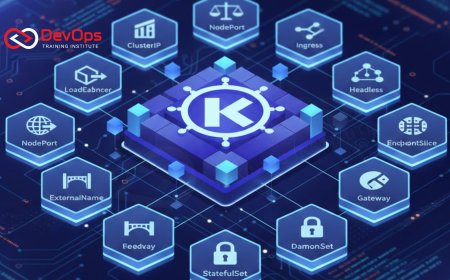
- Services and Networking: 20%. Pod-to-pod connectivity, network policies, ClusterIP, NodePort and LoadBalancer services, the Gateway API, Ingress and CoreDNS.
- Workloads and Scheduling: 15%. Rolling updates and rollbacks, ConfigMaps and Secrets, autoscaling, self-healing deployments, and controlling pod admission and scheduling.
- Storage: 10%. StorageClasses and dynamic provisioning, volume types, access modes and reclaim policies, PersistentVolumes and PersistentVolumeClaims.
Troubleshooting carries the largest weight, which tells you how to prepare. Practising installs is not enough. You need to break clusters deliberately and fix them under time pressure: a kubelet that will not start, a node marked NotReady, a Service with no endpoints, a network policy that blocks traffic it should allow.
CKAD: Certified Kubernetes Application Developer
CKAD tests whether you can design, build, configure and expose applications on Kubernetes. It suits developers and DevOps engineers who spend more time packaging and deploying applications than running the cluster itself. Its published domains are:
- Application Environment, Configuration and Security: 25%
- Application Design and Build: 20%
- Application Deployment: 20%
- Services and Networking: 20%
- Application Observability and Maintenance: 15%
CKAD rewards speed with everyday objects: Deployments, Jobs, CronJobs, ConfigMaps, Secrets, probes, resource requests, Services and network policies. Many candidates find it shorter on deep troubleshooting than CKA but tighter on time, because there are many small tasks.
CKS: Certified Kubernetes Security Specialist
CKS tests whether you can secure a cluster and the workloads on it during build, deployment and runtime. You must have passed CKA before you can attempt it. The domains are:
- Minimize Microservice Vulnerabilities: 20%
- Supply Chain Security: 20%
- Monitoring, Logging and Runtime Security: 20%
- Cluster Setup: 15%
- Cluster Hardening: 15%
- System Hardening: 10%
Preparing for CKS means working with network policies, RBAC, Pod Security Standards, admission control, image scanning and signing, audit logs and runtime detection. It is the hardest of the three for most people, mainly because it assumes CKA-level fluency and adds a wide set of security tools on top. Everything here is defensive work: hardening, detecting and responding.
Which one should you take first?
For most DevOps and platform roles, start with CKA. It covers the operational knowledge that job descriptions ask for, and it is the prerequisite for CKS anyway.
Start with CKAD if you are a developer who deploys to a cluster someone else runs, or if your target role is mainly about application delivery. CKAD is also a reasonable first step for people who find cluster administration intimidating, because its tasks are smaller.
Take CKS after CKA if you are moving toward DevSecOps or platform security. Our Kubernetes security best practices post is a good primer before you start.
How the exam works on the day
All three exams are taken online under a remote proctor. You work in a browser-based environment with access to several clusters and switch context between them for different tasks. The Linux Foundation's CKA page says registration includes two attempts at an exam simulator from Killer.sh, each with 36 hours of access, which is the closest you will get to the real interface before the exam.
Because the exam is hands-on, speed with kubectl matters. Candidates who generate YAML with imperative commands and edit it, rather than writing manifests from memory, usually finish more tasks.
# Generate a manifest instead of typing it from scratch
kubectl create deployment api --image=nginx --replicas=3 --dry-run=client -o yaml > api.yaml

# Switch to the cluster a task names before you start it
kubectl config use-context <context-name>

# Check why a pod is not running
kubectl describe pod <pod-name>
kubectl logs <pod-name> --previous
Always switch to the context the task specifies. Doing the right work on the wrong cluster scores nothing.
A preparation plan
- Get comfortable with Linux first. Systemd, journald, file permissions and networking commands come up constantly, especially in CKA troubleshooting.
- Build clusters yourself. Use kubeadm on virtual machines at least a few times so that control plane components stop being abstract.
- Work through each domain against the official curriculum. Tick off each competency only when you can do it without notes.
- Practise breaking things. Stop the kubelet, corrupt a manifest, delete a Service selector and fix each one.
- Use the official Kubernetes documentation as your reference. Learn where things are on kubernetes.io, because finding a YAML example quickly saves minutes.
- Do the simulator sessions near the end. Use the first to find gaps and the second to check timing.
- Book the exam with a margin. You have 12 months from purchase, and one retake is included.
Our guide to Kubernetes architecture components helps with the concepts behind the tasks, and the Kubernetes certification interview questions post helps you turn exam knowledge into interview answers.
What to look for in Kubernetes certification training in Pune
A certification course should prepare you for the exam and for the job, and the two overlap heavily because the exams are practical. When comparing options in Pune, ask:
- Does the syllabus map to the current Linux Foundation curriculum and Kubernetes version, rather than an older one?
- How much of the course time is you at a terminal, and on what kind of cluster?
- Does it cover kubeadm installation and troubleshooting, not only deploying apps on a managed cluster?
- Are there timed practice sessions that mimic the exam's multi-cluster setup?
- Does the trainer explain why things fail, or only show the command that fixes them?
Be careful with claims about pass rates or exam-center status. The Linux Foundation delivers these exams online with remote proctoring, so a training institute does not need to be a test center for you to sit them. Our classroom is in Kharadi, Pune, and the same courses run live online. See the CKA training, CKAD training and CKS training pages for course details.
How certification fits with experience
A Kubernetes certification proves you could do specific tasks under exam conditions. Interviewers will still ask about real situations: how you upgraded a cluster, how you handled a node failure, how you would design namespaces and RBAC for several teams. Pair the certification with a project you can explain, such as a GitOps deployment of a small application with monitoring and network policies. Our full stack DevOps training guide explains how Kubernetes fits into the rest of the delivery chain, and the global DevOps certification post covers how other credentials compare.
Renewal is part of the plan too. Because the certification lasts two years and Kubernetes moves quickly, treat renewal as a chance to catch up on what has changed rather than a box to tick.
Common mistakes on exam day
Most candidates who fall short on these exams know the material. They run out of time or lose marks to avoidable slips, and the patterns repeat.
- Working on the wrong cluster or namespace. Read each task's context and namespace before typing anything.
- Spending too long on one hard task. Flag a difficult one, move on, and return if time allows.
- Writing YAML from memory. Generate it with
--dry-run=client -o yamland edit, or copy a starting point from the documentation. - Not verifying. After each task, run a quick
getordescribeto confirm the resource exists and is in the state the task asked for. - Getting stuck on editor settings. Practise in a terminal editor beforehand, so indentation problems do not cost you minutes.
- Forgetting that the exam is remote. Check your machine, network and room against the Linux Foundation's requirements before the day.
Which certification suits which Pune role?
Job titles in Pune vary a lot between product companies, capability centres and services firms, but the work maps onto the three exams fairly cleanly.
A DevOps engineer or platform engineer who manages clusters, upgrades them and handles incidents gets the most from CKA. The troubleshooting weight in CKA matches the on-call side of these roles.
A backend developer or a DevOps engineer focused on application delivery gets more from CKAD. It covers how applications should be configured, probed, scaled and exposed, which is what reviewers on a platform team look for in a developer's manifests.
A DevSecOps engineer or someone moving into cloud security should plan for CKA followed by CKS. The security domains map onto the pipeline and runtime controls that security teams increasingly own.
If you are unsure, read a handful of job descriptions for the role you want and note whether they talk more about clusters, applications or security. That tells you where to start.
Study resources worth using
The single most useful resource is the official Kubernetes documentation on kubernetes.io, because it is what you will consult during real work and it matches the version the exams use. Pair it with the curriculum published on each Linux Foundation exam page, and treat that curriculum as your checklist. The Linux Foundation's own courses (LFS258, LFD259 and LFS260) are aligned with the exams and available in bundles. A local cluster built with kubeadm on two or three virtual machines gives you somewhere to practise installation and troubleshooting, which managed cloud clusters hide from you.
Renewing and keeping current
Two years passes quickly. Plan renewal from the day you pass: keep a running note of Kubernetes features that change across releases, such as new or graduated APIs and removed deprecated ones. When renewal comes up, check the Linux Foundation page for the current renewal options and the current exam version, because the exam environment moves with Kubernetes minor releases. Treat the renewal exam as a structured way to catch up on what changed, and run your own practice cluster on the current release for a few weeks beforehand.
Between renewals, the simplest way to stay sharp is to keep using Kubernetes on something real: a home lab, an open source contribution or a side project. Skills you use weekly do not fade.
Frequently asked questions
How long are the CKA, CKAD and CKS exams?
Each exam is two hours long, online and proctored, and performance-based, according to the Linux Foundation's exam pages.
Which Kubernetes version are the exams based on?
The Linux Foundation lists Kubernetes v1.37 for all three. It says the exam environment moves to each new minor version within about four to eight weeks of release.
How much do the Kubernetes certification exams cost?
The Linux Foundation lists $445 for the exam alone, $625 with a THRIVE-ONE annual subscription, and $645 with the matching course. Check the official page before you buy, as prices can change.
Do I need CKA before CKS?
Yes. The Linux Foundation requires you to have passed CKA before attempting CKS. CKA and CKAD have no such prerequisite.
How long is a Kubernetes certification valid?
Two years for CKA, CKAD and CKS. You also have 12 months from purchase to schedule and take the exam, and one retake is included.
Should I take CKA or CKAD first?
CKA suits DevOps, platform and SRE roles and leads to CKS. CKAD suits developers who deploy applications to a cluster someone else operates.
Where can I attend Kubernetes certification training in Pune?
Our classroom is in Kharadi, Pune, and the same CKA, CKAD and CKS courses run live online. The exams themselves are taken online with a remote proctor.
References
What's Your Reaction?
 Like
0
 Dislike
0
 Love
0
 Funny
0
 Angry
0
 Sad
0
 Wow
0