
















![Kong Interview Preparation Guide [2025]](https://www.devopstraininginstitute.com/blog/uploads/images/202509/image_430x256_68dbb95326997.jpg)








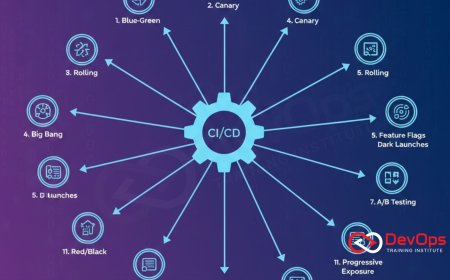
14 Kubernetes Deployment Strategies Explained
Master every Kubernetes deployment strategy used by top engineering teams in 2025–2026. This ultimate 4000+ word guide explains rolling updates, blue-green, canary, recreate, shadow, A/B testing, and 7 more advanced patterns with real-world examples, pros, cons, YAML snippets, risk levels, rollback speed, and when to use each strategy for zero-downtime, safe, and fast releases in production.
Introduction
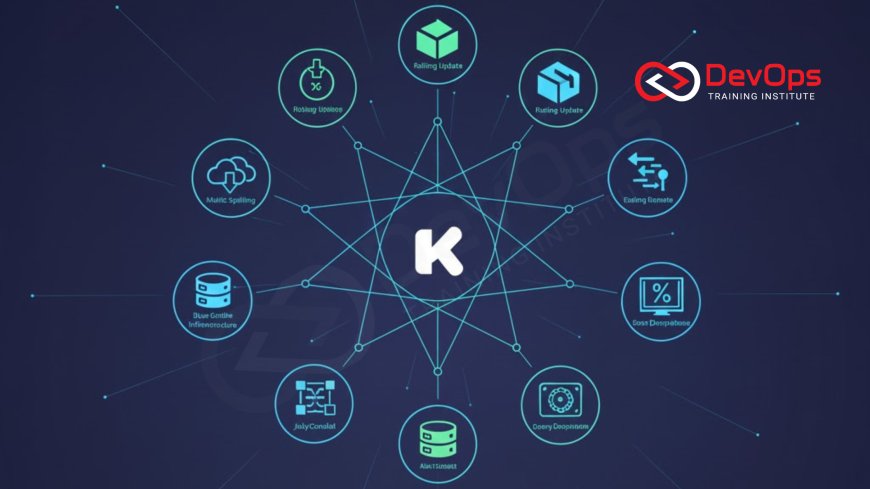
Kubernetes gives you incredible power to deploy applications, but with great power comes the need for great responsibility. A bad deployment strategy can cause outages that lasts hours and loses millions. The best teams in 2025 treat deployment strategy as a core competency. They don’t just use the default rolling update; they pick the perfect strategy for each service based on risk, traffic volume, rollback needs, and observability maturity. This guide explains all 14 strategies in use today, from the simplest to the most sophisticated.
1. Recreate Strategy – Fast but Risky
The nuclear option. Kubernetes terminates all old pods first, then starts new ones.
Best for:
- Development and staging environments
- Stateful apps that cannot run multiple versions
- When downtime is acceptable
Pros: fastest possible rollout, no version overlap. Cons: full downtime (seconds to minutes). Use only when you truly don’t care about availability.
2. Rolling Update – The Default and Most Common
Kubernetes gradually replaces old pods with new ones while keeping the service available.
- maxSurge: how many extra pods allowed during rollout
- maxUnavailable: how many pods can be down at once
Used by 80%+ of teams because it’s simple and zero-downtime in most cases. Perfect for stateless web apps and APIs.
3. Blue-Green Deployment – Instant Switchover
You maintain two identical environments: Blue (live) and Green (new version). When Green is ready and tested, you switch the router (Ingress/LoadBalancer) to point to Green in one atomic operation.
- Zero downtime
- Instant rollback (just switch back)
- Requires double infrastructure cost temporarily
Popular with teams that need sub-second rollback capability.
4. Canary Deployment – Test in Production Safely
Roll out the new version to a small percentage of users (1–10%) while monitoring metrics and logs. If healthy, gradually increase traffic.
Tools: Flagger, Argo Rollouts, Istio, Linkerd.
Best strategy for high-traffic consumer apps (e-commerce, social, gaming).
Canary traffic is often routed intelligently using Amazon Route 53 weighted records or service mesh.
5. Shadow (Mirror) Deployment – Zero-Risk Testing
New version receives duplicated production traffic but responses are discarded. You compare behavior, performance, and errors without affecting real users.
- Perfect for database schema changes
- Catches bugs that only appear under real traffic patterns
- Requires careful handling of stateful side effects
6. A/B Testing Deployment – Feature Experimentation
Route specific user segments (by cookie, header, geo) to different versions to test business metrics (conversion, engagement).
Used heavily by Netflix, Booking.com, and Shopify.
7. Progressive Delivery with Feature Flags
Deploy new code to 100% of pods but hide features behind flags (LaunchDarkly, Unleash, Flagsmith). Release features to 1%, 10%, or internal users first.
Combines perfectly with any other strategy.
8. Ramped Slow Rollout (Linear Traffic Increase)
Gradually increase traffic: 1% → 5% → 20% → 50% → 100% over hours or days with automated pauses on errors.
Flagger + Prometheus does this out of the box.
9. Fixed Deployment – Immutable Version Pinning
Deploy a new Deployment object with a different name (v2, v3) and manually switch traffic. Common in GitOps workflows where ArgoCD manages everything declaratively.
Git remains the single source of truth for deployments, just like collaborative code development.
10. Dark Launch – Feature Behind the Scenes
Deploy code that runs but is invisible to users (e.g., new recommendation engine running in parallel). Gradually trust the new system before switching.
11. Traffic Mirroring with Istio
Istio-specific version of shadow traffic with full request/response mirroring and automatic metric comparison.
12. Automated Canary with Argo Rollouts
Argo Rollouts replaces the default Deployment resource and adds native support for canary, blue-green, and experimentation with Prometheus integration.
13. GitOps-Driven Deployments (Declarative Everything)
ArgoCD or Flux watches Git. Any change to manifests triggers automatic sync. No kubectl apply in production ever again.
The most mature teams in 2025 run 100% GitOps.
14. Chaos-Aware Deployments
Combine any strategy with chaos engineering (Litmus, Chaos Mesh) to verify resilience during rollout. Only promote if the system survives injected failures.
Kubernetes Deployment Strategies Comparison Table (2025)
| Strategy | Downtime | Rollback Speed | Risk Level | Best For |
|---|---|---|---|---|
| Recreate | High | Fast | High | Dev/Staging |
| Rolling Update | None | Medium | Low | Most apps |
| Blue-Green | None | Instant | Low | Critical services |
| Canary | None | Fast | Very Low | High-traffic apps |
Conclusion
The era of “just use rolling updates” is over. Elite teams in 2025 treat deployment strategy as a strategic advantage. Start with rolling updates, add feature flags, graduate to automated canary with Flagger or Argo Rollouts, and eventually run full GitOps with progressive delivery. The right strategy reduces risk to near zero while letting you ship 10–100× more often. Pick one new strategy this quarter, measure MTTR and deployment frequency, and watch your velocity soar.
Frequently Asked Questions
What is the safest Kubernetes deployment strategy?
Automated canary with metrics-based promotion (Flagger + Prometheus) — risk approaches zero.
Blue-green vs canary: which is better?
Blue-green for instant rollback, canary for gradual confidence building.
Do I need Istio for canary deployments?
No. Argo Rollouts and Flagger work great on vanilla Kubernetes.
Can I combine multiple strategies?
Yes! Many teams do canary + feature flags + GitOps together.
Is recreate strategy ever acceptable in production?
Only for non-customer-facing batch jobs with scheduled windows.
How long should a canary phase last?
5–30 minutes minimum, longer for spiky traffic patterns.
What metrics should trigger canary rollback?
Error rate > 1%, latency p95 > 500ms, CPU > 90%, custom business metrics.
Do shadow deployments affect database load?
Yes — be careful with write-heavy traffic. Use read-only replicas when possible.
Is GitOps mandatory for safe deployments?
Not mandatory, but strongly recommended. It’s the industry standard in 2025.
Can I do A/B testing without a service mesh?
Yes — use Ingress annotations (NGINX, Traefik) or Route 53 weighted routing.
How do I handle database migrations?
Use shadow + canary with expanded contract patterns or separate migration jobs.
Argo Rollouts vs Flagger: which to choose?
Argo Rollouts for GitOps-first, Flagger for Prometheus-first teams.
Do deployment strategies work with Helm?
Yes — Helm + ArgoCD + Flagger is a very common stack.
What about statefulsets?
Rolling updates with podManagementPolicy: Parallel and proper readiness probes work well.
Is zero-downtime possible with every strategy?
Yes except Recreate. Proper readiness/liveness probes are required.
What's Your Reaction?
 Like
0
Like
0
 Dislike
0
Dislike
0
 Love
0
Love
0
 Funny
0
Funny
0
 Angry
0
Angry
0
 Sad
0
Sad
0
 Wow
0
Wow
0

![100+ Azure DevOps Interview Questions and Answers [Updated 2025]](https://www.devopstraininginstitute.com/blog/uploads/images/202509/image_140x98_68c40aa9a3834.jpg)






![Future Scope of DevOps Careers in Pune [Updated 2025]](https://www.devopstraininginstitute.com/blog/uploads/images/202510/image_140x98_68e3a84652312.jpg)