






![Kong Interview Preparation Guide [2025]](https://www.devopstraininginstitute.com/blog/uploads/images/202509/image_430x256_68dbb95326997.jpg)
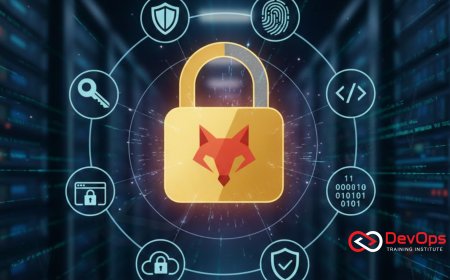




12 Kubernetes Security Best Practices You Must Follow
Secure your Kubernetes clusters with these 12 essential security best practices in 2025. From RBAC and network policies to Pod Security Standards, image scanning, runtime protection, and secrets management — this practical guide helps DevOps and platform teams prevent breaches, pass audits, and sleep better at night without slowing down delivery.
Introduction
Kubernetes has become the de-facto standard for container orchestration, but its power comes with serious security responsibility. A single misconfiguration can expose your entire cluster to attackers. High-profile breaches at Tesla, Shopify, and others were caused by unsecured Kubernetes APIs or overly permissive pods.
The good news? Following a small set of proven best practices dramatically reduces your attack surface. This guide distills the most important Kubernetes security practices used by Netflix, Google, and the CNCF community in 2025. Implement these 12 steps and you’ll be ahead of 95% of clusters out there.
1. Keep Kubernetes Up to Date
Run supported versions only. As of 2025:
- Always stay on the latest patch version (e.g., 1.30.x)
- Upgrade minor versions at least annually
- Never run versions older than n-2
- Enable automatic security updates for worker nodes
New releases close critical vulnerabilities every month. Outdated clusters are the #1 cause of compromises.
2. Enable RBAC and Remove Default Permissions
Role-Based Access Control is your first line of defense.
- Disable the legacy ABAC and Attribute-Based Access Control
- Delete default cluster-admin bindings in kube-system
- Use least-privilege roles and ClusterRoles
- Create separate roles for developers, CI/CD, monitoring
- Regularly audit with kubectl auth can-i
3. Use Pod Security Standards (or Admission Controllers)
Replace the deprecated PodSecurityPolicy with the built-in Pod Security Admission.
- Enforce baseline or restricted profile cluster-wide
- Block privileged containers, hostPath mounts, root users
- Use Kyverno or OPA Gatekeeper for custom policies
- Fail builds in CI if pods violate policy
4. Implement Network Policies
By default, pods can talk to anything. Network policies are your software firewall.
- Default-deny all ingress/egress
- Allow only necessary ports and namespaces
- Use Calico, Cilium, or Weave Net for enforcement
- Separate frontend, backend, database tiers
5. Scan Container Images for Vulnerabilities
Never trust images — even official ones get compromised.
- Scan every image in CI/CD with Trivy, Grype, or Snyk
- Block images with critical/high CVEs
- Sign images with cosign or Notary
- Enforce image signature verification with Kyverno
- Re-scan images in registry weekly
6. Use Runtime Security & Threat Detection
Prevent attacks even if something slips through.
- Deploy Falco, Tetragon, or Tracee for kernel-level monitoring
- Alert on suspicious behavior: shell in container, crypto mining, privilege escalation
- Integrate with SIEM (Splunk, Elastic, Datadog)
- Auto-block malicious pods with response engines
7. Secure Secrets Management
Never store secrets in ConfigMaps or Docker config.
- Use HashiCorp Vault, AWS Secrets Manager, Azure Key Vault, or Sealed Secrets
- Inject secrets at runtime (no volumes)
- Rotate secrets automatically
- Audit all secret access
8. Enable Audit Logging
Know who did what and when.
- Enable audit logs on API server
- Send logs to immutable storage (S3 with Object Lock)
- Use tools like Falco or Elastic for searching
- Create alerts for suspicious API calls
9. Restrict API Server Access
The Kubernetes API is the crown jewel — protect it fiercely.
- Never expose api-server to the internet
- Use VPN, bastion hosts, or authorized networks
- Enable certificate-based authentication
- Rotate certificates regularly
10. Use Distroless or Minimal Base Images
Smaller images = smaller attack surface.
- Prefer distroless, scratch, or Chainguard images
- Avoid alpine if you need shell debugging
- Run containers as non-root user (USER 10001)
- Drop unnecessary capabilities
11. Implement Zero Trust Networking with Service Mesh (Optional but Powerful)
Tools like Istio, Linkerd, or Cilium add mTLS and fine-grained authorization.
- Mutual TLS between all services
- Authorization policies beyond network policies
- End-to-end encryption
12. Regularly Run Security Benchmarks & Audits
Validate your hardening efforts.
- Run kube-bench against CIS Kubernetes Benchmark weekly
- Use kubeaudit, Popeye, or Polaris for cluster scanning
- Perform penetration testing annually
- Document exceptions and remediation plans
Quick Reference Table
| Practice | Risk if Ignored | Effort Level | Tool Example | |
|---|---|---|---|---|
| Keep K8s Updated | Critical CVEs | Medium | k8s version check | |
| RBAC Least Privilege | Insider takeover | High | kubectl auth can-i | |
| Pod Security Standards | Container escape | Medium | Kyverno/OPA | |
| Network Policies | Lateral movement | Medium | Calico/Cilium | |
| Image Scanning | Supply chain attack | Low | Trivy in CI | |
| Runtime Security | Zero-day exploits | Medium | Falco | |
| Secrets Management | Credential theft | Medium | Vault |
Conclusion
Security in Kubernetes is not a one-time setup — it’s a continuous process that evolves with your cluster growth and new threats. Prioritize the first six practices (updates, RBAC, Pod Security, network policies, image scanning, runtime protection) for immediate risk reduction. Then layer on secrets management, audit logging, and zero-trust networking as you mature.
Remember: the most secure clusters are those where security is automated and enforced by policy, not hope. When you run serverless workloads alongside Kubernetes, apply the same rigor — never ignore AWS Lambda limits and always scan Lambda layers too. Follow these 12 practices and your cluster will be dramatically more secure without sacrificing developer velocity.
Frequently Asked Questions
Is Kubernetes secure by default?
No — default installations are convenient but not secure. You must actively harden every cluster.
Should I use PodSecurityPolicy in 2025?
No — PSP was removed in Kubernetes 1.25. Use built-in Pod Security Admission or policy engines instead.
What’s the easiest way to enforce these practices?
Use policy-as-code tools like Kyverno or OPA Gatekeeper — write policies once, apply everywhere.
Do network policies work on all CNI plugins?
Most do (Calico, Cilium, Weave), but not all. Azure CNI requires Azure Network Policy addon.
How do I secure EKS/AKS/GKE managed clusters?
Managed control planes are safer, but you still own node configuration, IAM, and pod security.
Is it safe to run containers as root?
Never in production. Always set runAsNonRoot: true and user ID greater than 10,000.
How do I know if my cluster is secure?
Run kube-bench weekly and aim for less than 5% exceptions on CIS benchmark.
Can attackers exploit exposed dashboards?
Yes — never expose Kubernetes dashboard publicly. Use strong auth or disable it entirely.
Should I use service accounts for applications?
Yes — never use user accounts. Bind service accounts to minimal RBAC roles.
How do I secure Helm charts?
Use helm-secrets, validate with helm template + Kyverno, avoid latest tag.
Is Falco enough for runtime security?
Falco is excellent for behavioral detection. Combine with image scanning and pod security for defense-in-depth.
How do I handle secrets in GitOps?
Use Sealed Secrets, External Secrets Operator, or Vault with ArgoCD/Flux.
Are there free tools to audit my cluster?
Yes — kube-bench, Trivy, Falco, Kyverno, Polaris, Popeye are all open source and free.
How does this apply to serverless on Kubernetes (Knative, KEDA)?
Same rules apply — plus extra attention to event source authentication and CloudWatch monitoring for triggered functions.
What’s the biggest Kubernetes security risk in 2025?
Misconfigured RBAC and supply-chain attacks via malicious container images remain the top two vectors.
What's Your Reaction?
 Like
0
Like
0
 Dislike
0
Dislike
0
 Love
0
Love
0
 Funny
0
Funny
0
 Angry
0
Angry
0
 Sad
0
Sad
0
 Wow
0
Wow
0



![100+ Azure DevOps Interview Questions and Answers [Updated 2025]](https://www.devopstraininginstitute.com/blog/uploads/images/202509/image_140x98_68c40aa9a3834.jpg)






![Future Scope of DevOps Careers in Pune [Updated 2025]](https://www.devopstraininginstitute.com/blog/uploads/images/202510/image_140x98_68e3a84652312.jpg)