


































![Kong Interview Preparation Guide [2025]](https://www.devopstraininginstitute.com/blog/uploads/images/202509/image_430x256_68dbb95326997.jpg)
















10 Ways to Implement Self-Healing in DevOps Systems
Discover how to create resilient IT operations by learning the best ways to implement self-healing in DevOps systems for twenty twenty six. This extensive guide covers everything from automated pod restarts in Kubernetes and AI-driven anomaly detection to sophisticated rollback mechanisms and proactive resource scaling. Learn how to reduce system downtime, eliminate manual toil, and build autonomous infrastructure that detects and fixes issues before they impact your users. Whether you are a beginner or an experienced engineer, mastering these self-healing techniques will transform your software delivery pipeline into a robust, high-availability powerhouse that drives consistent business value in today’s demanding digital landscape.
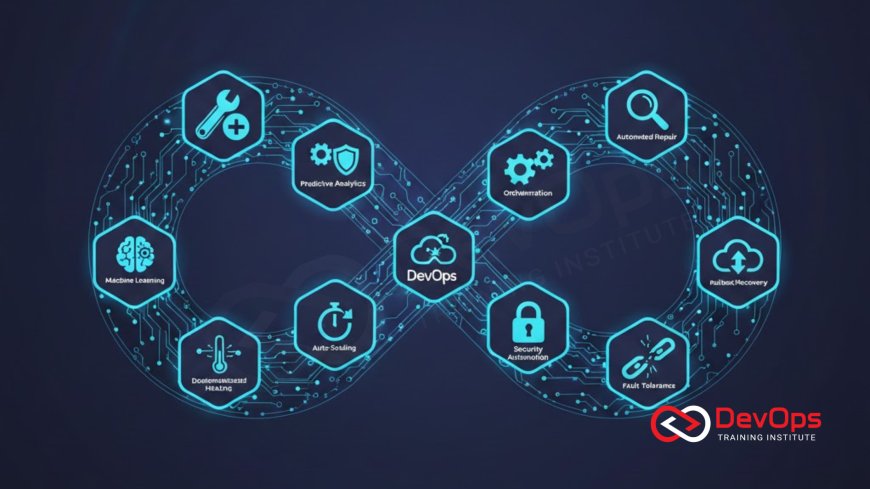
Introduction to Self-Healing Systems
The modern software landscape moves at a pace that makes manual oversight nearly impossible for even the most dedicated engineering teams. As systems grow in complexity and scale, the traditional reactive approach to fixing errors is being replaced by a more sophisticated model known as self-healing. In a DevOps context, self-healing refers to the ability of a system to autonomously detect, diagnose, and resolve operational problems without the need for human intervention. This shift toward autonomy is not just about convenience; it is a fundamental requirement for maintaining high availability and resilience in a world where users expect services to be online twenty four hours a day.
Implementing self-healing capabilities involves creating a continuous feedback loop that mirrors the human immune system. By utilizing AI-augmented devops toolchains, organizations can build environments that recognize when a component is failing or underperforming and take immediate corrective action. Whether it is restarting a failed container or rebalancing traffic across a global network, the goal is to reduce the Mean Time to Recovery (MTTR) to near zero. This introduction explores why self-healing has become the gold standard for high-performing technical teams and sets the stage for the specific strategies that will help you achieve an autonomous, resilient infrastructure today.
Leveraging Kubernetes Automated Restarts
One of the most powerful and widely used forms of self-healing is found within the Kubernetes ecosystem. At its core, Kubernetes is designed to maintain a desired state for your containerized applications. If a pod crashes or becomes unresponsive, the orchestrator automatically detects the failure and attempts to restart the container on a healthy node. This basic level of self-healing ensures that temporary software glitches or localized hardware failures do not escalate into full-scale outages for your end users. It provides a reliable safety net that allows your applications to remain available even when individual components encounter unexpected issues.
To maximize the effectiveness of these automated restarts, engineers must define clear liveness and readiness probes within their deployment manifests. A liveness probe tells Kubernetes when a container is "dead" and needs to be replaced, while a readiness probe indicates when a pod is ready to accept traffic. By fine-tuning these settings, you ensure that the system only sends traffic to healthy instances and replaces problematic ones as quickly as possible. This proactive approach to cluster states management is essential for any cloud-native strategy, as it creates a self-correcting environment that requires minimal manual intervention from the operations team during their daily tasks.
Implementing AI-Driven Anomaly Detection
While threshold-based alerts are useful, they often fail to catch subtle deviations in system behavior that indicate a looming failure. AI-driven anomaly detection uses machine learning to establish a dynamic baseline of what "normal" looks like for your specific workload. By analyzing vast streams of telemetry data—including logs, metrics, and traces—the AI can identify patterns that are invisible to the human eye. This allows the system to predict a failure hours before it actually occurs, providing the opportunity for the self-healing engine to trigger a preventive workflow, such as provisioning more resources or clearing a full disk.
Integrating AI-augmented devops into your monitoring stack allows for more intelligent decision-making when an issue is detected. Instead of just notifying an engineer, the AI can correlate signals across different services to find the root cause. For example, if a sudden spike in latency is detected, the AI might identify that it is related to a specific database query or a failing network link. The system can then execute a pre-approved runbook to mitigate the problem. This level of predictive intelligence is a game changer for incident handling, as it transforms the team from reactive firefighters into proactive architects of system reliability and technical excellence.
Automated Rollbacks and Release Safety
Deployment failures are a leading cause of unplanned downtime in modern software delivery. Self-healing systems address this risk by incorporating automated rollback mechanisms into the CI/CD pipeline. When a new version of an application is released, the system monitors its performance in real-time. If the error rate exceeds a certain threshold or if the application becomes unresponsive, the system can automatically trigger a rollback to the last known stable version. This ensures that a buggy release is "undone" in seconds, protecting the user experience and maintaining the high standards of quality expected by the business.
This technique is particularly effective when used in conjunction with advanced release strategies like canary deployments. In a canary release, the new version is exposed to a tiny percentage of users first. The self-healing engine acts as a "referee," analyzing the data from the canary group. If any distress is detected, the rollout is halted and the traffic is instantly reverted. By automating this critical decision-making process, you remove the delay and potential for human error associated with manual verification. It creates a paved road for software delivery that allows teams to ship code faster and with much higher confidence in their overall system stability.
Summary of Self-Healing Techniques and Benefits
| Technique | Primary Focus | Key Technical Benefit | Downtime Impact |
|---|---|---|---|
| Automated Restarts | Container Health | Rapid recovery from crashes | Minimal |
| Anomaly Detection | Predictive Monitoring | Early warning of failures | Proactive Prevention |
| Automated Rollbacks | Release Management | Safe deployment cycles | Near Zero |
| Predictive Scaling | Resource Capacity | Prevents resource exhaustion | Low |
| Circuit Breakers | Service Isolation | Prevents cascading failures | High Availability |
Predictive Scaling and Resource Management
Resource exhaustion is a frequent culprit behind performance degradation and system crashes. Traditional auto-scaling reacts to current load, which can sometimes be too slow to handle sudden spikes in traffic. Self-healing systems take this a step further by using predictive scaling. By looking at historical data and seasonal trends, the system can forecast an upcoming surge and provision additional compute resources before the traffic arrives. This ensures that the application always has the capacity it needs to perform optimally, even during unpredicted peak periods in the global digital market.
This strategy involves using architecture patterns that prioritize elasticity and decoupling. When a service is approaching its resource limits, the self-healing engine can automatically increase the number of pod replicas or scale up the underlying nodes. It can also identify "zombie" resources that are consuming budget without providing value and scale them down. By optimizing resource management through automation, you maintain a high user experience while also ensuring cost efficiency. It turns your infrastructure into a living organism that breathes and scales according to the real-time needs of the business and its valuable customers.
Circuit Breakers and Service Isolation
In a distributed microservices environment, a failure in one small component can quickly cascade through the entire system, leading to a massive outage. The circuit breaker pattern is a vital self-healing technique that prevents this by "tripping" when a service begins to fail. Instead of allowing a flood of requests to hit an unhealthy service—which only makes the problem worse—the circuit breaker redirects the traffic or provides a fallback response. This isolates the failure and allows the system to continue functioning, albeit in a degraded state, while the self-healing engine works to restore the service.
Implementing circuit breakers requires a deep understanding of your service dependencies and incident handling protocols. When the circuit is open, the system can automatically trigger a recovery script, such as clearing a cache or restarting a database connection. Once the service is healthy again, the circuit breaker "closes," and normal traffic flow is resumed. This resilience technique is essential for maintaining high availability in complex cloud-native systems. It ensures that a single point of failure does not become a catastrophic event, allowing your organization to maintain its reputation for reliability even in the face of unexpected technical challenges.
Autonomous Remediation and Self-Correction
The ultimate stage of self-healing is autonomous remediation, where the system identifies a problem and executes a specific fix without any human involvement. This goes beyond just restarting a service; it involves more complex actions like reconfiguring a firewall, patching a vulnerability, or re-routing traffic across different cloud regions. By using a library of pre-approved remediation playbooks, the system can handle up to seventy percent of common operational issues automatically. This eliminates the "toil" of repetitive maintenance and allows your engineers to focus on more creative and strategic tasks that drive innovation.
To implement this effectively, organizations often use ChatOps techniques to provide visibility into the system's actions. When a self-healing event occurs, the system can post a message to a shared chat channel, explaining what was detected and what fix was applied. This keeps the human team informed without requiring them to drop everything to investigate. By integrating continuous verification into this loop, the system can confirm that the remediation was successful before closing the incident. This autonomous approach to operations is the future of DevOps, providing a level of speed and precision that manual teams simply cannot match in today's fast-paced digital world.
To ensure long-term success with autonomous remediation, teams should focus on the following core areas:
- Build Robust Observability: Ensure you have clean, structured data from across your entire stack to fuel the detection engine.
- Define Clear Guardrails: Establish strict rules for what the system can and cannot do automatically to prevent cascading errors.
- Use Standardized Toolchains: Leverage tools like containerd and Kubernetes to provide a consistent platform for self-healing actions.
- Favour Idempotent Actions: Design your remediation scripts so that they can be run multiple times without causing side effects.
- Monitor the Healers: Regularly audit your self-healing events to ensure the system is making correct decisions and optimize the logic.
Conclusion: Building a Future-Proof Infrastructure
In conclusion, implementing self-healing in DevOps systems is a transformative journey that leads to unparalleled system resilience and operational excellence. From the foundational automated restarts of Kubernetes to the predictive power of AI-driven anomaly detection and autonomous remediation, these ten ways provide a comprehensive roadmap for building a self-correcting infrastructure. The goal is to create a system that is not only robust but also capable of learning and adapting to new challenges as they arise. By reducing the reliance on manual intervention, you empower your team to focus on the strategic innovation that drives your business forward in the competitive digital landscape of twenty twenty six.
As you move forward, consider who drives cultural change within your organization to ensure broad adoption of these advanced techniques. Embracing a self-healing mindset requires a shift from reactive firefighting to proactive architectural design. Staying informed about modern release strategies and the latest trends in AI-augmented devops will ensure that your infrastructure remains at the cutting edge. Ultimately, the best system is the one that watches over itself, allowing you to deliver faster, safer, and more reliable software to your users every single day. Start by identifying your most frequent manual fixes and automate them today; your future self will thank you for the extra time and peace of mind.
Frequently Asked Questions
What is self-healing in a DevOps context?
Self-healing refers to the system’s ability to autonomously detect, diagnose, and resolve operational problems without needing human intervention to restore services.
How does Kubernetes handle self-healing automatically?
Kubernetes uses liveness probes to detect failed pods and readiness probes to manage traffic, automatically restarting crashed containers to maintain desired state.
What role does AI play in self-healing systems?
AI establishes a dynamic baseline of normal behavior and uses machine learning to predict failures before they occur by identifying subtle data patterns.
Why are automated rollbacks important for DevOps?
They ensure that a buggy software release is instantly reverted to a stable version if performance degrades, protecting the user experience and quality.
What is a circuit breaker in microservices?
A circuit breaker isolates a failing service to prevent cascading errors across the cluster, providing a fallback until the service is healthy again.
How do I start implementing self-healing?
Start by identifying repetitive manual tasks, setting up robust observability, and using basic liveness probes in your container orchestration tool to manage health.
Can self-healing reduce my cloud costs?
Yes, self-healing systems can optimize resource management by scaling down unused resources and preventing expensive downtime through proactive and automated incident handling.
What is autonomous remediation in DevOps?
It is the process where a system automatically executes complex fixes, like reconfiguring a firewall or re-routing traffic, using a pre-approved playbook library.
Are there risks to self-healing automation?
Poorly designed automation can exacerbate problems; therefore, it is vital to define strict guardrails and monitor all self-healing events for accuracy and safety.
What is the benefit of predictive scaling?
Predictive scaling uses historical data to forecast traffic surges and provision resources ahead of time, ensuring consistent performance during unpredicted peak periods.
How does ChatOps help with self-healing?
ChatOps provides visibility by posting automated updates about detected issues and remediations to shared team channels, keeping human engineers informed without manual overhead.
Is containerd better than Docker for self-healing?
Choosing to use containerd can offer a more lightweight and efficient runtime for Kubernetes, which can lead to faster container restarts and better overall performance.
What are liveness and readiness probes?
Liveness probes check if a container is running, while readiness probes determine if it is prepared to handle traffic from the cluster service.
Can self-healing help with security breaches?
Yes, self-healing can isolate compromised segments or automatically apply security patches when vulnerabilities are detected through specialized scanning tools and automated policy enforcement.
How does GitOps relate to self-healing?
A GitOps model ensures that the live cluster state is constantly synchronized with the version-controlled configuration, allowing for automated reconciliation of any unauthorized changes.
What's Your Reaction?
 Like
0
Like
0
 Dislike
0
Dislike
0
 Love
0
Love
0
 Funny
0
Funny
0
 Angry
0
Angry
0
 Sad
0
Sad
0
 Wow
0
Wow
0


![100+ Azure DevOps Interview Questions and Answers [Updated 2025]](https://www.devopstraininginstitute.com/blog/uploads/images/202509/image_140x98_68c40aa9a3834.jpg)






![Future Scope of DevOps Careers in Pune [Updated 2025]](https://www.devopstraininginstitute.com/blog/uploads/images/202510/image_140x98_68e3a84652312.jpg)


