

![Kong Interview Preparation Guide [2025]](https://www.devopstraininginstitute.com/blog/uploads/images/202509/image_430x256_68dbb95326997.jpg)

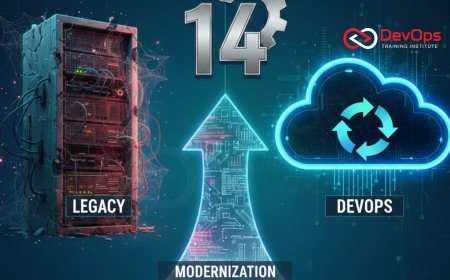
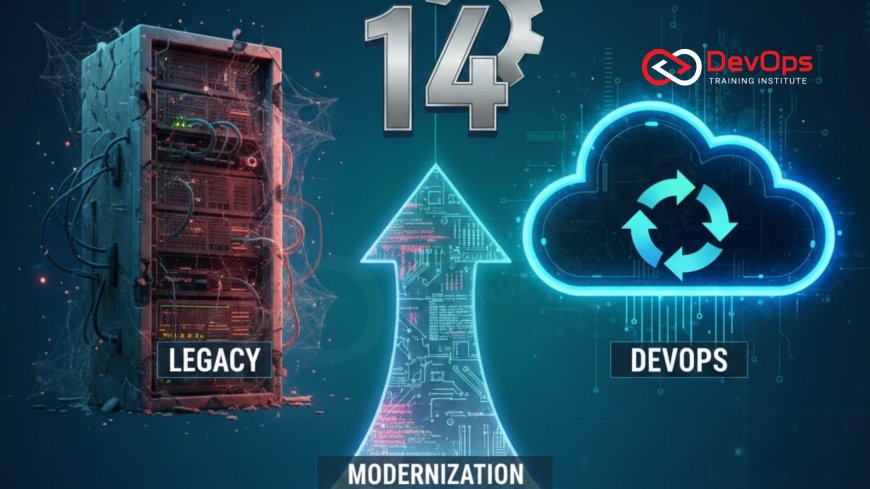
14 DevOps Strategies for Legacy Application Modernization
Modernizing legacy applications is a complex journey that requires a blend of technical expertise and cultural shifts. This guide explores fourteen essential strategies for transforming aging systems into cloud native powerhouses using modern automation. Learn how to break down monoliths, implement continuous integration, and leverage containerization to breathe new life into your enterprise software. By adopting these proven methods, organizations can reduce technical debt, improve security, and accelerate their delivery cycles to remain competitive in the rapidly evolving digital landscape of twenty twenty six.
Introduction to Legacy System Transformation
The challenge of managing aging software systems is something almost every established organization faces today. Legacy applications often represent years of business logic and critical data, yet they frequently run on outdated infrastructure that is difficult to maintain and even harder to scale. These systems act as a heavy anchor, preventing engineering teams from adopting the fast paced delivery models required in twenty twenty six. The goal of modernization is not just to move old code to a new server, but to fundamentally change how the software is built, deployed, and managed through the power of DevOps principles and modern automation.
Modernizing these systems requires a delicate balance between preserving existing value and embracing new technical standards. It involves a shift from manual, error prone processes to automated workflows that provide consistency and reliability. By applying modernization strategies, companies can transform their fragile monoliths into resilient, cloud native ecosystems. This journey is as much about people as it is about technology, requiring a shared vision across the entire organization to overcome the inertia of the past. Throughout this guide, we will explore the essential technical and cultural building blocks needed to navigate this complex but rewarding transformation successfully.
As we dive into the specific strategies, it is important to remember that modernization is a marathon rather than a sprint. There is no one size fits all solution, and the best approach often involves a combination of different techniques tailored to the specific needs of the business. Whether you are refactoring code, moving to containers, or implementing continuous verification, the ultimate aim is to create a flexible technical foundation that can support future growth and innovation. Let us begin by examining the core strategies that serve as the roadmap for turning legacy burdens into modern competitive advantages.
The Shift Toward Containerization and Microservices
One of the most effective ways to modernize a legacy application is to break it down into smaller, more manageable pieces known as microservices. Traditional monolithic applications are often tightly coupled, meaning a small change in one area can cause unexpected failures in another. By decomposing the monolith, teams can isolate different business functions and update them independently. This architectural shift allows for greater agility and enables the team to use the best tool for each specific task rather than being locked into a single, aging technology stack that limits creativity.
Once the application is broken down, containerization becomes the primary vehicle for deployment. Using containers allows you to package an application with all its dependencies, ensuring it runs identically across development, testing, and production environments. This eliminates the "it worked on my machine" problem that often plagues legacy environments. Choosing a modern runtime like containerd can further optimize resource usage and improve the speed of your deployment cycles, making the entire system more efficient and easier to manage at scale.
Transitioning to microservices also necessitates a robust orchestration layer to manage the hundreds of containers that might result from a large scale modernization project. Kubernetes has emerged as the industry standard for this task, providing automated scaling, load balancing, and self healing capabilities. By moving legacy workloads into an orchestrated container environment, you gain the ability to handle fluctuating user demand effortlessly. This shift provides the resilience and scalability that original legacy architectures simply could not offer, positioning the business for long term success in the cloud.
Implementing Continuous Integration and Automated Testing
Legacy applications are frequently associated with long, manual release cycles that can take weeks or even months. To fix this, implementing a Continuous Integration (CI) pipeline is essential. This strategy involves automatically building and testing your code every time a change is made, providing developers with immediate feedback. By automating the build process, you eliminate the human errors that occur during manual compilation and ensure that the software is always in a deployable state. This is a critical step in reducing the risk associated with updating old systems.
Automated testing is the backbone of any successful CI pipeline for legacy software. Since these systems often lack comprehensive documentation, writing automated tests helps to "map out" the existing behavior and ensure that new changes do not break critical functionality. This creates a safety net that allows developers to refactor old code with confidence. Without these automated checks, modernization efforts often result in frequent production regressions that can damage user trust and slow down the entire project. Quality becomes a shared responsibility rather than a final gate.
The integration of security into the automated flow is also paramount. By using secret scanning tools, you can identify hardcoded credentials that might have been hiding in the legacy codebase for years. This proactive approach to security ensures that modernization doesn't just improve performance but also hardens the application against modern threats. As the pipeline matures, you can add more sophisticated checks like performance benchmarking and vulnerability scanning. This ensures that every release is better than the last, building a culture of technical excellence and constant improvement across the engineering department.
Adopting Infrastructure as Code for Consistency
In the legacy world, servers were often hand configured by individual administrators, leading to "snowflake" environments that were impossible to replicate. Modernizing your application requires modernizing the infrastructure it runs on by adopting Infrastructure as Code (IaC). This practice involves defining your servers, networks, and databases in declarative scripts that can be version controlled and audited. By using tools like Terraform or Pulumi, you can spin up an exact replica of your production environment in minutes, ensuring total consistency across the lifecycle.
IaC allows for better collaboration between development and operations teams, as both can contribute to the infrastructure definitions. It also simplifies the process of cloud migration, as you can easily map your on premises resources to their cloud equivalents. This automation reduces the time spent on manual provisioning and allows the team to focus on the application logic instead. It also enables automated disaster recovery, as you can rebuild your entire environment from scratch if a primary site fails, providing a level of reliability that legacy manual setups could never achieve.
By treating your infrastructure with the same rigor as your application code, you can apply release strategies that were previously impossible. You can test infrastructure changes in a staging environment before applying them to production, minimizing the risk of downtime. Furthermore, IaC enables better cost management, as you can easily identify and decommission unused resources. This disciplined approach to environment management is essential for any organization looking to move away from the chaotic and unpredictable nature of legacy hardware management toward a more stable and professional cloud native future.
Deployment and Modernization Strategy Comparison
| Modernization Strategy | Primary Focus | Technical Difficulty | Business Value |
|---|---|---|---|
| Replatforming | Moving to Cloud/Containers | Medium | Improved Scalability |
| Refactoring | Restructuring Codebase | High | Lower Technical Debt |
| Re-architecting | Moving to Microservices | Very High | Maximum Agility |
| Retiring | Decommissioning Old Apps | Low | Cost Reduction |
| Replacing | Moving to SaaS Solutions | Medium | Lower Maintenance |
Observability and Monitoring for Aging Systems
You cannot modernize what you cannot measure. Legacy applications often lack deep visibility, making it difficult to identify the root cause of performance issues. To solve this, you must implement a modern observability stack that includes logs, metrics, and distributed tracing. By adding instrumentation to your legacy code, you can gain insights into how the application is behaving in real time. This data is invaluable for identifying bottlenecks that should be prioritized during the refactoring process, ensuring that your efforts are focused on the areas with the highest impact.
Modern monitoring tools use AI augmented devops capabilities to identify anomalies that might go unnoticed by human operators. This proactive approach to system health allows you to detect and fix issues before they impact the end user. It also provides the data needed to establish Service Level Objectives (SLOs) for your legacy systems, giving the business a clear picture of the application's reliability. By turning on the lights in these "dark" areas of the technical landscape, you empower your team to make informed decisions and move away from reactive firefighting toward proactive system management.
As you move through the modernization process, observability helps you validate that your changes are actually having the desired effect. If you migrate a service to the cloud, you can compare its performance metrics against the old on premises version to ensure no regression has occurred. This loop of continuous verification is essential for building confidence in the new platform. It ensures that the transition is smooth and that the modernized application delivers the high performance and stability that your customers expect in a competitive digital market.
Cultural Change and Team Empowerment
Successful modernization is as much about the people as it is about the code. Legacy systems often exist within siloed organizations where developers and operations teams rarely communicate. To overcome this, you must foster a DevOps culture that values collaboration, transparency, and shared responsibility. This involves breaking down the barriers between departments and encouraging teams to work together toward the common goal of system improvement. Understanding who drives cultural change is key to ensuring that new practices are adopted and sustained over the long term.
Empowering teams to make technical decisions and experiment with new tools is another critical component. Modernization should not be seen as a top down mandate but as a collaborative effort where everyone has a voice. This increases engagement and ensures that the best technical ideas are brought to the surface. It also helps in attracting and retaining top talent, as engineers are more likely to stay in an environment where they can work with modern technologies and have a meaningful impact on the business. A positive culture is the engine that drives technical transformation forward.
Education and training are vital to bridge the skills gap that often exists when moving from legacy to cloud native systems. Providing your team with the time and resources to learn about containers, Kubernetes, and automated pipelines pays huge dividends in the long run. As the team becomes more proficient in these new areas, the pace of modernization will naturally accelerate. This shift in mindset from "maintaining the status quo" to "continuous innovation" is the most important outcome of any modernization project. It prepares the organization to handle the challenges of the future with technical confidence and operational agility.
Security and Compliance in the Modernization Journey
Legacy applications often pose significant security risks because they run on unpatched software or use outdated encryption standards. Modernization provides an opportunity to build security directly into the application lifecycle, a practice known as DevSecOps. By integrating automated security scanning into your CI CD pipelines, you can ensure that every code change is checked for vulnerabilities before it is deployed. This significantly reduces the attack surface of your application and ensures that your digital assets remain protected in a busy threat landscape.
- Implement least privilege access across all modernized environments and cloud resources.
- Use automated tools to manage and rotate secrets and API keys securely.
- Establish clear admission controllers to enforce security policies within your Kubernetes clusters.
- Conduct regular security audits and penetration testing on all modernized components.
- Adopt vulnerability scanning for all container images and third party dependencies used in the project.
Compliance is another area where modernization can provide significant benefits. Manual compliance audits for legacy systems are often tedious and prone to error. By using Compliance as Code, you can automate the process of verifying that your infrastructure and applications meet regulatory requirements. This ensures that you are always audit ready and reduces the administrative burden on your engineering team. Modernization turns compliance from a periodic hurdle into a continuous, automated process that supports business growth rather than slowing it down.
Finally, data protection must be at the center of your modernization strategy. As you move data from legacy databases to modern cloud native storage solutions, you must ensure that encryption at rest and in transit is strictly enforced. By adopting modern cloud architecture patterns, you can leverage built in security features provided by cloud vendors to enhance your overall protection. This holistic approach to security ensures that your modernized application is not just faster and more scalable, but also significantly more secure and resilient against the sophisticated cyber attacks of today.
Conclusion
Modernizing legacy applications using DevOps strategies is a profound undertaking that transforms the very foundation of an organization's technical capabilities. By breaking down monoliths into microservices, embracing containerization, and automating the entire delivery pipeline, companies can shed the weight of technical debt and move with the speed of a startup. The strategies discussed in this guide provide a comprehensive framework for navigating this transition, balancing technical innovation with the need for stability and security. It is a journey that requires patience, discipline, and a commitment to continuous learning at all levels of the business.
The ultimate reward of modernization is a technical ecosystem that is agile, resilient, and ready for the future. Beyond the technical gains, the cultural shift toward collaboration and automation empowers teams to deliver greater value to customers more frequently. As you move forward, keep a close eye on emerging trends like AI augmented devops toolchains to further enhance your modernization efforts. The goal is to create a culture where modernization is not a one time event but a continuous part of the software lifecycle, ensuring that your business remains a leader in an increasingly digital world.
Frequently Asked Questions
What is the primary goal of legacy application modernization?
The primary goal is to update aging software systems to improve performance, scalability, and security while reducing overall technical debt levels.
How does DevOps help in modernizing legacy systems?
DevOps provides automation, continuous integration, and collaborative cultures that make the transition to modern cloud native architectures much safer and faster.
What is the difference between refactoring and replatforming?
Refactoring involves changing the internal code structure, while replatforming moves the application to a new environment with minimal changes to code.
Why are microservices preferred for modernized applications?
Microservices allow teams to update different parts of an application independently, increasing agility and preventing single points of failure in the system.
Can I modernize a legacy application without the cloud?
Yes, you can apply DevOps practices and containerization on premises, but the cloud offers significantly more elasticity and built in automation.
How do I handle data migration during modernization?
Data migration requires careful planning, using continuous synchronization tools to move data gradually while ensuring total integrity and minimal user downtime.
What role does GitOps play in modernization?
It uses Git as the source of truth, ensuring that GitOps manages your modernized environment consistently and reliably through automation.
How can I measure the success of modernization?
Success is measured using metrics like deployment frequency, lead time for changes, and the overall reduction in production incidents and costs.
What is the biggest challenge in modernization projects?
The biggest challenge is often the cultural resistance to change and the complexity of understanding undocumented legacy business logic and code.
Are containers necessary for modernizing legacy apps?
Containers are not strictly necessary but they are highly recommended as they provide the isolation and consistency needed for modern cloud operations.
How do I prioritize which apps to modernize?
Focus on applications with high business value that are currently causing significant maintenance pain or preventing the delivery of new features.
How can ChatOps improve modernization incident response?
Using ChatOps allows teams to collaborate in real time, sharing data and commands to resolve issues faster during the transition phase.
What are the best cloud architecture patterns for legacy?
Using architecture patterns like the Strangler Fig allows you to migrate legacy functionality gradually without a risky big bang cutover.
Is it expensive to modernize legacy software?
The initial investment can be high, but it significantly reduces long term maintenance costs and the high price of missed business opportunities.
How do I choose the right release strategies?
By using release strategies like canary deployments, you can test modernized features on a small group before rolling them out widely.
What's Your Reaction?
 Like
0
Like
0
 Dislike
0
Dislike
0
 Love
0
Love
0
 Funny
0
Funny
0
 Angry
0
Angry
0
 Sad
0
Sad
0
 Wow
0
Wow
0

![100+ Azure DevOps Interview Questions and Answers [Updated 2025]](https://www.devopstraininginstitute.com/blog/uploads/images/202509/image_140x98_68c40aa9a3834.jpg)





![Future Scope of DevOps Careers in Pune [Updated 2025]](https://www.devopstraininginstitute.com/blog/uploads/images/202510/image_140x98_68e3a84652312.jpg)