







![Kong Interview Preparation Guide [2025]](https://www.devopstraininginstitute.com/blog/uploads/images/202509/image_430x256_68dbb95326997.jpg)





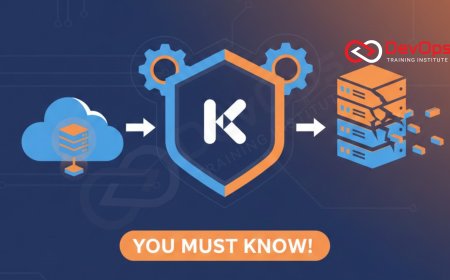
10 Kubernetes Disaster Recovery Tools You Must Know
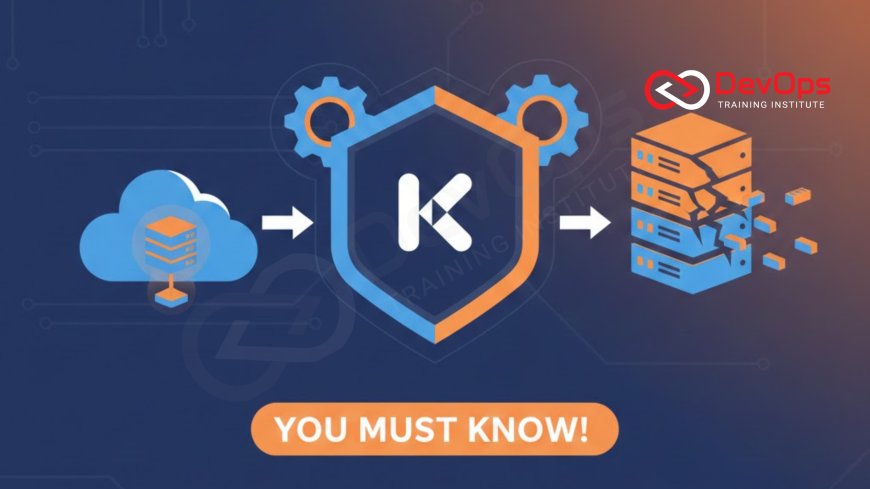
Master Kubernetes disaster recovery with this guide to the 10 most essential tools for backup, restore, and application mobility. Learn how to use Velero, Kasten K10, and advanced solutions for cluster state, persistent volume, and configuration backup. We explore strategies for defining backup policies, ensuring data integrity, and automating recovery processes to minimize RTO and RPO. These tools are crucial for achieving high availability and resilience in cloud-native environments, helping you maintain operational stability and rapid service restoration against inevitable failures, ensuring your microservices remain highly available.
Introduction
Kubernetes, the dominant platform for container orchestration, provides exceptional resilience against component failures by automating self-healing capabilities. However, Kubernetes itself is not immune to catastrophic failures. Disasters can range from data corruption of Persistent Volumes (PVs) and accidental deletion of namespaces to complete regional cloud outages or cluster-wide misconfigurations. In a high-velocity DevOps environment, the ability to quickly and reliably recover your entire application state—including the application code, configurations, and persistent data—is non-negotiable for meeting Service Level Agreements (SLAs). This capability is the essence of Kubernetes Disaster Recovery (DR).
A successful DR strategy for Kubernetes requires specialized tools because the cluster state is complex. It involves two primary components that must be backed up and restored coherently: first, the Cluster State (all Kubernetes API objects like deployments, services, and config maps) stored in etcd; and second, the Application Data stored in persistent volumes. Manual backup of these elements is fragile, slow, and prone to human error, which is why automation is essential. Effective DR tools abstract this complexity, allowing teams to define policy-driven backups and execute full cluster or application-level restores with a single command.
This guide highlights 10 essential tools and technologies that form the foundation of a robust Kubernetes disaster recovery plan. We've organized these resources across the key areas of DR—cluster state, persistent data, and enterprise-grade solutions—to provide a comprehensive roadmap for enhancing your cluster's resilience. Mastering these tools is crucial for minimizing Recovery Time Objective (RTO) and Recovery Point Objective (RPO), turning a potential disaster into a minor incident. Embracing these practices is a critical step in maturing your DevOps capabilities and managing the complexity of your release cadence with confidence.
Pillar I: Cluster State and Core Configuration Backup
The cluster state, stored in the highly-available key-value store etcd, is the blueprint for your entire application landscape. Losing etcd data means losing all metadata about your deployments, services, and security configurations. Therefore, backing up etcd reliably and securely is the most fundamental task in Kubernetes DR. These tools focus on capturing the core configuration and system metadata required to rebuild the control plane and schedule applications correctly.
1. etcdctl (Native Tool)
The `etcdctl` command-line utility is the native tool for interacting with the etcd data store. For smaller, self-managed clusters, performing a snapshot of the etcd database using `etcdctl snapshot save` is the most direct way to capture the entire cluster state. This snapshot is a single file that contains all Kubernetes resources. While this method is straightforward, it requires careful execution on the control plane nodes and manual management of the resulting file, which is why it is often augmented by other automation tools.
DR Use: Direct snapshotting and restoring of the entire cluster API state. This is typically used for control plane maintenance or recovery from non-data-related cluster corruption. It is the raw, foundational backup method that others are often built upon.
2. Velero (Application-Centric Backup)
Velero (formerly Heptio Ark) is the leading open-source tool for application-centric backup and recovery in Kubernetes. Velero simplifies DR by allowing you to back up and restore not just the persistent volumes, but also the entire set of Kubernetes resources associated with an application (e.g., Deployments, Services, ConfigMaps) in a unified operation. It uses custom resource definitions (CRDs) to define backups and stores them in cloud object storage (e.g., S3, Azure Blob). Velero's flexibility makes it a favorite for handling complex application mobility tasks like cluster migrations or replicating environments.
DR Use: Full application migration, restoration after namespace deletion, or moving workloads between clusters. Velero uses hooks and plugins to handle pre/post-backup tasks, ensuring consistency. It can also manage snapshots of cloud-provider Persistent Volumes (PVs) directly, coordinating the application state and data simultaneously. Its ability to manage complex application state makes it an essential tool for Kubernetes disaster recovery planning and execution.
3. Custom CI/CD Configuration Backup
A best practice, often used in GitOps models, involves treating all application configurations and Kubernetes manifest files (YAML) as Infrastructure as Code (IaC), stored in Git. While not a true data backup, this configuration backup ensures that you can rapidly redeploy the desired state of all applications onto a new or restored cluster. The CI/CD pipeline, often using tools like ArgoCD or Flux, serves as the deployment mechanism to re-create resources from Git. Losing the cluster is mitigated by having the application definition immediately available for redeployment.
DR Use: Rapid redeployment onto a clean cluster. This method is highly effective for stateless and configuration-heavy applications, reinforcing the importance of a well-maintained, external Git repository as the single source of truth for the entire application environment. This approach is fundamental to a robust GitOps strategy.
Pillar II: Persistent Data and Volume Protection
For stateful applications (databases, message queues, file servers), backing up the underlying data in Persistent Volumes (PVs) is the single most critical DR component. Tools in this category specialize in managing data integrity, often leveraging cloud provider native snapshots or specialized storage features for fast, consistent backups that minimize RPO.
4. Cloud Provider Native Snapshots
For Kubernetes clusters running on public clouds (AWS, Azure, GCP), the fastest and most efficient way to back up persistent data is often by leveraging the native snapshot capabilities of the underlying cloud storage (e.g., EBS snapshots on AWS, Persistent Disk snapshots on GCP). These snapshots are block-level, highly performant, and automatically managed by the cloud provider, offering near-instant RPO and fast RTO.
DR Use: Fast, incremental backups of entire PVs. While native snapshots are efficient, they require a mechanism (like Velero or Stork, see below) to coordinate the snapshot timing with the application state, ensuring data integrity by pausing the application before the snapshot is taken. This coordination is essential for stateful systems to avoid backing up corrupted data.
5. Stork (Storage Orchestrator)
Stork (Storage Orchestrator for Kubernetes) is a Kubernetes scheduler extension that enhances storage operations. While not a direct backup tool, Stork is crucial for DR because it ensures application consistency during volume snapshots. It coordinates with the Kubernetes scheduler and the underlying storage system (like Portworx) to suspend I/O operations before a snapshot, guaranteeing a clean, application-consistent point-in-time backup of the PV data, which is vital for databases.
DR Use: Ensures volume snapshots are application-consistent, making the data highly reliable upon restore. Stork is a fundamental piece of the enterprise-grade DR puzzle for stateful workloads, allowing teams to confidently use block storage snapshots for data recovery.
6. Rancher Longhorn
Longhorn is a lightweight, reliable, and powerful distributed block storage system for Kubernetes, originally developed by Rancher. Crucially, it has built-in DR features: it creates a dedicated storage class that allows volume snapshots to be taken, stored within the cluster, and periodically backed up to external object storage (S3/NFS). Its ability to replicate data across multiple nodes provides high availability, and its built-in restore capabilities simplify the RTO process considerably.
DR Use: Local high-availability and integrated, easy-to-manage backups for PV data. Longhorn is ideal for teams running Kubernetes on bare metal or private cloud where they need a fully self-contained storage and DR solution that is tightly integrated with the cluster itself.
Pillar III: Enterprise and Advanced Solutions
For organizations with strict compliance, security, and RTO/RPO requirements, enterprise-grade tools offer advanced features, guaranteed support, and streamlined operational interfaces. These solutions often provide a unified management plane for multi-cluster and multi-cloud DR.
7. Kasten K10
Kasten K10 (acquired by Veeam) is a leading commercial data management platform specifically designed for Kubernetes applications. It offers a comprehensive solution for backup, recovery, and application mobility. K10 is highly automated, discovering applications and their dependencies, automatically setting up policies, and ensuring DevSecOps compliance through integrated security and reporting features.
DR Use: Full application lifecycle management, including automated policy-driven backups, quick recovery, and sophisticated security checks on restored applications. K10’s focus on application-aware backups and its ability to handle complex compliance requirements make it a top choice for enterprise Kubernetes DR. Its integrated approach significantly simplifies the operational burden associated with multi-cluster management.
8. TrilioVault for Kubernetes
TrilioVault is another enterprise-focused data protection solution for Kubernetes applications. It provides agentless, application-centric backups, allowing the system to capture the application, its data, and its metadata in one bundle. TrilioVault is known for its multi-cloud and multi-cluster mobility features, enabling seamless migration and recovery across different Kubernetes distributions and cloud providers.
DR Use: Enterprise-grade backup and recovery with strong emphasis on application portability and tenant self-service capabilities. It offers granular control over recovery points and is often deployed in complex, large-scale enterprise environments demanding verifiable compliance and multi-cluster synchronization.
9. Application Mobility Solutions (DR/Migration)
Beyond disaster recovery, many tools focus on application mobility, which is a form of DR. Tools like Velero, Kasten, and TrilioVault allow seamless migration of applications between development, staging, and production clusters, or from one cloud to another. This capability ensures that in the event of a regional outage or a vendor lock-in scenario, the application and its data can be rapidly transplanted to a new, healthy environment. The automation involved ensures the restored application is secure, often requiring re-creation of secure host configurations such as those covered by RHEL 10 hardening best practices.
DR Use: Disaster avoidance by preemptively moving workloads, or rapid relocation after a major cloud outage. This capability is critical for achieving business continuity and minimizing downtime in scenarios where the original cluster is entirely unrecoverable. It is a necessary capability for any large-scale cloud-native architecture.
10. Automated Host Configuration Recovery
A often-overlooked aspect of DR is the recovery of the underlying worker nodes and control plane hosts. Tools like Ansible, Chef, or Terraform must be integrated into the DR plan to automatically provision and configure clean host operating systems, ensuring they meet the necessary security and performance baselines. For instance, the CI/CD pipeline should be capable of instantly provisioning a new RHEL 10 cluster node, applying all necessary security and networking configurations (like firewall rules and configuring SSH keys security in RHEL 10) before Kubernetes is reinstalled. Without this host-level automation, the application recovery phase will be significantly delayed.
DR Use: Guarantees that the underlying infrastructure is instantly and securely rebuilt, providing a trusted foundation for restoring the Kubernetes cluster and its applications. This ensures that the restored environment is compliant and stable from the OS layer up, which is a key part of the DevSecOps pipeline.
Conclusion
Disaster recovery for Kubernetes is not a luxury; it is a fundamental requirement for operating stateful, mission-critical applications in the cloud-native environment. The complexity of managing both the ephemeral cluster state (etcd) and the persistent application data (PVs) necessitates the use of specialized, automated tools. From the open-source community leader Velero and the native `etcdctl` utility to enterprise-grade, application-aware platforms like Kasten K10, the tools are available to build a robust DR strategy.
A resilient Kubernetes environment relies on a multi-layered DR plan that incorporates these tools strategically. This includes leveraging native cloud snapshots for speed, ensuring application consistency with tools like Stork, and most importantly, automating the entire process. The ultimate goal is to define clear RTO and RPO metrics and implement policy-driven automation that ensures these targets are met under all failure conditions. Furthermore, the recovery process must extend beyond the application, utilizing IaC and configuration management to instantly rebuild and harden the underlying host operating systems, providing a trusted foundation.
By implementing these 10 tools and practices, you transform Kubernetes from a merely self-healing platform into a truly resilient, business-critical system. Investing in this automation not only minimizes downtime but also provides the operational confidence necessary for high-velocity software delivery, turning potential catastrophic failures into manageable incidents. This commitment to resilience and recoverability is the hallmark of a mature DevOps organization, ensuring continuous uptime and data integrity for all services.
Frequently Asked Questions
What is the difference between RTO and RPO in Kubernetes DR?
RTO (Recovery Time Objective) is the maximum acceptable duration of downtime. RPO (Recovery Point Objective) is the maximum acceptable amount of data loss, usually measured in time.
What two components must always be backed up for a Kubernetes cluster?
You must back up the Cluster State (etcd data) and the application's Persistent Data (Persistent Volumes or PVs) for a complete recovery.
Why is Velero so popular for Kubernetes backup?
Velero is popular because it provides an open-source, application-centric solution that backs up both Kubernetes resources and persistent volumes in a unified, cloud-provider agnostic way.
How does Stork help achieve application consistency during backup?
Stork coordinates with the underlying storage system to quiesce (suspend I/O) the application before taking a volume snapshot, ensuring the data is clean and highly reliable upon restore.
What role does IaC (e.g., Ansible, Terraform) play in Kubernetes disaster recovery?
IaC is used to automatically provision and configure clean worker nodes and host operating systems after a failure, providing a secure, reliable foundation for the restored cluster.
What is the best way to back up ephemeral cluster resources?
The best way is to use a GitOps strategy, where all application manifest files (YAML) are stored in Git, serving as the single source of truth for all resource definitions.
What is the primary advantage of using Kasten K10 over open-source tools?
Kasten K10 provides enterprise-grade features, guaranteed support, automated discovery of application dependencies, and sophisticated security/compliance reporting in a unified platform, simplifying operations.
Why must the pipeline verify RHEL 10 hardening best practices during host recovery?
The recovery pipeline must verify host hardening to ensure the restored foundation is secure against known vulnerabilities and adheres to the security baseline before application services are restarted.
How do cloud provider native snapshots accelerate the recovery process?
Native snapshots (e.g., EBS) are block-level and incremental, making them extremely fast to create and restore, thereby directly reducing the Recovery Time Objective (RTO).
What is application mobility in the context of disaster recovery?
Application mobility is the ability to seamlessly migrate or relocate an application and its data from one cluster or cloud region to another, allowing for rapid relocation after a major outage.
How does RHEL 10 log management relate to disaster recovery?
Effective log management ensures that audit trails and diagnostic logs survive a cluster failure, providing crucial forensic data needed to understand the cause of the disaster and verify recovery success.
What is the primary risk of relying on manual etcd backups?
Manual etcd backups are slow, prone to human error, lack consistency checks, and require manual storage management, making them unreliable for critical, frequent DR operations.
How does an observability pillar help in post-disaster validation?
Metrics and traces are essential for validating the health and performance of the restored application and confirming that all services are functioning correctly and meeting established SLOs.
What is the security implication of recovering a cluster?
The security implication is ensuring that the restored cluster only accepts verified, signed container images, and that host security features, like SELinux, are correctly configured from the moment the new hosts are provisioned, preventing the restoration of a previously compromised state.
Why must the cluster manifest security be verified in the CI/CD pipeline?
The CI/CD pipeline must verify the security of the cluster manifests as part of the continuous threat modeling to ensure that any security flaws are fixed before the cluster resources are recreated, preventing the reintroduction of known vulnerabilities.
What's Your Reaction?
 Like
0
Like
0
 Dislike
0
Dislike
0
 Love
0
Love
0
 Funny
0
Funny
0
 Angry
0
Angry
0
 Sad
0
Sad
0
 Wow
0
Wow
0

![100+ Azure DevOps Interview Questions and Answers [Updated 2025]](https://www.devopstraininginstitute.com/blog/uploads/images/202509/image_140x98_68c40aa9a3834.jpg)






![Future Scope of DevOps Careers in Pune [Updated 2025]](https://www.devopstraininginstitute.com/blog/uploads/images/202510/image_140x98_68e3a84652312.jpg)