

![Kong Interview Preparation Guide [2025]](https://www.devopstraininginstitute.com/blog/uploads/images/202509/image_430x256_68dbb95326997.jpg)

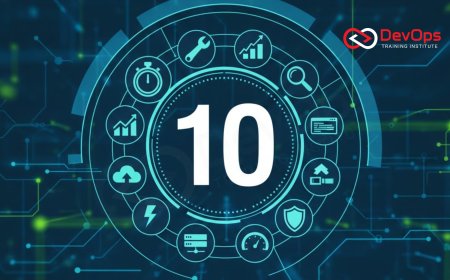
10 Must-Have Tools for Terraform Productivity
Supercharge your Infrastructure as Code (IaC) workflow with the 10 most essential tools for Terraform productivity in 2025. This guide details powerful solutions for security validation, policy enforcement, cost estimation, and code organization, going beyond the basic CLI commands. From linters and static analysis tools like TFLint and Checkov to orchestration wrappers and cloud cost management, learn how to integrate these tools into your CI/CD pipeline to write more reliable, cost-effective, and secure Terraform configurations, significantly boosting team collaboration and efficiency in high-velocity DevOps environments.
Introduction
Terraform has become the undisputed standard for Infrastructure as Code (IaC), allowing teams to define, provision, and manage cloud resources using human-readable HCL. However, managing complex, large-scale infrastructure requires more than just the basic terraform init, plan, and apply commands. To truly boost productivity, enhance reliability, and enforce security across a growing codebase, modern DevOps teams rely on an ecosystem of specialized tools that integrate directly with Terraform.
These specialized tools transform the Terraform workflow from a collection of manual CLI commands into an automated, collaborative, and secure pipeline. They address critical challenges inherent in IaC at scale: managing configuration duplication, enforcing compliance policies before deployment, estimating cloud costs, and ensuring that infrastructure changes are thoroughly tested. Integrating these tools shifts validation left, catching errors and policy violations during the development phase rather than after a costly, time-consuming deployment failure.
This guide breaks down the 10 most essential, must-have tools for any Terraform practitioner looking to maximize their productivity in 2025. We will cover productivity enhancers for code organization, security and compliance automation, cost governance, and advanced deployment workflows. By adopting these tools, you can ensure your Terraform code is always clean, compliant, cost-effective, and ready for reliable deployment in any high-velocity environment, significantly accelerating your team's development and operational efficiency. Mastering these tools is crucial for scaling your IaC practice and moving into advanced deployment strategies.
Productivity I: Code Organization and Modularity
As Terraform codebases grow, they often suffer from configuration duplication and sprawl, which severely hinders productivity. The key to maintaining a clean, scalable, and manageable codebase lies in robust modularity and adhering to the DRY (Don't Repeat Yourself) principle. The following tools are essential for managing complexity and ensuring that Terraform configurations are reusable and maintainable across multiple environments.
1. Terragrunt
Terragrunt is a thin, open-source wrapper around Terraform that addresses the challenge of managing multi-environment, multi-module setups. It helps keep your Terraform configurations DRY by allowing you to define a single root module and reuse it across multiple environments (dev, staging, prod). Terragrunt automates the creation of separate state files and manages remote backend configuration boilerplate, which significantly reduces duplication and improves maintainability.
Productivity Boost: Reduces boilerplate code, centralizes state configuration, and allows single-command execution across multiple related modules (e.g., deploying the entire 'networking' stack across all environments simultaneously). This streamlining significantly cuts down on context switching and manual configuration tasks that often slow engineers down, making it an essential tool for container orchestration setups that require repeatable environments.
2. TFLint
TFLint is a highly focused linter for Terraform. While terraform validate only checks HCL syntax correctness, TFLint goes further, checking code for adherence to best practices, potential errors, and conventions that the core CLI ignores. This includes checking for deprecated syntax, unused variables, and identifying potential resource provider-specific issues (e.g., using an incorrect AWS instance type or region-specific configurations).
Productivity Boost: Catches non-syntax errors and bad practices during local development or in a pre-commit hook, long before a costly terraform plan is run in the CI pipeline. This shift-left approach to quality ensures code is clean, consistent, and error-free, saving hours of debugging time during deployment validation. TFLint ensures your code is robust and follows best practices, reducing the chance of runtime errors.
Productivity II: Security and Compliance Automation
Security and compliance are non-negotiable, but checking them manually is a major time sink and a source of human error. Policy-as-Code tools automate these checks, integrating security as a mandatory, instantaneous gate in the development process. Integrating these tools ensures that infrastructure is secure by design, preventing the provisioning of risky configurations into any environment.
3. Checkov
Checkov is an open-source static code analysis tool specifically designed for IaC security and compliance. It scans Terraform files (along with Kubernetes, CloudFormation, and others) and checks them against hundreds of built-in policies to detect common misconfigurations, such as open security groups, unencrypted databases, or overly broad IAM permissions. It is often built using a Python policy-as-code framework, which can be highly accessible to DevOps engineers, providing granular security insights for your infrastructure. Achieving reliable deployment requires validating every layer of your stack.
Productivity Boost: Provides immediate, actionable feedback on security risks directly in the developer's terminal or pull request. By acting as a non-blocking gate, it empowers developers to fix security flaws instantly, turning security into a quick coding fix rather than a lengthy compliance audit later in the pipeline. It’s an essential part of DevSecOps practices, enforcing compliance early and automatically.
4. Open Policy Agent (OPA)
OPA is a general-purpose, open-source policy engine that allows you to codify governance policies using a declarative language called Rego. While Checkov is purpose-built for scanning IaC, OPA is often used within automation platforms (like Terraform Cloud or Spacelift) to enforce complex, custom rules against the execution plan itself (the output of terraform plan).
Productivity Boost: Enables complex, organization-specific compliance rules that are enforced at the plan stage, preventing the application of non-compliant infrastructure. OPA gives teams fine-grained control over what changes are allowed, streamlining the approval process and eliminating manual compliance reviews. OPA is the tool of choice for enforcing strict policies on API Gateways or database configurations before deployment.
5. Terrascan
Terrascan is another static code analyzer that scans IaC for security and compliance issues across multiple providers, similar to Checkov but with a different focus on policies and integrations. Terrascan's strength lies in its extensive policy library and its flexible integration with various CI/CD tools, making it easy to adopt into existing pipelines, ensuring a comprehensive security posture across the entire codebase.
Productivity Boost: Offers rapid, comprehensive security coverage across Terraform and other IaC types. Its integration capabilities allow it to be easily deployed as a mandatory security gate in the DevOps continuous delivery pipeline, ensuring consistent security scanning across heterogeneous infrastructure codebases. By providing fast feedback on security posture, it maintains pipeline velocity while adhering to security standards. This continuous validation is key to maintaining system integrity.
Productivity III: Automation, Testing, and Cost Control
The final set of tools focuses on automating the non-provisioning aspects of IaC: testing the infrastructure logic, estimating the financial impact of changes, and abstracting the HCL into programmable languages for enhanced testing capabilities. These tools move the IaC workflow into a true software engineering discipline, allowing for test-driven development and FinOps control. They ensure that infrastructure changes are not only secure and functional but also fiscally responsible, which is a major concern for modern cloud deployments.
6. Infracost
Infracost is a critical tool for FinOps (Cloud Financial Management). It provides cloud cost estimates for Terraform configurations directly in the CLI or within pull requests. Before applying changes, Infracost calculates the estimated monthly spend for the resources being provisioned, updated, or destroyed. This instant feedback on cost implications is vital for making fiscally sound infrastructure decisions during the design phase, streamlining development.
Productivity Boost: Enables FinOps and development teams to shift cost control left. Engineers get instant feedback on the financial impact of their infrastructure design choices, preventing expensive mistakes from reaching production and eliminating the need for separate cost analysis meetings. This instantaneous visibility allows for immediate cost optimization during the design phase, streamlining the release cadence by addressing financial concerns early, which is essential for business agility and profitability.
7. Terratest
Terratest is a Go library developed by Gruntwork for writing automated tests for infrastructure code. Unlike static analysis, Terratest runs integration tests against real, temporary infrastructure provisioned by Terraform. It verifies that the deployed resources are correctly configured, accessible, and functioning as intended before being destroyed. This end-to-end testing provides the highest level of confidence in the IaC module's correctness and reliability.
Productivity Boost: Significantly increases confidence in complex infrastructure modules by validating end-to-end functionality. Writing automated infrastructure tests with Terratest is essential for ensuring that new changes don't break existing functionality and that modules are truly reusable and reliable. This capability is vital for maintaining the stability of the DevOps continuous delivery pipeline across all environments, particularly when integrating security modules like SELinux into the deployment process.
8. CDKTF (Cloud Development Kit for Terraform)
CDKTF, developed by HashiCorp, allows developers to define Terraform infrastructure using familiar programming languages like Python, TypeScript, or Go, instead of HCL. CDKTF then synthesizes this code into standard HCL, which is executed by the Terraform CLI, effectively bridging the gap between developers and operations engineers.
Productivity Boost: Brings the benefits of general-purpose programming (loops, conditional logic, type safety, IDE support, unit testing) to IaC. This allows developer-heavy teams to use their existing skills to create complex, abstract, and highly reusable infrastructure code, improving maintainability and reducing the learning curve associated with pure HCL. It makes complex infrastructure logic easier to develop and test, accelerating development velocity.
9. Terraform-docs
Terraform-docs is a utility that automatically generates documentation for Terraform modules. It reads module input variables, outputs, and descriptions, and generates well-formatted documentation (usually in Markdown) for inclusion in README files. Good documentation is crucial for module adoption and team collaboration, which are core productivity challenges, ensuring new team members can onboard quickly and use modules correctly.
Productivity Boost: Automates the tedious task of documentation maintenance. By linking documentation generation into the CI pipeline, it ensures that module documentation is always accurate and up-to-date with the latest code, saving developers significant time and making it easier for new team members to consume existing modules effectively. Consistent documentation is essential for ensuring that security configurations are transparent, aligning with best practices like those covered in RHEL 10 hardening best practices, applied via IaC.
10. Atlantis
Atlantis is an open-source tool that automates the running of terraform plan and apply commands via Git pull requests (PRs). When a PR is opened, Atlantis automatically runs plan and posts the output as a comment. Users can then trigger apply by commenting /atlantis apply, enabling a true GitOps workflow for Terraform, making the infrastructure changes traceable and auditable directly through version control.
Productivity Boost: Automates the collaborative review and execution workflow. It centralizes execution in a secure environment, preventing engineers from running Terraform locally, which simplifies state management and credential handling. By automating plan on every PR, it dramatically speeds up code review and ensures that changes are reviewed before they can be merged and applied, enforcing strict governance and improving the security of the infrastructure change process. This ensures that only authorized, reviewed changes are executed against live environments.
Conclusion
The era of manually running unvalidated Terraform code is over. The 10 tools listed—spanning static analysis (Checkov, Terrascan), organization (Terragrunt), governance (OPA, Atlantis), testing (Terratest), and financial control (Infracost)—are essential for elevating your Terraform practice into a mature, productive, and reliable engineering discipline. These tools are designed to work together, automating the enforcement of quality and security from the developer's laptop to the live production environment. They embody the shift-left philosophy, catching errors, policy violations, and cost overruns at the earliest possible stage.
Mastering these tools is the key to unlocking true IaC productivity in 2025. By automating redundant tasks like linting and documentation, you free up engineering time for high-value work. By integrating security and cost checks directly into the pull request workflow, you embed reliability and financial responsibility into every code change, simplifying collaboration and accelerating deployments. The final goal is to create a seamless, self-governing process where infrastructure changes are predictable, safe, and efficient. This ensures your IaC strategy is resilient against common pitfalls, making your deployments faster and more reliable.
Start by integrating the basics: use TFLint for code quality and Checkov for security. Then, tackle organization with Terragrunt and deployment workflow with Atlantis. This layered approach ensures your investment in Terraform pays off by delivering infrastructure that is not just provisioned quickly, but is robust, compliant, and cost-aware, making your team highly efficient in managing modern, complex cloud infrastructure at scale. These practices are the benchmark for excellence in IaC today, and following them is the best way to accelerate your career and impact. It’s also crucial to remember the role of continuous monitoring, making use of all the observability pillars to validate the health of the provisioned infrastructure post-deployment.
Frequently Asked Questions
What is the main problem Terragrunt solves for Terraform users?
Terragrunt solves code duplication (DRY) by allowing the reuse of a single module across multiple environments while centrally managing boilerplate configurations like remote state backends.
How does Checkov enable a "shift-left" security approach?
Checkov automatically scans Terraform files for security misconfigurations during the pull request phase, giving developers immediate feedback before code is merged or deployed.
What is the difference between TFLint and Checkov?
TFLint primarily checks for HCL syntax correctness, deprecated functions, and resource errors, while Checkov checks for security and compliance policies against known vulnerabilities and best practices.
Why is Infracost considered a critical tool for DevOps productivity?
Infracost provides real-time cloud cost estimates for terraform plan changes, allowing engineers to optimize infrastructure design for cost before deployment, streamlining the release cadence by eliminating budget surprises.
What is the Rego language, and what tool uses it for Terraform?
Rego is a declarative policy language used by the Open Policy Agent (OPA) to define complex, custom governance and security policies that are enforced against the Terraform execution plan.
How does Atlantis simplify the Terraform execution workflow?
Atlantis automates terraform plan on every pull request and enables collaborators to trigger apply by commenting on the PR, centralizing execution and providing a secure, auditable workflow for DevOps continuous delivery pipeline management.
What benefits does CDKTF bring over traditional HCL?
CDKTF allows using general-purpose programming languages (Python, TypeScript) for IaC, enabling advanced features like type safety, unit testing, and IDE support that HCL lacks.
What is the purpose of Terratest in the IaC workflow?
Terratest is an automated testing framework (Go) used to deploy infrastructure (using Terraform) in a temporary environment and run integration tests against the live resources to verify correctness and functionality.
Why is automated documentation (Terraform-docs) important for productivity?
It ensures that module documentation is always up-to-date and accurate without manual effort, improving module adoption and easing team collaboration, which is a key part of configuration management best practices.
How can OpenTofu users benefit from these tools?
All these tools (Terragrunt, Checkov, TFLint, Infracost) are fully compatible with OpenTofu, providing the same productivity and security benefits to the community-driven fork of Terraform.
Why is continuous security validation crucial for IaC?
It prevents infrastructure misconfigurations (e.g., open firewalls, weak policies) from ever reaching production, mitigating risks before deployment and reinforcing the principles of secure-by-design RHEL 10 security enhancements and host hardening.
How does log management best practices apply to Terraform-provisioned infrastructure?
It ensures that logging infrastructure (e.g., logging agents, centralized log stores) is automatically provisioned and configured correctly by Terraform, providing the necessary audit trail and operational visibility for the provisioned systems.
What is the ultimate goal of implementing continuous threat modeling in the IaC pipeline?
The goal is to continuously validate security assumptions and proactively implement guardrails (via Policy-as-Code) against potential threats by analyzing the infrastructure's design and configuration before it is provisioned.
What's Your Reaction?
 Like
0
Like
0
 Dislike
0
Dislike
0
 Love
0
Love
0
 Funny
0
Funny
0
 Angry
0
Angry
0
 Sad
0
Sad
0
 Wow
0
Wow
0

![100+ Azure DevOps Interview Questions and Answers [Updated 2025]](https://www.devopstraininginstitute.com/blog/uploads/images/202509/image_140x98_68c40aa9a3834.jpg)




![Future Scope of DevOps Careers in Pune [Updated 2025]](https://www.devopstraininginstitute.com/blog/uploads/images/202510/image_140x98_68e3a84652312.jpg)