








![Kong Interview Preparation Guide [2025]](https://www.devopstraininginstitute.com/blog/uploads/images/202509/image_430x256_68dbb95326997.jpg)




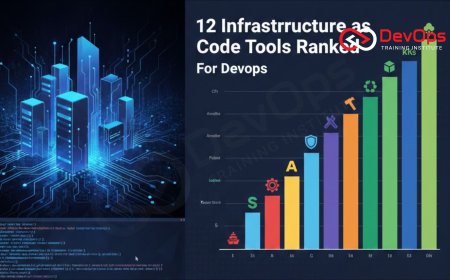
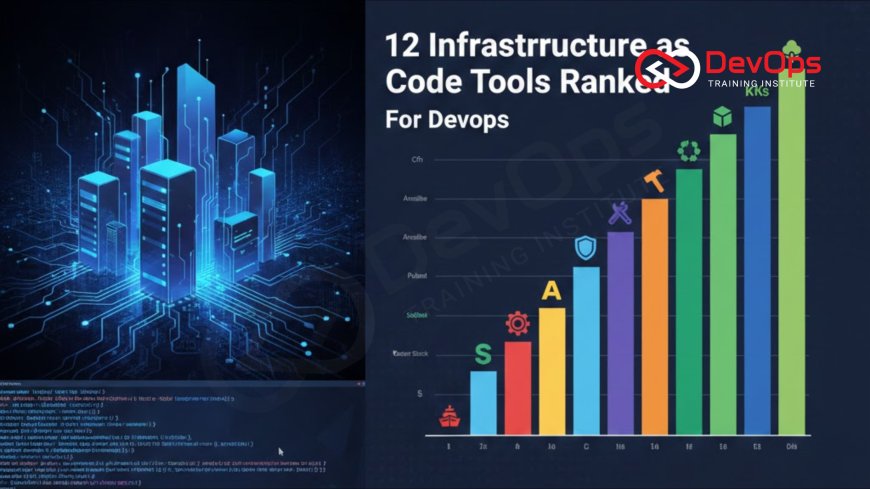
12 Infrastructure as Code Tools Ranked for DevOps
Comprehensive 2025 ranking of the 12 best Infrastructure as Code (IaC) tools: Terraform, Pulumi, AWS CDK, Crossplane, Ansible and more. Real-world comparison on ease of use, cloud support, community, and enterprise readiness.
Introduction
Infrastructure as Code has become the foundation of modern DevOps. In 2025, manually clicking in cloud consoles is considered a risk, not an option. The right IaC tool determines your team’s speed, safety, and multi-cloud flexibility. This definitive ranking evaluates the 12 most popular tools based on adoption, community strength, language support, cloud coverage, and real-world enterprise feedback. Whether you’re a beginner starting your first project or leading a Fortune 500 migration, this guide helps you choose wisely. Many of these tools store state and modules in Amazon S3 backends for collaboration and durability.
1. Terraform (HashiCorp) – Still the Undisputed King
- 950+ official providers – covers every major cloud and SaaS
- HCL language is declarative and beginner-friendly
- Terraform Cloud/Enterprise for team collaboration and policy
- Immutable infrastructure by default
- Drift detection and terraform plan safety net
- Used by 80%+ of Fortune 500
- Best choice for multi-cloud and hybrid environments
2. Pulumi – Code-First Revolution
Pulumi lets you write infrastructure in real programming languages: TypeScript, Python, Go, C#, Java. Full access to loops, conditionals, classes, and package ecosystems (npm, PyPI).
State management, secrets, and policy as code built-in. Fastest growing tool in 2025 — perfect for developers who hate HCL.
3. AWS Cloud Development Kit (CDK) – Best for AWS-Native Teams
- Write CloudFormation in TypeScript, Python, Java, C#, Go
- Constructs library with sane defaults and best practices
- Instant preview via cdk diff
- Many teams use S3 event notifications with CDK apps
- Seamless integration with AWS services
- cdk destroy actually cleans up everything
- Ideal if you’re 100% AWS
4. OpenTofu – The Open-Source Terraform Fork
Community fork after HashiCorp’s license change. 100% compatible with existing Terraform code and state. Backed by Linux Foundation and growing fast.
Same syntax, same workflow, fully open governance — gaining rapid enterprise adoption in 2025.
5. Crossplane – Kubernetes-Native Control Plane
- Turns Kubernetes into a universal cloud control plane
- Compose providers for AWS, Azure, GCP
- Composite resources let you create your own APIs
- Perfect for platform engineering teams
- Secure on-prem to cloud migration patterns
- GitOps ready with ArgoCD/Flux
- Rising star for internal developer platforms
6. AWS CloudFormation – Native & CDK for Terraform
Still powers most AWS accounts. Reliable but verbose JSON/YAML. CDK for Terraform (cdk8s) bridges the gap for Kubernetes-native apps.
Best when regulatory requirements mandate pure AWS services with no third-party dependencies.
7. Ansible – Configuration Management Turned IaC
- Agentless and simple YAML playbooks
- Excellent for server config and app deployment
- Can manage cloud resources via modules
- Monitor S3 with CloudWatch using Ansible roles
- Lower learning curve than Terraform for ops teams
- Imperative style — great for one-off tasks
8. Azure ARM / Bicep
Microsoft’s answer to CloudFormation. Bicep is the modern, clean syntax replacement for ARM JSON. Excellent Visual Studio Code integration.
Best choice if your organization is all-in on Azure.
9. Google Cloud Deployment Manager
- Native GCP tool using YAML or Python/Jinja templates
- Good integration with Google services
- Apply cost optimization patterns across clouds
- Limited community compared to Terraform
- Solid for pure GCP environments
10. Terraform CDK (cdktf)
Official HashiCorp project — write Terraform in TypeScript, Python, Java, C#, Go. Combines Pulumi flexibility with Terraform’s ecosystem and state management.
Great middle ground for teams wanting real code but loving Terraform providers.
11. Chef InSpec & Puppet – Legacy but Still Alive
- Strong in highly regulated industries (finance, healthcare)
- Excellent compliance as code
- Steep learning curve, smaller communities in 2025
- Being replaced by Terraform + Open Policy Agent in most new projects
12. Terragrunt & Terramate – Terraform Wrappers
Not standalone tools but essential wrappers that solve Terraform’s DRY and multi-environment problems. Most large Terraform deployments use one of these.
Terramate adds CDK-like constructs and better IDE support.
2025 IaC Tools Ranking Table
| Rank | Tool | Best For | Language | Cloud Score |
|---|---|---|---|---|
| 1 | Terraform | Multi-cloud | HCL | 10/10 |
| 2 | Pulumi | Developers | Real code | 9/10 |
| 3 | AWS CDK | AWS teams | TypeScript++ | 8/10 |
| 4 | OpenTofu | Open-source fans | HCL | 9/10 |
| 5 | Crossplane | Platform teams | YAML+K8s | 8/10 |
Conclusion
In 2025, Terraform remains the safe default for most organizations, but Pulumi and AWS CDK are closing the gap fast for developer-centric teams. OpenTofu and Crossplane are the ones to watch for open-source and platform-engineering futures. Pick based on your team’s language preference, cloud strategy, and governance needs — not hype. The best tool is the one your team actually uses consistently and safely.
Frequently Asked Questions
Should I switch from Terraform to Pulumi?
Only if your team strongly prefers real programming languages and accepts higher complexity.
Is OpenTofu ready for production?
Yes — many enterprises already migrated successfully in 2024–2025.
Can I use multiple IaC tools together?
Yes. Many teams use Terraform for infra + Pulumi/CDK for app-level resources.
Is CloudFormation dead?
No, but CDK has largely replaced raw templates.
What’s the future of IaC?
Platform engineering with Crossplane-style + AI-assisted code generation.
What's Your Reaction?
 Like
0
Like
0
 Dislike
0
Dislike
0
 Love
0
Love
0
 Funny
0
Funny
0
 Angry
0
Angry
0
 Sad
0
Sad
0
 Wow
0
Wow
0

![100+ Azure DevOps Interview Questions and Answers [Updated 2025]](https://www.devopstraininginstitute.com/blog/uploads/images/202509/image_140x98_68c40aa9a3834.jpg)






![Future Scope of DevOps Careers in Pune [Updated 2025]](https://www.devopstraininginstitute.com/blog/uploads/images/202510/image_140x98_68e3a84652312.jpg)