















![Kong Interview Preparation Guide [2025]](https://www.devopstraininginstitute.com/blog/uploads/images/202509/image_430x256_68dbb95326997.jpg)









10 Tools to Manage Kubernetes Secrets Safely
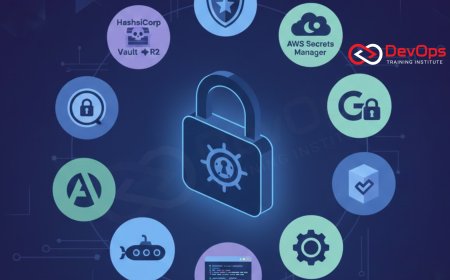
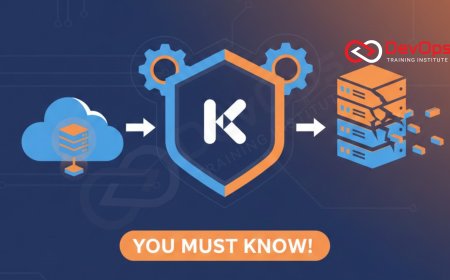
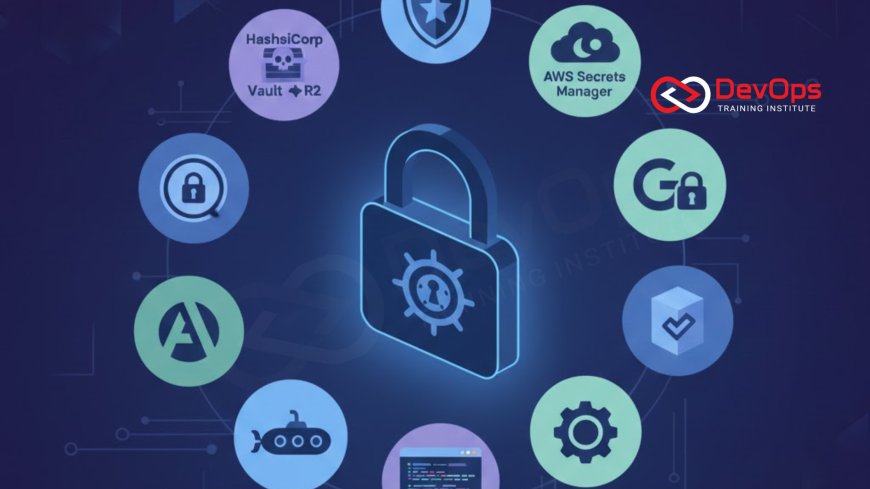
Discover the top ten essential tools for managing Kubernetes secrets safely in the modern cloud-native era of twenty twenty-six. This comprehensive guide provides beginner-friendly insights into protecting sensitive data like API keys and passwords using advanced solutions such as HashiCorp Vault, External Secrets Operator, and cloud-native managers. Learn how to eliminate secret sprawl, implement robust encryption, and automate credential rotation to ensure your production clusters remain secure and compliant. Whether you are building your first microservice or managing global enterprise workloads, these expert-recommended tools and best practices will empower your DevOps team to maintain peak security and reliability in today’s increasingly complex and automated digital landscape.
Introduction to Kubernetes Secret Management
In the high-stakes world of modern software delivery, keeping sensitive information out of the wrong hands is a primary concern for every engineering team. Kubernetes secrets are designed to store and manage sensitive data, such as passwords, OAuth tokens, and SSH keys, more securely than putting them directly in a Pod definition or a container image. However, by default, Kubernetes secrets are only base64 encoded, not encrypted, meaning that anyone with access to the cluster's etcd database or the API can easily decode them. This creates a significant security gap that requires specialized tools to close effectively in a production environment.
As we navigate through twenty twenty-six, the "secrets sprawl" problem has become more complex with the rise of multi-cloud architectures and thousands of microservices. Managing these credentials manually is no longer a viable option and often leads to catastrophic data breaches. Adopting a robust secret management strategy involves moving beyond native Kubernetes objects toward advanced, automated solutions that provide encryption at rest, centralized auditing, and dynamic credential generation. This guide explores ten essential tools that will help you harden your infrastructure and ensure your sensitive data remains protected throughout the entire software development lifecycle.
The Power of HashiCorp Vault for Enterprises
HashiCorp Vault remains the gold standard for enterprise grade secret management due to its comprehensive feature set and proven reliability. It provides a centralized platform to securely store, access, and deploy secrets across distributed systems. One of its most powerful features is dynamic secrets, which are generated on-demand and have a short time-to-live (TTL). For example, instead of a static database password, Vault can create a unique, temporary credential for a specific application pod and automatically revoke it once the task is complete, significantly reducing the window of opportunity for an attacker.
Integrating Vault with Kubernetes is typically achieved using the Vault Secrets Operator or the Vault Agent Injector sidecar. These methods allow your applications to consume secrets without needing to know about Vault's API, keeping your code clean and portable. By utilizing GitOps to manage your Vault policies and configurations, you ensure that your security posture is version-controlled and auditable. This level of sophistication is what enables large organizations to maintain continuous synchronization between their security requirements and their rapid deployment cycles in the cloud.
Leveraging the External Secrets Operator (ESO)
The External Secrets Operator (ESO) has become an essential tool for teams that want to bridge the gap between cloud-native secret managers and Kubernetes. Instead of forcing developers to interact with multiple proprietary APIs, ESO acts as a synchronization engine that fetches secrets from external providers—like AWS Secrets Manager or Azure Key Vault—and injects them into the cluster as native Kubernetes secrets. This allows your workloads to use standard environment variables or volume mounts while the actual "source of truth" remains safely stored in a hardened, cloud-managed vault.
This approach simplifies the developer experience by providing a unified way to manage secrets regardless of the underlying cloud platform. It also supports complex multi-cluster environments where secrets need to be synchronized across different regions or providers. By using admission controllers to validate that all secrets in a namespace are managed through ESO, security teams can ensure that no "loose" or unencrypted secrets are accidentally created by hand. It is a powerful technique for maintaining compliance as code and reducing the operational overhead of modern DevOps teams.
Bitnami Sealed Secrets for GitOps Workflows
Bitnami Sealed Secrets addresses a specific challenge in modern DevOps: how to store secrets safely within a public or private Git repository. In a traditional GitOps workflow, everything is defined as code, but committing secrets to Git is a major security violation. Sealed Secrets solves this by using asymmetric encryption. You use a client-side utility called kubeseal to encrypt your secret into a "SealedSecret" object that can only be decrypted by the controller running inside your specific Kubernetes cluster. This means you can safely commit the encrypted file to your repository along with your application manifests.
This tool is highly favored for its simplicity and its perfect alignment with continuous synchronization principles. Since the decryption key never leaves the cluster, the risk of credential leakage from the repository is virtually eliminated. It is an ideal solution for teams that want to keep their entire infrastructure definition in Git without the complexity of a full-scale vault. Integrating secret scanning tools alongside Sealed Secrets provides an additional layer of safety, ensuring that no unencrypted data accidentally slips into your version control history during a busy release cycle.
Comparison of Leading Kubernetes Secret Management Tools
| Tool Name | Primary Category | Key Strength | Best For |
|---|---|---|---|
| HashiCorp Vault | Full-Scale Platform | Dynamic Secrets | Complex Enterprise Environments |
| External Secrets Operator | Sync Engine | Cloud Provider Integration | Multi-Cloud Managed Secrets |
| Sealed Secrets | GitOps Tool | Safe Git Storage | Dev-Focused GitOps Pipelines |
| AWS Secrets Manager | Cloud Native | Automated AWS Rotation | AWS-First Infrastructure |
| Infisical | Developer Friendly | Intuitive UI & API | Modern Startups & Teams |
Modern Developer-First Solutions: Doppler and Infisical
As the DevOps landscape evolves, a new wave of tools like Doppler and Infisical is focusing on the developer experience by making secret management as easy as possible. These tools provide an intuitive central dashboard where teams can manage their environment variables and secrets across different projects and environments (dev, staging, production). They offer robust CLI tools and native Kubernetes operators that automatically sync changes to your pods in real-time. This eliminates the manual "restart dance" that often occurs when a simple API key needs to be updated in a running cluster.
Infisical, in particular, has gained traction as an open-source alternative that supports both self-hosted and cloud versions. It offers features like secret versioning, branching, and approval workflows, which are essential for maintaining deployment quality in fast-moving teams. By utilizing ChatOps techniques, these platforms can notify the entire engineering team whenever a secret is changed, ensuring that everyone is aligned on the latest configuration state. These tools are perfect for high-growth startups that need enterprise-grade security without the steep learning curve of more traditional vault solutions.
Cloud-Native Managers: AWS, Azure, and GCP
For organizations already deeply committed to a specific cloud ecosystem, using the native secret manager—such as AWS Secrets Manager, Azure Key Vault, or Google Secret Manager—is often the most efficient path. These services are fully managed, highly available, and deeply integrated with the cloud provider's Identity and Access Management (IAM) systems. This allows you to grant access to secrets based on the specific IAM role of your Kubernetes pod, following the principle of least privilege perfectly. By choosing architecture patterns that leverage these managed services, you offload the security burden of infrastructure management to the cloud provider.
Managed cloud secret managers also provide built-in automation for secret rotation, which is a critical incident handling best practice. For example, AWS Secrets Manager can automatically update a database password in both the RDS instance and the secret store, ensuring that your application always has the correct credentials without any manual intervention. When combined with the continuous verification of your deployment pipelines, these services ensure that your security gates are always closed to unauthorized traffic. They provide a rock-solid foundation for any organization that prioritizes stability and uptime in a busy cloud environment.
Specialized Tools for High-Security Environments
- CyberArk Conjur: An enterprise-grade solution designed for massive scale and complex hybrid environments, offering deep visibility and control over all privileged identities.
- Akeyless: A SaaS-based vault platform that uses "fragmented key" technology to ensure that even the provider never has access to your full unencrypted secrets.
- Keeper Secrets Manager: A zero-trust, zero-knowledge platform that integrates seamlessly with existing password management tools to protect technical credentials.
- OpenBao: A community-driven, open-source fork of Vault that aims to maintain the original features and license for teams committed to open-source software and digital sovereignty.
- Cert-manager: While primarily for SSL/TLS certificates, it is an essential secret management tool for automating the lifecycle of cryptographic identities within Kubernetes.
- Secrets Store CSI Driver: A vendor-neutral driver that allows Kubernetes to mount secrets from various external stores directly as volumes into application pods.
- Sops (Secrets Operations): A powerful command-line tool from Mozilla that allows you to encrypt and decrypt entire files using cloud-based KMS keys for safe Git storage.
Choosing the right combination of these tools depends on your specific regulatory requirements and existing technical stack. Many successful teams use a "layered" approach, where a central vault like Akeyless or Conjur serves as the primary root of trust, while a Kubernetes-native tool like cert-manager handles short-lived identities at the edge. By integrating who drives cultural change strategies, you can ensure that security becomes a shared responsibility across your development and operations teams, rather than just a final hurdle to pass before production.
Conclusion on Safe Secret Management
In conclusion, the ten tools discussed in this guide provide a robust roadmap for any DevOps team looking to manage Kubernetes secrets safely in twenty twenty-six. From the enterprise power of HashiCorp Vault to the GitOps elegance of Sealed Secrets and the cloud-native efficiency of AWS Secrets Manager, each tool addresses a different layer of the security challenge. By moving beyond basic base64 encoding and embracing automated, encrypted, and versioned secret management, you are building a resilient technical foundation that protects your organization's most valuable digital assets from increasingly sophisticated cyber threats.
Looking forward, the rise of AI-augmented DevOps will likely bring even more intelligent automation to our secret management workflows, predicting potential exposures before they occur. Staying informed about AI augmented devops trends will ensure that your security posture remains modern and effective. Ultimately, the goal is to create a frictionless environment where security is built-in by default, allowing your developers to focus on innovation while the tools handle the operational heavy lifting. Embrace these ten tools today to transform your secret management from a potential liability into a major competitive advantage for your business.
Frequently Asked Questions
What is the main problem with native Kubernetes secrets?
Native Kubernetes secrets are only base64 encoded, not encrypted, meaning they can be easily decoded by anyone with access to the cluster.
Why should I use an external secret manager like HashiCorp Vault?
External managers provide advanced features like encryption at rest, automated secret rotation, detailed audit logs, and dynamic credential generation for security.
How does the External Secrets Operator (ESO) improve security?
ESO syncs secrets from secure external stores into Kubernetes, allowing pods to use native secrets while keeping the master data in a vault.
What is Bitnami Sealed Secrets used for?
Sealed Secrets allows you to safely store encrypted secrets in a Git repository, ensuring only the cluster can decrypt and use them.
Is it safe to store secrets in environment variables?
It is common but risky, as environment variables can be leaked in logs, process dumps, or through the Kubernetes API if not properly restricted.
What are dynamic secrets in the context of Vault?
Dynamic secrets are unique, short-lived credentials generated on-demand for an application and automatically revoked after a set period to minimize risk.
How do cloud-native secret managers like AWS Secrets Manager help?
They offer fully managed, highly available storage and automated rotation for credentials, deeply integrated with the cloud's IAM security system and policies.
What role does secret rotation play in incident handling?
Regular rotation limits the usefulness of a leaked credential, as the old password will expire automatically even if the breach is not detected.
Can I manage SSL certificates using Kubernetes secret tools?
Yes, tools like cert-manager specifically manage the lifecycle of SSL/TLS certificates, storing the resulting keys securely as Kubernetes secrets for your apps.
What is secret sprawl and why is it dangerous?
Secret sprawl is when credentials are scattered across many different systems and repositories, making them hard to track, secure, and update effectively.
How do secret scanning tools protect my CI/CD pipeline?
Secret scanning tools automatically check your code and configurations for hardcoded passwords or API keys, blocking any insecure commits before they reach production.
Do these tools work with on-premises Kubernetes clusters?
Yes, most of these tools, including HashiCorp Vault and Infisical, offer self-hosted options that work perfectly in private data centers and clusters.
What is the difference between encryption in transit and at rest?
Encryption in transit protects data as it moves across the network, while encryption at rest protects data when it is stored on disk.
How can ChatOps improve secret management workflows?
ChatOps provides real-time notifications in chat channels whenever secrets are modified, allowing for faster collaboration and visibility across the entire engineering team.
What's Your Reaction?
 Like
0
Like
0
 Dislike
0
Dislike
0
 Love
0
Love
0
 Funny
0
Funny
0
 Angry
0
Angry
0
 Sad
0
Sad
0
 Wow
0
Wow
0





![100+ Azure DevOps Interview Questions and Answers [Updated 2025]](https://www.devopstraininginstitute.com/blog/uploads/images/202509/image_140x98_68c40aa9a3834.jpg)






![Future Scope of DevOps Careers in Pune [Updated 2025]](https://www.devopstraininginstitute.com/blog/uploads/images/202510/image_140x98_68e3a84652312.jpg)