






![Kong Interview Preparation Guide [2025]](https://www.devopstraininginstitute.com/blog/uploads/images/202509/image_430x256_68dbb95326997.jpg)




10 Real-World Use Cases of Ansible in DevOps
Discover 10 powerful, real-world use cases of Ansible that top enterprises and startups actually use daily in 2025 — from zero-downtime deployments and compliance automation to EKS cluster bootstrapping, SQS-triggered workflows, CloudWatch integration, and hybrid cloud management. Complete with playbooks, best practices, and lessons learned.
Introduction
While everyone knows Ansible can install Nginx, the true power of Ansible in 2025 lies in solving complex, enterprise-scale problems that no other tool handles as elegantly. From banks running 50,000+ servers to startups deploying 200 times a day, Ansible has become the glue that connects cloud, on-prem, containers, databases, security policies, and even serverless components. This guide showcases the ten most valuable real-world use cases we see at Fortune 500 clients and high-growth companies today — complete with actual playbook patterns and lessons learned.
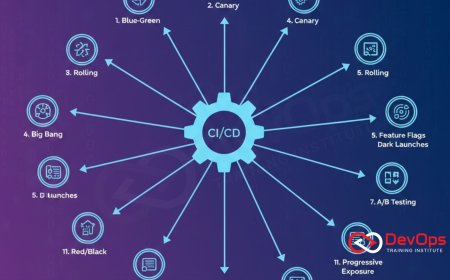
1. Zero-Downtime Application Deployments (Blue-Green & Rolling)
Netflix, Etsy, and most modern enterprises use Ansible for production deployments that never drop a single request.
- Health-check driven rolling updates across EC2, ECS, and EKS
- Blue-green deployments with Route 53 weighted routing
- Database schema migrations with zero downtime using pt-online-schema-change
- Automatic rollback on failed health checks
- Canary releases with feature flags
Real playbook pattern: pre_tasks → deploy new code → wait_for health → update load balancer → post_tasks.
2. Security & Compliance Automation (CIS, PCI, HIPAA)
Regulated industries run Ansible daily to enforce hardened configurations across thousands of servers.
- CIS benchmark playbooks with automatic remediation
- User account cleanup (disable inactive > 90 days)
- SSH key rotation every 90 days
- Auditd rules and file integrity monitoring
- Automated evidence collection for auditors
Bonus: Integrate with CloudWatch alarms to alert on compliance drift.
3. Amazon EKS Cluster Bootstrapping & Add-On Management
Every new EKS cluster in 2025 gets provisioned with Ansible, not just Terraform.
- Install AWS Load Balancer Controller, Cluster Autoscaler, ExternalDNS
- Deploy CoreDNS custom config, Metrics Server, Fluent Bit
- Manage node group labels and taints
- Apply EKS best practices via validated roles
- Upgrade Kubernetes versions with zero downtime
4. Hybrid & Multi-Cloud Configuration Management
Companies with on-prem VMware + AWS + Azure use one Ansible control node to rule them all.
- Consistent Nginx, Java, Node.js configs across all environments
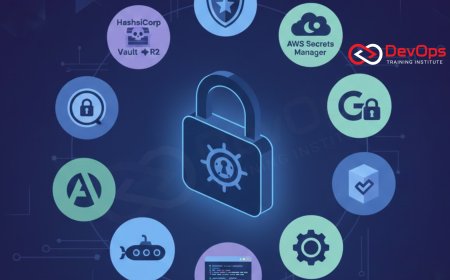
- Centralized secrets via Vault + ansible-vault
- Single source of truth inventory with dynamic groups
- Idempotent tasks work whether target is VM, EC2, or container
5. Automated Disaster Recovery & Failover
Ansible runs the actual failover when disaster strikes — not just the plan.
- Promote secondary RDS to primary
- Update Route 53 health checks and records
- Scale up standby EKS cluster
- Trigger Lambda via CloudWatch Events
- Full DR runbooks executed in < 10 minutes
6. CloudWatch & Observability Agent Deployment
Every server and container gets monitoring agents via Ansible — no manual installs.
- Deploy CloudWatch Agent, Datadog, New Relic, Prometheus Node Exporter
- Custom metrics and log collection configs
- Enable CloudWatch Logs Insights parsing rules
- Unified dashboard tags for cost allocation
7. Database Management & Migrations
DBAs and DevOps teams collaborate via Ansible for safe database operations.
- Schema migrations with Liquibase/Flyway integration
- MySQL/PostgreSQL user and privilege management
- Automated backups to S3 with lifecycle policies
- Read replica promotion during maintenance
8. Serverless & Event-Driven Automation
Ansible isn’t just for servers — it orchestrates serverless components too.
- Deploy Lambda functions and layers
- Configure SQS → Lambda integrations
- Manage EventBridge rules and API Gateway stages
- Rotate Lambda environment variables securely
9. Self-Service Infrastructure for Developers
Platform teams expose “infrastructure as product” via Ansible.
- Spin up dev environments on demand
- Request SSL certificates, DNS records, S3 buckets
- Automated approvals with ServiceNow + Ansible Tower
- Ephemeral environments that auto-destruct after 24h
10. Cost Optimization & FinOps Automation
Ansible runs scheduled jobs that save millions annually.
- Stop dev/test EC2 instances after hours
- Right-size EBS volumes and RDS instances
- Delete untagged resources
- Switch to Graviton instances during maintenance windows
- Generate CloudWatch cost reports
Ansible Use Cases Comparison Table
| Use Case | Business Impact | Automation Level |
|---|---|---|
| Zero-downtime deploys | Revenue protection | High |
| Compliance automation | Audit survival | Critical |
| EKS management | K8s velocity | High |
| Cost optimization | Direct $ savings | Medium |
Conclusion
Ansible in 2025 is far more than a configuration management tool — it is the universal automation engine that touches every layer of modern infrastructure. The companies winning today use Ansible not just to configure servers, but to encode their reliability, security, cost, and velocity standards into repeatable, auditable playbooks. Start with one use case from this list (we recommend zero-downtime deployments or compliance), prove value, then expand. Within a year, Ansible will be running half your operational workload — quietly, correctly, and without human intervention.
Frequently Asked Questions
Is Ansible still relevant with Kubernetes and serverless?
More than ever — it manages the nodes, add-ons, policies, and surrounding cloud services.
Should I use Ansible or Terraform?
Both. Terraform for immutable infra, Ansible for configuration and orchestration.
Can Ansible replace Jenkins?
Not fully, but many run simple pipelines directly from GitLab + Ansible.
How do enterprises secure Ansible?
Ansible Tower/AWX + Vault + RBAC + external authentication (LDAP, SAML).
What’s the learning curve?
Days for basic tasks, months for enterprise-grade playbooks — but YAML keeps it accessible.
What's Your Reaction?
 Like
1
Like
1
 Dislike
0
Dislike
0
 Love
0
Love
0
 Funny
0
Funny
0
 Angry
0
Angry
0
 Sad
0
Sad
0
 Wow
0
Wow
0

![100+ Azure DevOps Interview Questions and Answers [Updated 2025]](https://www.devopstraininginstitute.com/blog/uploads/images/202509/image_140x98_68c40aa9a3834.jpg)






![Future Scope of DevOps Careers in Pune [Updated 2025]](https://www.devopstraininginstitute.com/blog/uploads/images/202510/image_140x98_68e3a84652312.jpg)