















![Kong Interview Preparation Guide [2025]](https://www.devopstraininginstitute.com/blog/uploads/images/202509/image_430x256_68dbb95326997.jpg)








Top 12 Kubernetes Gateways for API Traffic
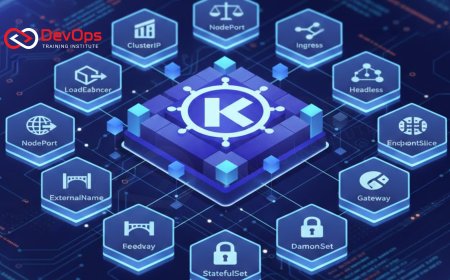
Explore the leading Kubernetes Gateways designed to efficiently manage and secure API traffic in modern containerized environments. This comprehensive guide covers key features, benefits, and use cases for twelve prominent gateway solutions, helping you choose the best option for your microservices architecture. Understand how these gateways enhance load balancing, traffic routing, security policies, and observability, ensuring robust and scalable API management within your Kubernetes clusters. Ideal for developers, architects, and DevOps professionals seeking to optimize their API infrastructure.

Introduction
In the rapidly evolving landscape of cloud-native applications, Kubernetes has emerged as the de facto standard for orchestrating containerized workloads. As applications transition to microservices architectures, the complexity of managing API traffic, from external clients to internal services, grows exponentially. This is where Kubernetes gateways become indispensable. A Kubernetes gateway acts as the entry point for all incoming API requests, providing a centralized point for traffic management, security enforcement, and observability. It is much more than a simple load balancer; it is a critical component that shapes how your services interact with the outside world and with each other.
Choosing the right Kubernetes gateway is a pivotal decision that can significantly impact the performance, security, and scalability of your applications. With a plethora of options available, each offering distinct features and architectural approaches, navigating this choice can be challenging. This comprehensive guide aims to simplify that decision by exploring 12 of the top Kubernetes gateways for API traffic. We will delve into their core functionalities, highlight their unique strengths, and discuss scenarios where they excel. Whether you are building a new microservices platform or optimizing an existing one, understanding these gateways is crucial for building robust and efficient Kubernetes deployments.
The Role of an API Gateway in Kubernetes
An API Gateway in Kubernetes serves as a vital intermediary between external clients and the microservices running within your cluster. Its primary role is to act as a reverse proxy, routing incoming requests to the appropriate backend services. However, its functionalities extend far beyond mere traffic forwarding. API gateways are instrumental in implementing a wide array of cross-cutting concerns that are essential for modern distributed systems. They offload these responsibilities from individual microservices, allowing developers to focus purely on business logic, thereby streamlining development and maintenance efforts.
Key responsibilities of a Kubernetes API Gateway include load balancing requests across multiple instances of a service to ensure high availability and performance. It also handles advanced traffic routing capabilities, such as path-based routing, host-based routing, and weighted routing, which are crucial for A/B testing, blue/green deployments, and canary releases. Security is another major aspect, with gateways providing features like authentication, authorization, rate limiting, and DDoS protection, safeguarding your APIs from malicious access and overuse. Furthermore, gateways offer a single point for observability, logging, and metrics collection, giving you valuable insights into API traffic patterns and service health. This centralized management greatly simplifies operational tasks and enhances the overall resilience of your Kubernetes environment.
Core Features to Look for in a Kubernetes Gateway
When evaluating Kubernetes gateways for your API traffic, several core features stand out as essential for robust and scalable microservices architectures. These features collectively contribute to the gateway's ability to manage, secure, and monitor API interactions effectively. A good gateway should not only handle basic traffic routing but also provide advanced capabilities that address the complexities of cloud-native deployments. Prioritizing these features during your selection process will ensure that the chosen solution aligns with your current and future operational needs and development paradigms.
Here are some of the critical features to consider:
- Traffic Management: This includes sophisticated load balancing algorithms, advanced routing rules (e.g., header-based, query parameter-based), traffic splitting for canary deployments, and circuit breakers for fault tolerance. The ability to dynamically adjust traffic flow is paramount for continuous delivery.
- Security: Look for robust authentication and authorization mechanisms (JWT validation, OAuth2 integration), rate limiting to prevent abuse, IP whitelisting/blacklisting, WAF (Web Application Firewall) capabilities, and TLS termination to secure communication.
- Observability: Comprehensive logging, metrics (Prometheus integration is common), and distributed tracing capabilities are vital for monitoring API performance, troubleshooting issues, and understanding service dependencies.
- Scalability and Performance: The gateway should be able to handle high volumes of concurrent connections and requests with low latency, scaling horizontally with your Kubernetes cluster. Efficient resource utilization is also important.
- Developer Experience: Ease of configuration, clear documentation, CLI tools, and integration with GitOps workflows can significantly improve productivity for development and operations teams.
- Extensibility: The ability to extend the gateway's functionality through plugins, custom filters, or WebAssembly modules allows you to tailor it to specific organizational requirements without modifying its core.
- Kubernetes Native Integration: Seamless integration with Kubernetes APIs (Ingress, Gateway API, Services, Endpoints) for configuration and discovery is a must.
- Protocol Support: Support for various protocols beyond HTTP/1.1, such as HTTP/2, gRPC, and WebSockets, is increasingly important for modern applications.
Understanding Ingress vs. API Gateway vs. Service Mesh
Before diving into specific gateway solutions, it is crucial to clarify the distinctions between related concepts in the Kubernetes ecosystem: Ingress, API Gateway, and Service Mesh. While they all deal with traffic management, they operate at different layers of abstraction and address different sets of problems. Understanding these differences helps in properly positioning each component within your architecture and making informed choices about which tools to deploy for specific functionalities. Overlapping capabilities exist, but their primary purposes remain distinct.
Kubernetes Ingress: An Ingress is a Kubernetes API object that manages external access to services within a cluster, typically HTTP/HTTPS traffic. It provides load balancing, SSL termination, and name-based virtual hosting. Ingress resources themselves do not route traffic; they define rules that are then implemented by an Ingress Controller. Common Ingress Controllers include NGINX Ingress Controller, Traefik, and HAProxy. Ingress is primarily concerned with Layer 7 routing (HTTP/HTTPS) and acts as the entry point for external traffic into the cluster. It is relatively basic compared to a full API Gateway, offering fewer advanced features like rate limiting, authentication, or sophisticated traffic manipulation. However, it is a fundamental component for exposing services.
API Gateway: An API Gateway, as discussed, is a more feature-rich component that sits at the edge of your microservices. While it can fulfill the role of an Ingress Controller by handling external traffic, it goes further by providing advanced capabilities such as request/response transformation, comprehensive security policies (authentication, authorization, WAF), caching, rate limiting, circuit breakers, and detailed observability. API Gateways are typically protocol-aware and can handle complex routing logic across different services. They are designed to manage the entire lifecycle of API requests and responses, often acting as a central point for applying policies that span multiple services. Many API Gateways can integrate with or even replace Ingress Controllers, offering a more complete solution for API management.
Service Mesh: A Service Mesh operates at a different level, focusing on inter-service communication within the cluster, often referred to as "east-west" traffic. Unlike an API Gateway which handles "north-south" (external to internal) traffic, a service mesh provides a dedicated infrastructure layer for making service-to-service communication safe, fast, and reliable. It typically uses sidecar proxies (like Envoy) deployed alongside each application instance to intercept and manage all network traffic. Key features of a service mesh include sophisticated traffic control (e.g., retries, timeouts, circuit breaking), advanced load balancing, end-to-end encryption, strong identity-based authentication, and deep telemetry for all inter-service communication. While an API Gateway manages external access, a service mesh enhances the communication between services once traffic is inside the cluster, complementing rather than replacing an API Gateway.
Top 12 Kubernetes Gateways for API Traffic
| Gateway | Type | Key Features | Ideal Use Case |
|---|---|---|---|
| NGINX Ingress Controller | Ingress/Lightweight API Gateway | High performance, robust routing, SSL/TLS termination, basic load balancing, widely adopted. | General purpose HTTP/HTTPS traffic routing, simple API exposure, common web applications. |
| NGINX Plus Ingress Controller | Commercial API Gateway | Advanced load balancing, WAF, JWT auth, active health checks, session persistence, live activity monitoring. | Enterprise-grade deployments, enhanced security, advanced traffic control, mission-critical applications. |
| Envoy Proxy / Envoy Gateway | Proxy / API Gateway (Cloud Native) | High performance, L7 filtering, gRPC, WebSockets, dynamic configuration, robust observability. | Service mesh integration (Istio), custom routing logic, highly dynamic environments, performance-critical APIs. |
| Istio (with Envoy) | Service Mesh + API Gateway | Comprehensive traffic management, policy enforcement, strong identity, rich telemetry, mutual TLS. | Large-scale microservices, complex traffic routing, zero-trust security, multi-cluster deployments. |
| Kong Gateway | API Gateway (Open Source & Enterprise) | Extensive plugin ecosystem, developer portal, hybrid/multi-cloud, rate limiting, authentication, traffic control. | API monetization, rapid API development, hybrid environments, need for extensive custom functionality. |
| Ambassador Edge Stack (Emissary-ingress) | API Gateway / Ingress Controller | Kubernetes-native, declarative config, authentication, rate limiting, integrated developer portal, gRPC support. | Developer-centric teams, GitOps workflows, organizations prioritizing ease of use and Kubernetes integration. |
| Traefik Proxy | Ingress/API Gateway | Automatic service discovery, dynamic configuration, simple setup, Let's Encrypt integration, middleware support. | Rapid deployments, small to medium clusters, developers seeking simplicity and automation. |
| Gloo Edge (Solo.io) | API Gateway / Ingress Controller | Envoy-powered, GraphQL, WASM extensibility, function routing, advanced traffic control, service mesh integration. | Organizations leveraging modern protocols (gRPC, GraphQL), serverless functions, multi-cluster environments. |
| Apigee (Google Cloud) | Enterprise API Management | Full API lifecycle management, robust security, analytics, developer portal, monetization, hybrid deployment. | Large enterprises, complex API ecosystems, strict governance, hybrid/multi-cloud strategies. |
| Tyk API Gateway | API Gateway (Open Source & Enterprise) | GraphQL support, rich analytics, developer portal, rate limiting, quota management, extensive policy engine. | Organizations requiring deep API analytics, advanced policy enforcement, GraphQL APIs. |
| API7 (Apache APISIX) | API Gateway (Open Source) | High performance, dynamic routing, multi-protocol support, plugin-rich, real-time traffic management. | High-traffic applications, performance-critical APIs, dynamic configurations, cloud-native deployments. |
| HAProxy Ingress Controller | Ingress/Lightweight API Gateway | Proven reliability, high performance, advanced load balancing, session persistence, L4 and L7 support. | Performance-sensitive applications, environments where HAProxy is already familiar, robust traffic distribution. |
The selection of a Kubernetes gateway significantly influences the performance, security, and manageability of your microservices architecture. Each of the gateways listed above offers a distinct set of features and caters to different organizational needs and technical requirements. From lightweight ingress controllers like the NGINX Ingress Controller, which provides essential routing and SSL termination, to full-fledged API management platforms like Apigee, the spectrum of capabilities is vast. The choice often hinges on the scale of your operations, the complexity of your API traffic, your security posture, and your preference for open source versus commercial solutions.
Envoy Proxy, for instance, serves as the foundation for many modern gateways and service meshes due to its high performance and extensible architecture, making it a powerful choice for those building custom solutions or integrating with service mesh deployments like Istio. Kong Gateway stands out with its extensive plugin ecosystem, offering unparalleled flexibility for custom authentication, logging, and traffic transformations. Traefik Proxy, on the other hand, prioritizes ease of use and automatic discovery, making it a favorite for smaller teams and rapid application deployments. As you explore these options, consider not just the immediate needs but also the long-term scalability and maintenance aspects of your API infrastructure. The right gateway will act as a strategic asset, empowering your teams to deliver robust and secure APIs.
Implementing and Configuring Your Chosen Gateway
Once you have selected a Kubernetes gateway that aligns with your project requirements, the next crucial step is its implementation and configuration. The process typically involves deploying the gateway into your Kubernetes cluster and then defining the rules and policies that dictate how it handles API traffic. While the specific steps will vary depending on the chosen gateway, common patterns and best practices apply across the board. A well-implemented gateway not only ensures optimal performance but also enhances the overall security posture and operational efficiency of your microservices. It is essential to approach this phase with meticulous planning and thorough testing.
Most gateways are deployed as standard Kubernetes deployments or DaemonSets, often accompanied by associated Services and Ingress resources (or Gateway API resources). Configuration is usually handled via Kubernetes manifests (YAML files) that define routing rules, SSL certificates, authentication policies, rate limits, and other gateway-specific settings. For example, the NGINX Ingress Controller uses Ingress resources with annotations to apply NGINX-specific configurations. More advanced gateways like Kong or Gloo Edge might introduce Custom Resource Definitions (CRDs) that provide a more declarative and Kubernetes-native way to define complex API management policies. It's recommended to store these configurations in a version control system like Git and employ GitOps workflows for automated deployment and management, ensuring consistency and auditability.
Initial setup often involves exposing the gateway to external traffic, usually through a LoadBalancer service type or a NodePort. Securing the gateway with TLS certificates is a top priority, typically achieved through integration with Cert-Manager or by manually configuring certificates. After deployment, thoroughly test all routing rules, security policies, and performance characteristics. Monitor the gateway's logs and metrics closely to identify any misconfigurations or performance bottlenecks. Iterative refinement of the configuration based on real-world traffic patterns and performance observations is key to optimizing its operation. Regular updates to the gateway software are also essential to benefit from new features and security patches.
Security Considerations for Kubernetes Gateways
The Kubernetes gateway is often the first line of defense for your applications, making its security absolutely paramount. As the entry point for all incoming API traffic, it is a prime target for attacks, and any vulnerabilities can expose your entire microservices architecture. Therefore, adopting a robust security posture for your chosen gateway is not optional; it is a fundamental requirement. This involves a multi-layered approach that covers configuration, access control, traffic filtering, and continuous monitoring. A compromised gateway can lead to data breaches, service disruptions, or unauthorized access to sensitive internal systems.
Firstly, ensure all external communication to and from the gateway uses strong encryption. TLS termination at the gateway is a standard practice, but it's crucial to use up-to-date TLS versions and strong cipher suites. Consider implementing mutual TLS (mTLS) for critical inter-service communication where possible, especially if integrating with a service mesh like Istio. Secondly, implement strict authentication and authorization policies. This might involve integrating with Identity Providers (IDPs) for user authentication, validating JWT tokens, or enforcing API keys. Fine-grained access control should be applied to prevent unauthorized access to specific API endpoints. Thirdly, protect against common web vulnerabilities with a Web Application Firewall (WAF) if your gateway offers this functionality or through integration with an external WAF solution.
Rate limiting is another crucial security measure to prevent abuse, DDoS attacks, and resource exhaustion by malicious or misbehaving clients. Configure limits based on IP address, API key, or other client identifiers. Regularly audit the gateway's configuration for misconfigurations, open ports, and default credentials. Ensure that the gateway's underlying infrastructure and runtime environment (e.g., container images) are kept up-to-date with the latest security patches. Isolate the gateway within your network using Kubernetes Network Policies to restrict its communication to only necessary backend services. Implement robust logging and monitoring to detect unusual traffic patterns or potential attacks in real-time. Integrating gateway logs with a SIEM (Security Information and Event Management) system can provide centralized visibility and alert capabilities, allowing for rapid response to security incidents. Prioritizing these security considerations will significantly enhance the resilience of your Kubernetes deployments.
Observability and Monitoring for API Traffic
Beyond simply routing and securing traffic, a Kubernetes gateway is a goldmine of data for understanding the health and performance of your applications. Comprehensive observability and monitoring capabilities are critical for troubleshooting issues, optimizing performance, and ensuring a smooth user experience. Without adequate visibility into API traffic flowing through your gateway, diagnosing problems can become a complex and time-consuming endeavor. Effective monitoring provides the insights necessary to proactively identify and resolve potential bottlenecks or failures before they impact end-users. It transforms raw data into actionable intelligence.
Most modern gateways provide integration with popular observability tools. Look for gateways that offer rich metrics, preferably in Prometheus format, covering request rates, error rates, latency, and resource utilization (CPU, memory) of the gateway itself. These metrics can be scraped by Prometheus and visualized in dashboards using Grafana, providing real-time insights into traffic patterns and gateway performance. Furthermore, structured logging is essential. The gateway should emit detailed logs for each request, including request headers, response codes, latencies, and any policy decisions made (e.g., rate limit applied, authentication failed). These logs should be easily ingestible by centralized logging solutions like Elasticsearch, Splunk, or cloud-native logging services, enabling efficient searching, filtering, and analysis.
Distributed tracing is another advanced observability feature that is incredibly valuable for microservices architectures. When a request traverses multiple services, tracing allows you to follow its entire journey, identifying latency hotspots and points of failure across service boundaries. Gateways that support OpenTelemetry or Jaeger integration can inject and propagate trace headers, providing an end-to-end view of requests. By combining metrics, logs, and traces, you gain a holistic understanding of your API traffic. This empowers your operations and development teams to quickly pinpoint root causes, optimize service behavior, and ensure the reliability and responsiveness of your Kubernetes-deployed applications. Remember that choosing a gateway with strong observability features can significantly reduce mean time to resolution (MTTR) for production issues.
The Future of Kubernetes Gateways: Gateway API and Beyond
The Kubernetes ecosystem is constantly evolving, and the landscape of API gateways is no exception. A significant development shaping the future of traffic management in Kubernetes is the Gateway API. Designed as a successor to the Ingress API, Gateway API aims to provide a more expressive, extensible, and role-oriented approach to defining API gateways within Kubernetes. This new set of APIs addresses many limitations of the original Ingress resource, offering greater flexibility and a clearer separation of concerns for platform operators and application developers. It represents a standardized way for various gateway implementations to expose their advanced features in a Kubernetes-native fashion, fostering greater interoperability and consistency.
The Gateway API introduces several new resource types:
- GatewayClass: Defines a class of gateways, similar to an IngressClass, abstracting away provider-specific implementations.
- Gateway: Represents an instance of a gateway, such as a load balancer or a proxy, configured by an infrastructure provider.
- HTTPRoute, TCPRoute, UDPRoute, TLSRoute: Define how requests for specific protocols are routed to services. These provide much richer routing capabilities than the basic Ingress rules.
- Policy Attachment (future): A mechanism to attach various policies (e.g., authentication, rate limiting) to routes or gateways in a standardized way.
This layered approach allows infrastructure providers to manage the underlying gateway infrastructure (GatewayClass, Gateway) while application developers can self-serve and define their application-specific routing rules (Routes) without needing deep knowledge of the underlying infrastructure. This separation of concerns simplifies management for large organizations and promotes a more secure and governed environment.
Beyond the Gateway API, the future will likely see further convergence of API Gateway and Service Mesh functionalities, especially as edge computing and multi-cluster deployments become more prevalent. Solutions offering unified control planes for both external and internal traffic will gain traction. Increased adoption of WebAssembly (WASM) for extending gateway functionality will enable greater customization and portability across different gateway implementations. Machine learning and AI might also play a role in intelligent traffic routing, anomaly detection, and predictive scaling. As Kubernetes continues to mature, the tools for managing API traffic will undoubtedly become even more sophisticated, automated, and integral to the operational fabric of cloud-native applications. Staying informed about these advancements will be key to leveraging the full potential of your Kubernetes infrastructure.
Conclusion
Navigating the complex world of Kubernetes API traffic management requires a deep understanding of the tools available. The journey through the top 12 Kubernetes gateways has highlighted the diverse array of solutions, each offering unique strengths tailored to different operational scales, security needs, and architectural preferences. From the foundational NGINX Ingress Controller providing reliable HTTP/HTTPS routing, to the comprehensive API management capabilities of Kong or Apigee, and the robust service mesh functionalities of Istio, the ecosystem provides powerful options to manage your north-south traffic effectively. The choice ultimately depends on factors such as your team's expertise, the criticality of your applications, your budget, and the specific advanced features your business demands.
Selecting the right gateway is not merely a technical decision; it is a strategic one that impacts developer productivity, system reliability, and overall security posture. By carefully considering features like advanced traffic management, stringent security policies, comprehensive observability, and Kubernetes-native integration, organizations can make an informed choice. Furthermore, the evolving landscape, spearheaded by the Gateway API, promises even more standardized and flexible ways to manage API traffic in the future. As Kubernetes continues to be the backbone of modern applications, mastering these gateway technologies will remain crucial for building scalable, resilient, and secure microservices architectures, empowering developers and operations teams alike to deliver exceptional digital experiences.
Frequently Asked Questions
What is the primary function of a Kubernetes Gateway?
A Kubernetes Gateway acts as the entry point for external API traffic, routing requests to internal services and enforcing policies.
How does an API Gateway differ from a Kubernetes Ingress?
An API Gateway offers more advanced features like authentication, rate limiting, and request transformation compared to a basic Ingress.
Can a single Kubernetes Gateway manage traffic for multiple microservices?
Yes, a single gateway is designed to consolidate API traffic management for numerous microservices within a cluster.
Is a service mesh a replacement for a Kubernetes Gateway?
No, a service mesh manages inter-service (east-west) traffic, while an API Gateway handles external (north-south) traffic; they are complementary.
What is the significance of the Gateway API in Kubernetes?
The Gateway API provides a more expressive, extensible, and role-oriented approach to defining and managing API gateways in Kubernetes.
Why is traffic management important in a Kubernetes Gateway?
Traffic management ensures load balancing, enables advanced routing for deployments, and improves application reliability and performance.
How do Kubernetes Gateways enhance API security?
Gateways enhance security through features like authentication, authorization, rate limiting, WAF capabilities, and TLS termination.
What role does observability play in API Gateway operations?
Observability provides crucial insights through metrics, logs, and tracing, essential for monitoring performance and troubleshooting issues.
Are there open-source and commercial Kubernetes Gateway options?
Yes, the market offers a wide range of both open-source solutions like NGINX Ingress and commercial products like NGINX Plus or Apigee.
Can Kubernetes Gateways handle gRPC and WebSocket traffic?
Many modern Kubernetes Gateways, especially those based on Envoy, offer robust support for gRPC and WebSocket protocols.
How do I configure routing rules in a Kubernetes Gateway?
Routing rules are typically configured using Kubernetes manifests (YAML files), often leveraging Ingress resources or the newer Gateway API resources.
What is the sticky bit and how does it relate to gateways?
The sticky bit primarily impacts directory permissions in Linux, it does not directly relate to Kubernetes gateways' core functions.
Which gateway is best for a small-scale Kubernetes deployment?
For small-scale deployments, lightweight options like NGINX Ingress Controller or Traefik Proxy are often excellent choices.
Do all Kubernetes Gateways offer a developer portal?
No, a developer portal is a feature found in more comprehensive API Management solutions like Kong, Apigee, or Ambassador Edge Stack.
How can I ensure high availability for my Kubernetes Gateway?
High availability is achieved by running multiple gateway replicas and exposing them behind a Kubernetes LoadBalancer service.
What's Your Reaction?
 Like
0
Like
0
 Dislike
0
Dislike
0
 Love
0
Love
0
 Funny
0
Funny
0
 Angry
0
Angry
0
 Sad
0
Sad
0
 Wow
0
Wow
0



![100+ Azure DevOps Interview Questions and Answers [Updated 2025]](https://www.devopstraininginstitute.com/blog/uploads/images/202509/image_140x98_68c40aa9a3834.jpg)






![Future Scope of DevOps Careers in Pune [Updated 2025]](https://www.devopstraininginstitute.com/blog/uploads/images/202510/image_140x98_68e3a84652312.jpg)