




![Kong Interview Preparation Guide [2025]](https://www.devopstraininginstitute.com/blog/uploads/images/202509/image_430x256_68dbb95326997.jpg)





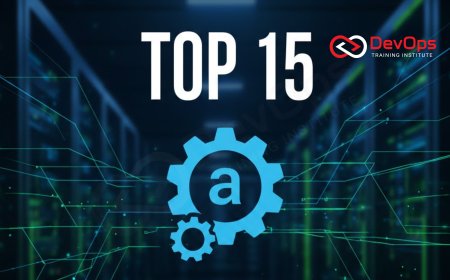
Top 15 Ansible Playbooks Used in Production
Discover the 15 most critical Ansible playbooks that power real production environments in 2025. From zero-downtime deployments and security hardening to Kubernetes management, disaster recovery, and self-healing systems, these battle-tested examples with practical patterns will transform how your team automates infrastructure at scale.
Introduction
Ansible has evolved from a simple configuration tool into the backbone of enterprise automation. The most successful DevOps teams don’t just write ad-hoc tasks; they maintain a library of rock-solid, idempotent playbooks that can safely run against thousands of nodes. These 15 playbooks are the ones you’ll actually find in production at scale, often starting with secure bootstrapping using private subnet strategies for maximum protection.
1. Bootstrap New Servers
- Applies latest security patches and disables root login
- Creates standardized admin users with SSH key access only
- Sets correct timezone, locale, and hostname conventions
- Installs monitoring agents (Prometheus node exporter, Datadog)
- Configures firewall (ufw/firewalld) and fails2ban
- Adds host to dynamic inventory groups automatically
- Runs in under 90 seconds on any cloud or bare metal
2. Zero-Downtime Application Deployment
This is the most frequently executed playbook in mature organizations. It pulls the latest Docker image or artifact, performs smoke tests, gracefully drains connections, updates the service, waits for health checks to pass, then shifts traffic. Includes automatic rollback if error rates spike and sends notifications to Slack or Teams. Used by companies like Spotify and Netflix to deploy hundreds of times daily without customer impact.
3. Security Hardening & CIS Compliance
- Enforces CIS Level 1/2 or STIG benchmarks automatically
- Configures password complexity and account lockout policies
- Enables auditd with immutable rules and central logging
- Removes unnecessary packages and disables unused services
- Sets kernel parameters (sysctl) for enhanced security
- Installs and configures tools like aide and lynis, often combined with advanced observability
4. OS Patch Management
Intelligent patching playbook that runs during maintenance windows. Uses serial batches to update only 10% of fleet at once. Records service status before patching, applies only security updates, reboots only when kernel changes, then verifies all services return healthy before proceeding to next batch.
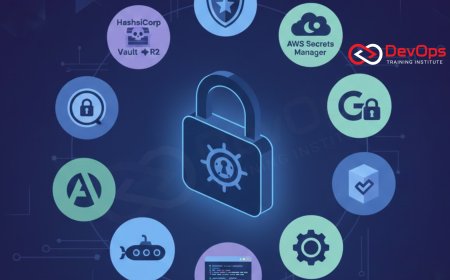
5. Secrets Distribution & Rotation
- Pulls secrets from HashiCorp Vault or AWS Secrets Manager
- Writes encrypted files with 600 permissions
- Rotates database passwords and API keys on schedule
- Triggers graceful service restart only when needed
- Supports emergency credential revocation workflows
- Uses ansible-vault for Git-stored variables
- Ensures zero plaintext exposure in logs
6. Docker & Container Runtime Setup
Standardizes container runtime across all environments. Installs containerd or Docker with hardened configuration, sets up overlay2 storage driver, enables live-restore, configures logging to fluentd, and applies security best practices. Essential before joining nodes to Kubernetes clusters.
7. Kubernetes Node Management
- Installs exact versions of kubelet, kubeadm, and containerd
- Joins worker and control plane nodes securely
- Handles certificate rotation and version upgrades
- Performs node drain/cordon before maintenance
- Validates cluster health after every change
- Integrates with etcd backup procedures using automated backup patterns
8. Monitoring Stack Deployment
Deploys the complete observability stack including Prometheus Node Exporter, Grafana Agent, and OpenTelemetry Collector. Configures scrape targets, alerting rules, and dashboard auto-provisioning across the entire infrastructure.
9. Database Backup & Recovery
- Runs pg_dump, mysqldump, or MongoDB logical backups
- Encrypts and uploads to S3 with lifecycle policies
- Tests restore procedures monthly in isolated environments
- Supports point-in-time recovery verification
- Maintains strict RPO/RTO requirements
- Integrates with disaster recovery playbooks and read replica scaling
- Provides audit trail for compliance
10. Log Shipping Configuration
Installs and configures Fluent Bit or Vector agents. Sets up reliable pipelines to Loki, Elasticsearch, or Splunk with proper buffering and retry logic. Handles multiline logs and adds metadata enrichment.
11. Let's Encrypt Certificate Management
- Automates wildcard certificate issuance via DNS-01
- Deploys certs to Nginx, Traefik, and Java keystores
- Renews 30 days before expiry automatically
- Reloads services without downtime
- Integrates with load balancers and ingress controllers
- Saves millions compared to commercial certs
12. Windows Server Automation
Manages Windows hosts using WinRM over HTTPS. Applies security baselines, installs Windows updates, configures IIS and .NET, manages scheduled tasks, and enforces Group Policy equivalents via PowerShell DSC integration.
13. Blue-Green Environment Switching
- Maintains two identical production environments
- Deploys new version to inactive environment
- Runs comprehensive smoke and load tests
- Switches traffic via DNS in one atomic operation
- Enables instant rollback if issues detected
- Perfect for database migrations
14. Disaster Recovery Orchestration
Full regional failover automation that restores infrastructure from latest backups, updates DNS records, validates database replication, and performs cutover only when all checks pass. Run quarterly as fire drills.
15. Self-Healing Infrastructure
- Triggered automatically by monitoring alerts
- Restarts failed services and clears disk space
- Kills rogue processes consuming resources
- Cordons and drains unhealthy Kubernetes nodes
- Integrates with Prometheus Alertmanager webhooks
- Reduces MTTR from hours to minutes
- Prevents cascading failures proactively
Conclusion
These 15 production-grade Ansible playbooks represent the gold standard of infrastructure automation in 2025. They enable organizations to deploy faster, recover instantly, maintain security compliance, and operate at massive scale with confidence. Start implementing these patterns today and watch your operational maturity transform overnight.
Frequently Asked Questions
How should I organize production playbooks?
Use role-based structure with clear separation between bootstrap, application, security, and recovery playbooks. Keep everything in Git with proper branching strategy.
Is it safe to run Ansible as root?
Use become only when necessary and prefer least-privilege accounts with targeted sudo rules. Never store become passwords in plaintext.
Can Ansible manage both Linux and Windows?
Yes, seamlessly. Use conditional tasks based on ansible_os_family to apply different configurations.
How do you handle secrets in production?
Never commit plaintext secrets. Use ansible-vault for variables and pull runtime secrets from Vault or cloud secret managers.
What makes a playbook "production-ready"?
Idempotency, extensive error handling, health checks, rollback capability, detailed logging, and peer review.
Should playbooks include notifications?
Yes. Integrate with Slack, Teams, or PagerDuty to track who ran what and when in production.
What's Your Reaction?
 Like
1
Like
1
 Dislike
0
Dislike
0
 Love
0
Love
0
 Funny
0
Funny
0
 Angry
0
Angry
0
 Sad
0
Sad
0
 Wow
0
Wow
0

![100+ Azure DevOps Interview Questions and Answers [Updated 2025]](https://www.devopstraininginstitute.com/blog/uploads/images/202509/image_140x98_68c40aa9a3834.jpg)





![Future Scope of DevOps Careers in Pune [Updated 2025]](https://www.devopstraininginstitute.com/blog/uploads/images/202510/image_140x98_68e3a84652312.jpg)