











![Kong Interview Preparation Guide [2025]](https://www.devopstraininginstitute.com/blog/uploads/images/202509/image_430x256_68dbb95326997.jpg)







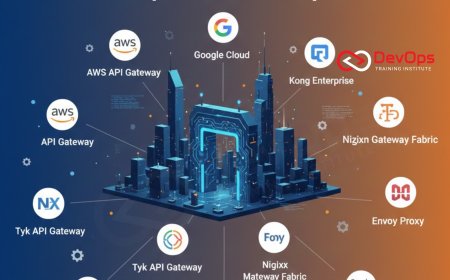
12 Cloud API Gateways DevOps Should Compare
In the rapidly evolving world of twenty twenty six, selecting the right cloud API gateway is a foundational decision for DevOps teams aiming to build scalable and secure microservices architectures. This comprehensive guide compares twelve leading API gateway solutions, analyzing their performance, security features, and integration capabilities within modern CI/CD pipelines. Discover how to optimize internal and external traffic management while reducing latency and improving observability across diverse cloud environments. Whether you are managing global enterprise APIs or high growth startup services, this expert comparison provides the technical insights needed to choose a gateway that enhances your delivery speed and system reliability today.
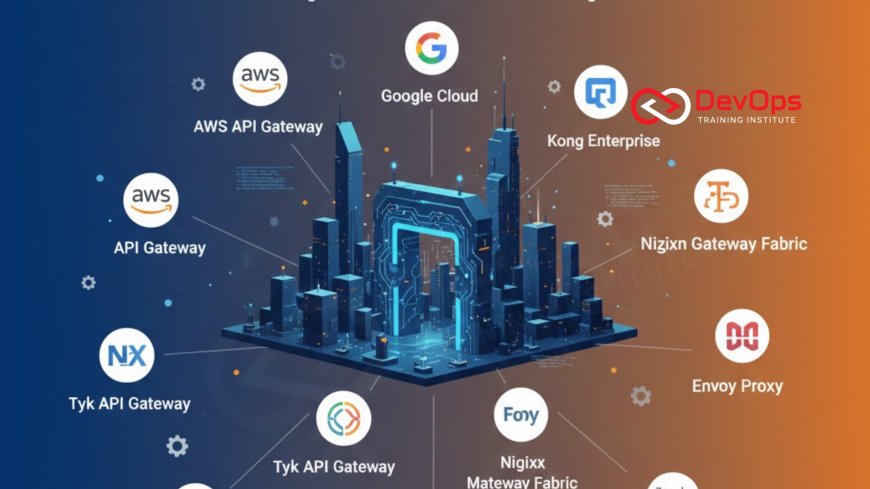
Introduction to the Modern API Gateway Landscape
As the digital backbone of contemporary software, API gateways have moved far beyond simple request routing to become the central nervous system of microservices. In twenty twenty six, DevOps professionals are tasked with managing increasingly complex networks where security, observability, and performance must be enforced at the edge of every service. An API gateway acts as a single entry point, abstracting the internal complexity of your cloud architecture patterns while providing essential features like authentication, rate limiting, and protocol translation. Choosing the right gateway is critical because it sits directly in the request path, meaning its efficiency defines the overall user experience.
Modern gateways are now expected to integrate seamlessly into automated workflows, supporting declarative configurations and versioning through Git. This shift toward "API Gateway as Code" allows teams to maintain continuous synchronization between their traffic policies and their infrastructure manifests. In this detailed comparison, we will examine twelve industry leading gateways, ranging from cloud native managed services to highly extensible open source projects. Understanding the nuances of these tools will help your team build a resilient and high performing technical foundation that can scale alongside your business demands in an increasingly interconnected and fast paced digital world.
Kong Gateway: The Extensible Open Source Leader
Kong Gateway remains a dominant force in the industry due to its incredible performance and massive ecosystem of plugins. Built on top of NGINX, it offers a lightweight and fast solution that can run on premises, in the cloud, or in a hybrid configuration. For DevOps teams, Kong’s primary appeal lies in its flexibility; you can easily add features like JWT validation, request transformation, and advanced logging simply by enabling a plugin. This allows for a significant cultural change where platform teams can provide standardized security and monitoring tools to application developers without requiring them to write custom code for every single service.
One of Kong’s standout features is its native support for Kubernetes through the Kong Ingress Controller. This allows engineers to manage their gateway configurations using standard Kubernetes CRDs, ensuring that traffic rules are versioned and deployed alongside the application pods. By utilizing GitOps principles with Kong, you can achieve a high level of automation and auditability. Whether you are handling a few hundred requests or millions per second, Kong’s architecture is designed to scale horizontally, making it a reliable choice for organizations that prioritize low latency and high extensibility in their technical stack.
AWS API Gateway: Fully Managed Serverless Integration
For teams heavily invested in the Amazon Web Services ecosystem, the AWS API Gateway offers a fully managed, highly available solution that integrates perfectly with Lambda, DynamoDB, and Cognito. It eliminates the operational burden of managing servers, as AWS handles all the scaling, patching, and monitoring on your behalf. This makes it an ideal choice for serverless architectures where you want to focus purely on business logic rather than infrastructure maintenance. It provides a robust set of features, including VPC integration, canary deployments, and automated SDK generation, which can significantly speed up your release strategies.
The gateway supports both REST and HTTP APIs, allowing you to choose the level of complexity and cost that fits your specific needs. While it is incredibly convenient, DevOps teams should be mindful of potential vendor lock in and the specific latency overhead that managed services sometimes introduce. However, the ability to utilize who drives cultural change strategies by offloading the undifferentiated heavy lifting of API management to a cloud provider is a major advantage. For many startups and enterprises alike, the seamless integration with AWS security and billing systems makes this gateway the most efficient path to production for their cloud native applications.
Apigee: Enterprise-Grade API Management
Apigee, now part of Google Cloud, is widely recognized as the gold standard for enterprise API management. It goes beyond simple gateway functionality to provide a comprehensive platform for API monetization, developer portals, and advanced analytics. Apigee is designed for organizations that treat their APIs as products, requiring deep insights into usage patterns and a sophisticated way to manage external developer communities. It excels in hybrid and multi cloud environments, providing a consistent management layer regardless of where your actual services are hosted in the global network.
From a DevOps perspective, Apigee’s strength lies in its powerful policy engine, which allows for complex traffic manipulation and security enforcement at scale. While the learning curve can be steeper than simpler gateways, the level of control it provides is unmatched for large scale digital transformation projects. By integrating AI augmented devops capabilities, Apigee can help identify unusual traffic patterns or potential security threats before they impact your services. It is a premium solution for teams that require high levels of compliance, detailed reporting, and a robust set of tools to manage the entire API lifecycle from design to retirement in a structured and professional manner.
Top 12 Cloud API Gateways Comparison Table
| Gateway Name | Primary Model | Key Strength | DevOps Integration |
|---|---|---|---|
| Kong Gateway | Open Source / Hybrid | Extensibility & Speed | Kubernetes Native (CRDs) |
| AWS API Gateway | Fully Managed | Serverless Ecosystem | CloudFormation / Terraform |
| Tyk | Open Source / Cloud | Batteries-included | Powerful REST API |
| KrakenD | Stateless / Binary | Ultra-low Latency | Declarative JSON config |
| Azure API Mgmt | Fully Managed | Microsoft Integration | ARM Templates / Bicep |
Tyk and KrakenD: Specialized Performance Leaders
Tyk is a powerful, "batteries included" API gateway written in Go, offering a feature rich experience without the need for extensive third party plugins. It provides an intuitive dashboard for management while remaining highly performant and scalable. For DevOps teams, Tyk’s appeal is its consistency; all features are available in the open source version, and its native support for GraphQL makes it a top choice for modern front end architectures. Its ability to manage incident handling through automated circuit breaking and advanced rate limiting ensures that your backends are always protected from unexpected traffic surges or malicious attacks.
On the other end of the spectrum is KrakenD, an ultra high performance, stateless API gateway. Unlike many other gateways that rely on a database for configuration, KrakenD uses a single JSON file, making it incredibly easy to deploy and scale in containerized environments. It is designed to be "uncompromising" on speed, focusing on request manipulation and aggregation rather than management overhead. This makes it an excellent choice for containerd based microservices where every millisecond counts. KrakenD’s stateless nature simplifies your cluster states management, as you don’t have to worry about synchronizing a backend database across multiple regions or data centers.
Service Mesh Ingress: Gloo Edge and Ambassador
As Kubernetes usage has matured, a new category of gateways has emerged that focus specifically on cloud native ingress. Gloo Edge, built on the Envoy proxy, is designed to handle modern workloads like GraphQL, gRPC, and WebAssembly. It offers a sophisticated control plane that simplifies the management of Envoy’s complex configurations, providing a developer friendly interface for advanced traffic routing. By utilizing admission controllers, Gloo can ensure that only valid and secure traffic policies are applied to your cluster, protecting your infrastructure from configuration errors.
Ambassador (now Emissary-ingress) is another popular Envoy based gateway that is built specifically for Kubernetes. It prioritizes the developer experience by allowing teams to manage traffic routing directly in their application manifests using annotations. This decentralization of gateway management fits perfectly with the cultural change seen in high performing DevOps teams where individual squads have autonomy over their service configurations. Both Gloo and Ambassador provide a bridge between traditional API management and the world of service mesh, offering deep observability and security features that are essential for managing a complex web of microservices in twenty twenty six.
Best Practices for API Gateway Comparison
- Evaluate Latency: Measure the added response time of the gateway under load to ensure it doesn't become a bottleneck for your applications.
- Check GitOps Support: Prioritize gateways that offer declarative configuration, allowing you to manage your traffic rules in a version controlled repository.
- Security Features: Ensure the gateway supports modern standards like OAuth2, OIDC, and mTLS to maintain a robust security posture across your APIs.
- Observability Integration: Choose a tool that exports metrics and traces to your existing monitoring stack, such as Prometheus, Jaeger, or Datadog.
- Scalability and Resilience: Verify how the gateway handles horizontal scaling and whether it can maintain incident handling logic like retries and circuit breaking.
- Developer Experience: Look for gateways that provide easy to use portals or clear documentation, as this impacts how quickly your teams can adopt the tool.
- Secrets Management: Utilize secret scanning tools to ensure that no API keys or certificates are accidentally exposed in your gateway configuration files.
When comparing these twelve options, it is important to remember that the "best" gateway depends entirely on your specific use case and existing technical debt. A team running a purely serverless stack on AWS will have very different requirements than an enterprise managing a hybrid network of legacy COBOL apps and modern Go services. By focusing on continuous verification and choosing a gateway that aligns with your long term release strategies, you can ensure that your API layer remains a catalyst for growth rather than a source of operational pain. Always perform a thorough proof of concept to validate the gateway’s behavior in a production like environment before making a final commitment.
Conclusion: Selecting Your Future API Foundation
In conclusion, the API gateway is a critical component of the modern DevOps toolkit, serving as the primary arbiter of traffic, security, and observability for your microservices. Whether you choose the massive extensibility of Kong, the managed convenience of AWS API Gateway, or the ultra low latency of KrakenD, the key is to prioritize automation and security. As we move further into the year twenty twenty six, the integration of AI augmented devops will likely continue to transform how these gateways operate, providing even more intelligent ways to manage and protect our digital assets.
Staying informed about AI augmented devops trends will help you choose a solution that remains relevant as technology evolves. By treating your gateway as an essential part of your cloud architecture patterns, you can build a system that is both flexible and resilient. Ultimately, the goal of an API gateway is to empower your developers to ship software faster while maintaining a high standard of operational excellence. Choose wisely, automate everything, and ensure that your API infrastructure is ready to handle the scale and complexity of the modern world.
Frequently Asked Questions
What is an API gateway and why do I need one?
An API gateway is a server that acts as an API front-end, receiving requests, enforcing policies, and routing them to the appropriate backend services.
What is the difference between an API gateway and a Load Balancer?
A load balancer primarily distributes traffic, while an API gateway provides advanced features like authentication, rate limiting, and request transformation for various services.
Can I use Kubernetes Ingress as an API gateway?
Yes, many modern API gateways like Kong and Gloo Edge operate as Kubernetes Ingress Controllers, providing enhanced management features for the cluster.
Is Kong Gateway better than AWS API Gateway?
It depends on your needs; Kong offers more extensibility and multi-cloud support, while AWS provides a fully managed, maintenance-free serverless experience.
What is the benefit of a stateless API gateway?
Stateless gateways like KrakenD are easier to scale and manage because they don't require a database to synchronize configuration across different instances.
Does an API gateway add significant latency to requests?
While all gateways add some overhead, modern solutions are designed to minimize this, often adding less than a few milliseconds to the total time.
How do API gateways improve security for microservices?
They centralize security enforcement, providing a single place to manage SSL termination, OAuth2 validation, and protection against common web attacks like SQL injection.
Can an API gateway handle protocol translation?
Yes, many gateways can translate between different protocols, such as converting a RESTful JSON request into a gRPC call for a backend service.
What is rate limiting and why is it important?
Rate limiting controls the number of requests a user can make in a given time, preventing service abuse and ensuring fair resource distribution.
How do I manage API gateway configurations in DevOps?
Best practices suggest using declarative configuration files (YAML or JSON) stored in Git, allowing for automated deployments through your CI/CD pipeline.
What is a developer portal in API management?
A developer portal is a self-service website where developers can discover APIs, read documentation, and register for API keys to use the services.
Can an API gateway help with legacy system integration?
Yes, an API gateway can provide a modern RESTful interface over legacy SOAP or XML services, making them easier for new applications to consume.
What is the role of Envoy in modern API gateways?
Envoy is a high-performance proxy that many modern gateways (like Gloo and Ambassador) use as their underlying data plane for handling network traffic.
How does an API gateway assist in canary releases?
It can intelligently route a small percentage of traffic to a new version of a service, allowing you to test it in production safely.
What should be my main criteria for choosing a gateway?
The main criteria should be performance, ease of DevOps integration, security features, and how well it fits into your existing cloud or on-premise infrastructure.
What's Your Reaction?
 Like
0
Like
0
 Dislike
0
Dislike
0
 Love
0
Love
0
 Funny
0
Funny
0
 Angry
0
Angry
0
 Sad
0
Sad
0
 Wow
0
Wow
0


![100+ Azure DevOps Interview Questions and Answers [Updated 2025]](https://www.devopstraininginstitute.com/blog/uploads/images/202509/image_140x98_68c40aa9a3834.jpg)






![Future Scope of DevOps Careers in Pune [Updated 2025]](https://www.devopstraininginstitute.com/blog/uploads/images/202510/image_140x98_68e3a84652312.jpg)