



![Kong Interview Preparation Guide [2025]](https://www.devopstraininginstitute.com/blog/uploads/images/202509/image_430x256_68dbb95326997.jpg)


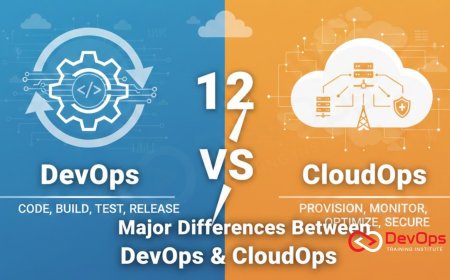
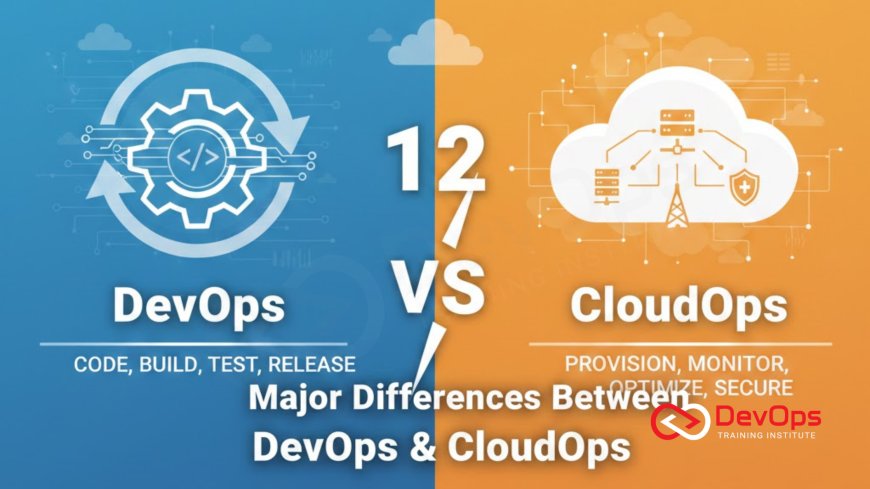
12 Major Differences Between DevOps & CloudOps
In the technical landscape of 2026, the lines between software delivery and infrastructure management are blurring. This comprehensive guide clarifies the twelve major differences between DevOps and CloudOps, helping engineering leaders and professionals navigate the nuances of modern technical operations. Learn how DevOps focuses on the software delivery lifecycle through cultural change and CI/CD, while CloudOps prioritizes the health, cost, and optimization of cloud-native environments. Discover how these two disciplines collaborate to achieve technical excellence, high availability, and measurable business growth in today’s complex, automated, and global cloud-native ecosystem.
Introduction to the Convergence of Dev and Ops
As we navigate through 2026, the terminology in the tech industry can often feel overlapping. Two of the most critical frameworks for modern business are DevOps and CloudOps. While they share the same DNA—prioritizing automation, speed, and reliability—they operate at different layers of the technical stack. DevOps is primarily a philosophy of cultural change and technical practices aimed at breaking down silos between developers and operations to speed up the software delivery lifecycle. It is about how we build and ship software with high quality and frequency.
CloudOps, on the other hand, is the evolution of traditional IT operations, specifically tailored for the cloud-native era. It focuses on the ongoing management, optimization, and health of the cloud environment where the software lives. If DevOps is about the "car" (the software), CloudOps is about the "road" (the cloud infrastructure). Understanding the twelve key differences between these roles is essential for building a resilient engineering organization that can scale effectively in a digital-first economy. This guide provides a deep dive into how these two disciplines complement each other while maintaining distinct goals and technical focus areas.
1. Primary Objective: Delivery vs. Stability
The core objective of DevOps is to increase the velocity of software delivery. It focuses on the "North Star" of getting code from a developer’s machine to production as quickly and safely as possible. Success in DevOps is often measured by deployment frequency and lead time for changes. By contrast, the primary objective of CloudOps is to ensure the continuous availability and health of the cloud infrastructure. CloudOps professionals are the guardians of uptime, focusing on system resilience and ensuring that the underlying platform can support the application's needs 24/7 without interruption.
2. Scope: Application Lifecycle vs. Infrastructure Health
The scope of DevOps covers the entire application development lifecycle, from planning and coding to testing and deployment. It is deeply integrated with the developer's workflow. CloudOps has a different scope, focusing on the post-deployment phase. It manages the virtual servers, storage, and networking components. While DevOps might use GitOps to manage application state, CloudOps uses it to maintain cluster synchronization and prevent configuration drift in the environment itself.
3. Key Metrics: DORA vs. SLA/SLO
DevOps teams live and die by DORA metrics: Deployment Frequency, Lead Time, Mean Time to Recovery (MTTR), and Change Failure Rate. These measure the health of the delivery pipeline. CloudOps teams focus more on Service Level Agreements (SLAs) and Service Level Objectives (SLOs). They track metrics like latency, error rates, and resource utilization. These metrics ensure that the cloud architecture patterns in place are delivering the performance and reliability promised to the business and its end users.
4. Performance Tuning: Code vs. Resource
When an application is slow, a DevOps engineer looks at the code, the database queries, or the container configuration to find bottlenecks. They optimize the "logic." A CloudOps professional looks at the infrastructure layer. They might adjust the auto-scaling rules, change the instance types, or optimize the content delivery network (CDN) settings. This distinction is vital for incident handling; knowing whether the problem is in the software or the "pipes" determines which team takes the lead in resolving the issue.
DevOps vs. CloudOps Comparison Table
| Feature | DevOps | CloudOps |
|---|---|---|
| Core Focus | Software Delivery & Culture | Cloud Management & Optimization |
| Primary Tools | Jenkins, GitHub Actions, Docker | Terraform, AWS CloudWatch, Datadog |
| Target User | Internal Developers | The Business / External Users |
| Cost Management | Toolchain Efficiency | FinOps & Resource Optimization |
5. Cost Optimization: Pipeline vs. Platform (FinOps)
In DevOps, cost optimization is often about reducing the time and compute resources required to run builds and tests. In CloudOps, cost management (often called FinOps) is a major pillar. It involves identifying "zombie" resources, right-sizing instances, and managing reserved instance commitments. CloudOps ensures the business doesn't overspend on cloud bills. By utilizing architecture patterns that prioritize cost-efficiency, CloudOps turns infrastructure from a black hole of expense into a lean, value-driven asset.
6. Security Approach: Shift-Left vs. Continuous Compliance
DevOps promotes "Shift-Left" security, integrating vulnerability scanning and secret detection early in the CI/CD pipeline. The goal is to catch security flaws before the code is merged. CloudOps focuses on "Continuous Compliance" and perimeter security. This involves managing Identity and Access Management (IAM) roles, configuring firewalls, and using admission controllers to ensure that any resource running in the cloud meets organizational security policies at runtime.
7. Tooling: CI/CD vs. Monitoring & Observability
The DevOps toolchain is centered around automation and integration (Jenkins, CircleCI, GitLab). It is built to facilitate the movement of code. CloudOps tools are centered around observability and infrastructure management (Prometheus, Grafana, CloudFormation). While there is overlap, the way these tools are used differs. DevOps uses monitoring to see if a build passed; CloudOps uses observability 2.0 to understand the deep, internal state of the distributed cloud system and predict potential failures.
8. Relationship with Legacy Systems: Transformation vs. Migration
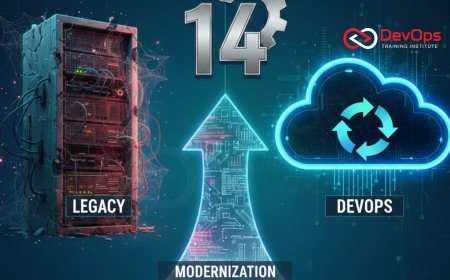
DevOps is often tasked with transforming legacy applications into microservices or containerized workloads to make them "delivery-friendly." CloudOps is often focused on the migration and "re-platforming" of these systems. CloudOps ensures that when a legacy app moves to the cloud, it has the right network connectivity, backup strategies, and disaster recovery protocols. It ensures the cluster states of the new environment are robust enough to handle the workload that was previously sitting on-premises.
9. Incident Response: Code Fix vs. Infrastructure Recovery
When a system goes down, DevOps and CloudOps have different starting points. A DevOps engineer asks, "What was the last code change we deployed?" They focus on rollbacks or "hotfixes." A CloudOps professional asks, "Is there an outage in the AWS region? Is the load balancer healthy? Is the disk full?" They focus on infrastructure recovery. By utilizing ChatOps techniques, both teams can collaborate in real-time, but their diagnostic paths remain distinct and complementary.
10. Resource Provisioning: Ephemeral vs. Permanent
DevOps often deals with ephemeral resources—containers that spin up to run a test and then disappear, or "build agents" that only exist for a few minutes. CloudOps manages the more "permanent" (though still elastic) infrastructure. They manage the Kubernetes control plane, the persistent database clusters, and the long-lived networking routes. CloudOps ensures that the foundational cluster states are stable so that the ephemeral DevOps workloads have a reliable place to execute their tasks.
11. Philosophy: Developer Empowerment vs. Business Continuity
DevOps is fundamentally about developer empowerment—removing the barriers that prevent engineers from shipping code. It is a cultural change that promotes autonomy. CloudOps is about business continuity. It is the assurance that the lights stay on and the service stays fast, regardless of how many developers are pushing code. CloudOps provides the "paved road" that allows developers to move fast without veering off a cliff. This balance is what creates a high-performing technical organization in 2026.
12. Testing Focus: Functional vs. Environmental
In the DevOps world, testing is focused on the application: unit tests, integration tests, and user acceptance testing (UAT). It's about ensuring the software does what it's supposed to do. In CloudOps, the focus is on environmental testing: load testing, chaos engineering, and disaster recovery drills. CloudOps tests the resilience of the environment itself. By integrating continuous verification, CloudOps confirms that the infrastructure can withstand the pressure of real-world traffic and unexpected failures.
Conclusion: A Unified Front for Technical Excellence
In conclusion, while the twelve differences between DevOps and CloudOps are significant, they are two sides of the same coin. A modern organization cannot succeed with one and not the other. DevOps provides the speed and innovation, while CloudOps provides the stability and optimization. Together, they form a unified front that ensures software is not only delivered quickly but also runs in an environment that is secure, cost-effective, and highly available. As technology continues to evolve toward AI-augmented DevOps, the collaboration between these two roles will only become more critical.
The future of technical operations belongs to those who can bridge the gap between these disciplines. By understanding where the software delivery lifecycle ends and the cloud operations lifecycle begins, you can build a more agile and resilient business. Focus on automation, embrace cultural change, and prioritize the developer experience while never losing sight of infrastructure health. This holistic approach is the key to mastering the complex digital landscape of 2026 and beyond. Start by aligning your teams, sharing your tools, and working toward the common goal of technical excellence.
Frequently Asked Questions
Is CloudOps a replacement for DevOps?
No, CloudOps is a complementary discipline. DevOps focuses on the software delivery process, while CloudOps focuses on managing and optimizing the cloud environment.
Can the same team do both DevOps and CloudOps?
In smaller organizations, these roles often overlap. However, as an organization scales, specialized teams for delivery (DevOps) and platform health (CloudOps/SRE) become necessary.
What role does automation play in both roles?
Automation is the foundation of both. DevOps automates code builds and deployments; CloudOps automates infrastructure provisioning and scaling.
How does SRE (Site Reliability Engineering) fit into this?
SRE is often considered the "bridge" or the implementation of DevOps principles specifically for operations, making it very closely aligned with CloudOps.
Why is cost optimization considered part of CloudOps?
Because CloudOps manages the infrastructure resources, they have the direct visibility and control needed to implement FinOps and reduce cloud waste.
Does CloudOps work with on-premises data centers?
Technically, CloudOps is specific to cloud environments (public, private, or hybrid). Traditional IT operations handle on-premises, though they are increasingly adopting "cloud-like" practices.
What is the first step in moving from DevOps to CloudOps?
The first step is usually implementing comprehensive monitoring and observability to understand the health and performance of the infrastructure layer.
Do I need different tools for DevOps and CloudOps?
While there is overlap (like Terraform), DevOps tools often focus on the CI/CD pipeline, while CloudOps tools focus on monitoring, security, and resource management.
How do these roles impact the end user?
DevOps impacts users by delivering new features faster; CloudOps impacts users by ensuring the application is always available and fast when they need it.
Is "Platform Engineering" the same as CloudOps?
Platform Engineering is the practice of building the internal tools and platforms (IDPs) that both DevOps and CloudOps teams use to do their jobs effectively.
What's Your Reaction?
 Like
0
Like
0
 Dislike
0
Dislike
0
 Love
0
Love
0
 Funny
0
Funny
0
 Angry
0
Angry
0
 Sad
0
Sad
0
 Wow
0
Wow
0

![100+ Azure DevOps Interview Questions and Answers [Updated 2025]](https://www.devopstraininginstitute.com/blog/uploads/images/202509/image_140x98_68c40aa9a3834.jpg)






![Future Scope of DevOps Careers in Pune [Updated 2025]](https://www.devopstraininginstitute.com/blog/uploads/images/202510/image_140x98_68e3a84652312.jpg)