




![Kong Interview Preparation Guide [2025]](https://www.devopstraininginstitute.com/blog/uploads/images/202509/image_430x256_68dbb95326997.jpg)




Top 18 DevOps Use Cases Across Industries
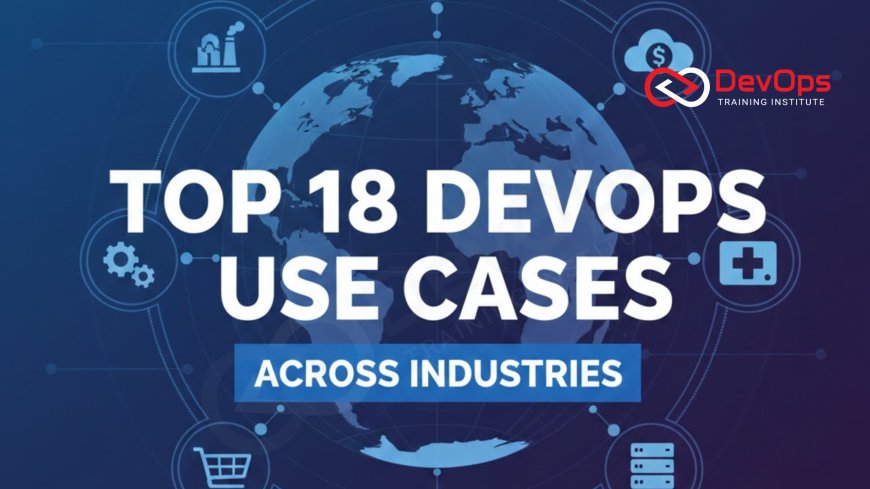
Explore the top 18 high-impact DevOps use cases transforming major industries, including Financial Services, Healthcare, Telecom, and E-commerce. This guide details how automation, CI/CD, Infrastructure as Code, and observability are leveraged to solve industry-specific challenges, such as ensuring HIPAA compliance in healthcare, enabling rapid 5G service deployment in telecom, and facilitating real-time fraud detection in fintech. By implementing these solutions, organizations achieve superior speed, reliability, security, and scalability, ultimately accelerating their digital transformation and competitive advantage across the board.
Introduction
DevOps is more than a set of tools; it is a cultural and technical methodology that empowers organizations to deliver software with superior speed, reliability, and security. While the core practices—Continuous Integration/Continuous Delivery (CI/CD), Infrastructure as Code (IaC), and continuous monitoring—are universal, their application yields unique, high-impact use cases across different industries. From a fintech firm needing millisecond transaction speeds to a healthcare provider requiring stringent HIPAA compliance, DevOps provides the framework for digital transformation.
The operational challenges faced by various sectors often dictate the specific DevOps practices that yield the greatest return. For instance, regulatory compliance (common in finance and healthcare) requires robust DevSecOps and automated auditing, while unpredictable user demand (typical in e-commerce and gaming) necessitates dynamic auto-scaling and resilience patterns. By automating repetitive tasks, promoting cross-functional collaboration, and leveraging cloud-native technologies, DevOps addresses these sector-specific pain points, turning software delivery into a strategic competitive advantage rather than a costly overhead.
This guide explores 18 of the most prevalent and valuable DevOps use cases, categorized by the industries they are transforming. Understanding these real-world examples provides a practical roadmap for applying DevOps principles to solve complex business problems, accelerate time-to-market, and achieve operational excellence. Whether your focus is on maintaining system production stability, optimizing cloud costs, or ensuring continuous regulatory compliance, these use cases demonstrate the versatility and power of a mature DevOps implementation across the entire digital economy.
Financial Services & Fintech (Regulation and Speed)
The financial sector demands high velocity combined with zero tolerance for downtime or security breaches. DevOps practices are instrumental in meeting stringent regulatory compliance (e.g., PCI DSS, SOX) while accelerating time-to-market for new digital banking, trading, and loan services. The ability to deploy code instantly, reliably, and with full auditability is the main driver of DevOps adoption in this industry.
1. Automated Fraud Detection Pipelines
DevOps is used to build and deploy Machine Learning (ML) models for real-time fraud detection. The use case involves automating the data pipeline, the training, testing, and deployment of ML models (MLOps) into production. This ensures that the detection system is continuously updated with new fraud patterns, allowing financial applications to adapt dynamically to emerging cyber threats with minimal human intervention.
2. Automated Compliance Monitoring and Auditing
Financial institutions rely on automated monitoring systems to continuously audit infrastructure and application configurations against regulatory mandates (e.g., enforcing access controls and data encryption). Policy-as-Code tools are integrated into CI/CD to prevent the deployment of non-compliant infrastructure, providing full, auditable traceability for every change to satisfy regulators. This process is crucial for minimizing regulatory risk and ensuring continuous compliance.
3. Core Banking System Modernization
Many banks are migrating monolithic core banking systems to cloud-native microservices architectures to enable faster updates and higher availability. DevOps provides the CI/CD pipelines, container orchestration, and zero-ddowntime deployment strategies (Canary/Blue-Green) necessary to perform these migrations safely without disrupting critical services or customer transactions.
Healthcare & Pharmaceuticals (Compliance and Data Integrity)
In healthcare, patient data security (HIPAA, GDPR) and system reliability are life-critical. DevOps and DevSecOps practices are adopted to automate compliance checks, improve system uptime for Electronic Health Records (EHR) systems, and accelerate the development of personalized medicine applications. The goal is to deploy secure updates rapidly while maintaining the highest standard of patient data integrity and system availability.
4. Continuous HIPAA and GDPR Compliance Checks
The CI/CD pipeline is fortified with automated security gates that specifically check for misconfigurations related to patient data handling, access controls, and encryption standards mandated by regulations like HIPAA. This DevSecOps approach ensures that security is integrated into every stage, from code review to infrastructure provisioning, directly impacting data privacy and legal compliance.
5. Resilient Electronic Health Record (EHR) Systems
EHR systems require maximum uptime. DevOps enables this through self-healing infrastructure and automated failover mechanisms. Real-time monitoring detects system anomalies, and automated runbooks or Kubernetes self-healing features instantly restart services or reroute traffic, ensuring that medical staff have uninterrupted access to critical patient information, which is a key measure of production stability.
6. Accelerating Personalized Medical Applications
Developing applications for diagnostics or personalized medicine involves rapid prototyping and processing massive datasets. DevOps provides the automated data pipelines and scalable cloud infrastructure (provisioned via IaC) to accelerate the development, testing, and deployment of these data-intensive applications, allowing researchers to iterate quickly on new diagnostic tools and services.
Telecom & Network Infrastructure (Velocity and Scale)
Telecom operators deal with massive data loads, 24/7 connectivity requirements, and the necessity to deploy complex network functions (like 5G services) rapidly. DevOps is the operational model enabling the transition from proprietary hardware to Network Function Virtualization (NFV) and Software-Defined Networking (SDN).
7. Automated 5G/Network Service Deployment
Deploying new 5G network slices or virtual network functions (VNFs) typically involves complex configuration across thousands of devices. CI/CD pipelines, driven by Infrastructure as Code tools, automate the entire process, allowing operators to deploy new network services in minutes rather than months, significantly reducing time-to-market for new services like high-bandwidth IoT or edge computing.
8. Network Fault Detection and Auto-Remediation
Due to the complexity of global networks, automated fault resolution is mandatory. Real-time monitoring and observability tools instantly detect network degradation or component failure. The system then automatically triggers a remedial action—restarting a VNF, rerouting traffic, or isolating a faulty node—ensuring uninterrupted service and maximizing network uptime. This form of self-healing is critical for production stability.
9. Infrastructure as Code for Cloud-Native Telco
Telecom is heavily leveraging the cloud. IaC practices using Terraform or Ansible automate the provisioning of cloud and virtualized infrastructure for NFV environments. This ensures that every new network component is configured consistently and deployed predictably, eliminating configuration drift and supporting global, distributed deployments efficiently. The automation must handle host-level configuration, often including configuring SSH keys security in RHEL 10 for underlying compute nodes.
E-commerce & Retail (Elasticity and CX)
E-commerce faces massive, unpredictable traffic spikes (Black Friday, holidays) and needs to deliver personalized customer experiences through frequent feature updates. DevOps provides the necessary auto-scaling capability and the high-velocity CI/CD pipelines to iterate on features and maintain 24/7 availability under extreme load. The rapid deployment of A/B tests and promotional campaigns is essential for competitiveness.
10. Dynamic Auto-Scaling for Peak Load
The primary use case is automatically scaling the application and infrastructure in real-time to handle massive traffic spikes. DevOps configures observability metrics (e.g., request rate, CPU utilization) to trigger Kubernetes Horizontal Pod Autoscaler or cloud auto-scaling groups, instantly adding capacity during peak shopping hours and scaling down afterwards to optimize cloud costs. This ensures the best possible customer experience (CX) and zero downtime during high-demand periods.
11. Personalized Recommendations Deployment (MLOps)
E-commerce relies on personalization. DevOps pipelines automate the deployment of machine learning models that power product recommendation engines. CI/CD ensures that new, optimized models are pushed to production frequently, enabling continuous A/B testing of recommendation algorithms to maximize conversion rates and customer engagement in real-time.
12. Automated Disaster Recovery (DR) and Failover
Ensuring site availability is critical. DevOps automates disaster recovery procedures using Infrastructure as Code (IaC) to instantly provision mirrored environments in different regions. This automation enables rapid failover in the event of a regional outage, reducing recovery time (MTTR) from hours to minutes and maintaining 24/7 operations, which is essential for preserving revenue and customer trust.
Gaming, Media, and Manufacturing (High Availability and IoT)
The gaming and media industries require global deployment, low latency, and continuous updates (patches, new features). Manufacturing, meanwhile, focuses on reliable software for factory automation and large-scale IoT management. These industries leverage DevOps for resilience and efficient device management at the edge.
13. Global Game Server Deployment and Patching
Gaming requires deploying servers globally to minimize player latency. DevOps automates this via CI/CD pipelines that push containerized game servers to multi-region cloud environments. Patches and new features are released frequently using advanced deployment strategies like Canary or Blue/Green, ensuring minimal disruption to millions of concurrent players. This continuous delivery model is critical for player satisfaction.
14. Over-the-Air (OTA) Updates for IoT Devices
Manufacturing and media use IoT devices (e.g., smart factory robots, streaming boxes). DevOps manages the lifecycle of these devices by automating secure Over-the-Air (OTA) updates for firmware and operating system patches. CI/CD pipelines build, test, and securely distribute these updates to millions of remote devices, ensuring compliance and functionality while minimizing the risk of a corrupted patch being deployed to the edge.
15. High-Availability Streaming Infrastructure
Media streaming services must ensure 99.999% uptime. DevOps implements chaos engineering principles, proactively injecting failures into non-production environments to test and validate the resilience of their distributed video delivery infrastructure. This practice, along with automated monitoring and self-healing systems, verifies that the application can withstand turbulent conditions and maintains seamless video playback quality under extreme user load.
Cross-Industry Foundational Use Cases
These final three use cases are fundamental DevOps applications that cut across every industry, serving as the essential building blocks for achieving automation, security, and visibility in any modern software delivery organization. They represent core competencies that must be mastered regardless of the specific business domain.
16. Automated Operating System Hardening
All cloud and on-premises infrastructure requires a secure host foundation. DevOps uses configuration management tools (Ansible, Chef) to automatically apply security policies and hardening best practices, such as those covered in RHEL 10 hardening best practices, to every VM and host node. This ensures that the underlying operating system is secure and compliant before containers or applications are deployed, creating a robust, low-attack surface environment and streamlining the RHEL 10 post-installation checklist process.
17. GitOps-Driven Deployment Strategy
GitOps is becoming the default deployment model for Kubernetes, used across all industries for traceable, secure, and declarative delivery. The desired state of the application is stored in Git, and an automated operator (ArgoCD or Flux) continuously pulls and applies changes to the cluster. This simplifies Continuous Deployment and ensures that all infrastructure and application changes are auditable and traceable via Git, enhancing operational security and reliability.
18. Continuous Observability for Incident Prevention
Every industry needs to move beyond reactive monitoring. DevOps embeds Continuous Observability—using integrated metrics, logs, and traces—to proactively detect anomalies, identify performance degradations, and pinpoint bottlenecks. Tools like Prometheus and Grafana, coupled with centralized log management best practices, provide the necessary insights to optimize applications and prevent failures before they impact the customer, drastically reducing the total number of production incidents and improving the overall quality of service. This is critical for maintaining high availability.
Conclusion
The 18 use cases detailed demonstrate that DevOps is the universal operating model for digital excellence. Whether the priority is the regulatory compliance of a financial institution, the life-critical availability of a healthcare system, or the sheer scale and velocity required by a telecom operator, the core principles of automation, continuous feedback, and collaboration provide the solution. By strategically applying CI/CD, IaC, and DevSecOps, organizations across all sectors are moving from slow, manual processes to high-velocity, reliable, and secure software delivery.
The success of these use cases hinges on deep technical implementation, such as mastering container orchestration platforms like Kubernetes, ensuring the immutability of deployed artifacts, and integrating security checks directly into the code pipeline. The focus remains on eliminating human error, maximizing automation, and leveraging observability to achieve continuous improvement and maintain stringent Service Level Objectives (SLOs) in production. This commitment to engineering excellence is what drives the next generation of digital products and services.
Ultimately, embracing these DevOps use cases means embracing digital transformation itself. They offer a blueprint for building resilient, scalable, and secure systems that can adapt instantly to market demands and security threats. By integrating foundational practices like host hardening and advanced techniques like GitOps and continuous threat modeling, organizations ensure that their software delivery pipeline is a strategic asset, providing a sustainable competitive advantage and securing their position in the rapidly evolving global economy. This comprehensive approach ensures that velocity and stability are mutually reinforcing goals across all business domains.
Frequently Asked Questions
What is the biggest DevOps challenge in the Financial Services industry?
Balancing the need for high-velocity software releases with stringent regulatory compliance and auditability requirements is the biggest challenge, making DevSecOps critical.
How does DevOps address HIPAA compliance in Healthcare?
It automates security checks and enforces policy-as-code to ensure proper data encryption and access controls, providing continuous, auditable evidence of HIPAA compliance within the CI/CD pipeline.
What is NFV, and how does DevOps enable it in Telecom?
NFV (Network Function Virtualization) moves network functions from hardware to software. DevOps automates the deployment and management of these virtual network functions (VNFs) using IaC and CI/CD, enabling rapid 5G service deployment.
Why is dynamic auto-scaling crucial for E-commerce?
It allows the platform to automatically provision and de-provision cloud resources in real-time based on traffic load, ensuring production stability and zero downtime during unpredictable peak shopping events.
What is the purpose of the RHEL 10 post-installation checklist use case?
It ensures that the base operating system for all cloud VMs or nodes is consistently and securely configured via automation (IaC/Ansible) before any application code is deployed, aligning with RHEL 10 post-installation checklist best practices.
How does GitOps simplify Continuous Deployment?
GitOps uses Git as the single source of truth for the desired state, and an automated operator (like ArgoCD) continuously pulls and applies changes, simplifying deployments and enhancing auditability across the entire system.
What role does chaos engineering play in the Gaming industry?
Chaos engineering proactively injects failures into the distributed server infrastructure to test and validate its resilience and auto-remediation mechanisms, ensuring high availability and low latency for players.
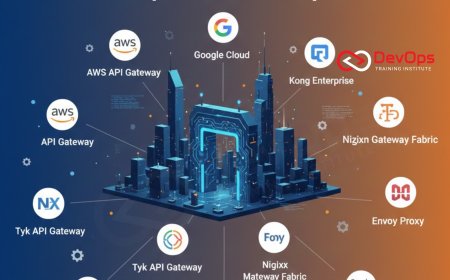
How do API Gateways simplify deployment in microservices?
API Gateways centralize traffic routing, authentication, and security policies at the edge, abstracting complexity from individual services and simplifying their deployment and management.
What is the value of continuous observability in incident prevention?
By correlating metrics, logs, and traces in real-time, observability detects performance anomalies and potential failures proactively, enabling teams to address issues before they become incidents.
How is the release cadence of high-velocity teams maintained?
It is maintained through fully automated CI/CD pipelines, advanced deployment strategies (Canary/Blue-Green), and continuous testing that quickly validates code, minimizing manual gates and accelerating the time-to-market for new features.
What is the primary security goal of using trusted base images in the CI/CD pipeline?
To minimize the attack surface of containerized applications by ensuring the foundation contains only necessary components and inherits fewer known vulnerabilities from the base OS.
Why is immutable infrastructure a key DevOps use case in Manufacturing IoT?
It ensures that software updates (OTA updates) for remote IoT devices are consistent, secure, and reliable, preventing configuration drift and simplifying remote maintenance and patching.
How does automated security scanning (SAST/SCA) help the finance industry?
It detects code vulnerabilities and known weaknesses in third-party libraries early in the development cycle, helping the finance industry meet stringent compliance requirements and reduce risk.
What are the benefits of integrating log management best practices into CI/CD?
It ensures every pipeline event is logged to a centralized, structured, and auditable system, providing the necessary forensic trail for incident response and regulatory compliance, particularly in regulated industries.
How does automated host hardening align with RHEL 10 hardening best practices?
It uses IaC and configuration management to enforce all security policies (e.g., firewall, access control, disabling unnecessary services) on RHEL hosts, ensuring the entire infrastructure is provisioned securely and consistently from the start.
What's Your Reaction?
 Like
0
Like
0
 Dislike
0
Dislike
0
 Love
0
Love
0
 Funny
0
Funny
0
 Angry
0
Angry
0
 Sad
0
Sad
0
 Wow
0
Wow
0


![100+ Azure DevOps Interview Questions and Answers [Updated 2025]](https://www.devopstraininginstitute.com/blog/uploads/images/202509/image_140x98_68c40aa9a3834.jpg)






![Future Scope of DevOps Careers in Pune [Updated 2025]](https://www.devopstraininginstitute.com/blog/uploads/images/202510/image_140x98_68e3a84652312.jpg)