
























![Kong Interview Preparation Guide [2025]](https://www.devopstraininginstitute.com/blog/uploads/images/202509/image_430x256_68dbb95326997.jpg)











20 DevOps Innovation Stories from Indian Startups
Explore twenty inspiring DevOps innovation stories from the vibrant Indian startup ecosystem in 2025. This detailed guide showcases how home-grown pioneers in fintech, healthcare, and deep tech are leveraging advanced automation, site reliability engineering, and cloud-native practices to scale globally. Discover practical case studies of Indian startups using GitOps, FinOps, and AI-driven pipelines to reduce delivery cycles and enhance system resilience in a competitive digital landscape. Learn from the best Indian tech minds who are redefining operational excellence through clever engineering and strategic DevOps transformations today.
Introduction to the Indian DevOps Revolution
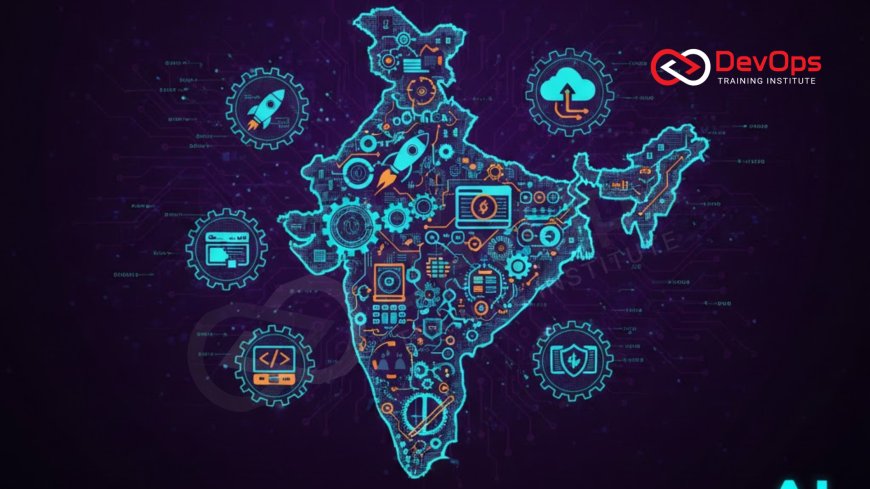
India has long been known as a global hub for software talent, but in recent years, the focus has shifted from service delivery to product innovation. The Indian startup ecosystem, now the third largest in the world, is producing a new wave of companies that are building sophisticated, world-class infrastructure. These startups are not just adopting global standards; they are innovating on top of them, creating unique DevOps patterns that handle massive scale, diverse user bases, and complex regulatory environments. The story of Indian tech in 2025 is one of resilience, speed, and a relentless pursuit of engineering excellence.
This article dives into 20 compelling stories of how Indian startups have used DevOps to solve real-world problems. From automating the launch of private rockets to managing ten-minute grocery deliveries, these stories highlight the critical role of automation and site reliability. We will look at how companies across Bangalore, Pune, Hyderabad, and Delhi are using modern toolchains to disrupt traditional industries. These narratives provide a roadmap for any growing team looking to balance the need for rapid feature releases with the absolute necessity of maintaining a stable and secure production environment for millions of users.
Fintech Pioneers Scaling Through Automation
The fintech sector in India has been a primary driver of technical innovation. Startups like Cred and various neo-banks have had to build systems that are both highly available and strictly compliant with financial regulations. Their success relies on a DevSecOps approach where security checks are integrated into every stage of the pipeline. By automating compliance audits and using fine-grained access controls, these companies can release updates multiple times a day without risking sensitive financial data or violating local laws. This automated safety net allows them to stay ahead of traditional banks while maintaining a superior user experience.
Another major challenge for Indian fintech is the sheer volume of transactions. During peak hours or festive sales, the load on digital payment systems can spike by ten times or more. Startups have solved this by implementing sophisticated gitops workflows that allow their clusters to scale automatically based on real-time demand. This ensures that every transaction is processed instantly, regardless of the global traffic. The ability to manage such massive scale with minimal manual intervention is a testament to the maturity of the DevOps culture within these organizations, making them benchmarks for financial technology worldwide.
Revolutionizing Delivery with Real-Time Data
Quick commerce has taken India by storm, with startups like Zepto promising deliveries in under ten minutes. Achieving this feat requires more than just a large fleet of riders; it requires a highly optimized supply chain powered by real-time data and automated workflows. These startups use Platform Engineering to provide their developers with a standardized set of tools, allowing them to deploy new logistics algorithms in minutes. By reducing the time it takes to move from a code change to a production release, these companies can constantly fine-tune their delivery routes and inventory management systems.
To ensure their systems can survive the unpredictable nature of internet connectivity and mobile device performance in diverse regions, many of these startups have embraced how can chaos engineering improve resilience in devops pipelines. They deliberately inject failures into their systems to see how their apps behave when a warehouse goes offline or a network becomes slow. This proactive testing allows them to build self-healing mechanisms that keep the service running even when parts of the underlying infrastructure are struggling. This commitment to resilience is what allows them to maintain their "ten-minute" promise to millions of customers across the country every single day.
Deep Tech and Space Innovation in Bharat
Perhaps the most exciting area of innovation is in the deep tech and space sectors. Startups like Skyroot Aerospace are using DevOps principles to manage the software that powers their rocket launches. For these companies, a failed deployment is not just a bug; it is a mission-critical failure. They implement a rigorous why is shift left testing a critical strategy for faster delivery approach, where every simulation and flight code update is subjected to thousands of automated tests before it ever reaches a physical component. This ensures that the margin for error is kept at an absolute minimum.
Similarly, AI startups like Sarvam AI are building language models specifically for the Indian context. Managing the massive datasets and compute resources required for these models has led to the development of unique MLOps (Machine Learning Operations) pipelines. These pipelines automate the training, testing, and deployment of models across diverse cloud environments. By treating their machine learning models with the same discipline as traditional software, these startups can iterate rapidly on their AI features, bringing the power of technology to people who speak regional languages like Hindi, Tamil, and Bengali across the rural heartlands of India.
Table: DevOps Innovation Maturity in Indian Startups
| Startup Sector | Core DevOps Innovation | Primary Tooling | Key Success Metric |
|---|---|---|---|
| Fintech | Automated Compliance and Security | Vault, Snyk, Terraform | 99.99% Transaction Success Rate |
| Quick Commerce | Real-time Route Optimization | Kubernetes, ArgoCD, Prometheus | 10-Minute Delivery Latency |
| Deep Tech / Space | Mission-Critical Testing | Jenkins, Docker, Custom Simulations | Zero Critical Deployment Failures |
| Healthtech | HIPAA-Compliant Infrastructure | Azure Pipelines, Ansible, ELK Stack | 100% Data Privacy Compliance |
| EdTech | Predictive Content Scaling | AWS Lambda, CloudFront, Grafana | Seamless High-Traffic Exam Peaks |
Optimizing Cloud Spend in a Value-Driven Economy
Indian startups are famous for being capital-efficient, often described as "frugal innovation" or "Jugaad." In the cloud era, this has translated into a strong focus on how does finops help optimize cloud spend in devops driven teams. Instead of just letting their cloud bills grow as they scale, startups are using automated tools to monitor and optimize their resource usage in real-time. This includes identifying unused storage, automatically shutting down development environments during non-working hours, and using spot instances for non-critical tasks.
By making cloud costs visible to every developer, these startups encourage a culture of efficiency. Developers can see the price of a specific architectural choice before they even deploy it. This transparency ensures that the organization can grow its user base without its infrastructure costs spiraling out of control. This disciplined approach to financial operations allows Indian startups to stay competitive on a global stage, proving that you can build world-class, scalable systems while maintaining a lean and sustainable budget. It is a powerful lesson for any company looking to maximize the value of their cloud investments.
Observability and Monitoring in Diverse Environments
Operating in the Indian market presents unique challenges, such as dealing with a wide variety of mobile devices and fluctuating network speeds across different states. Startups have overcome this by building deep Observability into their applications. They don't just look at whether a server is up; they look at the end-to-end user journey. By understanding the what are the key differences between observability and monitoring in devops, they can pinpoint if a slowdown is caused by a backend bug, a slow database, or a local ISP issue in a specific city.
This level of insight is vital for maintaining a consistent user experience. For instance, an e-commerce startup might notice that users in a particular region are experiencing slow checkouts. By diving into their observability data, they can identify that a specific third-party integration is failing under low-bandwidth conditions. They can then use how do feature flags enable safe continuous deployment to disable that feature for those users instantly, providing a faster "lite" version of the app. This dynamic adaptation keeps the business moving and ensures that every user gets the best possible experience regardless of their location or device constraints.
Standardizing Success with Platform Engineering
As startups grow from a few developers to hundreds, the risk of chaos and fragmentation increases. To solve this, many Indian companies are investing in Platform Engineering. They build internal developer portals that provide a "golden path" for everything from spinning up a new microservice to setting up a monitoring dashboard. This standardization reduces the cognitive load on developers, allowing them to focus on the business logic that makes their startup unique rather than getting bogged down in infrastructure details.
A well-built platform also ensures that every service follows the organization's best practices for security and reliability from day one. It automates the complex parts of how do canary releases reduce risk in production deployments, making safe releases the default behavior. By providing these self-service capabilities, startups can maintain the agility of a small team even as they scale into large enterprises. This focus on developer experience is a key reason why Indian startups are able to attract and retain top engineering talent, fostering an environment where innovation can happen at scale without compromising on quality or safety.
- Frugal Innovation: Using automation to achieve high results with limited cloud budgets.
- Hyper-Scale Ready: Designing systems that can handle 10x traffic spikes during Indian festive sales.
- Developer First: Building internal platforms that make it easy for engineers to follow best practices.
- Resilience Focused: Embracing chaos engineering to survive the unpredictable nature of real-world infrastructure.
- Compliance as Code: Automating financial and data regulations to allow for high-speed delivery.
Conclusion
The 20 DevOps innovation stories from Indian startups in 2025 serve as a powerful testament to the country's maturing tech landscape. We have seen how startups are not just following global trends but are actively shaping them to suit unique, large-scale challenges. From the mission-critical testing in space tech to the automated cost optimization in a value-driven economy, these companies are proving that DevOps is much more than just a set of tools. It is a culture of continuous learning, automation, and a deep respect for system reliability. By integrating security at every stage and empowering developers through platform engineering, Indian startups are building a new standard for operational excellence. These stories highlight that with the right engineering mindset, any organization can achieve global scale while maintaining a high pace of innovation. As the Indian startup ecosystem continues to evolve, these DevOps practices will remain the foundation of their success, enabling them to build a more resilient, secure, and technologically advanced world for everyone. The journey from local innovation to global impact is paved with automated pipelines and a relentless focus on the end-user experience.
Frequently Asked Questions
What is the current state of DevOps in Indian startups?
In 2025, Indian startups have moved beyond basic CI/CD, embracing advanced concepts like GitOps, FinOps, and Platform Engineering to scale globally.
How do Indian startups handle massive traffic spikes?
They use highly automated autoscaling and Kubernetes orchestration, often refined through chaos engineering, to ensure system stability during huge demand peaks.
Why is Platform Engineering popular in India?
It reduces the cognitive load on developers by providing self-service tools, allowing teams to maintain speed and standards as they grow rapidly.
How does FinOps help Indian companies?
FinOps allows startups to monitor and optimize cloud spend in real-time, ensuring they remain capital-efficient while supporting rapid business growth.
What role does AI play in DevOps for these startups?
AI is used in MLOps pipelines to automate model training and in AIOps for predictive monitoring and faster incident response.
Is security integrated into the DevOps process?
Yes, most successful startups use a DevSecOps approach, automating security scans and compliance checks directly within their delivery pipelines.
How do startups test their system resilience?
They use chaos engineering to deliberately inject faults into production or staging environments, verifying that their self-healing mechanisms work correctly.
What are "Golden Paths" in engineering?
Golden paths are pre-approved, automated workflows provided by platform teams that make it easy for developers to deploy services safely.
Can DevOps reduce the time-to-market for startups?
Absolutely, by automating manual steps, DevOps allows startups to release features and fixes much faster, often in minutes instead of days.
How do startups manage database changes?
They use automated database migration scripts that are version-controlled and tested just like their application code to ensure data integrity.
What is a Canary Release in a startup context?
It involves rolling out new software to a small subset of users first to verify stability before deploying it to everyone.
Do Indian startups use multiple cloud providers?
Many use a multi-cloud or hybrid cloud strategy to prevent vendor lock-in and to leverage specific services from different cloud giants.
How is observability different from monitoring?
Monitoring tells you if something is wrong, while observability helps you understand why it happened by looking at deep system data.
What is the benefit of GitOps for infrastructure?
GitOps uses Git as the single source of truth for infrastructure, ensuring that the live environment always matches the configuration in code.
How do feature flags improve deployment safety?
Using feature flags allows teams to turn off a broken feature instantly without needing a full code rollback or redeployment.
What's Your Reaction?
 Like
0
Like
0
 Dislike
0
Dislike
0
 Love
0
Love
0
 Funny
0
Funny
0
 Angry
0
Angry
0
 Sad
0
Sad
0
 Wow
0
Wow
0




![100+ Azure DevOps Interview Questions and Answers [Updated 2025]](https://www.devopstraininginstitute.com/blog/uploads/images/202509/image_140x98_68c40aa9a3834.jpg)






![Future Scope of DevOps Careers in Pune [Updated 2025]](https://www.devopstraininginstitute.com/blog/uploads/images/202510/image_140x98_68e3a84652312.jpg)