


![Kong Interview Preparation Guide [2025]](https://www.devopstraininginstitute.com/blog/uploads/images/202509/image_430x256_68dbb95326997.jpg)

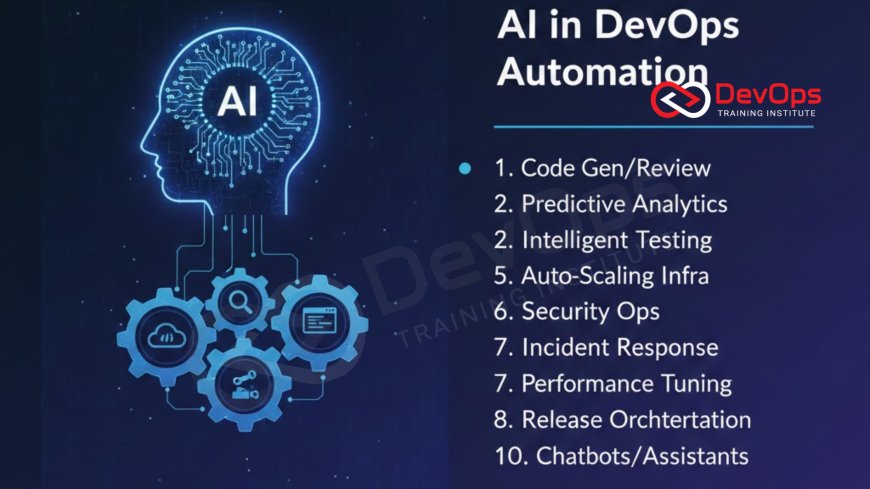
10 Use Cases of AI in DevOps Automation
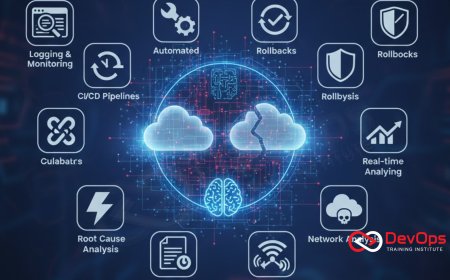
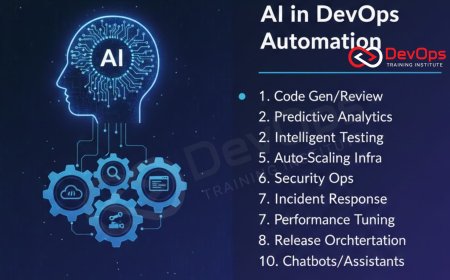
Explore the transformative power of artificial intelligence in our comprehensive guide on 10 use cases of AI in DevOps automation. This article delves into how machine learning and predictive analytics are revolutionizing the software development lifecycle by enhancing incident management, optimizing resource allocation, and streamlining continuous integration pipelines. Discover practical applications that improve system reliability, reduce manual toil, and empower engineering teams to achieve unprecedented levels of operational excellence in modern cloud-native environments and distributed architectures.
Introduction to the Era of Intelligent DevOps
The field of software development and operations has always been about finding ways to move faster without breaking things. For years, we relied on static scripts and manual rules to manage our applications. However, as systems grow into thousands of microservices and global cloud environments, human beings can no longer keep up with the sheer volume of data. This is where artificial intelligence and machine learning come into play, offering a new way to manage complexity through intelligent automation.
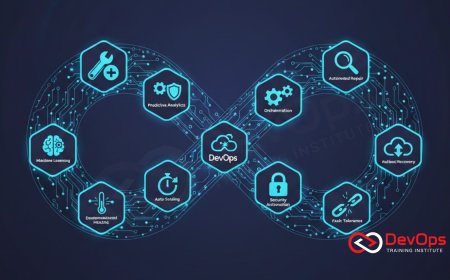
By integrating AI into the DevOps workflow, organizations are moving from reactive firefighting to proactive engineering. AI can analyze vast amounts of logs, metrics, and traces in real time, identifying patterns that a human might miss. This transformation, often called AIOps, allows teams to predict failures before they happen, optimize their cloud spending, and automate the most tedious parts of the delivery pipeline. In this blog, we will explore ten powerful use cases that demonstrate how AI is reshaping the landscape of modern technology operations.
Predictive Incident Management and Resolution
One of the most impactful ways AI is changing the game is through predictive incident management. Traditional monitoring systems only alert you when a threshold is crossed, which often means the problem has already occurred. AI models, however, can look at historical data and current system behavior to forecast potential outages. By identifying subtle warning signs, such as a slow increase in memory usage or a slight shift in network latency, the system can warn engineers minutes or even hours before a critical failure happens.
Beyond just predicting problems, AI can also suggest solutions. When an incident does occur, machine learning algorithms can scan past incident reports and documentation to recommend the most likely fix. This significantly reduces the mean time to resolution and prevents engineers from wasting time on dead end troubleshooting paths. This proactive approach is a natural extension of platform engineering principles, where the goal is to build internal tools that make life easier for developers and operations staff alike.
Smart Log Analysis and Anomaly Detection
In a large scale system, log files can generate gigabytes of data every single minute. It is impossible for a person to read through all this information to find the root cause of an error. AI specialized in natural language processing can ingest these logs at incredible speeds, filtering out the noise and highlighting the specific lines that matter. By learning what a normal log sequence looks like, the AI can immediately flag an anomaly, such as an unusual error code or a sequence of events that has never happened before.
This deep insight is essential for maintaining high levels of observability, which is the ability to understand the internal state of a system based on its external outputs. While traditional monitoring might tell you that a service is down, AI driven log analysis can tell you exactly which line of code or configuration change caused the crash. This saves teams countless hours of manual work and ensures that troubleshooting is based on data rather than guesswork, leading to much more stable and reliable production environments for users.
Automated Testing and Quality Assurance
Quality assurance has traditionally been a bottleneck in the software delivery process because writing and maintaining tests takes a lot of time. AI is solving this by automating the creation of test cases and identifying which tests are most likely to find bugs based on the changes made to the code. AI can also perform visual testing, comparing screen captures to ensure that a new update hasn't accidentally broken the user interface in a way that functional tests might not catch.
This intelligence supports a shift left testing strategy, where quality checks are moved earlier in the development process. By finding and fixing bugs while the code is still being written, teams can avoid expensive and time consuming delays later in the cycle. AI can even predict which areas of the codebase are the most "risky" based on past performance, allowing developers to focus their testing efforts where they will have the biggest impact on overall software quality and security.
Table: AI Impact on DevOps Workflows
| DevOps Phase | AI Use Case | Key Benefit | Impact Level |
|---|---|---|---|
| Planning | Predictive Analytics for Capacity | Accurate resource forecasting. | Medium |
| Development | AI-Powered Code Suggestions | Increased developer productivity. | High |
| Testing | Autonomous Test Generation | Faster feedback and better coverage. | High |
| Deployment | Deployment Risk Prediction | Fewer failed production releases. | Medium |
| Operations | AIOps Incident Prevention | Higher uptime and faster MTTR. | Very High |
Optimizing Cloud Resource and Cost Management
Managing the costs of cloud computing is one of the biggest challenges for modern engineering teams. It is easy for cloud bills to spiral out of control when resources are over-provisioned or left running when they are not needed. AI can solve this by continuously monitoring resource usage and automatically adjusting instance sizes or shutting down idle services. This dynamic optimization ensures that you are only paying for the computational power you actually use, without sacrificing performance.
This use case is a cornerstone of finops, which is the practice of bringing financial accountability to the cloud. AI can forecast future spending patterns and suggest budget adjustments, allowing the finance and engineering teams to work together more effectively. By automating the most tedious parts of cost management, teams can save thousands of dollars a month while ensuring their applications have exactly the resources they need to remain fast and responsive for every user around the world.
Enhancing Security with AI-Driven DevSecOps
Security can no longer be a final check at the end of the development cycle; it must be integrated into every step. AI is making this possible by automatically scanning code and infrastructure configurations for vulnerabilities as soon as they are written. Unlike traditional scanners that rely on known signatures, AI can detect zero day threats and sophisticated attack patterns by analyzing the behavior of the application and the network traffic it generates in real time.
This proactive integration of security is the essence of how devsecops works in a modern environment. AI can also manage user access and permissions, identifying and blocking suspicious login attempts before they can lead to a data breach. By automating security compliance and threat detection, organizations can innovate more quickly while maintaining a much stronger defense against the increasingly complex landscape of cyber threats that businesses face every single day.
Intelligent Continuous Delivery and Deployment
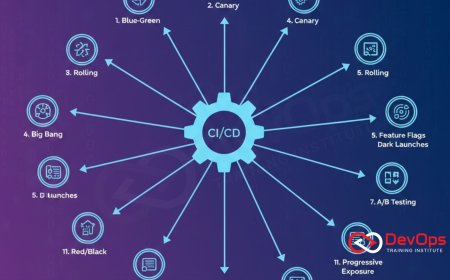
Deploying new software is always a high risk activity. Even with thorough testing, things can go wrong in production. AI helps mitigate this risk by analyzing the health of the system during a rollout. For example, if you are performing a canary release, where you show the new version to a small group of users first, AI can monitor the metrics and automatically stop the deployment if it detects any negative impact on performance or error rates, protecting the rest of your users.
Using AI in this way allows for more sophisticated deployment strategies, such as canary releases, to be managed entirely by software. The AI can decide when to advance to the next stage of the rollout or when to trigger an immediate rollback. This level of automation reduces the stress on the operations team and ensures that new features can be delivered to customers more frequently and with much higher confidence. It turns the deployment process from a nervous manual event into a routine, automated success.
Building Resilience Through Chaos Automation
Resilience is not just about avoiding failure; it is about knowing how to handle it when it happens. AI can be used to automate the injection of failures into a system to see how it reacts, a practice known as chaos engineering. By using machine learning to choose the most effective "experiments," AI can uncover hidden weaknesses in your architecture that you might not have considered. This helps teams build systems that are truly self healing and capable of surviving real world disasters.
Learning how can chaos engineering improve resilience is vital for any team managing mission critical applications. AI can analyze the results of these experiments to suggest architectural changes that would make the system more robust. By making resilience a core part of the automated pipeline, organizations can ensure that their applications stay online and performant, even when the underlying cloud infrastructure or third party services are experiencing significant issues or localized outages.
- AI helps in identifying the most critical paths in your system to test for failure.
- It can automatically adjust the "blast radius" of an experiment to ensure it doesn't impact real users too severely.
- AI provides detailed analysis of how cascading failures occur across distributed microservices.
- It automates the documentation of chaos experiments for compliance and auditing purposes.
Conclusion
The integration of artificial intelligence into DevOps automation is no longer a futuristic dream; it is a current reality that is providing a competitive edge to high performing engineering teams. From the ability to predict and prevent incidents before they impact users to the intelligent optimization of cloud costs and security, AI is the key to managing the overwhelming complexity of modern software systems. We have explored how AI streamlines the entire lifecycle, from smart code suggestions to autonomous quality assurance and resilience testing. By embracing these ten use cases, organizations can reduce manual toil, improve system reliability, and empower their engineers to focus on what they do best: innovating and building value. As AI technology continues to evolve, we can expect even deeper levels of automation, leading to a future where systems are not just managed by humans but are increasingly self-driving and self-optimizing. The journey toward intelligent DevOps is just beginning, and the benefits for those who start today are truly transformative. For those looking to master these concepts, understanding the power of gitops and other modern automation frameworks will be essential for success.
Frequently Asked Questions
What is AIOps in DevOps?
AIOps refers to the use of artificial intelligence and machine learning to automate and enhance IT operations and system monitoring tasks.
How does AI improve incident response?
AI can predict potential outages by analyzing patterns in system data and suggesting the most effective fixes based on historical reports.
Can AI help reduce cloud costs?
Yes, AI can automatically scale resources up or down based on real-time demand, ensuring you only pay for what you actually use.
Is AI-driven security better than manual checks?
AI can scan code and traffic in real-time to detect sophisticated threats and zero-day vulnerabilities that traditional manual methods might miss.
What is predictive analytics in DevOps?
Predictive analytics involves using historical data to forecast future events, such as traffic spikes, resource needs, or potential software bugs.
How does AI assist in software testing?
AI can automatically generate test cases, perform visual UI testing, and identify the most critical areas of code to test for quality.
Can AI manage software deployments?
AI can monitor the health of a deployment and automatically halt or rollback the release if it detects any negative impact on performance.
What are the benefits of AI log analysis?
AI can quickly sift through massive volumes of log data to find specific anomalies and root causes that would take humans hours to locate.
How does AI impact site reliability engineering?
AI provides SREs with deeper observability and automated recovery tools, helping them maintain high system uptime with less manual effort.
Will AI replace DevOps engineers?
AI is designed to augment engineers by handling repetitive tasks, allowing them to focus on more complex architectural and creative problem-solving work.
What is the role of AI in FinOps?
AI automates cost tracking and forecasting, providing visibility and recommendations to help teams optimize their cloud spending and budget effectively.
How does AI help with chaos engineering?
AI can design and run controlled experiments to find weaknesses in a system, helping engineers build more resilient and self-healing architectures.
Can AI improve developer productivity?
Yes, AI provides smart code completions, automates documentation, and speeds up the feedback loop from testing and security scanning processes.
What are the challenges of using AI in DevOps?
Challenges include the need for high-quality data to train models, the complexity of initial setup, and ensuring human oversight of automated decisions.
Is AI suitable for small DevOps teams?
Absolutely, many AI tools are available as managed services that can provide immediate benefits to teams of any size by reducing manual work.
What's Your Reaction?
 Like
0
Like
0
 Dislike
0
Dislike
0
 Love
0
Love
0
 Funny
0
Funny
0
 Angry
0
Angry
0
 Sad
0
Sad
0
 Wow
0
Wow
0


![100+ Azure DevOps Interview Questions and Answers [Updated 2025]](https://www.devopstraininginstitute.com/blog/uploads/images/202509/image_140x98_68c40aa9a3834.jpg)





![Future Scope of DevOps Careers in Pune [Updated 2025]](https://www.devopstraininginstitute.com/blog/uploads/images/202510/image_140x98_68e3a84652312.jpg)