






![Kong Interview Preparation Guide [2025]](https://www.devopstraininginstitute.com/blog/uploads/images/202509/image_430x256_68dbb95326997.jpg)



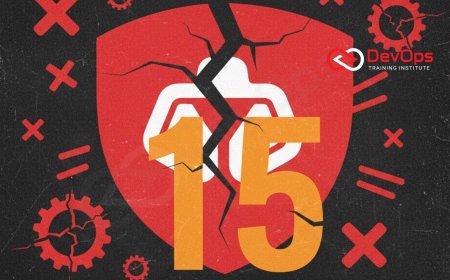


15 Common DevOps Anti-Patterns & How to Avoid Them
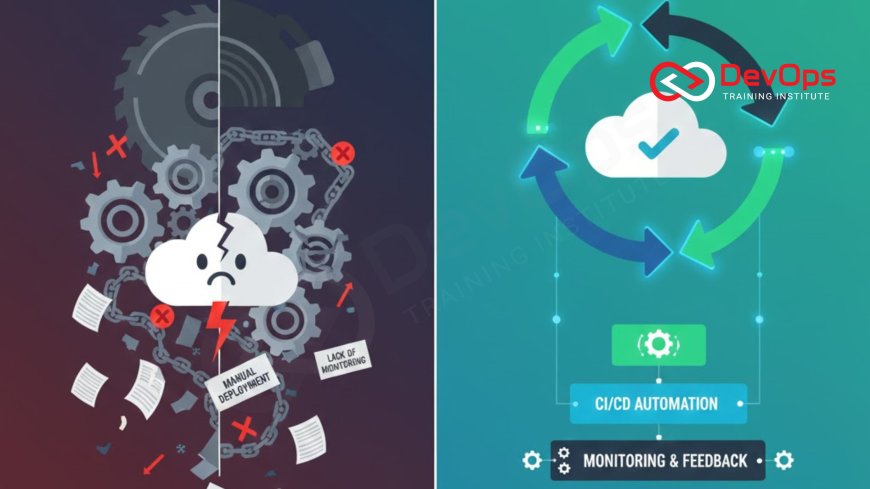
Successfully adopting DevOps requires avoiding common pitfalls known as anti-patterns, which often mimic DevOps processes but fail to deliver real value or cultural change. This comprehensive guide details 15 of the most dangerous anti-patterns, including "DevOps in Name Only," the "Automation Illusion," and "Blame Culture." Learn how to identify these traps and implement proven strategies—such as cross-functional teams, pipeline automation, and a strong culture of psychological safety—to ensure your transformation is genuine and sustainable, delivering true acceleration and reliability instead of merely adding complexity to your existing IT silos. Understanding these pitfalls is the foundation of a mature DevOps methodology.
Introduction: The Roadblocks to True DevOps
DevOps is a powerful cultural and technical movement that has redefined how software is delivered, demanding tight collaboration, end-to-end automation, and a commitment to continuous improvement. However, because the concept is often misunderstood, many organizations attempt to implement DevOps practices without fully embracing the underlying cultural change, inadvertently falling into what are known as anti-patterns. An anti-pattern is a seemingly attractive, yet ultimately counterproductive, solution to a recurring problem. In the context of DevOps, these pitfalls mimic the visual cues of a successful transformation—such as buying new tools or creating a new job title—but fail to deliver the core benefits of increased speed, reduced risk, and improved morale, instead often exacerbating existing organizational friction and slowing down the delivery cycle even further.
Successfully navigating a DevOps transformation is less about mastering complex new tools and more about identifying and dismantling these cultural and procedural roadblocks. These anti-patterns act as hidden traps, ensuring that resources are misallocated, team accountability is fragmented, and automation efforts remain stuck in silos, ultimately hindering the organization's ability to evolve and respond quickly to market demands. Recognizing these common mistakes is the most important step toward building a mature, high-performing IT team. This guide will illuminate 15 of the most frequently encountered DevOps anti-patterns and provide actionable, proven strategies to avoid them, ensuring your journey toward continuous delivery is built on solid, reliable principles rather than superficial changes.
Cultural and Organizational Anti-Patterns
DevOps is fundamentally a cultural movement, and the most dangerous anti-patterns are those that involve organizational structure, team dynamics, and management philosophy. These flaws cannot be fixed with a new tool purchase or an automation script; they require sustained commitment from leadership to redefine roles, responsibilities, and how teams communicate and share ownership. Without addressing these deep-seated cultural issues, any technical implementation will be built on a shaky and unsustainable foundation, leading to eventual failure or stagnation.
These anti-patterns directly undermine the shared responsibility model essential to success:
1. "DevOps in Name Only" (DINO): This occurs when an organization renames its existing System Administrators as "DevOps Engineers" or creates a dedicated "DevOps Team" without changing their responsibilities, breaking down silos, or integrating them with development teams. The result is a new silo that simply accepts code "thrown over the wall" but is still entirely separate from the development process. The solution is to dissolve the dedicated team and embed DevOps Specialists or Platform Engineers directly into cross-functional product teams, shifting responsibility for operational outcomes back to the primary value stream teams.
2. The "Blame Culture" Trap: When an incident or failure occurs, the immediate reaction is to find the person responsible for the mistake. This fear-based culture encourages secrecy, discourages experimentation, and prevents engineers from escalating potential problems early, leading to catastrophic incidents that could have been avoided. The proven remedy is adopting a Blameless Post-Mortem process, which shifts the focus from individual failure to analyzing systemic and procedural weaknesses, fostering a strong organizational culture of continuous learning and psychological safety.
3. Lack of Shared Accountability: The anti-pattern of passing ownership off after a handoff (e.g., "my code works, the Ops team broke the deployment"). This failure in the core DevOps principle prevents end-to-end ownership. To avoid this, implement a Shared Responsibility Model where product teams are responsible for their application from code commit through production monitoring and on-call rotation. This ensures teams feel the pain of their own design or deployment flaws, encouraging them to build reliability into the process from the start.
Technical and Automation Anti-Patterns
While automation is central to DevOps, many organizations mistakenly believe that simply automating bad manual processes will solve their problems. These technical anti-patterns often involve misapplied tooling, focusing automation efforts on the wrong areas, or failing to treat infrastructure as code. These mistakes create new, more complex, and harder-to-troubleshoot bottlenecks in the delivery pipeline, often ironically slowing down overall delivery speed despite the increased investment in automation technologies and cloud resources.
4. The "Automation Illusion": Automating complex, manual processes without first simplifying and standardizing them. If a complex manual process takes twenty error-prone steps, automating those twenty steps simply results in a fast, complex, and still error-prone automated process that is now much harder to debug. The solution is to first streamline and simplify the process—for example, by migrating to containers or serverless platforms—and then apply automation to the now-simplified workflow. This ensures that automation efforts yield genuine efficiency gains.
5. Treating Infrastructure as Pets, Not Cattle: Managing production servers, containers, or VMs as unique entities (pets) that are manually patched and nursed back to health, rather than disposable, identical resources (cattle) that can be easily replaced via automation. This anti-pattern leads to Configuration Drift and unrepeatable environments. The remedy is to strictly enforce the principle of Immutable Infrastructure by using containers (Docker/Kubernetes) and comprehensive Infrastructure as Code (IaC) tools (Terraform/CloudFormation) to ensure that resources are consistently provisioned and destroyed for every update, eliminating the ability to manually patch servers.
6. Large, Infrequent Deployments: Waiting months to release a single, massive bundle of features, code changes, and bug fixes. This creates an extremely high-risk "big-bang" deployment that almost guarantees failure, long maintenance windows, and painful rollbacks. This habit directly violates the continuous flow principle of DevOps. The solution is to strictly enforce a culture of Small Batch Sizes, promoting continuous integration and continuous delivery (CI/CD) practices that push code through the pipeline multiple times a day, making each change low-risk and easily reversible.
7. Ignoring the Database in CI/CD: Treating the database schema and data migrations as a manual, out-of-band process managed separately from the application deployment. Since the application cannot run without the correct database schema, this manual step becomes the single biggest bottleneck and source of risk in the entire deployment process. The fix is to integrate Database-as-Code tools (like Flyway or Liquibase) directly into the automated CI/CD pipeline, ensuring that schema changes are version-controlled, reviewed, and automatically applied alongside the application code, thus enabling true end-to-end continuous delivery.
Security and Compliance Anti-Patterns
Security is the area where resistance to DevOps is often strongest, frequently resulting in an anti-pattern where security is treated as a manual "gate" placed right at the end of the deployment cycle. This practice, known as the "Security as an Afterthought" anti-pattern, forces teams to find and fix costly, major vulnerabilities just before launch, dramatically slowing delivery speed and increasing deployment anxiety. The modern solution is to adopt DevSecOps, embedding security practices throughout the entire pipeline.
8. Security as an Afterthought: Placing all security checks, vulnerability scanning, and compliance auditing in a separate, manual step right before the production release. This anti-pattern guarantees that security flaws discovered late in the cycle require expensive and time-consuming rework by development teams, dramatically slowing release speed. The remedy is to Shift Left on security, integrating automated security analysis (SAST/DAST) directly into the CI build stage, ensuring developers get immediate feedback on security flaws as they write code, which is the core principle of why developers are shifting to this model.
9. Hardcoding Secrets: Embedding sensitive credentials (API keys, passwords, access tokens) directly into configuration files, IaC templates, or source code and committing them to a version control system like Git. This is a massive security risk that exposes the organization to compromise. The strict solution is to implement a dedicated, centralized Secrets Management system (like HashiCorp Vault, AWS Secrets Manager, or Azure Key Vault) and enforce the use of temporary, dynamically generated credentials for applications and deployment tools. This ensures that sensitive data is managed securely and never stored in plaintext within the code repository.
10. Over-Privileged Pipelines: Granting the CI/CD pipeline or deployment roles overly permissive access (e.g., administrator or full-write access) to production cloud environments "just to make things work." This anti-pattern creates an extremely high-risk attack vector, where a compromise of the CI/CD server could lead to total infrastructure takeover. The best practice is to strictly enforce the Principle of Least Privilege, ensuring that every pipeline tool and service role is granted only the absolute minimum IAM permissions required to provision or modify its specific target resources, greatly limiting the potential blast radius of a security incident.
| # | Anti-Pattern | Category | Recommended Solution |
|---|---|---|---|
| 1 | "DevOps in Name Only" (DINO) | Cultural/Org | Dissolve dedicated DevOps silos; embed engineers into product teams. |
| 5 | Infrastructure as Pets | Technical/IaC | Adopt Immutable Infrastructure via containers and IaC tools like Terraform. |
| 6 | Large, Infrequent Deployments | Process/Flow | Enforce small batch sizes and high-frequency, automated CI/CD. |
| 8 | Security as an Afterthought | Security | Shift Left on security: automate scanning early in the CI build phase. |
| 11 | Ignoring Observability | Operational | Implement comprehensive, unified monitoring for logs, metrics, and tracing. |
Operational and Process Flow Anti-Patterns
These anti-patterns occur when the processes designed to streamline the flow of software delivery become bottlenecks themselves, often due to a failure to integrate key stages or apply continuous improvement principles to the deployment pipeline itself. Solving these often involves adopting robust testing practices, ensuring that environments are identical, and building mechanisms for continuous feedback from the production environment, which is the cornerstone of the SRE practice.
11. Ignoring Observability: Deploying applications without implementing comprehensive, unified monitoring for all three pillars of observability: metrics, logs, and traces. This leaves the team blind to performance degradation, user impact, and the root cause of failures, leading to slow Mean Time to Recovery (MTTR) because engineers rely on guesswork rather than data. The solution is to mandate the integration of monitoring tools (Prometheus, Grafana, Splunk) as part of every deployment, making system health transparent to both developers and operations and proactively using monitoring to enforce service level objectives (SLOs), which is a core tenet of SRE practices and essential for tracking critical metrics.
12. Environment Drift: Allowing development, staging, and production environments to slowly diverge over time, either through manual changes or mismatched configurations. This anti-pattern ensures that deployments that succeed in staging fail mysteriously in production ("it worked on my machine!"). The avoidance strategy requires strictly managing all environments using Infrastructure as Code (IaC), ensuring configuration is defined in source control, and adopting containerization to package the application and its dependencies together, guaranteeing parity across all environments from development to production. Adopting a tool like Docker and Kubernetes makes this form of environment drift impossible.
13. Manual Testing Dependency: The failure to fully automate the testing phase, leaving the CI/CD pipeline dependent on lengthy, manual quality assurance (QA) cycles before deployment can proceed. This bottleneck drastically slows down the release process and limits deployment frequency to human speed. To fix this, elevate the QA role to that of an Automation Specialist, mandate high code coverage for unit and integration tests, and utilize advanced tools to automatically run performance and security tests on every build, embedding quality continuously throughout the automated pipeline.
Strategic and Business-Level Anti-Patterns
These anti-patterns are rooted in strategic mistakes or a failure by leadership to recognize the true nature of DevOps as a comprehensive business strategy rather than just a cost-cutting IT initiative. These mistakes often lead to poor technology choices, fragmented organizational efforts, and a lack of investment in the necessary skills and education required to sustain a long-term cultural transformation.
14. Ignoring the Cloud or Multi-Cloud Platform Choice: Failing to adopt a standardized cloud platform, or, conversely, adopting a multi-cloud strategy without the necessary platform-agnostic tools and expertise to manage the increased complexity. The wrong choice—or a haphazard non-choice—ensures engineers spend time wrestling with bespoke infrastructure instead of building customer-facing features. A thoughtful solution requires selecting a primary cloud platform (AWS, Azure, or GCP) based on business needs, and leveraging tools like Terraform and Kubernetes to abstract the cloud platform's complexity, making the infrastructure a reliable, scalable foundation for continuous delivery.
15. Tool-Centric Focus (The Illusion of Tooling): The belief that buying the latest continuous delivery tool, automation server, or monitoring platform alone constitutes a DevOps transformation. This anti-pattern prioritizes tool acquisition over the fundamental cultural shift, often resulting in expensive software licenses being deployed on top of existing organizational silos. The avoidance strategy is to treat tools as merely enablers of culture and process. Start by fostering the culture of collaboration and shared ownership first, then select the minimal set of open-source or commercial tools necessary to support the improved process, ensuring that the technology investment genuinely supports the desired behavioral change.
Conclusion: Cultivating a Culture of Flow
The journey toward becoming a high-performing DevOps organization is less a sprint toward new tools and more a long-term marathon of continuous process improvement and cultural introspection. The 15 common anti-patterns outlined here—from the cultural failure of the "Blame Trap" to the technical mistake of "Infrastructure as Pets"—represent the primary reasons why many transformation efforts fail to achieve their intended results. Success hinges on a conscious effort to adopt the opposite practices: embedding engineers into cross-functional teams, strictly automating everything through IaC, integrating security from the start (DevSecOps), enforcing small batch sizes, and building a blameless culture that prioritizes learning over finger-pointing.
Organizations must recognize that DevOps is not a destination but a practice built on humility, transparency, and a relentless focus on optimizing the flow of value to the customer. By meticulously dismantling these organizational and technical anti-patterns, teams create a healthy environment where risk is naturally minimized, speed is safely maximized, and engineers feel empowered to innovate, achieving the stability and efficiency that defines world-class software delivery and sustains SRE principles in production.
Frequently Asked Questions
What is a DevOps anti-pattern?
An anti-pattern is a common but counterproductive solution that superficially resembles a good practice but ultimately causes more problems in the system or organization.
How do you fix "DevOps in Name Only"?
Fix it by dissolving dedicated "DevOps teams" and embedding automation and infrastructure specialists directly within product-focused development teams.
What is the greatest risk of ignoring the database in CI/CD?
The greatest risk is database schema mismatch, which causes application failure and requires lengthy, manual, and high-risk recovery procedures during deployment.
What does "Blameless Post-Mortem" mean?
It means analyzing failures by focusing on systemic and procedural causes, not on individual human errors, to promote learning and honest reporting.
How do you avoid configuration drift?
Avoid drift by strictly enforcing Immutable Infrastructure, ensuring environments are only provisioned or updated using version-controlled Infrastructure as Code (IaC).
What is the "Automation Illusion"?
It is the mistake of automating a complex, inefficient manual process without first simplifying and standardizing the underlying workflow to maximize gains.
Why is hardcoding secrets an anti-pattern?
Hardcoding secrets is a massive security risk because it exposes credentials and sensitive data within the source code repository, creating a major attack vector.
What does "Shift Left" on security mean?
It means integrating automated security scanning, testing, and vulnerability checks early into the CI/CD pipeline, not just before the final deployment phase.
How should production permissions be handled for pipelines?
Pipelines must be strictly configured using the Principle of Least Privilege, granting only the absolute minimum permissions required to perform their specific tasks.
What are "pets" versus "cattle" in infrastructure?
Pets are unique servers that are manually maintained; cattle are disposable, identical, and replaceable resources provisioned automatically by code, which is the DevOps goal.
Why are large, infrequent deployments dangerous?
They are dangerous because they are high-risk, bundling many changes that are difficult to isolate, troubleshoot, and roll back when failure occurs.
What should be done when an application lacks good observability?
Implement mandatory, unified monitoring for metrics, logs, and traces, making system health transparent for developers to use for proactive issue resolution.
What is the goal of adopting small batch sizes?
The goal is to increase deployment frequency, reduce the risk associated with each release, and enable faster, simpler rollbacks if any change fails in production.
How can organizations encourage a learning culture?
They can encourage it by running blameless post-mortems and rewarding transparency when potential problems or near-misses are reported early by any team member.
Is a DevOps tool purchase enough for a transformation?
No, a tool purchase alone is insufficient; the primary transformation must be cultural, organizational, and centered on shared responsibility and automation of the process.
What's Your Reaction?
 Like
0
Like
0
 Dislike
0
Dislike
0
 Love
0
Love
0
 Funny
0
Funny
0
 Angry
0
Angry
0
 Sad
0
Sad
0
 Wow
0
Wow
0


![100+ Azure DevOps Interview Questions and Answers [Updated 2025]](https://www.devopstraininginstitute.com/blog/uploads/images/202509/image_140x98_68c40aa9a3834.jpg)






![Future Scope of DevOps Careers in Pune [Updated 2025]](https://www.devopstraininginstitute.com/blog/uploads/images/202510/image_140x98_68e3a84652312.jpg)