

![Kong Interview Preparation Guide [2025]](https://www.devopstraininginstitute.com/blog/uploads/images/202509/image_430x256_68dbb95326997.jpg)

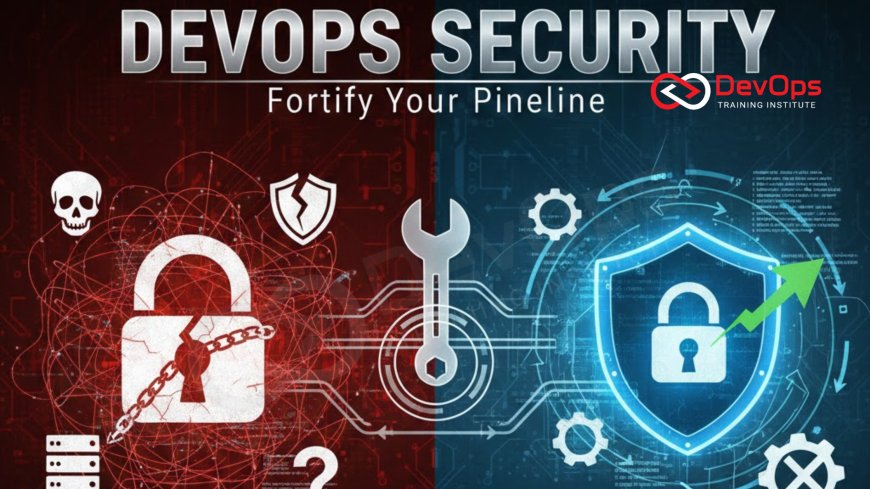
18 DevOps Security Issues & How to Fix Them
Dive into the 18 most critical security issues facing modern DevOps pipelines and distributed systems, and learn the practical DevSecOps strategies required to fix them. This comprehensive guide covers everything from securing CI/CD secrets and managing infrastructure-as-code vulnerabilities to preventing misconfigurations in cloud environments and enforcing least privilege access. Discover how shifting left with automated scanning, securing the supply chain, and integrating security controls across the entire software development lifecycle (SDLC) can transform your organization into a high-trust, resilient enterprise. Essential reading for all security-conscious DevOps practitioners and SRE teams striving for excellence.
Introduction
The core philosophy of DevOps is speed and agility, enabled by automated Continuous Integration and Continuous Delivery (CI/CD) pipelines. However, in the rush to accelerate delivery, security is often treated as an afterthought, creating significant vulnerabilities that span the entire development lifecycle, from code commit to production runtime. This paradigm, known as "Security as an Afterthought," is unsustainable in the modern threat landscape, where automated attacks target every weak link in the software supply chain. The integration of security into every phase of the development lifecycle—DevSecOps—is no longer optional; it is a fundamental requirement for building resilient systems.
DevSecOps necessitates a cultural shift, moving security responsibilities out of a centralized team and embedding them directly within the development and operations teams. This shift left means building security checks and automated guardrails into the CI/CD pipeline, ensuring that vulnerabilities and compliance risks are identified and remediated early, where they are cheapest and easiest to fix. This guide breaks down 18 of the most common and critical security issues facing DevOps environments and provides actionable, professional strategies to fix them. By addressing these issues systematically, organizations can build secure-by-design systems that maintain both high velocity and high assurance, leading to better operational outcomes.
Security Issues in the CI/CD Pipeline
The CI/CD pipeline is the central nervous system of any DevOps organization, automating everything from code compilation to production deployment. As such, it presents a prime target for attackers, who aim to inject malicious code, steal credentials, or pivot into production environments. Securing the pipeline means locking down every step, ensuring the integrity of the code being built and the environment executing the build process. A single vulnerability in the pipeline can compromise the entire software supply chain, making it the most critical area to secure.
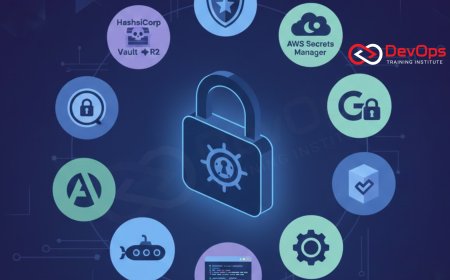
- Exposed Secrets in Code or Configuration: Many developers inadvertently commit sensitive credentials (API keys, database passwords, tokens) directly into version control systems (VCS). This immediately exposes them to anyone with repository access. Fix: Implement automated secret scanning tools (e.g., git-secrets, truffleHog) that scan every commit and pull request for credential patterns. Use dedicated secret management solutions (e.g., HashiCorp Vault, AWS Secrets Manager) and ensure secrets are only injected into the CI/CD runner at runtime.
- Weak or Over-Privileged CI/CD Service Accounts: The service account that executes the CI/CD job often has excessive permissions, such as the ability to deploy to both development and production environments, or the group permissions to perform administrative tasks across multiple services. Fix: Adhere strictly to the principle of least privilege (PoLP). Limit the scope of the CI/CD service account to only the resources and actions absolutely necessary for the job (e.g., only push to the container registry, not deploy to production). Use short-lived, ephemeral credentials via solutions like OpenID Connect (OIDC) for cloud authentication.
- Insecure Use of Third-Party Pipeline Actions/Extensions: CI/CD platforms like GitHub Actions or GitLab CI rely heavily on third-party actions or extensions. An attacker could compromise a popular action library, inserting malicious code that is then executed by your pipeline. Fix: Pin dependencies to specific, full commit SHAs rather than broad versions (e.g., `v1`). Audit the source code of all external actions, prioritizing those from verified creators, and maintain a private registry of approved, internal-reviewed actions to limit external exposure and supply chain risk.
- Lack of Code Integrity and Signing: Pipelines often build artifacts without verification, allowing potentially tampered code to proceed. Fix: Implement code signing for build artifacts (containers, packages, binaries) using tools like Sigstore. Verify the signature during the deployment stage to confirm that the artifact has not been modified since it left the controlled build environment, ensuring the software integrity of the entire supply chain.
Security Issues in Source Code and Dependencies
The application code itself is the most common vector for vulnerabilities. Even if the CI/CD pipeline is secure, flaws in the custom code or the open-source libraries it relies upon can introduce critical security holes. DevSecOps mandates shifting security testing left, making security a continuous part of the coding process rather than a final audit. Automating these checks reduces developer friction and ensures security issues are found immediately upon introduction, when they are least expensive to fix.
- Vulnerable Dependencies and Libraries: Most modern applications rely on hundreds of open-source packages. If a vulnerability (e.g., Log4Shell) is discovered in a dependency, the entire application is at risk. Fix: Implement Software Composition Analysis (SCA) tools (e.g., Dependabot, Snyk) in the CI pipeline to automatically scan all dependencies, flag known vulnerabilities, and generate pull requests to update to secure versions. Maintain a high-frequency patching cycle to manage dependency drift continuously.
- Custom Code Vulnerabilities (Injection, XSS): Flaws in custom application logic, such as SQL Injection (SQLi) or Cross-Site Scripting (XSS), remain a persistent threat. Fix: Integrate Static Analysis Security Testing (SAST) tools into the CI pipeline to scan source code for common vulnerability patterns without executing the code. Run SAST checks on every pull request and enforce rules that fail the build if high-severity vulnerabilities are introduced, making developers responsible for immediate remediation.
- Insecure Development Environment Setup: Developers often work in local environments that lack security controls, potentially exposing company data or providing an easy pivot point for attackers. Fix: Standardize development environments using containerized environments (e.g., Dev Containers) or managed cloud workspaces that enforce consistent security settings, isolate sensitive data, and minimize the use of administrator rights on developer machines to enforce a secure baseline.
Security Issues in Infrastructure as Code (IaC)
Infrastructure as Code (IaC) tools like Terraform, CloudFormation, and Ansible automate resource provisioning, eliminating manual configuration error. However, if the code defining the infrastructure contains security misconfigurations, that vulnerability is replicated instantly and at scale across all environments, greatly magnifying the risk. Security must be integrated into the IaC review process to ensure cloud infrastructure is provisioned securely by default.
- Insecure IaC Configurations (Public Storage, Open Ports): IaC files often define resources with overly permissive access, such as S3 buckets open to the public internet or security groups with port 22 (SSH) open to the world. Fix: Implement Infrastructure as Code Security Testing (IACS/IaC Scanning) tools (e.g., Checkov, Terrascan) to scan the Terraform or CloudFormation files for compliance and security issues before they are applied. These tools act as a guardrail, automatically failing the CI pipeline if a policy violation (like public access to storage) is detected.
- Neglecting Cloud Service Permissions and Roles: Poorly defined Identity and Access Management (IAM) roles can grant services excessive permissions, allowing an attacker who compromises one service to pivot across the entire cloud account. Fix: Use automated tools to enforce the principle of least privilege for every IAM role. Continuously review and prune unused or overly broad permissions. Ensure that service roles are defined granularly, granting only the specific read, write, and execute permissions necessary to perform their required tasks.
- Hardcoding Credentials in IaC Templates: Developers occasionally hardcode sensitive information directly into environment variables or output blocks within IaC templates. Fix: Strictly prohibit the use of plaintext secrets in IaC. Utilize native cloud secret managers (e.g., AWS Secrets Manager, Azure Key Vault) to store sensitive values and reference them dynamically within the IaC template at runtime, ensuring that the infrastructure definition remains clean and auditable.
Overview of 18 DevOps Security Issues and Fixes
| Issue Category | Security Issue (Threat) | Recommended Fix (DevSecOps Strategy) |
|---|---|---|
| CI/CD Pipeline | Exposed Secrets in Code/VCS | Automated secret scanning on commit; centralized secret management (Vault). |
| CI/CD Pipeline | Over-Privileged Service Accounts | Enforce Least Privilege; use OIDC and short-lived, ephemeral cloud credentials. |
| CI/CD Pipeline | Insecure Third-Party Actions | Pin actions to specific SHAs; maintain a verified registry of approved components. |
| CI/CD Pipeline | Lack of Code Integrity and Signing | Implement code signing (e.g., Sigstore) for all build artifacts; verify signatures before deployment. |
| Source Code | Vulnerable Dependencies/Libraries | Automated Software Composition Analysis (SCA) in CI; maintain a continuous patching cycle. |
| Source Code | Custom Code Vulnerabilities (SQLi, XSS) | Integrate Static Analysis Security Testing (SAST) on every pull request. |
| Source Code | Insecure Development Environment Setup | Standardize environments using cloud workspaces or secure, containerized dev environments. |
| IaC | Insecure IaC Configurations (Public Access) | IACS/IaC Scanning in CI to enforce policies before provisioning. |
| IaC | Neglecting Cloud Service Permissions | Continuously enforce Least Privilege on IAM roles and service accounts. |
| IaC | Hardcoding Credentials in IaC Templates | Use secret management systems; prohibit plaintext secrets in IaC files. |
| Runtime/Cloud | Unsecured Cloud Storage (S3/Blobs) | Automated cloud security posture management (CSPM) and preventative policies. |
| Runtime/Cloud | Unpatched Operating Systems/Containers | Automated vulnerability scanning on images; build immutable infrastructure with golden images. |
| Runtime/Cloud | Neglected Security Logging and Monitoring | Centralized security event management (SIEM); audit all privileged access. |
| Container/Image | Excessive Privileges in Containers | Run containers as non-root users; use Pod Security Standards (PSS) in Kubernetes. |
| Container/Image | Large Container Images with Bloat | Use multi-stage builds and minimal base images (Alpine, Distroless); remove unnecessary tools. |
| Container/Image | Secrets Baked into Container Images | Use runtime secret injection (Kubernetes Secrets, Vault) over build-time secrets. |
| Access/Identity | Insufficient Sudo/Privileged User Auditing | Strictly control sudo access; centralize and audit all privileged command logs (e.g., via `r/syslog`). |
| Access/Identity | Inadequate Offboarding of User Accounts | Automate user account management (addition/deletion) tied to identity provider; enforce timely account deactivation. |
Security Issues in Cloud Runtime and Management
Even if code is perfectly secure and the pipeline is locked down, security issues can emerge in the running cloud environment due to operational oversight, monitoring gaps, or failure to apply security patches. These issues represent a failure in the "Ops" side of DevOps, often stemming from the dynamic nature of cloud infrastructure and the complexity of managing large, distributed application fleets. Continuous monitoring and automated compliance checks are the only way to maintain a secure posture in a constantly changing cloud environment.
- Unsecured Cloud Storage (S3 Buckets, Blob Storage): Misconfigured storage buckets that inadvertently grant public read or write access are a perpetual source of high-profile data breaches. This is often caused by manual changes or a failure to enforce security policies on legacy buckets. Fix: Use Cloud Security Posture Management (CSPM) tools to continuously audit the configurations of all cloud resources. Enforce preventative policies (e.g., AWS Service Control Policies) that actively prevent the creation or modification of public storage resources, ensuring that security guardrails are applied at the organizational level.
- Unpatched Operating Systems and Images: The underlying operating systems or virtual machine images running containers must be regularly updated to prevent exploitation of known kernel or system vulnerabilities. Fix: Adopt immutable infrastructure principles. Instead of patching running servers, build new, secure "golden images" with the latest updates and deploy them to replace the old instances. Implement automated image vulnerability scanning in the CI pipeline to ensure only patched, secure images are approved for deployment.
- Neglected Security Logging and Monitoring: A security incident cannot be properly contained or analyzed without complete visibility. Many organizations fail to centralize, secure, and monitor logs from critical security sources like firewalls, identity providers, and OS audit trails. Fix: Integrate all security logs into a centralized Security Information and Event Management (SIEM) system. Ensure that the roles of etcpasswd and etcshadow are logged for changes, and all privileged access attempts are monitored and alerted upon, providing a complete, auditable security history for incident response and forensic analysis.
Security Issues in Containerization and Images
Containers are the de facto deployment unit in DevOps, but they introduce unique security challenges related to image hygiene, runtime isolation, and privileged execution. Misconfigurations here can allow an attacker to escape the container boundary and gain access to the underlying host system, leading to a full infrastructure compromise. Container security must be baked into the image build process and enforced at the orchestration layer (e.g., Kubernetes).
- Excessive Privileges in Containers: Running the container as the `root` user within the container gives the application unnecessary privileges and vastly increases the damage potential if the container is compromised. Fix: Always run containers as a non-root user. Use Kubernetes Pod Security Standards (PSS) or custom admission controllers to enforce security contexts that drop unnecessary kernel capabilities and prevent privileged container access, limiting the potential for a container escape exploit.
- Large Container Images with Bloat: Oversized container images often contain unnecessary binaries, development tools, and configuration files that increase the attack surface and download times. Fix: Use multi-stage Docker builds to ensure only the necessary runtime components are included in the final image. Select minimal base images (e.g., Alpine Linux or Google's Distroless images) that contain only the essential runtime libraries, reducing the total number of files an attacker can exploit, which is an application of compression and file size optimization for security.
- Secrets Baked into Container Images: Storing API keys or credentials directly within the container image layers makes the secret persistent and easily discoverable if the image is accessed. Fix: Utilize runtime secret injection exclusively. In Kubernetes, this means using Secrets resources mounted as files or injected as environment variables only when the container starts, ensuring the secret never resides persistently within the immutable image layer itself.
Security Issues in Identity and Access Management (IAM)
Identity and Access Management is the critical perimeter of any secure system. Failures here allow unauthorized users or processes to gain access to sensitive resources. In a dynamic DevOps environment, managing access for both human users and automated service accounts requires continuous vigilance, automation, and strict adherence to the principle of least privilege, ensuring that every user or service only has the minimum necessary read, write, and execute permissions to do their job, and nothing more.
- Insufficient Sudo/Privileged User Auditing: Elevated access commands (e.g., `sudo`) performed by system administrators or developers are often not adequately logged or audited, creating blind spots for security teams. Fix: Strictly control and audit privileged access. Centralize and monitor all `sudo` usage logs, correlating them with user identity and time. Implement solutions that require justification and approval for temporary elevated access, following the principle of "break glass" for emergency situations only.
- Inadequate Offboarding of User Accounts: Failing to promptly deactivate or delete user accounts and associated credentials when an employee leaves the organization creates potential backdoors for unauthorized access. Fix: Automate user account management tied to a central Identity Provider (IdP) like Active Directory or Okta. Ensure that the offboarding workflow includes immediate deactivation of user accounts and revocation of all associated keys, tokens, and access rights across the cloud environment and all internal systems, preventing a user from retaining access once they leave the company.
- Lack of Credential Rotation: Long-lived credentials, service account keys, and API tokens significantly increase the risk profile if compromised. Fix: Enforce automated, frequent credential rotation for all long-lived secrets. Utilize cloud-native identity solutions like OIDC that provide short-lived, temporary tokens for CI/CD pipelines, eliminating the need for static, long-term keys entirely.
The DevSecOps Cultural Mandate
Fixing the 18 security issues detailed above is impossible without a fundamental shift in the organizational culture. DevSecOps is a cultural mandate that requires security to be treated as a shared responsibility, not a function owned solely by a single security team. This requires providing developers with the right tools, knowledge, and accountability to own the security of the code they write and the infrastructure they provision. Shifting left is not just about tools; it is about empowerment, making security feedback immediate and actionable within the developer's workflow, where it can be consumed and resolved efficiently.
Leaders must invest in training developers on secure coding practices, provide easily consumable security tools that integrate seamlessly into the CI/CD pipeline, and establish clear policies that fail the build for critical security violations. This process of continuous feedback and automated enforcement creates a virtuous cycle: security improves because it is caught early, and delivery speed is maintained because security is not a disruptive, last-minute checkpoint. By making security a transparent, automated part of the continuous delivery process, organizations can focus their security experts on advanced threats and proactive security architecture, rather than chasing down basic vulnerabilities in every pull request.
Conclusion
The transition to DevOps accelerates value delivery but simultaneously amplifies security risk if not managed correctly. By addressing the 18 critical security issues across the CI/CD pipeline, source code, IaC, cloud runtime, and identity management, organizations can successfully integrate security into their high-velocity environment. The core solutions are rooted in automation, including continuous scanning (SAST, DAST, IACS), rigorous least privilege enforcement (OIDC, short-lived credentials), and strict access control policies to secure the software supply chain from end to end. The combination of archival integrity for logs and immutable infrastructure ensures that forensic analysis and recovery are robust and reliable.
Ultimately, true DevSecOps maturity is achieved when security becomes a transparent, automated function—a set of non-negotiable guardrails that protect the organization without impeding its speed. By focusing on principles like least privilege, continuous auditing of privileged access, and cultural ownership, organizations can secure their cloud-native infrastructure, drastically reduce their risk exposure, and build a resilient platform that meets the demand for both continuous innovation and ironclad assurance. Adopting these fixes is the only way to thrive in the modern, threat-rich environment and secure your systems from the underlying file system to the exposed application endpoints, driving operational excellence and customer trust.
Frequently Asked Questions
What is the primary goal of the "shift left" security approach?
The goal is to move security testing and responsibility earlier into the development lifecycle to find and fix vulnerabilities when they are cheapest to resolve.
What is the greatest risk of exposed secrets in version control?
The greatest risk is that an attacker who compromises the repository gains direct access to sensitive cloud resources or application data, leading to a breach.
How does OIDC enhance CI/CD security for cloud deployments?
OIDC eliminates the need for long-lived cloud access keys by using short-lived, verifiable tokens for automated authentication, reducing the risk of credential leakage.
What is the function of an IACS scanning tool?
Its function is to scan IaC files (like Terraform) for security misconfigurations and policy violations before the infrastructure is provisioned in the cloud.
How does running containers as non-root users improve security?
It limits the potential damage an attacker can cause if they compromise the container, making it harder for them to pivot to the underlying host system.
Why is automated SCA essential in a DevOps pipeline?
SCA is essential because it automatically detects known vulnerabilities in the vast number of open-source dependencies used by modern applications.
What is the "blast radius" in security and how do microservices help reduce it?
The blast radius is the potential scope of damage. Microservices reduce it by localizing the impact of a single service failure or breach.
How can organizations ensure user account management is secure during offboarding?
They must automate the deactivation and deletion of accounts, keys, and tokens, linking the process to a central Identity Provider (IdP) for timely revocation.
What is a "golden image" and how does it help patching?
A golden image is a pre-built, fully patched VM or container image used for all deployments, allowing old, vulnerable instances to be fully replaced instead of patched.
Why is auditing privileged access like `sudo` critical?
Auditing is critical to monitor and track actions taken with elevated access, providing the necessary audit trail for security investigations and compliance.
What are the security benefits of using Immutable Infrastructure?
It prevents configuration drift and ensures that any security fix or patch is applied uniformly across the entire running application fleet.
What should be centralized and monitored for security incident response?
All security logs, including authentication attempts, firewall events, and audit trails, should be centralized in a SIEM for correlation and rapid incident response.
How do you secure secrets within Kubernetes without baking them into images?
You use Kubernetes Secrets resources, which are mounted into the container at runtime as files or environment variables, keeping them out of the image layer.
What is the role of file access permissions in container security?
File permissions are crucial for container security to ensure the application only has the minimum necessary rights to access specific files within its own environment.
What is the main risk of using a third-party CI/CD action pinned to a broad version?
A broad version range means the action's maintainer could push a new, malicious version that your pipeline automatically consumes without manual review or audit.
What's Your Reaction?
 Like
0
Like
0
 Dislike
0
Dislike
0
 Love
0
Love
0
 Funny
0
Funny
0
 Angry
0
Angry
0
 Sad
0
Sad
0
 Wow
0
Wow
0


![100+ Azure DevOps Interview Questions and Answers [Updated 2025]](https://www.devopstraininginstitute.com/blog/uploads/images/202509/image_140x98_68c40aa9a3834.jpg)





![Future Scope of DevOps Careers in Pune [Updated 2025]](https://www.devopstraininginstitute.com/blog/uploads/images/202510/image_140x98_68e3a84652312.jpg)