

![Kong Interview Preparation Guide [2025]](https://www.devopstraininginstitute.com/blog/uploads/images/202509/image_430x256_68dbb95326997.jpg)



12 DevOps Roles Explained for Freshers
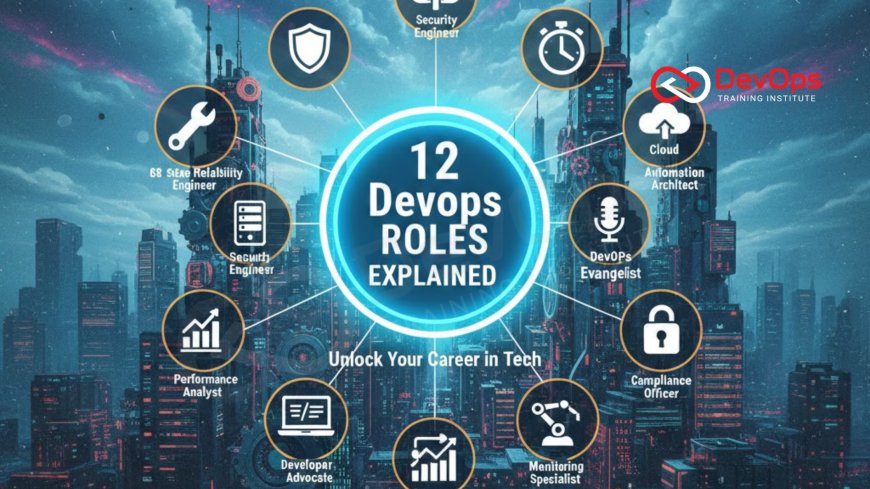
The DevOps landscape is rich with diverse career paths, moving far beyond the single title of "DevOps Engineer." This extensive guide, tailored specifically for freshers, clearly defines 12 core roles within the modern software delivery pipeline, from Site Reliability Engineering (SRE) to DevSecOps and Platform Engineering. Understand the key responsibilities, required skills, and daily activities of each position, helping you choose the right specialization to launch your career. We demystify the jargon and explain how these roles collaborate to build, deploy, and maintain robust applications across various cloud platforms and infrastructure types. This is your essential roadmap to navigating the dynamic world of DevOps careers.
Introduction to the Evolving DevOps Career Landscape
The term "DevOps" began as a cultural movement, emphasizing collaboration, automation, and continuous feedback between software development and IT operations teams. Over the past decade, this movement has matured into a complex and highly specialized field, giving rise to a wide array of job titles. For a fresher entering the technology industry, the sheer volume of roles, from "DevOps Engineer" to "Platform Engineer" or "SRE," can be overwhelming. Understanding these distinctions is the crucial first step toward selecting a career path that aligns with your technical interests, whether that is writing code, managing infrastructure, or ensuring application reliability at scale.
The core concept uniting all these roles is the pursuit of velocity and quality in software delivery. Every specialization is dedicated to breaking down silos and automating repetitive tasks. While a generalized "DevOps Engineer" might wear many hats in a small company, larger organizations divide responsibilities to achieve deep expertise in areas like security (DevSecOps), infrastructure automation (Cloud Engineer), or production stability (SRE). Recognizing this specialization is vital, as it highlights the specific tools, skills, and daily focus that define each career track and what an aspiring professional should prioritize learning.
This comprehensive guide aims to demystify these specialized titles by providing clear explanations of 12 critical roles within the DevOps ecosystem. We will explore the key responsibilities, the fundamental knowledge required for entry, and the kind of impact each position has on the overall software value stream. By understanding these distinctions, freshers can better tailor their learning journey, target specific internships, and confidently articulate their career goals to potential employers in this highly competitive, yet rewarding, technical domain.
The Core Automation and Engineering Roles
These roles focus directly on the heart of the DevOps transformation: automating the pipeline, managing infrastructure through code, and building the environment where applications run. They require a strong blend of coding proficiency and operational knowledge, acting as the bridge between developers writing application features and the physical hardware or virtualization layers that host them. These are often the most common entry points for freshers who have a foundational understanding of scripting languages like Python or Go and familiarity with cloud computing basics.
A central tenet of these roles is the use of Infrastructure as Code (IaC) tools like Terraform or CloudFormation. They treat infrastructure configuration files as code, enabling repeatable, testable, and version-controlled environments. This shift from manual configuration to code-driven automation is the reason modern companies can scale rapidly and recover from failures predictably. The automation engineer, for instance, is constantly seeking opportunities to eliminate repetitive manual work, dedicating their time to writing tools and scripts that make the rest of the team more productive, freeing up valuable developer time.
The work often involves provisioning and managing resources across public cloud platforms such as AWS, Azure, or GCP. This requires not only knowing the IaC tools but also understanding networking, security groups, and storage volumes within the chosen cloud environment. For a fresher, demonstrating proficiency in these cloud fundamentals, along with proficiency in container technologies like Docker and Kubernetes, is a critical differentiator when applying for these foundational DevOps and Cloud Engineering positions.
The Operational and Reliability Focus Roles
The roles centered around operational excellence ensure that the applications, once deployed, remain stable, fast, and available to users twenty-four hours a day, seven days a week. This discipline is often referred to as Site Reliability Engineering (SRE), a practice pioneered by Google. SREs bring a software engineering perspective to operations, using code and automation to solve operational problems, focusing on minimizing manual intervention and defining clear metrics for service health.
SREs define and enforce Service Level Objectives (SLOs), which are quantifiable targets for availability, latency, and performance. Their time is typically split between improving the production system (known as "toil reduction") and developing new features. They actively discourage manual operational tasks, seeing them as opportunities for automation. This is where an SRE shines: developing self-healing capabilities, automated scaling solutions, and centralized logging and monitoring dashboards to proactively detect and prevent outages before customers are affected.
A key responsibility for this group is incident response. When a major service outage occurs, the SRE is often at the forefront, not just fixing the immediate problem, but leading the blameless post-mortem process. The goal is always to prevent recurrence by automating the fix, turning every failure into a long-term improvement in system resilience. This requires a cool head, strong debugging skills, and deep knowledge of how the application code interacts with the underlying infrastructure, making it a demanding yet highly rewarding career path.
Specialized Disciplines in DevOps
As the DevOps movement has matured, highly specialized roles have emerged to address specific technical challenges, most notably security and compliance. These roles require a dedicated focus and often an advanced understanding of a particular domain. The DevSecOps Engineer, for example, is not just responsible for security, but for integrating security practices directly into the automated CI/CD pipeline, ensuring that security checks run automatically and continuously from the moment code is committed.
The DevSecOps Engineer ensures that security is "shifted left," meaning security is considered early and often, rather than being an afterthought. This involves integrating tools for static analysis, dependency scanning, and compliance validation directly into the continuous integration phase. They work with developers to champion secure coding practices and manage centralized secrets management systems, guaranteeing that sensitive credentials are never hard-coded or exposed in the file system or configuration files. This fusion of security expertise with automation skills is one of the fastest-growing and highest-demand areas in the entire technology sector.
Another crucial specialized role is the Configuration Management Specialist, who focuses on ensuring consistency across all production and non-production environments. They utilize tools like Ansible, Chef, or Puppet to define the desired state of all servers and devices, automating the installation, patching, and configuration of the operating system and applications. This meticulous approach prevents configuration drift and ensures that environments are reproducible, which is vital for debugging and compliance. These specialists are the guardians of stability, ensuring that deployments are predictable regardless of the target server.
Summary of 12 Core DevOps Roles
This table provides a concise overview of the 12 key roles discussed, highlighting their primary areas of expertise and the main tools they utilize. Note that in smaller organizations, one individual might encompass the responsibilities of several of these roles, especially the DevOps Engineer.
| Role Title | Primary Focus | Key Tools Used | Career Trajectory |
|---|---|---|---|
| DevOps Engineer | General automation, CI/CD pipeline building, cross-functional collaboration. | Jenkins, GitLab CI, Terraform, Docker, Kubernetes. | Leads to Platform Engineering or SRE. |
| Site Reliability Engineer (SRE) | System reliability, monitoring, incident response, toil reduction. | Prometheus, Grafana, PagerDuty, Scripting (Python/Go). | Specializes in Operational Resilience. |
| Cloud Engineer | Managing cloud resources and services, cloud cost optimization. | AWS, Azure, GCP consoles, CloudFormation, Terraform. | Leads to Cloud Architect roles. |
| Automation Engineer | Developing scripts and tools to eliminate manual administrative tasks. | Bash, Python, Ansible, PowerShell, custom tooling development. | Deep specialization in Infrastructure as Code. |
| Release Manager/Engineer | Orchestrating releases, managing environments, pipeline governance. | Jira, CI/CD tools, communication platforms, centralized dashboards. | Focuses on Delivery Velocity and Coordination. |
| DevSecOps Engineer | Integrating security testing and compliance into the CI/CD pipeline. | SAST/DAST tools (e.g., SonarQube), Vault, container security scanners. | High-demand role in Application Security. |
| Configuration Management Specialist | Maintaining consistent configuration of servers and application components. | Ansible, Chef, Puppet, SaltStack. | Deep expertise in Systems Automation. |
| Toolchain Engineer | Selecting, integrating, and maintaining the suite of tools used by DevOps teams. | All CI/CD, monitoring, and source control tools. | Focuses on Developer Experience and Tool Integration. |
| Platform Engineer | Building and maintaining the internal "platform" (e.g., self-service Kubernetes). | Kubernetes, abstraction layers, internal APIs, GitOps tools. | Architectural, focused on Internal Developer Platforms (IDPs). |
| Infrastructure Architect | Designing large-scale infrastructure, networking, and high-availability solutions. | Networking, Security, Cloud Provider Services, Cost Modeling. | Senior-level strategic planning. |
| QA Automation Engineer | Creating and maintaining automated test suites for continuous quality checks. | Selenium, Cypress, TestNG, integrated into CI pipelines. | Specializes in Shift-Left Testing and Quality Gates. |
| DevOps Consultant/Evangelist | Driving cultural adoption, training teams, and defining transformation strategy. | Agile frameworks, coaching tools, presentation and communication. | Focuses on Organizational and Cultural Change. |
The Emerging Role of Platform Engineering
Platform Engineering is one of the newest and fastest-growing specialized areas within the DevOps movement. Its goal is to create a delightful, self-service experience for application developers. Rather than requiring developers to manually configure their CI/CD pipelines, networking, and monitoring tools, the Platform Engineer builds an internal developer platform (IDP) that abstracts away this complexity. This means developers can focus on writing business logic and features, while the platform automatically handles the infrastructure, security, and deployment details.
A key outcome of this role is increased developer productivity. The Platform Engineer provides a curated set of tools and golden paths that automatically adhere to the company's security and compliance standards. For example, they might build a single internal command-line interface that allows a developer to provision a new microservice, complete with monitoring, logging, and an auto-scaling cluster deployment, all with one command. This move from managing infrastructure directly to managing the platform that provisions infrastructure is a strategic step for scaling engineering organizations efficiently.
Platform Engineers spend a lot of time working with Kubernetes, building internal abstractions using GitOps tools, and defining internal APIs. Their work is highly code-centric, treating the platform itself as a product with its own users (the developers). They are architects of the internal toolchain, responsible for integrating various services, whether they are commercial observability suites or internal open source solutions. This role is highly strategic and requires not only deep technical skill but also strong communication abilities to understand and serve the needs of the internal customers.
The Toolchain Engineer and DevOps Consultant
The Toolchain Engineer is the individual responsible for making all the disparate parts of the DevOps environment work together seamlessly. Modern software delivery often relies on dozens of tools: a version control system (Git), a CI server (Jenkins), an artifact repository (Nexus), a configuration management tool (Ansible), and various monitoring platforms. The Toolchain Engineer ensures that the integrations between these components are robust, secure, and performant, essentially stitching the entire digital factory floor together.
This role requires broad, not just deep, technical knowledge. They must understand the APIs of every tool in the stack to troubleshoot integration failures and optimize data flow, such as ensuring that test results from the QA Automation Engineer are correctly displayed on the SRE’s monitoring dashboard. They are crucial for maintaining the single source of truth and preventing data silos, which can quickly erode the benefits of the DevOps collaboration model. They often manage the licensing and lifecycle of these tools, ensuring they remain updated and compliant.
The DevOps Consultant or Evangelist, on the other hand, operates primarily on the cultural and strategic side. This person is not typically hands-on with the daily pipelines but focuses on organizational change system administration and training. They assess the organization’s current maturity level, define a roadmap for transformation, and coach teams on Agile, lean, and DevOps principles. This requires a profound understanding of technical capabilities but demands superior soft skills to overcome resistance to change and champion new ways of working across departments.
Skills to Master for a DevOps Fresher
Regardless of the specific role a fresher targets, there are foundational skills that are universally valued across the DevOps spectrum. Mastering these core competencies will significantly increase employability and provide a solid base for future specialization. The modern DevOps professional must be comfortable operating in a diverse technology landscape, where continuous learning is mandatory and automation is the default approach to every problem.
The most important foundational skill is competency in at least one scripting or programming language, such as Python, Go, or Bash. These are essential for writing automation scripts, building custom tooling, and even contributing to infrastructure as code definitions. Proficiency in Git, the dominant version control system, is also non-negotiable for collaborative development and managing configuration changes. A strong candidate demonstrates that they can not only execute commands but understand branching, merging, and collaboration workflows in a team setting.
Beyond coding, deep familiarity with cloud infrastructure fundamentals (networking, storage, compute) and containerization technologies (Docker and Kubernetes) is mandatory. Recruiters frequently look for hands-on experience with at least one major cloud provider (AWS, Azure, or GCP). Finally, understanding the CI/CD concepts is key: how code moves from a developer's machine to production, and the purpose of continuous integration, delivery, and deployment. Practice using popular open source tools in personal projects to showcase these vital capabilities.
The Path to Infrastructure Architecture and Strategy
The Infrastructure Architect role represents the pinnacle of the operational track. This is typically a senior position, rarely an entry point for freshers, but understanding it provides a clear long-term career goal. The Architect is responsible for the overall technical design of the entire infrastructure, ensuring it meets business requirements for scale, security, cost efficiency, and high availability. They think strategically, designing disaster recovery plans and multi-region deployment strategies before any actual coding or provisioning takes place.
The Infrastructure Architect must possess a holistic view of the system, understanding the tradeoffs between different technologies, such as choosing between various database systems, serverless computing models, or virtualization techniques. They translate high-level business goals into concrete technical blueprints that the Cloud Engineers and Platform Engineers execute. Their decisions have massive financial implications, making cost optimization a critical part of the job, balancing performance against expense.
To reach this level, a professional typically moves through the ranks of Cloud Engineer or Platform Engineer, gaining extensive, hands-on experience in managing complex distributed systems. They must master the art of governance, defining best practices and guardrails for other teams. The role requires deep expertise in networking, security principles, and compliance, making it a highly technical and strategic leadership position focused entirely on future-proofing the organization's technological foundations.
Conclusion Starting Your DevOps Journey
The world of DevOps offers a dynamic and rewarding career landscape for freshers, characterized by continuous innovation and high demand. By clearly defining and differentiating the 12 key roles, we see that the path is not singular; it is a branching tree leading to specializations in automation, reliability, security, or platform creation. Whether your passion lies in mastering infrastructure as code, developing robust monitoring for an SRE team, or integrating security controls as a DevSecOps Engineer, there is a clear and valuable place for your skills.
The unifying thread among all these roles is the cultural commitment to collaboration and the technical mastery of automation. For a fresher, the best strategy is to focus on building a strong foundation in scripting, cloud fundamentals, and containerization. Understanding how tools like Terraform and Kubernetes function, combined with practical experience in Git and CI/CD concepts, will open the door to entry-level positions in Cloud Engineering or generalized DevOps Engineer roles. From there, you can organically specialize into one of the more advanced disciplines, like Platform Engineering or SRE.
Embrace continuous learning, choose the area that most excites you, and remember that in DevOps, every failure is an opportunity for automated improvement. By clearly articulating which of these 12 roles you aspire to, and backing it up with projects showcasing the foundational skills, you will be well-equipped to launch a successful and impactful career in the world of modern software delivery and system management.
Frequently Asked Questions
What is the difference between an SRE and a DevOps Engineer?
SRE is a specific discipline focused on system reliability and toil reduction, while DevOps Engineer is a broader role focused on pipeline automation and collaboration.
Do I need to know how to code for a DevOps role?
Yes, coding (scripting like Python or Go) is essential for automation, writing infrastructure as code, and creating custom tooling.
What is the most in-demand specialized DevOps role today?
DevSecOps Engineer and Platform Engineer are currently among the most highly sought-after specialized roles across the industry.
What is Infrastructure as Code (IaC)?
IaC is the practice of managing and provisioning computing infrastructure using code and automation, rather than through manual processes.
Which cloud platform should a fresher prioritize learning?
While AWS is often dominant, proficiency in any major cloud provider (AWS, Azure, or GCP) will provide a strong foundational career advantage.
What is Configuration Management?
It is the process of ensuring that a system's settings and state are consistent and maintained over time using specialized automation tools.
What is the primary function of a Release Manager?
The Release Manager coordinates and orchestrates the timely, safe, and governed deployment of software across all environments to production.
What are containers, and why are they important in DevOps?
Containers package an application and its dependencies, ensuring it runs reliably regardless of the environment, simplifying deployment and testing.
Is the DevOps Consultant role technical or non-technical?
It is highly technical, but the core focus is on organizational strategy, cultural change, and clear communication rather than hands-on coding.
What is the primary difference between a Platform Engineer and a Cloud Engineer?
A Cloud Engineer manages the cloud resources, while a Platform Engineer builds the internal tools developers use to access those resources.
What are DAST and SAST in the context of DevSecOps?
DAST (Dynamic) and SAST (Static) are automated security testing tools integrated into the pipeline to find vulnerabilities in code.
Do QA Automation Engineers work in DevOps teams?
Yes, they are crucial for implementing "Shift Left" testing, ensuring continuous quality checks are automated within the CI/CD pipeline.
What kind of salary expectation should a DevOps Fresher have?
Salaries vary significantly by location and specialization, but DevOps roles are typically among the highest paying entry-level positions in IT.
Is knowing an operating system like Linux necessary?
Yes, since most production servers run on Linux, a strong working knowledge of the command line and system fundamentals is essential.
What are "toil" and "toil reduction" for an SRE?
Toil refers to manual, repetitive tasks that have no lasting value; toil reduction is the SRE’s job of automating these tasks away.
What's Your Reaction?
 Like
0
Like
0
 Dislike
0
Dislike
0
 Love
0
Love
0
 Funny
0
Funny
0
 Angry
0
Angry
0
 Sad
0
Sad
0
 Wow
0
Wow
0


![100+ Azure DevOps Interview Questions and Answers [Updated 2025]](https://www.devopstraininginstitute.com/blog/uploads/images/202509/image_140x98_68c40aa9a3834.jpg)





![Future Scope of DevOps Careers in Pune [Updated 2025]](https://www.devopstraininginstitute.com/blog/uploads/images/202510/image_140x98_68e3a84652312.jpg)