

![Kong Interview Preparation Guide [2025]](https://www.devopstraininginstitute.com/blog/uploads/images/202509/image_430x256_68dbb95326997.jpg)

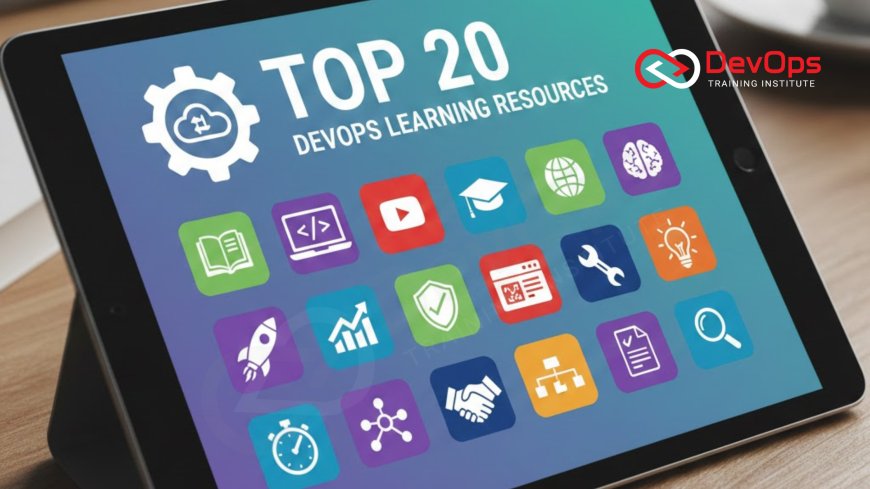
Top 20 DevOps Learning Resources for 2025
Navigate the ever-evolving DevOps landscape with the top 20 essential learning resources for 2025. This curated list covers everything from structured professional certifications and foundational books to hands-on labs and active community forums. Whether you're mastering Kubernetes, deepening your skills in infrastructure as code, or adopting the latest DevSecOps practices, these resources—including high-value courses, influential blogs, and key open-source projects—provide the knowledge and practical experience needed to accelerate your career and contribute effectively to high-velocity technology organizations, ensuring you stay current with industry demands and best practices.
Introduction
DevOps is a field defined by continuous learning. The technology stack—from container runtimes to cloud providers and automation tools—evolves at a relentless pace. To thrive as a DevOps Engineer in 2025, you must commit to actively seeking out the best resources, mastering foundational concepts, and gaining hands-on experience with production-grade tools. Simply knowing the theory is not enough; practical application, validated by industry certification and community contribution, is what separates novice practitioners from highly valued professionals.
The sheer volume of available information can be overwhelming. This guide cuts through the noise to provide a strategic, prioritized list of 20 essential learning resources. We've organized these resources into four key pillars: formal education (courses and certifications), foundational knowledge (books and administration skills), hands-on practice (open-source and community labs), and continuous knowledge streams (blogs and video tutorials). By utilizing resources across all four pillars, you ensure a balanced approach to skill acquisition, covering the culture, the tools, and the hands-on practice required for success.
Whether you are starting from scratch or looking to specialize in areas like advanced container orchestration, DevSecOps, or FinOps, these 20 resources offer a clear path to mastery. Prioritizing certifications from cloud providers and container organizations, engaging with influential open-source projects, and maintaining consistent skill building are the non-negotiable elements of a successful DevOps career strategy for the coming years. Let this list be your roadmap to achieving technical excellence and securing your position at the forefront of modern software delivery.
Pillar I: Top Professional Certifications (Formal Validation)
Certifications validate your expertise in core, high-demand tools and cloud platforms. Focusing on vendor-neutral and major cloud provider certifications proves that you can apply your knowledge in real-world scenarios, directly increasing your marketability and demonstrating your commitment to mastering specific toolchains. For 2025, the focus remains heavily on containers and Infrastructure as Code (IaC).
1. Certified Kubernetes Administrator (CKA)
Offered by The Linux Foundation, the CKA is the gold standard for Kubernetes proficiency. It is a performance-based exam that tests your ability to set up, secure, and manage Kubernetes clusters. Mastering the CKA proves you can handle the complexities of container orchestration in a production environment, making it a critical certification for cloud-native roles.
2. AWS Certified DevOps Engineer - Professional
Amazon Web Services remains the dominant cloud provider. This professional-level certification validates expertise in automating the provisioning, operation, and management of AWS resources, focusing heavily on continuous delivery, security controls, and monitoring. It is essential for any engineer working deeply within the AWS ecosystem.
3. Microsoft Certified: Azure DevOps Engineer Expert (AZ-400)
For those specializing in the Microsoft ecosystem, this certification validates the skills needed to implement DevOps practices using Azure technologies, including Azure DevOps Server, Azure Pipelines, and managing Azure Kubernetes Service (AKS). It focuses on the end-to-end implementation of Azure-native solutions.
4. HashiCorp Certified: Terraform Associate
Terraform is the leading multi-cloud IaC tool. This certification proves a foundational understanding of Terraform's core concepts, configuration language (HCL), and best practices for planning, creating, and managing infrastructure reliably across any cloud provider. This fundamental IaC skill is non-negotiable for modern DevOps roles.
5. Red Hat Certified Engineer (RHCE) - DevOps Focus
The RHCE, often focused on Ansible automation and system administration skills, remains a crucial validation of foundational Linux and automation mastery. In a DevOps context, it proves deep competence in automating the deployment and configuration of systems, a core requirement for ensuring consistent and reliable host environments.
Pillar II: Foundational Knowledge & Concepts (Books and OS)
DevOps is built on fundamental concepts of reliability, culture, and systems administration. These resources provide the enduring knowledge that underpins all tool-based learning, preventing you from becoming merely a "tool operator" and enabling you to understand the "why" behind the practices.
6. The DevOps Handbook & The Phoenix Project
These two books by Gene Kim and co-authors are mandatory reading. The Phoenix Project introduces the cultural and process challenges of IT and the "Three Ways" of DevOps through a relatable fictional narrative. The DevOps Handbook provides the actionable guidance and organizational practices needed to implement a world-class agility, reliability, and security within your technology organization.
7. Site Reliability Engineering (SRE) by Google
This book and its follow-up, The Site Reliability Workbook, define the engineering discipline dedicated to designing, building, and operating large-scale, reliable systems. They introduce critical concepts like SLOs, SLIs, Error Budgets, and post-mortems—all essential for improving software reliability and managing risk in production.
8. Infrastructure as Code by Kief Morris
This definitive guide provides the conceptual foundation for treating infrastructure the same way developers treat code. It covers best practices, patterns, and principles for automating infrastructure provisioning and configuration management, which is essential for achieving consistency and repeatability across environments.
9. Linux Administration and Scripting
Regardless of how many layers of abstraction (containers, serverless) you use, every DevOps engineer must be proficient in Linux administration, including shell scripting (Bash), package management, service control (systemd), and filesystem management. This foundational skill is critical for advanced debugging and host-level security. Understanding setting up RHEL 10 for the first time remains a highly relevant skill.
10. Networking Fundamentals (TCP/IP, DNS, Firewalls)
A deep understanding of TCP/IP, routing, load balancing, and DNS is essential for troubleshooting microservices. Network failures often manifest as application issues, and debugging complex distributed systems requires the ability to diagnose problems at the network layer, especially in containerized and cloud environments. Knowing how to troubleshoot connectivity is crucial for reliability.
Pillar III: Hands-On Practice and Open Source (Experience)
Theoretical knowledge is useless without practical application. These resources provide the hands-on experience and community engagement necessary to master the tools, understand real-world constraints, and build a compelling professional track record.
11. Docker and Kubernetes Hands-On Labs (KodeKloud, Katacoda)
Interactive, browser-based labs are the fastest way to learn containerization and orchestration. Platforms like KodeKloud and the former Katacoda (now part of various vendor sites) offer guided, hands-on scenarios for practicing Docker commands, deploying applications to Kubernetes, and configuring complex resources without needing local setup, ensuring an immersive learning experience. Achieving container orchestration skill is the number one practical requirement.
12. Open-Source Contributions (Kubernetes, Prometheus, Helm)
Contributing to a major open-source project (e.g., Kubernetes, Prometheus, GitLab, or Ansible) provides unparalleled experience. It forces you to learn Git, understand complex codebases, follow professional contribution guidelines, and interact with global experts. Start with documentation fixes, bug triage, or issues tagged "good first issue" to accelerate your learning and build visibility within the industry.
13. Build a Homelab / Personal Project
The best learning resource is your own project. Acquire a cheap cloud account or a spare computer and build a full, end-to-end CI/CD pipeline from scratch. Deploy a simple application (e.g., a Python/Node API and a database) using Git, Jenkins/GitLab CI, Terraform/Ansible, and Kubernetes. This holistic approach solidifies tool integration and exposes you to real operational challenges, from configuring SSH keys security in RHEL 10 to managing persistent storage.
14. Cloud Certification Exam Practice
Using practice exam platforms and dedicated training courses for CKA, AWS, or Azure certifications forces you to engage deeply with the technical requirements of the cloud vendors. Even if you don't take the exam immediately, the structured study guides and simulated tests ensure you cover all necessary tool features and operational best practices, validating your readiness for professional work.
15. DevOps and SRE Meetup Groups
Local or online community groups provide networking, exposure to new tools, and real-world case studies from active practitioners. Participating in discussions and attending talks on topics like post-mortems, chaos engineering, and advanced deployment strategies exposes you to the human and cultural aspects of DevOps, which are just as vital as the technical skills.
Pillar IV: Continuous Knowledge Streams (Blogs and Video)
To stay current in a rapidly moving field, you need continuous, up-to-date knowledge streams. These resources provide practical tutorials, news on emerging tools, and expert insights that fill the gap between formal training and live industry trends, ensuring your skills remain relevant in 2025 and beyond.
16. DevOps Blogs (DevOps.com, GitHub Blog, Atlassian)
Following industry-leading blogs provides timely updates on tool features, security trends (DevSecOps), and enterprise adoption strategies. These resources often feature expert guest posts, detailed case studies, and insights into large-scale deployments, helping you understand how theoretical concepts are applied in the enterprise world. Reading these regularly is essential for staying abreast of the rapid changes in the ecosystem.
17. Cloud Vendor Documentation and Release Notes
AWS, Azure, and Google Cloud documentation are indispensable living resources. They are the authoritative source for configuration, best practices, and the latest features. Dedicate time to reading release notes and official "Well-Architected Frameworks" to understand vendor recommendations for security, performance, and cost management. This is key for understanding security controls like those covered in RHEL 10 hardening best practices applied at the host level.
18. YouTube Channels (TechWorld with Nana, KodeKloud, Bret Fisher)
Video tutorials from experienced practitioners offer visual, step-by-step guidance on complex tool setups (e.g., Kubernetes installation, Jenkins pipelines, Terraform modules). Channels run by experts often simplify complex topics, providing easy-to-digest content that is ideal for quick, practical learning and visual troubleshooting techniques, supplementing formal course materials.
19. Certification-Specific Video Courses (Udemy, Coursera, Pluralsight)
While certifications require hands-on practice, video courses from platforms like Coursera and Udemy provide structured, guided pathways through the required curriculum. Look for highly-rated courses focused on CKA, Docker Certified Associate (DCA), or specific cloud certifications to quickly acquire the foundational knowledge needed to start the practical work.
20. The CNCF Landscape and Interactive Maps
The Cloud Native Computing Foundation (CNCF) maintains a vast, interactive landscape map of all cloud-native projects. Regularly exploring this map helps you discover new tools in areas like observability, service mesh, and GitOps, guiding your specialized learning path and ensuring you're aware of the emerging technologies that will define the future of DevOps, thus constantly refining your skill set based on industry innovation.
Conclusion
The path to becoming an expert DevOps Engineer in 2025 is continuous, but highly rewarding. Success hinges on a balanced approach to learning: combining the structured validation of professional certifications with the foundational wisdom found in industry-defining books, and crucially, hands-on experience derived from personal projects and open-source contributions. The 20 resources listed here provide a comprehensive, multi-faceted strategy to acquire skills in the most in-demand areas, from IaC and container orchestration to advanced observability and security practices.
Your learning strategy must prioritize depth over breadth. Choose one cloud provider, one IaC tool, and one CI/CD platform to master initially, using tools like Terraform, Kubernetes, and Ansible to build practical, end-to-end pipelines. Always reinforce theoretical learning with hands-on labs and personal projects. The ability to demonstrate a fully functional, reliable, and secure pipeline is the strongest asset you can possess in the job market, proving you can handle the real-world demands of high-velocity software delivery.
By consistently engaging with these resources and integrating security and reliability principles into your work—such as leveraging log management for better diagnostics and adopting SRE concepts—you ensure that your expertise remains current and highly relevant. The future of IT depends on skilled professionals who can manage complex, distributed systems; let this be your definitive guide to becoming one of them. Commit to the process, embrace the continuous nature of the field, and accelerate your journey toward DevOps mastery, ensuring that your contributions are always valuable and impactful.
Frequently Asked Questions
What is the single most important certification for a DevOps beginner in 2025?
The Certified Kubernetes Administrator (CKA) is arguably the most valuable certification, as Kubernetes proficiency is foundational for most cloud-native roles.
Should I prioritize learning Jenkins or GitLab CI/CD first?
GitLab CI/CD offers a more modern, integrated approach (single application) and is often favored for new projects, but Jenkins remains highly valuable due to its vast enterprise use and plugin ecosystem.
What foundational knowledge is most critical for advanced DevOps?
Deep proficiency in Linux administration, networking (TCP/IP, DNS), and systems thinking (SRE/DevOps culture) is the most critical foundation.
How does reading "The Phoenix Project" help with technical skills?
The book teaches the cultural and process principles (The Three Ways) of DevOps, which are essential for understanding the strategic release cadence and flow required for high-velocity teams.
What is the purpose of the CNCF Landscape map?
It provides an interactive visual guide to all cloud-native projects, helping you identify new tools and technologies in areas like security, observability, and storage to focus your specialization efforts.
How can I ensure my personal projects are reflective of real-world DevOps?
Ensure your project includes an end-to-end pipeline using Git, IaC (Terraform), CI/CD, and a container orchestrator (Kubernetes) while incorporating security best practices and configuring SSH keys security in RHEL 10 for the host OS.
Why is Prometheus considered a key learning tool for observability?
Prometheus is the de-facto open-source standard for metrics collection in Kubernetes, essential for understanding application performance, defining alerts, and managing observability pillars.
What is the role of the RHEL 10 post-installation checklist in continuous learning?
It reinforces the importance of consistent, automated configuration management and host-level security, ensuring that the base operating system is reliably hardened before any application code is deployed, aligning with RHEL 10 post-installation checklist best practices.
How do the official cloud vendor "Well-Architected Frameworks" help in learning?
They provide structured best practices for designing cloud systems focusing on reliability, security, cost optimization, performance, and operational excellence, offering high-level architectural guidance.
Which books provide the best technical guidance for IaC and automation?
The book "Infrastructure as Code" by Kief Morris provides best practices for automation, while "Terraform: Up & Running" provides hands-on, tool-specific guidance for the leading IaC tool.
Where should I focus to learn DevSecOps in 2025?
Focus on implementing automated security tools (SAST/SCA) in CI/CD pipelines and studying resources like "Securing DevOps" to understand the cultural and technical integration of security, including concepts like RHEL 10 hardening best practices.
How can I transition from traditional IT to a DevOps role?
Start by learning CI/CD tools (Jenkins/GitLab), a cloud provider (AWS/Azure), and containerization (Docker/Kubernetes). Acquire the Terraform Associate certification and focus heavily on automation scripting.
What is the significance of OpenTelemetry in the learning roadmap?
OpenTelemetry is the unifying standard for metrics, logs, and traces. Learning it is essential for future-proofing your skills in observability and avoiding vendor lock-in for monitoring solutions.
How do forums like GitHub and community blogs accelerate learning?
They provide real-time troubleshooting help, expose you to diverse implementations, and offer insights into emerging trends and tools that academic courses often lag behind, fostering practical, immediate problem-solving skills.
How can I use my knowledge of log management best practices to stand out?
Demonstrate your ability to centralize and structure logs (e.g., using ELK or Grafana Loki) and correlate log data with metrics and traces for fast incident root cause analysis, proving operational expertise.
What's Your Reaction?
 Like
0
Like
0
 Dislike
0
Dislike
0
 Love
0
Love
0
 Funny
0
Funny
0
 Angry
0
Angry
0
 Sad
0
Sad
0
 Wow
0
Wow
0


![100+ Azure DevOps Interview Questions and Answers [Updated 2025]](https://www.devopstraininginstitute.com/blog/uploads/images/202509/image_140x98_68c40aa9a3834.jpg)


![Future Scope of DevOps Careers in Pune [Updated 2025]](https://www.devopstraininginstitute.com/blog/uploads/images/202510/image_140x98_68e3a84652312.jpg)