

![Kong Interview Preparation Guide [2025]](https://www.devopstraininginstitute.com/blog/uploads/images/202509/image_430x256_68dbb95326997.jpg)


20 DevOps Predictions That Will Shape the Future
As we navigate the technical landscape of 2026, the intersection of artificial intelligence, platform engineering, and autonomous systems is fundamentally redefining the software delivery lifecycle. This comprehensive guide explores twenty pivotal DevOps predictions that will shape the future of digital innovation, from the rise of agentic infrastructure and self-architecting systems to the mandatory adoption of FinOps and GreenOps as boardroom metrics. Discover how organizations are shifting from speed to strategic value, leveraging AI-augmented toolchains to eliminate technical debt and reduce cognitive load for engineering squads. Whether you are a CTO planning a 12-36 month roadmap or a hands-on engineer mastering new cloud-native paradigms, these expert insights will empower your team to thrive in an era of intelligent, secure, and sustainable automation today.
Introduction to the DevOps Transformation of 2026
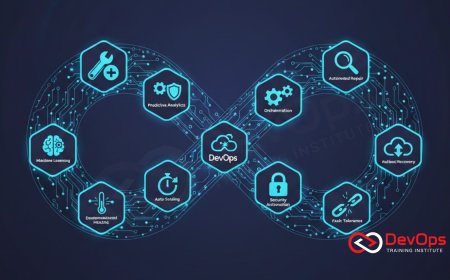
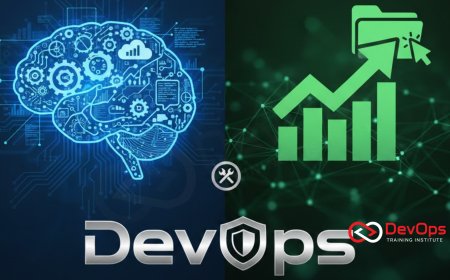
In the rapidly evolving world of 2026, DevOps has matured from a cultural experiment into the intelligent backbone of the modern enterprise. The primary focus of engineering leaders has shifted from simply increasing deployment frequency to delivering measurable, strategic business value through autonomous systems. We are entering an era where automation is gaining a "brain," moving beyond static scripts toward self-learning pipelines that can anticipate failures and remediate risks in real time. This transition is not merely about new tools; it is a fundamental shift in how human creativity and artificial intelligence collaborate to build resilient, global-scale software.
The predictions for the next few years highlight a massive consolidation of fragmented toolchains into unified Internal Developer Platforms (IDPs). As system complexity reaches a tipping point, the industry is embracing platform engineering to reduce the cognitive load on individual developers. This guide outlines twenty critical shifts that will define the DevOps landscape in 2026 and beyond. By understanding these emerging trends, organizations can bridge the gap between technical execution and business outcomes, ensuring they remain competitive in an increasingly automated and secure global digital economy. Let us explore the future of software delivery and the innovations driving the next wave of transformation.
Prediction One: The Rise of Agentic Infrastructure
By 2026, the concept of static infrastructure will be replaced by agentic infrastructure, where AI agents act as first-class citizens within the technical ecosystem. These agents go beyond simple task execution; they orchestrate entire subsystems autonomously, managing resource allocation and implementing architectural changes based on live traffic patterns. Mature platforms will treat these agents like human users, complete with specific RBAC permissions and resource quotas. This shift ensures that continuous synchronization between code and infrastructure is maintained with a level of precision that human operators cannot achieve manually.
These AI agents will learn from historical usage patterns to propose optimizations that humans might miss, such as switching instance types to save costs or migrating databases to reduce latency. This evolution turns the platform into a proactive partner in the development process. By utilizing AI augmented devops toolchains, engineering squads can offload the "heavy lifting" of routine maintenance to these agents. This allows human talent to focus on high-level strategy and innovative features, significantly accelerating the time-to-market for complex digital products while maintaining peak system stability and performance in a busy cloud-native world.
Prediction Two: Platform-Centric Security as a Service
Individual developers can no longer be expected to master every security control in a world of thousands of microservices and non-human actors. By 2026, security will be delivered primarily as a platform-level service, with hardened defaults and identity-by-default access models baked into the developer portal. This "Platform as a Product" mindset ensures that the secure path is also the easiest path for developers to take. Platform engineering teams will act as security multipliers, embedding policy-as-code and real-time compliance validation directly into the continuous delivery workflow across all environments.
This centralization reduces the risk of inconsistent enforcement, which is a leading cause of vulnerabilities in distributed systems. Developers will interact with fewer standalone security tools, instead benefiting from predictable, secure "golden paths" for common use cases. By integrating admission controllers and automated secret scanning into the platform layer, organizations can maintain high security standards without slowing down the development cycle. This shift builds deeper trust between dev, sec, and ops teams, creating a more resilient software supply chain that can withstand increasingly sophisticated cyber threats in the modern digital era.
Prediction Three: Self-Architecture and Autonomous Optimization
Auto-scaling was just the beginning; the future lies in self-architecture, where platforms dynamically re-architect systems to meet specific cost and latency targets. In 2026, leading platforms will switch instance types, restructure service meshes, and move workloads between edge and core data centers without human intervention. This proactive approach to system resilience ensures that the architecture is always perfectly aligned with the current needs of the application. It moves DevOps from a reactive "fix it when it breaks" model to a proactive "optimize before it fails" standard for enterprise engineering.
Self-architecture leverages massive streams of telemetry data to make decisions that optimize for both performance and sustainability. By utilizing architecture patterns that support this level of flexibility, organizations can significantly reduce technical debt and operational waste. This trend is particularly vital for companies managing fluctuating global workloads where demand patterns are unpredictable. As AI models become more adept at understanding system dependencies, the human role will shift from traditional architect to technical strategist, setting the high-level constraints while the platform handles the execution details of the digital infrastructure.
Comparative Analysis of DevOps Trends (2025 vs 2026)
| Focus Area | Standard in 2025 | Prediction for 2026 | Business Impact |
|---|---|---|---|
| Automation | Script-Based (Procedural) | Autonomous (Agentic) | Reduced OpEx & Burnout |
| Cloud Strategy | Multi-Cloud Hybrid | Cloud-Native Edge | Lower Latency & Global Scale |
| Compliance | Ad-hoc Audits | Continuous Verification | Real-Time Risk Mitigation |
| Security | Checkpoints in CI/CD | Platform Capability | Secure-by-Default Delivery |
| Metrics | Deployment Frequency | Strategic Value & DevEx | Business Outcome Alignment |
Prediction Four: FinOps and GreenOps as Boardroom Metrics
The days of unchecked cloud spending are over. By 2026, FinOps will move from reactive dashboards to preventive controls, with platforms implementing pre-deployment cost gates. Engineering teams will be held accountable for the unit-economic thresholds of their services, making cost-aware development a core engineering discipline. This shift ensures that financial guardrails are baked into the entire lifecycle, preventing costly surprises before they impact the bottom line. Organizations will increasingly prioritize ML-based cost optimization to manage the rising expenses of token and inference costs in AI-driven workloads.
Parallel to this, GreenOps is emerging as a critical priority for socially responsible enterprises. Sustainability in software engineering is moving from a marketing slogan to a measurable KPI, with teams optimizing for carbon impact alongside latency and cost. This involves choosing energy-efficient regions and utilizing carbon-aware scheduling for non-critical tasks. These "boardroom metrics" reflect a more mature approach to cloud operations where efficiency is defined by fiscal responsibility and environmental stewardship. Integrating continuous verification for these metrics ensures that every release aligns with the organization's broader ESG and financial goals.
Prediction Five: The Convergence of DevOps and MLOps
The historical fragmentation between application delivery and ML model deployment is coming to an end. By the end of 2026, mature platforms will offer a single, unified delivery pipeline that serves developers, ML engineers, and data scientists through one cohesive experience. This convergence eliminates manual handoffs and ensures that AI models are governed by the same rigorous CI/CD and DevSecOps standards as traditional code. This unified approach is essential for managing AI-driven mobile applications and complex enterprise systems that rely on real-time model inference and data processing.
In this unified world, MLOps practices like model versioning and data drift detection will be integrated directly into the standard observability 2.0 stack. By utilizing GitOps for model management, teams can ensure that their cluster states include both the application logic and the intelligence that powers it. This trend reduces the complexity of maintaining heterogeneous stacks and allows for faster innovation in AI-powered products. It represents a major cultural change where data science and engineering teams work as a single squad, driving shared outcomes and delivering smarter solutions to the end user with high reliability.
20 Predictions Shaping the Future of DevOps
- Agentic Infrastructure: AI agents autonomously orchestrate subsystems and manage resource negotiations in the cloud.
- Platform-Owned Security: Hardened defaults and identity management become central platform-level services for teams.
- Self-Architecting Systems: Platforms proactively switch instance types and restructure meshes for performance targets.
- FinOps Preventive Gates: Cost-aware code becomes a hard requirement with pre-deployment financial validation gates.
- GreenOps Sustainability: Carbon-impact metrics move into the boardroom as a key engineering performance indicator.
- DevOps & MLOps Convergence: A single delivery pipeline serves both application developers and data science squads.
- Continuous Verification: Software supply chain security shifts from ad-hoc checks to real-time verification loops.
- AIOps Predictive Reliability: Machine learning models predict and fix production drift before humans notice a failure.
- Developer Experience (DevEx) KPIs: Employee satisfaction and cognitive load become standard boardroom metrics for tech leaders.
- Agent Golden Paths: Platform teams define specific workflows for AI agents just like they do for developers.
- Policy-as-Code Maturation: Regulatory compliance is interpreted and enforced in real-time by intelligent pipelines.
- Edge-Native DevOps: CI/CD tools handle sprawling edge deployments with geo-aware traffic and load balancing.
- Vibe Coding Guardrails: Platforms serve as the safety net for AI-generated code, auto-remediating insecure manifests.
- Autonomous Compliance: Regulated industries like fintech run fully audited, self-documenting pipelines for audits.
- Identity-by-Default Pattern: Least-privilege access is designed into the core platform, not bolted on by teams.
- Quantum-Resistant DevOps: Security strategies begin addressing the long-term threat of quantum computing to encryption.
- Engineering Squads Over Silos: Cross-functional units owning delivery from idea to deploy replace fragmented teams.
- Low-Code Governance: Platform teams enforce git-linkage and security scans for citizen-developed applications.
- Usage-Based Engineering: Cost modeling for token and inference expenses becomes a standard part of architectural design.
- Kubernetes Evolution: Modern runtimes like containerd drive better performance for high-frequency autonomous deployments.
As these predictions materialize, the role of who drives cultural change will be more important than ever. Leadership must transition from managing speed to orchestrating strategic value, fostering an environment where human creativity is amplified by AI-powered automation. By utilizing ChatOps techniques, these intelligent platforms will communicate their findings and actions directly to human engineers, maintaining transparency in a largely autonomous world. The future of DevOps is smarter, safer, and deeply integrated into the business strategy, ensuring that technology remains a powerful engine for growth and resilience for years to come.
Conclusion: Strategic Value in the AI Era
In conclusion, the twenty DevOps predictions for 2026 point toward a fundamental shift from simple automation to intelligent, strategic value delivery. The rise of agentic infrastructure, platform-owned security, and autonomous optimization represents the next level of cloud-native maturity. By prioritizing developer experience and integrating cost and sustainability metrics into the core lifecycle, organizations can build systems that are not only faster but significantly more resilient and responsible. This new era of "Cognitive DevOps" demands a commitment to continuous learning and a shift in mindset from manual control to automated governance.
As you plan your roadmap, remember that release strategies must now account for AI-generated content and dynamic architectures. Staying informed about AI augmented devops trends will be critical for maintaining your competitive edge. The integration of continuous intelligence and self-healing systems will ensure that your digital operations remain stable and secure as you scale globally. By embracing these twenty predictions today, you are positioning your team to lead the next decade of digital innovation, delivering world-class software that is truly built for the future.
Frequently Asked Questions
What is agentic infrastructure in 2026?
It is a system where autonomous AI agents manage cloud resources, deployments, and optimizations as first-class citizens with RBAC permissions.
How does platform engineering improve security?
It centralizes security as a service, providing developers with secure "golden paths" and hardened defaults that reduce configuration errors significantly.
What is the role of AI-augmented feedback loops?
They use machine learning to analyze massive telemetry data, predicting risks and optimizing pipeline decisions before they impact the production environment.
Why is FinOps becoming a board-level metric?
Rising cloud and AI costs make fiscal responsibility essential; pre-deployment cost gates ensure every architectural change is economically viable and sustainable.
What is the difference between self-healing and self-architecture?
Self-healing fixes known failures like crashed pods, while self-architecture proactively re-designs the system for better cost and latency performance automatically.
How do MLOps and DevOps converge in the future?
They merge into a single delivery pipeline, ensuring AI models follow the same security, versioning, and deployment standards as traditional application code.
What are "Vibe Coding" guardrails?
They are platform-level safety nets that validate and remediate AI-generated infrastructure code to prevent insecure or non-deterministic configurations from reaching production.
How does GreenOps impact DevOps teams?
It requires engineers to optimize for carbon efficiency by selecting energy-efficient regions and reducing unnecessary compute cycles during the deployment process.
What is the benefit of "Engineering Squads"?
They are cross-functional units that own a product from idea to deployment, eliminating handovers and silos to accelerate innovation and delivery speed.
How can I stay updated on DevOps trends?
Participate in cloud-native communities, follow research from groups like Gartner and Forrester, and experiment with new autonomous tools in staging environments.
Will AI-driven DevOps replace human engineers?
No, it shifts their role to technical strategists who set constraints and objectives while AI handles the repetitive operational and implementation tasks.
What is the most important skill for a DevOps pro in 2026?
Proficiency in platform engineering, AI orchestration, and strategic resource governance will be the most sought-after competencies in the technical market.
How does GitOps help with multi-cluster management?
It maintains continuous synchronization between the desired state in Git and live clusters, providing a unified process for global infrastructure orchestration.
What is the "Identity-by-Default" pattern?
It is a security strategy where least-privilege access and identity management are built into every component of the platform by default.
What should be my first step toward a 2026-ready team?
Start by building or adopting an Internal Developer Platform to centralize tools and provide secure, automated self-service paths for your engineering squads.
What's Your Reaction?
 Like
0
Like
0
 Dislike
0
Dislike
0
 Love
0
Love
0
 Funny
0
Funny
0
 Angry
0
Angry
0
 Sad
0
Sad
0
 Wow
0
Wow
0

![100+ Azure DevOps Interview Questions and Answers [Updated 2025]](https://www.devopstraininginstitute.com/blog/uploads/images/202509/image_140x98_68c40aa9a3834.jpg)





![Future Scope of DevOps Careers in Pune [Updated 2025]](https://www.devopstraininginstitute.com/blog/uploads/images/202510/image_140x98_68e3a84652312.jpg)