


![Kong Interview Preparation Guide [2025]](https://www.devopstraininginstitute.com/blog/uploads/images/202509/image_430x256_68dbb95326997.jpg)




10 Kubernetes Multi-Tenant Security Practices
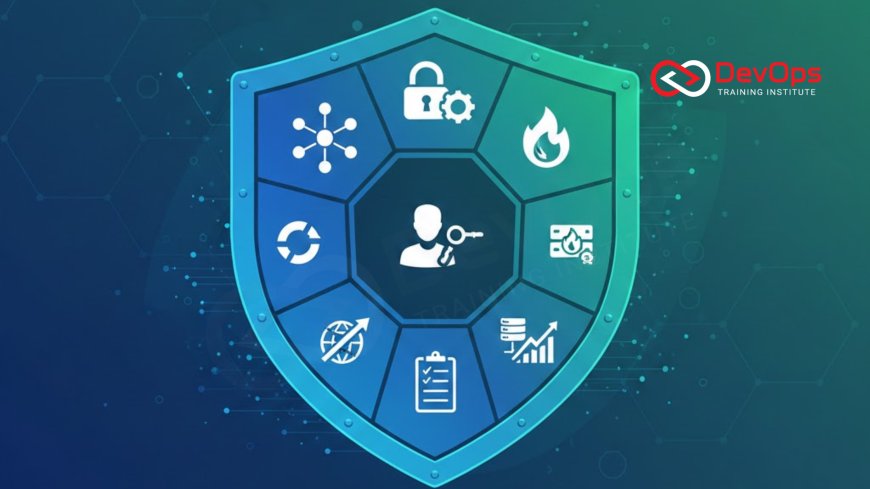
As organizations consolidate workloads into shared clusters, ensuring robust isolation is critical for maintaining system integrity and compliance. This guide explores ten essential Kubernetes multi-tenant security practices for twenty twenty-six, ranging from namespace isolation and granular Role-Based Access Control to zero-trust networking and virtual cluster management. Learn how to prevent lateral movement, mitigate "noisy neighbor" effects, and enforce global security policies across diverse engineering squads. Discover the best practices for managing shared resources and sensitive data to build a resilient, enterprise-grade multi-tenant environment that supports rapid innovation while protecting your organization's most valuable digital assets in today's increasingly complex and automated cloud-native landscape.
Introduction to Multi-Tenant Cluster Management
Multi-tenancy in Kubernetes refers to the practice of sharing a single physical cluster among multiple users, teams, or applications, known as tenants. In the high-velocity engineering landscape of twenty twenty-six, this approach has become a standard for optimizing resource utilization and reducing the operational overhead of managing dozens of individual clusters. However, sharing a cluster introduces significant security risks, as the default Kubernetes environment is relatively open. A breach in one tenant's application could potentially lead to a complete compromise of the entire cluster if proper isolation mechanisms are not in place from the start.
Securing a multi-tenant environment requires a layered defense strategy that addresses both logical and physical isolation. The goal is to ensure that tenants cannot access each other's data, interfere with each other's performance, or escalate their privileges to gain control over cluster-level resources. By implementing the ten practices outlined in this guide, DevOps teams can build a "hardened" environment that supports diverse workloads while maintaining the highest standards of technical excellence and safety. This foundation is essential for any organization aiming to scale its cloud-native operations with confidence and precision in a global, digital-first economy.
Hardening Isolation with Namespaces
Namespaces are the primary building block for logical isolation in Kubernetes. Every tenant should be confined to one or more dedicated namespaces, which act as a virtual boundary for their resources like pods, services, and secrets. While namespaces alone do not provide absolute security, they serve as the anchor point for all other isolation policies, such as RBAC and NetworkPolicies. By explicitly labeling namespaces with tenant identifiers, you can also simplify cost tracking and auditing across your cluster states, ensuring that every resource is correctly attributed to the responsible team.
Effective namespace management involves more than just creation; it requires a standardized provisioning process. Utilizing cultural change strategies to encourage self-service namespace creation through GitOps ensures that every environment is provisioned with a baseline set of security configurations. For example, every new tenant namespace should automatically include a set of restricted labels and annotations required for global governance. This proactive approach prevents the creation of "orphan" namespaces that lack proper oversight, providing a clean and organized technical foundation for your multi-tenant strategy.
Implementing Granular Role-Based Access Control (RBAC)
Role-Based Access Control is the cornerstone of tenant authorization, defining exactly what actions a user or service account can perform within a namespace. In a multi-tenant setup, you must follow the principle of least privilege, granting only the specific permissions necessary for a tenant's operations. This typically involve using RoleBindings to bind users to namespace-scoped Roles, rather than using cluster-wide ClusterRoles. This ensures that even if a tenant has administrative rights within their own space, they remain completely invisible and powerless in other tenants' environments.
To further enhance security, organizations are increasingly adopting attribute-based access control (ABAC) logic to complement their RBAC policies. This allows for more dynamic permission sets based on resource tags or user metadata. Regularly auditing your RBAC configurations is vital for identifying redundant roles or potential privilege escalation paths. By utilizing GitOps to manage your authorization logic, you maintain an immutable record of who has access to what, which is essential for meeting the strict compliance requirements of modern enterprise software delivery.
Zero-Trust Networking with NetworkPolicies
By default, Kubernetes pods can communicate with any other pod in the cluster, which is a major security risk in multi-tenant environments. Implementing NetworkPolicies is the only way to enforce network-level isolation between tenants. The best practice is to start with a "Default-Deny" policy for both ingress and egress traffic in every tenant namespace. You then explicitly allow only the necessary connections, such as allowing a frontend service to talk to a backend service on a specific port. This "zero-trust" approach eliminates the possibility of lateral movement between tenants.
Egress control is equally important to prevent data exfiltration. An egress policy should limit which external IP addresses or internal services a pod can connect to, ensuring that a compromised application cannot "call home" to an attacker's server. For complex environments, many teams choose to layer a service mesh like Istio or Linkerd on top of their network policies to provide mutual TLS (mTLS) encryption and deeper traffic observability. This multi-layered networking strategy ensures that your continuous synchronization efforts are protected by a robust and verifiable security perimeter that works tirelessly to keep tenant data isolated and secure.
Multi-Tenant Resource and Security Patterns
| Practice Name | Primary Security Goal | Technical Tool | Isolation Level |
|---|---|---|---|
| Namespace Isolation | Logical Grouping | K8s Namespace | Soft |
| Network Segmentation | Lateral Movement Prevention | NetworkPolicies | Hard (Data Plane) |
| Resource Quotas | Noisy Neighbor Mitigation | ResourceQuota | Soft (Fairness) |
| Admission Control | Policy Enforcement | Kyverno / Gatekeeper | Hard (Governance) |
| Virtual Clusters | Control Plane Isolation | vCluster | Hard |
Mitigating "Noisy Neighbors" with Resource Quotas
One of the most common challenges in multi-tenancy is the "noisy neighbor" effect, where one tenant's application consumes an excessive share of CPU or memory, causing performance degradation for everyone else. To ensure fairness and stability, you must implement ResourceQuotas at the namespace level. These quotas limit the total amount of compute resources a tenant can request, preventing any single workload from monopolizing the cluster's capacity. This technical enforcement is a vital component of modern architecture patterns designed for shared infrastructure.
In addition to quotas, LimitRanges should be used to define the minimum and maximum resource requests for individual pods. This prevents developers from accidentally launching pods that are too large for the environment or too small to function correctly. By combining these resource constraints with horizontal pod autoscaling, you create a system that can absorb demand shocks while maintaining peak performance for all tenants. Regularly monitoring resource utilization through specialized dashboards allows you to adjust these limits based on actual usage, ensuring that your multi-tenant environment remains both cost-effective and highly responsive to business needs.
Enforcing Policy with Admission Controllers
Admission controllers are the ultimate guardrails of a Kubernetes cluster, allowing you to intercept and validate every request before it is committed to the API server. Tools like Kyverno or OPA Gatekeeper enable you to implement "Policy as Code" for multi-tenancy. You can create rules that automatically block any pod that lacks required tenant labels, tries to run as root, or doesn't have resource limits defined. This proactive enforcement ensures that your environment remains compliant with your organization's security standards without requiring manual oversight or constant intervention.
By utilizing admission controllers, you can also automate the injection of sidecars or security settings for specific tenants. For example, you can ensure that every pod in a "finance" namespace is automatically configured with a logging sidecar and a specific security context. This automated governance is a key differentiator for high-performing DevOps teams. It allows for a standardized and secure developer experience where the infrastructure handles the complexities of compliance, freeing up your human talent to focus on innovation and solving the most interesting business problems today.
Hard Multi-Tenancy with Virtual Clusters (vCluster)
For organizations that require a higher degree of isolation than namespaces can provide, virtual clusters offer a powerful alternative. Tools like vCluster allow you to spin up fully functional, lightweight Kubernetes clusters inside a single namespace of a host cluster. Each virtual cluster has its own API server and control plane, providing tenants with the freedom to manage their own CRDs, namespaces, and users without affecting the host cluster or other tenants. This "hard" multi-tenancy model is ideal for teams that need high autonomy or have strict regulatory requirements.
Virtual clusters combine the cost benefits of shared worker nodes with the security benefits of an isolated control plane. They effectively solve the challenge of managing cluster-scoped resources in a multi-tenant environment. When combined with containerd or other efficient runtimes, vClusters provide a seamless and high-performance experience that feels like a dedicated cluster to the end user. This innovative approach to orchestration represents the future of enterprise multi-tenancy, providing the ultimate balance between operational efficiency and technical security for your most demanding workloads.
Multi-Tenant Security Best Practices Checklist
- Enable Audit Logging: Track every API request to identify who accessed what resource and when, which is vital for forensic analysis and incident handling.
- Use Managed Identities: Leverage cloud-native workload identities to grant pods secure access to external services without using long-lived secrets or credentials.
- Scan for Secrets: Utilize secret scanning tools to ensure that tenants don't accidentally hardcode API keys or passwords in their configuration manifests or logs.
- Isolate Sensitive Nodes: Use taints and tolerations to ensure that highly sensitive workloads run on dedicated node pools that are physically separate from general traffic.
- Enforce Pod Security Standards: Use built-in Pod Security Admission to require "Baseline" or "Restricted" profiles for all tenant workloads and applications.
- Verify with Feedback Loops: Incorporate continuous verification to confirm that your isolation policies are actually providing the intended security and performance benefits in real-time.
- Centralize Observability: Scrape logs and metrics from all namespaces into a single, secure monitoring stack to maintain global visibility across all tenants simultaneously.
Maintaining a secure multi-tenant environment is an ongoing journey that requires constant monitoring and refinement. As your organization grows and new threats emerge, you must be prepared to adjust your policies and adopt new tools to stay ahead of the curve. By utilizing ChatOps techniques, you can bring real-time security alerts directly to your team's communication channels, ensuring that everyone is aware of potential isolation breaches or policy violations. This collaborative approach to security builds a stronger team and ensures that your Kubernetes clusters remain a trusted and resilient platform for your entire organization's digital operations for years to come.
Conclusion: Securing the Shared Cloud Native Future
In conclusion, the ten Kubernetes multi-tenant security practices discussed in this guide provide a comprehensive roadmap for building a resilient and secure shared infrastructure. From the foundational logic of namespaces and RBAC to the advanced isolation provided by virtual clusters and zero-trust networking, each strategy plays a vital role in your overall technical success. By automating these security layers, you create an environment where innovation can thrive without compromising on the high standards of data protection and system uptime that your business requires. The transition to hard-multi-tenancy is not just a technical upgrade; it is a commitment to a more efficient and secure way of working in the cloud.
As you move forward, remember that the most successful DevOps teams are those that prioritize automation and visibility in every stage of the lifecycle. Staying informed about AI augmented devops trends will ensure that your security strategies remain modern and proactive. Ultimately, the goal of multi-tenant security is to make the infrastructure truly invisible and frictionless for developers while providing absolute protection for the organization. By adopting these ten patterns today, you are building a future-proof Kubernetes ecosystem that can handle any challenge the digital world throws your way with unprecedented excellence and confidence.
Frequently Asked Questions
What is multi-tenancy in Kubernetes?
Multi-tenancy is the practice of sharing a single cluster among multiple users or teams, using logical or virtual boundaries to isolate their workloads effectively.
How do namespaces help with multi-tenant security?
Namespaces provide a logical boundary for resources, allowing you to apply specific RBAC and NetworkPolicies to isolate one tenant's applications and data from another.
What is a "noisy neighbor" in a shared cluster?
A noisy neighbor is a tenant application that consumes excessive resources like CPU or memory, negatively impacting the performance of other applications in the cluster.
Can Kubernetes NetworkPolicies block traffic between namespaces?
Yes, by using a namespaceSelector, you can write rules that explicitly allow or block traffic coming from or going to other specific namespaces in the cluster.
What is the difference between soft and hard multi-tenancy?
Soft multi-tenancy uses logical isolation like namespaces for trusted teams, while hard multi-tenancy uses virtual clusters or separate nodes for untrusted or sensitive workloads.
Why should I use ResourceQuotas for every tenant?
ResourceQuotas ensure that no single tenant can monopolize cluster resources, maintaining fairness and preventing system-wide instability during high demand periods or traffic spikes.
What role does vCluster play in multi-tenancy?
vCluster creates virtual Kubernetes clusters within a shared host cluster, providing tenants with their own control plane and high autonomy without affecting the host environment.
Is Kubernetes secure by default for multiple tenants?
No, the default configuration is relatively open; you must explicitly implement RBAC, NetworkPolicies, and admission controllers to achieve a secure multi-tenant environment and cluster.
How do admission controllers enhance tenant isolation?
Admission controllers enforce security and configuration policies at the gate, blocking any tenant from deploying insecure or non-compliant containers into the shared cluster environment.
Can I monitor the cloud costs of individual tenants?
Yes, by using labels and specialized tools like Kubecost, you can accurately track and allocate infrastructure costs to specific tenant namespaces for better budget control.
What are Pod Security Standards (PSS)?
PSS are built-in Kubernetes profiles (Privileged, Baseline, Restricted) that define the security requirements for pods, helping you enforce safety across all tenant namespaces.
Should I use separate node pools for different tenants?
Using separate node pools with taints and tolerations provides physical isolation, which is highly recommended for tenants with different security levels or performance needs.
How does GitOps contribute to multi-tenant security?
GitOps ensures that all security and isolation policies are defined as code in Git, providing a versioned, auditable, and automated way to manage tenant environments.
What is mTLS and why is it useful here?
mTLS (mutual TLS) encrypts and authenticates traffic between pods, ensuring that internal communication is secure and that only authorized services can talk to each other.
What is the first step in securing a multi-tenant cluster?
The first step is establishing a "Default-Deny" baseline for all network and resource access, followed by creating dedicated namespaces for every individual tenant team.
What's Your Reaction?
 Like
0
Like
0
 Dislike
0
Dislike
0
 Love
0
Love
0
 Funny
0
Funny
0
 Angry
0
Angry
0
 Sad
0
Sad
0
 Wow
0
Wow
0


![100+ Azure DevOps Interview Questions and Answers [Updated 2025]](https://www.devopstraininginstitute.com/blog/uploads/images/202509/image_140x98_68c40aa9a3834.jpg)






![Future Scope of DevOps Careers in Pune [Updated 2025]](https://www.devopstraininginstitute.com/blog/uploads/images/202510/image_140x98_68e3a84652312.jpg)