











![Kong Interview Preparation Guide [2025]](https://www.devopstraininginstitute.com/blog/uploads/images/202509/image_430x256_68dbb95326997.jpg)





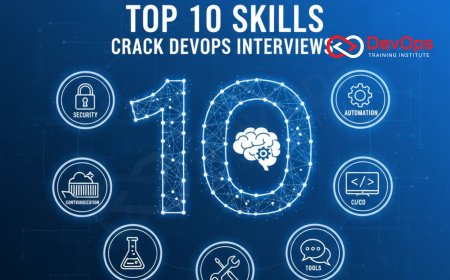
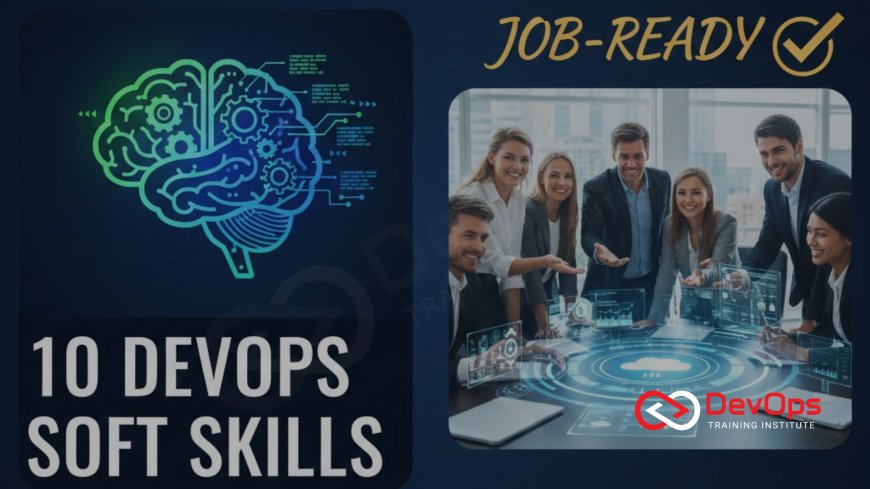
10 DevOps Soft Skills That Make You Job-Ready
Technical skills get you the interview — these 10 DevOps soft skills get you hired and promoted. Master communication, ownership, blameless culture, teaching, and more to stand out in 2025.
Introduction
In 2025, every DevOps job posting lists the same tools: Terraform, Kubernetes, AWS, CI/CD. What actually separates the hired from the rejected — and the promoted from the plateaued — are soft skills. Companies can teach tools in weeks, but culture, communication, and ownership take years to build. These 10 soft skills are repeatedly named by hiring managers at Netflix, Google, Amazon, and startups alike as the real differentiators. Many of these skills play out daily when teams manage shared resources like Amazon S3 buckets across development, staging, and production.
1. Ownership & Accountability
- You build it, you run it, you fix it — no finger-pointing
- Follow every incident to resolution, even if it’s “not your code”
- Proactively alert when you see risk, not just when paged
- Say “I will make sure this is fixed” instead of “it’s broken”
- Elite engineers own outcomes, not just tasks
2. Blameless Post-Mortem Culture
Running effective post-mortems without blame-free is the #1 cultural predictor of high-performing teams (Google’s Project Aristotle & DORA research). You write timelines, root causes, and action items — never names.
Great post-mortems turn failures into the fastest learning sessions in the company.
3. Clear Written Communication
- Write runbooks anyone can follow at 3 a.m.
- Craft PR descriptions and Slack updates that save questions
- Document S3 + Lambda integrations once and forever
- Use bullet points, bold key actions, add screenshots
- Remote-first world runs on written clarity
4. Teaching & Knowledge Sharing
The best DevOps engineers are force-multipliers. They run lunch-and-learns, write internal blog posts, pair-program, and create reusable Terraform modules or GitHub Actions.
Companies promote people who make others better faster than those who only excel individually.
5. Empathy & Emotional Intelligence
- Understand why the developer is stressed at 6 p.m.
- Know when to push back technically and when to compromise wins
- Securely migrate on-prem data to S3 without breaking anyone’s workflow
- Read the room during incidents
- High EQ = fewer conflicts, faster resolutions
6. Incident Command & Calm Under Pressure
When production is down, the best engineers become incident commanders: clear communication, delegate tasks, keep stakeholders updated, and stay calm.
Practice in game days — real incidents reward those who have rehearsed composure.
7. Cross-Team Collaboration & Influence Without Authority
- Work with security, compliance, product, and data teams
- Explain technical trade-offs in business language
- Monitor S3 usage with CloudWatch and teach finance why it matters
- Build alliances instead of walls
- Get budget for tools by showing ROI
8. Documentation as a Love Language
Treat documentation as production code: versioned, reviewed, tested. Write ADRs (Architecture Decision Records), runbooks, and “how to deploy” guides.
Great documentation reduces on-call pages by 50–80% and makes you the go-to person.
9. Feedback Giving & Receiving
- Give feedback early, kindly, and specifically
- Ask for feedback on your PRs and incidents
- Enforce S3 cost policies through gentle nudges, not gates
- Turn code reviews into teaching moments
- Growth-minded teams improve fastest
10. Curiosity & Continuous Learning
Top engineers read release notes, try new tools in sandboxes, and ask “why” five times. They spend 5–10 hours a week learning — not because they have to, but because they love it.
Curiosity compounds faster than any certification grinding ever could.
Soft Skills vs Hard Skills Impact Table
| Skill Type | Gets You Hired | Gets You Promoted |
|---|---|---|
| Hard Skills (tools) | Yes | Sometimes |
| Soft Skills (above) | Sometimes | Always |
Conclusion
Tools change every year, but these 10 soft skills are timeless. The engineers who get hired quickly, paid well, and promoted fastest aren’t the ones with the longest certification list — they’re the ones who communicate clearly, own outcomes, teach others, and stay calm when everything is on fire. Start practicing one skill this week (we recommend blameless post-mortems or documentation), and within months you’ll be the person every team fights to hire.
Frequently Asked Questions
Do recruiters really care about soft skills?
Yes — 90% of DevOps managers say culture fit and communication trump pure technical ability.
How do I prove soft skills in interviews?
Tell specific stories: “I ran the incident…”, “I wrote the runbook that…”, “I taught the team…”
Can introverts succeed in DevOps?
Absolutely — many of the best are introverts who excel at written communication and documentation.
Which soft skill is most underrated?
Teaching others — it proves mastery and multiplies your impact.
How fast can I improve these skills?
Focus on one per month with deliberate practice — in one year you’ll be transformed.
What's Your Reaction?
 Like
0
Like
0
 Dislike
0
Dislike
0
 Love
0
Love
0
 Funny
0
Funny
0
 Angry
0
Angry
0
 Sad
0
Sad
0
 Wow
0
Wow
0


![100+ Azure DevOps Interview Questions and Answers [Updated 2025]](https://www.devopstraininginstitute.com/blog/uploads/images/202509/image_140x98_68c40aa9a3834.jpg)






![Future Scope of DevOps Careers in Pune [Updated 2025]](https://www.devopstraininginstitute.com/blog/uploads/images/202510/image_140x98_68e3a84652312.jpg)