


![Kong Interview Preparation Guide [2025]](https://www.devopstraininginstitute.com/blog/uploads/images/202509/image_430x256_68dbb95326997.jpg)


10 DevOps Use Cases for Blockchain Applications
Explore how blockchain technology is transforming the software development lifecycle with our guide on 10 DevOps use cases for blockchain applications. This detailed article covers innovative strategies for enhancing security, ensuring software supply chain integrity, and automating smart contract deployments. Discover how decentralized ledgers improve auditability, streamline resource management, and foster transparency in modern engineering environments, providing a robust foundation for more reliable, secure, and efficient delivery pipelines in today's digital landscape.
Introduction to Blockchain in Engineering Workflows
The intersection of blockchain technology and operations management represents one of the most exciting frontiers in modern technology. While most people associate blockchain exclusively with digital currencies, its core properties of immutability, transparency, and decentralization offer profound benefits for software engineering teams. In a traditional environment, many of our tools rely on centralized databases and trust based systems that can be vulnerable to tampering or single points of failure. By integrating a decentralized ledger, we can create a higher standard of truth for our build and release processes.
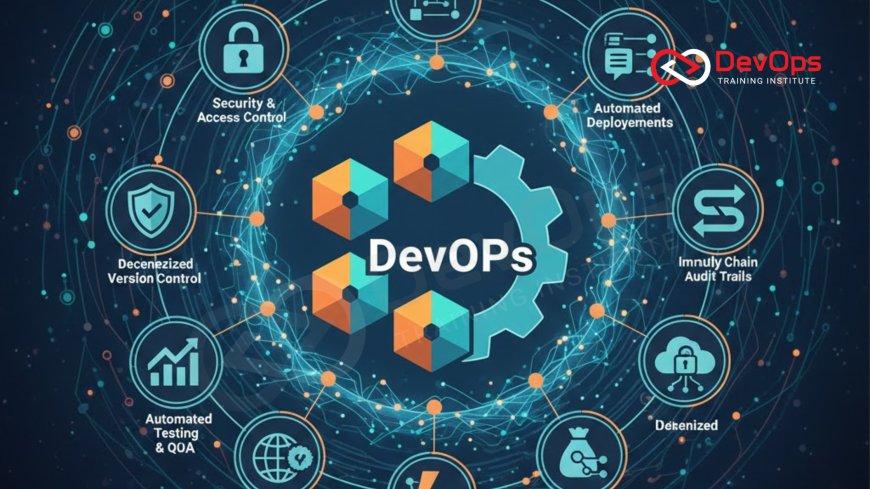
This article explores ten powerful use cases where blockchain can solve persistent challenges in the delivery lifecycle. From securing the software supply chain to providing an unalterable audit trail of every change made to production, blockchain provides a layer of trust that was previously impossible to achieve. As we move toward more complex and distributed systems, the need for verified data and automated compliance becomes even more critical. Understanding these use cases will help you see how decentralized technology can be the foundation for a more resilient and transparent future for engineering teams everywhere.
Securing the Software Supply Chain Integrity
One of the most pressing concerns for modern organizations is the security of the software supply chain. This involves tracking every component, library, and dependency that goes into a final application. If a malicious actor injects compromised code into a popular library, it can affect thousands of downstream users. Blockchain allows teams to create a permanent, cryptographic record of every artifact. This ensures that the code running in your production environment is exactly what was tested and approved by your developers, with no unauthorized modifications in between.
By using a decentralized ledger, teams can verify the origin and signature of every package automatically within their pipeline. This practice is a significant evolution of how devsecops handles security by making integrity checks part of the very fabric of the build process. It prevents the use of untrusted artifacts and provides a clear history of who created each version and when. This level of traceability is vital for regulated industries where proving the provenance of software is a legal requirement, ensuring that security is maintained from the first line of code to the final deployment.
Immutable Audit Trails for Compliance and Governance
Compliance and auditing are often seen as tedious, manual processes that slow down the speed of delivery. Blockchain transforms this by providing an immutable audit trail of every action taken within the system. Every code merge, every deployment, and every configuration change can be recorded as a transaction on the ledger. Because these records cannot be changed or deleted after they are written, auditors can trust the data implicitly without needing to perform manual spot checks or verify logs from multiple disparate systems.
This automated governance allows teams to maintain a high velocity while staying compliant with strict internal and external regulations. For example, when using gitops to manage infrastructure, the blockchain can record the exact state of the cluster at any point in time. If a security incident occurs, investigators can look back at the unalterable history to see exactly what changed and who authorized it. This transparency builds trust between different departments and ensures that the organization can prove its adherence to best practices at all times, making the audit process faster and much more reliable for everyone involved.
Decentralized Storage for Build Artifacts and Images
Traditionally, build artifacts and container images are stored in centralized registries. While convenient, these registries can represent a single point of failure and can be expensive to scale across global regions. Decentralized storage solutions powered by blockchain allow teams to store and distribute their artifacts across a peer to peer network. This not only increases the availability of the data but also speeds up the download process for distributed teams, as images can be pulled from the nearest available node rather than a single central server.
Furthermore, decentralized storage provides an extra layer of security through content addressing. Every file is identified by its unique cryptographic hash, meaning that if even a single byte of the image is changed, the hash will no longer match, and the system will reject the file. This ensures that the images used in your platform engineering efforts are consistent across all environments. By removing the reliance on a single vendor for artifact storage, organizations can build more resilient delivery pipelines that are less susceptible to outages and can scale globally with ease and efficiency.
Table: Blockchain Benefits in the DevOps Lifecycle
| DevOps Function | Blockchain Application | Key Advantage | Traditional Limitation |
|---|---|---|---|
| Version Control | Decentralized code history | Resistance to history tampering. | History can be rewritten by admins. |
| Secrets Management | Identity-based vaulting | Verified access logs. | Logs can sometimes be cleared. |
| Configuration | Immutable state records | Proof of configuration state. | Configuration drift can be hidden. |
| Deployment | Smart contract rollouts | Automated, condition-based release. | Requires manual oversight or triggers. |
| Monitoring | Decentralized health logs | Transparent service metrics. | Data can be manipulated to hide errors. |
Automated Smart Contract Deployment Pipelines
As blockchain based applications, or decentralized apps, become more common, the need for specialized deployment pipelines is growing. A smart contract is a piece of code that runs on the blockchain and cannot be changed once it is deployed. This makes the testing phase incredibly high stakes, as a single bug can lead to catastrophic financial losses that cannot be easily reversed. Integrating blockchain into the pipeline allows teams to automate the testing and verification of these contracts in a way that mimics the final production environment.
Using these pipelines, developers can ensure that their contracts meet all functional and security requirements before they are committed to the main chain. This is a perfect example of why is shift left testing a critical strategy for faster delivery because finding a bug after deployment is not just an inconvenience; it is often permanent. Automated verification scripts can run simulations to check for common vulnerabilities and gas efficiency. By automating these checks, teams can release new features for their decentralized applications with greater confidence and much less risk of a multi million dollar error.
Resource Tokenization and Cloud Spend Optimization
Managing the costs of cloud infrastructure is a major headache for large organizations. Blockchain offers a unique solution through the tokenization of compute resources. Imagine a marketplace where you can trade unused cloud credits or bid for spare capacity on a decentralized network. By using a ledger to track resource usage and payments, companies can gain much more granular control over their spending and potentially save a significant amount of money by utilizing cheaper, peer to peer resources when available.
This decentralized approach to resource management is highly beneficial for how does finops help optimize cloud spend in devops driven teams. Instead of being locked into a single cloud provider's pricing model, organizations can use smart contracts to automate the purchasing of the most cost effective resources in real time based on their current needs. This flexibility ensures that the organization always has the capacity it needs for its applications while keeping its overhead as low as possible. It turns infrastructure from a static cost into a dynamic, market driven asset that can be optimized continuously for better financial performance.
Decentralized Identity and Access Management
Traditional identity management systems rely on a central authority to verify who you are and what you can access. This creates a large target for attackers, as compromising the central identity provider can give them access to everything in the organization. Blockchain enables a decentralized identity model, often called Self Sovereign Identity. In this model, every user and service holds their own cryptographic keys and provides proof of their identity without needing to store passwords on a central server that could be leaked or stolen.
For operations teams, this means more secure and manageable access control across diverse tools and cloud platforms. Instead of managing thousands of individual user accounts, you can manage permissions based on verified cryptographic proofs. This significantly reduces the complexity of onboarding and offboarding employees and ensures that permissions are always up to date. This approach is highly compatible with modern observability practices, as every action can be tied to a verified identity. Understanding what are the key differences between observability and monitoring in devops becomes even more important when your identity data is decentralized and needs to be correlated with system behavior for security auditing.
- Self-Sovereign Identity: Users control their own identity data without a central provider.
- Cryptographic Verification: Every request is signed and verified using unalterable keys.
- Granular Permissions: Access can be granted or revoked instantly through smart contracts.
- Unified Access: A single identity can work across multi-cloud and on-premise systems seamlessly.
Enhanced Resilience and Chaos Engineering Integration
Building resilient systems is about more than just avoiding failure; it is about knowing how the system will react when things inevitably go wrong. Blockchain based systems are inherently resilient because they do not have a single point of failure. By distributing data and processing power across a network, the system can continue to function even if several nodes go offline. This architectural property can be leveraged by teams to build more robust applications that provide a better user experience even during major infrastructure outages.
[Image showing a comparison between centralized failure and decentralized resilience]
Integrating blockchain data into your resilience testing can provide new insights into how your system handles stress. For instance, knowing how can chaos engineering improve resilience in devops pipelines is crucial when you are testing decentralized components. You can simulate the loss of specific nodes or increase network latency between peers to see how the consensus mechanism reacts. This allows you to design applications that are not just stable, but truly anti fragile, growing stronger as they are tested by the unpredictable nature of real world network conditions and traffic spikes.
Conclusion
The marriage of blockchain and DevOps is not just a passing trend; it is a fundamental shift toward more transparent, secure, and resilient engineering practices. We have explored ten powerful use cases that demonstrate how decentralized ledgers can protect the software supply chain, automate compliance, and optimize cloud spending. By providing an immutable source of truth, blockchain allows teams to build trust into their processes, reducing the need for manual checks and balancing. Whether it is through decentralized storage, smart contract automation, or self-sovereign identity, these technologies empower professionals to tackle the complex challenges of modern distributed systems with greater confidence. As the tools and platforms in this space continue to mature, we can expect to see even more innovative applications that redefine what it means to achieve operational excellence. Embracing these decentralized principles today will help you stay ahead of the curve, ensuring that your organization can deliver high quality software faster and more securely in a digital world that is becoming increasingly decentralized by the day.
Frequently Asked Questions
What is the main benefit of using blockchain in DevOps?
The main benefit is providing an immutable and transparent record of every action, which enhances security, auditability, and overall trust in the process.
Can blockchain improve software supply chain security?
Yes, by recording the cryptographic hash of every artifact on a ledger, you can verify that code has not been tampered with during delivery.
Is blockchain too slow for CI/CD pipelines?
While some blockchains are slow, private or side-chain solutions offer the speed needed to record pipeline events without causing significant delays in releases.
What is a smart contract in a DevOps context?
A smart contract is a self-executing script on the blockchain that can automate release approvals or resource purchasing based on predefined conditions.
How does decentralized storage work for artifacts?
It breaks files into pieces and distributes them across a network of peers, ensuring high availability and faster downloads via content addressing.
Can blockchain help with cloud cost optimization?
Yes, by tokenizing resources and using decentralized marketplaces, companies can find and pay for the most efficient compute power in real time.
What is Self-Sovereign Identity?
It is a decentralized identity model where users own and control their credentials without relying on a central authority like Google or Microsoft.
How do I audit a blockchain-based DevOps system?
You can use blockchain explorer tools to view the unalterable history of transactions, which serves as a perfect and permanent audit trail for compliance.
Does blockchain replace Git?
No, blockchain complements Git by providing a way to record and verify the outcome of Git-based workflows and the integrity of the final artifacts.
What is content addressing?
It is a way of identifying files by what they contain (using a hash) rather than where they are stored, ensuring data integrity.
Is blockchain only for decentralized apps (dApps)?
No, the principles of blockchain can be used to secure and automate traditional enterprise software pipelines and infrastructure as well.
How does blockchain enhance resilience?
By removing central points of failure and distributing data across many nodes, the system remains operational even if part of the network fails.
Can I use blockchain for secrets management?
Yes, blockchain can provide a decentralized and highly auditable way to manage access to sensitive credentials using verified identity proofs.
What is gas efficiency in smart contracts?
Gas efficiency refers to writing code that uses the minimum amount of computational power on the blockchain to keep transaction costs low.
How do feature flags relate to blockchain releases?
By using feature flags, teams can deploy decentralized code but enable it gradually, reducing the risk of a permanent error on the chain.
What's Your Reaction?
 Like
0
Like
0
 Dislike
0
Dislike
0
 Love
0
Love
0
 Funny
0
Funny
0
 Angry
0
Angry
0
 Sad
0
Sad
0
 Wow
0
Wow
0

![100+ Azure DevOps Interview Questions and Answers [Updated 2025]](https://www.devopstraininginstitute.com/blog/uploads/images/202509/image_140x98_68c40aa9a3834.jpg)






![Future Scope of DevOps Careers in Pune [Updated 2025]](https://www.devopstraininginstitute.com/blog/uploads/images/202510/image_140x98_68e3a84652312.jpg)