



![Kong Interview Preparation Guide [2025]](https://www.devopstraininginstitute.com/blog/uploads/images/202509/image_430x256_68dbb95326997.jpg)


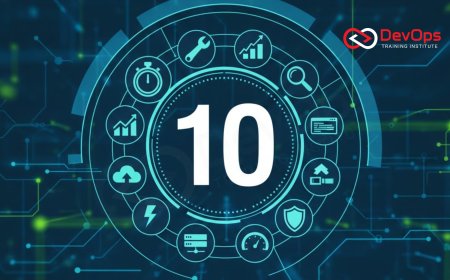
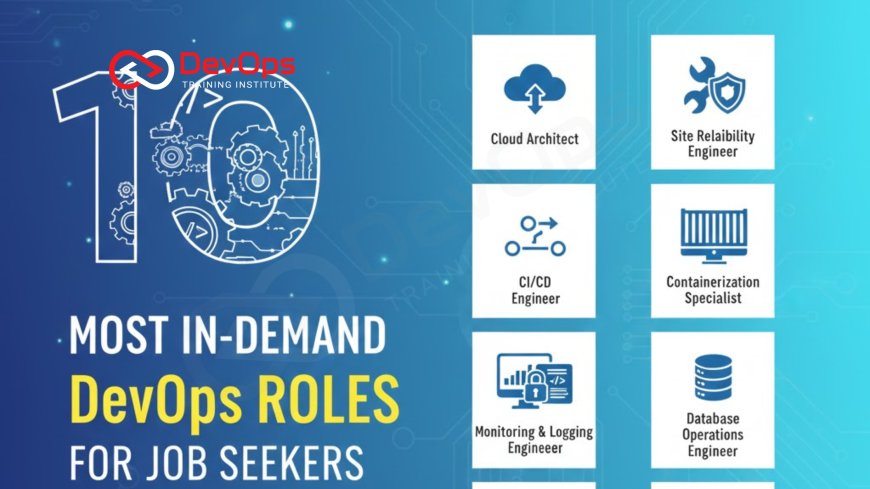
10 Most In-Demand DevOps Roles for Job Seekers
Explore the 10 most in-demand and highest-paying DevOps roles for job seekers in 2025, detailing the required skill sets, core responsibilities, and career trajectory for each position. From foundational roles like DevOps Engineer and CI/CD Specialist to advanced roles such as SRE, Platform Engineer, and DevSecOps Architect, this guide provides the essential knowledge needed to navigate the market, demonstrating how to leverage expertise in automation, cloud, and security to accelerate your career and meet the growing demand for reliable, high-velocity software delivery professionals.
Introduction
The job market for DevOps professionals remains exceptionally strong, characterized by high salaries and rapidly evolving job titles. DevOps is no longer a niche skill set; it's the standard operating model for modern software delivery. As organizations scale their cloud-native applications and adopt complex architectures like microservices, the demand for specialized roles that combine development, operations, and security expertise has soared. These roles are critical for automating workflows, ensuring system reliability, and managing the continuous flow of code into production.
For job seekers, navigating this dynamic landscape requires more than just mastering one tool; it demands a deep understanding of core principles like automation, observability, and resilience. The key to career acceleration is recognizing which roles are driving the most value in the enterprise today—often those focused on platform building and security integration—and tailoring your skills accordingly. Understanding the subtle differences between a traditional DevOps Engineer and a Site Reliability Engineer (SRE), or a CI/CD Specialist and a Platform Architect, is vital for targeting your job search effectively.
This comprehensive guide breaks down the 10 most in-demand DevOps roles for 2025. For each role, we outline the primary focus, key responsibilities, and the essential technical skills required. Whether you are aiming for a highly technical automation role, a strategic architectural position, or a specialist role in security or MLOps, this list provides the roadmap to the most rewarding and impactful careers in the field. Mastering the core tools and embracing a continuous learning mindset is your passport to success in this high-velocity domain.
1. Site Reliability Engineer (SRE)
Primary Focus: Reliability, performance, and operational scalability. SREs apply software engineering principles to operations problems, focusing on minimizing human toil and ensuring services meet defined Service Level Objectives (SLOs). This role is highly strategic and data-driven.
Key Responsibilities: Defining, measuring, and enforcing SLOs and SLIs; designing and implementing highly available systems; automating manual operational tasks ("toil"); conducting post-mortems; and performing capacity planning and performance tuning. SREs are the stewards of production stability.
Essential Skills: Deep expertise in cloud platforms (AWS/GCP/Azure), Kubernetes, strong programming ability (Python/Go), advanced observability tools (Prometheus, Grafana, Tracing), and proficiency in implementing resilience patterns like circuit breakers and retries. Understanding the core concepts of SRE is a non-negotiable requirement for this role.
2. Platform Engineer
Primary Focus: Building and maintaining the Internal Developer Platform (IDP). Platform Engineers treat the entire development and deployment environment as their product, abstracting complexity away from application developers.
Key Responsibilities: Creating self-service tools and APIs (e.g., automated environment provisioning, shared CI/CD pipelines, managed data services); managing the underlying Kubernetes cluster; and setting up the GitOps flow. The goal is to maximize developer productivity and provide a secure, standardized deployment pathway.
Essential Skills: Kubernetes, Infrastructure as Code (Terraform), GitOps (Argo CD/Flux CD), CI/CD system design (GitLab CI/Jenkins), strong scripting (Bash/Python), and excellent communication skills to serve internal customer needs. This role is crucial for enabling a rapid release cadence.
3. DevSecOps Engineer / Security Automation Specialist
Primary Focus: Integrating security tooling and best practices directly into the CI/CD pipeline and runtime environment. This role champions the "shift left" security philosophy, automating security governance.
Key Responsibilities: Implementing and tuning SAST/DAST/SCA tools; managing secrets (Vault/Secrets Manager); enforcing policy-as-code (OPA); hardening container images; and automating vulnerability response. This role is highly critical for maintaining compliance and reducing risk.
Essential Skills: SAST/SCA tools (Snyk/Trivy/SonarQube), Policy-as-Code (OPA/Rego), secrets management, deep knowledge of cloud security controls, and a strong understanding of container runtime security (e.g., Kubernetes network policies, SELinux in RHEL 10 explained for beginners). Expertise in continuous threat modeling is a major differentiator.
4. Cloud Architect (DevOps Focus)
Primary Focus: Strategic design of cloud infrastructure, networking, and application deployment patterns. This role translates business requirements into scalable, reliable, and cost-optimized cloud architecture, often focusing on multi-cloud or hybrid solutions.
Key Responsibilities: Defining network topology (VPC/VNet); selecting appropriate cloud services (Serverless, DBaaS, Containers); designing high-availability and disaster recovery strategies; and ensuring compliance and cost efficiency across all environments. They set the technical direction for the entire organization's cloud presence.
Essential Skills: Deep certification and experience in one or more major clouds (AWS/Azure/GCP); advanced networking; strong understanding of security architecture; expertise in Infrastructure as Code principles; and knowledge of advanced services like Service Mesh and global load balancing. This is a senior, highly compensated role.
5. CI/CD Specialist / Release Engineer
Primary Focus: Optimizing the automated software release process, managing toolchains, and ensuring consistent, reliable deployments. This role is the expert on the integration and orchestration layers of the pipeline.
Key Responsibilities: Building, maintaining, and improving CI/CD pipelines (Jenkins, GitLab, GitHub Actions, Tekton); managing artifact repositories (Artifactory); implementing advanced deployment strategies (Canary, Blue/Green); and measuring release velocity and success metrics (DORA). They ensure the pipeline is the fastest, safest route to production.
Essential Skills: Expert proficiency in pipeline tools and scripting (Groovy/YAML/Python); GitOps methodologies; deep knowledge of container registries; artifact management; and understanding of how to implement quality gates (security, performance) within the automated flow.
6. DevOps Engineer (Generalist)
Primary Focus: Bridging the gap between development and operations. This foundational role automates operational tasks, manages configurations, and supports the deployment pipeline across various application teams.
Key Responsibilities: Writing Infrastructure as Code (Terraform/CloudFormation); developing configuration management scripts (Ansible); managing cloud resources; troubleshooting integration issues; and assisting with setting up monitoring and logging tools. This role requires broad technical exposure and a willingness to learn across the stack.
Essential Skills: Solid Linux administration, proficiency in a scripting language (Python/Bash), IaC (Terraform), configuration management (Ansible), and working knowledge of Kubernetes and a major cloud provider. This role is a great entry point, and continuous learning, including reviewing resources like a RHEL 10 post-installation checklist, is vital for success.
7. MLOps Engineer
Primary Focus: Applying DevOps principles to machine learning workloads. This role automates the entire lifecycle for ML models, from experimentation and training to deployment and continuous monitoring (model drift). This is a highly specialized and rapidly growing field.
Key Responsibilities: Building and managing automated data pipelines; versioning training data and models; deploying ML models via APIs (often using Kubernetes); monitoring model performance and data integrity in production; and ensuring reproducible experimentation environments.
Essential Skills: Kubernetes/Docker, Python/R, ML frameworks (TensorFlow/PyTorch), CI/CD tools, distributed computing (Spark), and expertise in model monitoring and data versioning tools (DVC/MLflow). This role is highly cross-functional, sitting between data science and DevOps.
8. Observability and Monitoring Specialist
Primary Focus: Ensuring complete transparency into the health and performance of distributed systems. This specialist builds and manages the platform for collecting and analyzing metrics, logs, and traces—the three pillars of observability.
Key Responsibilities: Instrumenting applications for metrics and tracing; managing and scaling observability backends (Prometheus, Jaeger, ELK/Loki); creating advanced dashboards (Grafana); and defining high-fidelity alerts to minimize false positives. They ensure that operations and SRE teams have the data needed for quick diagnosis.
Essential Skills: Deep knowledge of Prometheus and PromQL, distributed tracing (OpenTelemetry/Jaeger), log aggregation, and strong analytical skills. Mastery of which observability pillar to prioritize for incident insight is key to this role's success.
9. Cloud Automation Specialist
Primary Focus: Deep, exclusive expertise in automating cloud infrastructure via Infrastructure as Code (IaC) and native cloud services. This role is often seen implementing complex, highly available, and secure infrastructure blueprints using specific cloud vendor tools.
Key Responsibilities: Designing complex Terraform modules and AWS CloudFormation templates; managing cloud network resources (VPC peering, Transit Gateway); optimizing costs within IaC; and implementing automated compliance checks on the infrastructure layer (Policy-as-Code). They bridge the gap between architectural design and repeatable execution.
Essential Skills: Expert-level Terraform, Ansible for configuration management, deep understanding of cloud resource APIs and IAM, and practical experience applying security hardening principles, such as those covered in RHEL 10 hardening best practices, to base infrastructure images.
10. FinOps Specialist (Cloud Cost Optimization)
Primary Focus: Bringing financial accountability to the cloud. This specialist works with engineering, finance, and product teams to maximize business value by helping engineering teams manage cloud spending effectively.
Key Responsibilities: Monitoring and analyzing cloud consumption and billing data; providing actionable cost optimization recommendations to engineering teams; implementing automated resource governance (e.g., auto-shutdown of non-prod environments via IaC); and forecasting future cloud spending. They turn operational efficiency into financial ROI.
Essential Skills: Cloud billing and cost management tools (CloudHealth, native vendor tools), strong data analysis (SQL/Python), IaC understanding (to implement cost controls), and excellent cross-functional communication and negotiation skills. The ability to articulate technical decisions in terms of business cost is paramount, especially when discussing efficiency gains from tools like API Gateways simplify deployment and consolidate traffic management.
Conclusion
The DevOps job market in 2025 is defined by specialization, with roles moving beyond the generalist "DevOps Engineer" title toward specific, high-value functions: securing the pipeline (DevSecOps), ensuring system resilience (SRE), and providing standardized platforms (Platform Engineer). The common thread across all these roles is the mastery of automation, cloud-native technologies (Kubernetes), and a commitment to data-driven reliability.
For job seekers, the path to a high-demand role requires targeted skill development. Focus on mastering the Infrastructure as Code toolchain, gaining deep experience with Kubernetes orchestration, and integrating advanced concepts like GitOps and observability into your projects. The transition from a tactical operator to a strategic, platform-focused engineer or SRE is where the highest demand and compensation lie. Furthermore, integrating security automation and financial management skills (FinOps) provides an additional, highly valued differentiator in a competitive market.
Your ability to articulate technical achievements in terms of business impact—reducing MTTR, accelerating deployment frequency, or lowering cloud costs—is essential for career growth. Use the skills listed here as your roadmap, commit to continuous learning, and demonstrate proficiency through certifications and hands-on portfolio projects. By targeting one of these 10 in-demand roles, you can secure a rewarding and accelerated career path at the forefront of the technology industry, making your expertise vital to the continuous delivery of high-quality software.
Frequently Asked Questions
What is the difference between a DevOps Engineer and a Platform Engineer?
A DevOps Engineer automates tasks for application teams. A Platform Engineer builds the shared, self-service tools and environments (the platform) used by all application teams.
What is the primary responsibility of a Site Reliability Engineer (SRE)?
The SRE's primary responsibility is ensuring the service meets its reliability goals (SLOs) by reducing manual work (toil) and improving system resilience through code.
Which is more important for a DevSecOps role: coding skills or security audit knowledge?
Coding skills (Python/Go) are more critical, as the role is primarily focused on automating security testing, policy enforcement, and building security tools directly into the CI/CD pipeline.
Is Kubernetes required for all 10 in-demand roles?
While not strictly required for all, a strong working knowledge of Kubernetes is either essential or highly beneficial for at least 8 of the 10 roles, reflecting its dominance in container orchestration.
What are DORA metrics, and which role relies on them most?
DORA metrics measure software delivery performance (e.g., deployment frequency). The CI/CD Specialist, Platform Engineer, and SRE rely on them most for measuring pipeline effectiveness and stability.
How does a FinOps Specialist interact with Infrastructure as Code (IaC)?
The FinOps specialist provides cost insights and requires the IaC engineer (DevOps/Cloud Automation Specialist) to implement the cost-saving changes, such as modifying Terraform or CloudFormation templates to use cheaper resources or automated shutdown schedules.
What kind of expertise is required for an Observability Specialist to reduce MTTR?
Expertise in correlating data across metrics, logs, and traces, coupled with strong PromQL skills and the ability to instrument applications for high-fidelity telemetry, is essential for rapid diagnosis.
How do roles ensure compliance with RHEL 10 hardening best practices?
The DevSecOps and Cloud Automation roles automate the application of hardening policies (via Ansible/Chef/IaC) and build automated pipeline checks (via OPA) to verify that the base images and hosts comply with security standards before deployment.
What is the core function of API Gateways simplify deployment in microservices architecture?
API Gateways centralize traffic routing, authentication, and policy enforcement at the edge, abstracting complexity and simplifying the deployment and external exposure of internal microservices, often a key task for the Platform Engineer.
Which roles benefit most from understanding which observability pillar is best for incident insight?
The SRE and Observability Specialist roles benefit most, as they need to quickly pivot between metrics (alerts), traces (performance), and logs (context) to achieve the fastest Mean Time to Resolution (MTTR).
Why is configuring SSH keys security in RHEL 10 still a relevant skill in cloud-native DevOps?
Even in cloud-native environments, underlying worker nodes (often RHEL/Linux) require secure access mechanisms for maintenance and advanced troubleshooting, making secure SSH configuration a critical host-level security skill, primarily handled by the Cloud Automation or Platform Engineer.
What is the relationship between the MLOps Engineer and the Data Scientist?
The MLOps Engineer takes the ML models developed by the Data Scientist and builds the robust, automated, and observable infrastructure required to deploy, monitor, and continuously retrain those models in a production environment.
How does the CI/CD Specialist contribute to stability?
They contribute to stability by implementing advanced deployment strategies (Canary/Blue-Green) and building automated quality gates (security, performance) directly into the pipeline, preventing risky changes from reaching production.
What career path often follows the generalist DevOps Engineer role?
The generalist DevOps Engineer often progresses into one of the specialized roles, such as SRE, Platform Engineer, or DevSecOps Engineer, by deepening their skills in one key area, often after reviewing foundational materials like the RHEL 10 post-installation checklist for core system administration tasks.
How does the DevSecOps role use continuous threat modeling?
The DevSecOps role uses threat modeling to continuously analyze the application design and pipeline architecture, informing where automated security checks (SAST, OPA) need to be implemented or improved to mitigate the highest-risk vulnerabilities, shifting security left.
What's Your Reaction?
 Like
0
Like
0
 Dislike
0
Dislike
0
 Love
0
Love
0
 Funny
0
Funny
0
 Angry
0
Angry
0
 Sad
0
Sad
0
 Wow
0
Wow
0

![100+ Azure DevOps Interview Questions and Answers [Updated 2025]](https://www.devopstraininginstitute.com/blog/uploads/images/202509/image_140x98_68c40aa9a3834.jpg)





![Future Scope of DevOps Careers in Pune [Updated 2025]](https://www.devopstraininginstitute.com/blog/uploads/images/202510/image_140x98_68e3a84652312.jpg)