

![Kong Interview Preparation Guide [2025]](https://www.devopstraininginstitute.com/blog/uploads/images/202509/image_430x256_68dbb95326997.jpg)




12 Principles of Continuous Feedback in DevOps
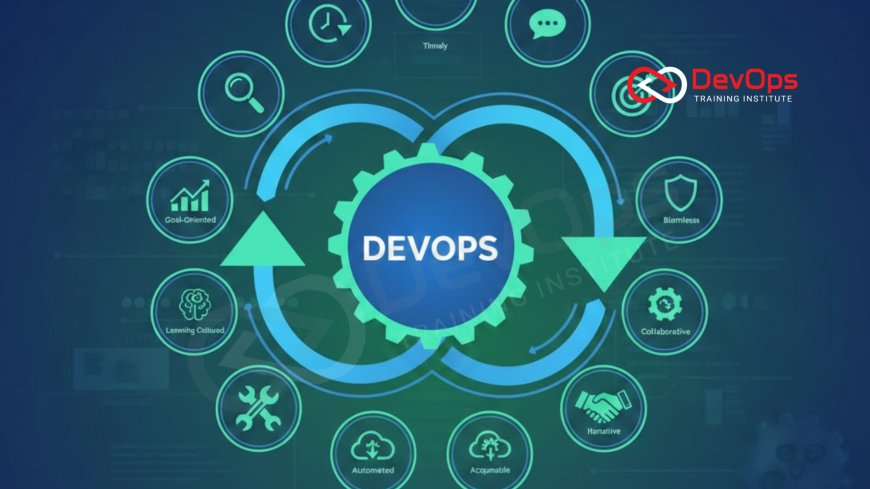
Explore the twelve foundational principles of Continuous Feedback, the cornerstone of successful DevOps transformation and high-velocity software delivery. This comprehensive guide details how to implement rapid, automated feedback loops across development, testing, and operations, ensuring quality and stability from code commit to production monitoring. Learn the importance of shifting left and right, integrating security and compliance, and fostering a culture where all teams use data for continuous improvement. Mastering these principles will enable your organization to reduce lead time, enhance collaboration, and build a truly resilient, customer-centric product lifecycle, accelerating your digital maturity significantly.
Introduction
DevOps is more than just a set of tools and automation scripts; it is a cultural and operational philosophy built on the foundation of the Three Ways: Flow, Feedback, and Continuous Learning. Of these, Feedback is arguably the most critical component for fostering a culture of continuous improvement and ensuring the quality and stability of modern software applications. Continuous Feedback encompasses the mechanisms and practices that allow information about the performance, quality, and security of a system to be rapidly shared across the entire value stream, from the moment a developer writes code until that code is running in production and being used by a customer.
Without robust and timely feedback loops, the core promises of DevOps—faster delivery, lower failure rates, and quicker recovery—cannot be realized. Developers would work in isolation, unaware of how their code performs under real-world load, and operations teams would remain separate from development, only seeing failures after they occur. Continuous Feedback breaks down these silos, embedding quality checks, security scans, and operational insights directly into the development and deployment pipelines. This comprehensive guide will explore the twelve core principles that define and enable a successful Continuous Feedback culture, transforming an organization’s ability to respond to changing market demands and deliver superior digital products.
Principle : Integrating Feedback Early (Shift-Left)
The principle of Shift-Left is fundamental to Continuous Feedback. It mandates that quality, security, and performance checks are moved earlier into the software development lifecycle, rather than being relegated to late-stage testing environments. The rationale is simple: the cost and effort required to fix a bug or security vulnerability increases exponentially the later it is discovered. By receiving feedback within minutes of a code commit, a developer can fix the issue while the context is fresh, dramatically reducing the lead time for changes and improving developer efficiency.
This principle is applied through the automation of testing and analysis within the Continuous Integration (CI) pipeline. Every code commit triggers automated unit tests, integration tests, static code analysis (SAST), and dependency scanning. If any of these automated checks fail, the developer receives immediate feedback, preventing flawed code from proceeding further. This instantaneous validation transforms the pipeline into a powerful safety net and a constant source of early quality assurance. For example, integrating tools that check file permissions during the build phase can catch security flaws before they ever reach a testing environment. Shifting feedback left creates a powerful preventative mechanism against production issues.
Principle : Automated Quality Gates
Automated Quality Gates are the non-negotiable checkpoints within the Continuous Delivery (CD) pipeline that enforce feedback-driven decisions. Instead of relying on manual sign-offs or subjective assessments, these gates use predefined, measurable criteria to determine whether an artifact (such as a container image or an application binary) is fit to move to the next environment. If a quality gate fails, the pipeline halts immediately, providing explicit, actionable feedback to the responsible team, preventing the deployment of potentially harmful code. This structured approach formalizes the "fail fast, learn faster" mindset that is central to DevOps.
Typical Automated Quality Gates include performance testing results, code coverage percentages, security scan scores, and compliance checks (often known as Compliance as Code). For instance, a gate might require that the latency of a critical API endpoint must not increase by more than 10% compared to the previous version, or that the application must have zero critical security vulnerabilities identified by a vulnerability scanner. By automating these decisions, the deployment process gains reliability and speed. The feedback is precise, objective, and timely, reducing the communication overhead and human error associated with manual gate reviews. This process is essential for achieving a reliable and trustworthy continuous delivery pipeline.
Principle : Monitoring and Telemetry Integration (Shift-Right)
While shifting left focuses on prevention, Shift-Right focuses on validation and learning in the most important environment: production. This principle emphasizes the continuous collection and analysis of monitoring data (telemetry) from live systems. Logs, metrics, and distributed traces are constantly flowing back from the application, providing real-time feedback on performance, user behavior, and errors under actual operational load. This production-based data offers the most accurate picture of system health and provides critical insights that synthetic testing environments often miss, such as real-world network latency or user interaction patterns.
Implementing this principle requires robust Application Performance Monitoring (APM) tools, centralized logging systems, and deep integration with cloud platforms. Developers and operations teams must share access to and responsibility for analyzing this data. Feedback here is delivered via automated alerts when performance thresholds are breached or when errors spike. This allows teams to detect and address anomalies proactively, often before customers are even aware of an issue. Analyzing user feedback and production data also informs the next iteration of the product, creating a virtuous cycle where production stability and customer value are continuously optimized. Analyzing log data is often the best way to understand application behavior in production, making good log management essential.
Principle : Customer and User Experience Feedback
| Feedback Type | Source | Target Audience (Who Acts on it) | Frequency |
|---|---|---|---|
| Automated Testing Failures | CI Pipeline, Static Analysis Tools | Developers, Development Team | Instant (Per Code Commit) |
| Security Scan Results | SAST/DAST Tools, Vulnerability Scanners | Developers, Security Team | Per Build, Daily, or Weekly Scan |
| Production Errors / Latency | APM, Logging, Metrics (Prometheus/Grafana) | Operations, Development, Incident Team | Real-Time Alerting |
| Customer Behavior / Bugs | Support Tickets, Analytics, A/B Testing, User Feedback Forms | Product Owners, Developers, QA | Daily/Weekly Analysis, Real-Time Ticketing |
| Infrastructure Health | Cloud Provider Metrics, Kubernetes Monitoring | Platform Engineers, Operations Team | Real-Time Alerting |
| Compliance Violations | Compliance as Code Tools (e.g., automated checks on privileged access configurations) | Security, Development, Compliance Team | Per Deployment or Scheduled Audit |
The ultimate measure of software success is the value it delivers to the customer. Therefore, one of the most important principles is the integration of direct and indirect customer feedback into the development cycle. This includes both quantitative data, such as analytics on feature usage, conversion rates, and performance metrics perceived by the end-user, and qualitative data, such as support tickets, feature requests, and direct user interviews. This type of feedback closes the final loop, ensuring that engineering efforts are always aligned with market needs and user satisfaction, preventing teams from building features that are neither wanted nor valuable.
Indirect feedback is gathered automatically using tools like A/B testing frameworks and feature flagging, allowing teams to test hypotheses on a small subset of users before a full rollout. If a new feature performs poorly, the feature flag provides a kill switch and the resulting data informs the next design iteration. Direct feedback mechanisms involve ensuring that customer support issues are rapidly triaged and routed back to the responsible development teams. This requires a cultural shift where developers don't just "throw code over the wall" but actively engage with support logs and customer interactions. Empowering teams to analyze user-reported data is a necessary step for organizations to remain highly customer-centric and prioritize work that genuinely impacts the user experience.
Principle : Blameless Post-Mortems and Learning
Continuous learning is the third pillar of DevOps, and it is directly powered by structured feedback from failures. The principle of Blameless Post-Mortems dictates that when an incident or failure occurs, the primary goal of the review process is not to assign blame to an individual, but to identify all systemic and technical contributing factors. The focus shifts from "who caused it?" to "what caused it?" and "how can we prevent recurrence?" This approach requires psychological safety within the organization, encouraging all team members to openly discuss mistakes and share what they learned, without fear of punishment.
The post-mortem process uses the comprehensive feedback collected during the incident—logs, metrics, and timeline—to reconstruct the failure with precision. The output is a set of specific, prioritized preventative actions that are then integrated back into the development roadmap as technical debt or automation improvements. For example, a post-mortem might reveal that a failed deployment was due to an untested database migration script, leading to the corrective action of implementing an automated integration test specifically for database changes in the CI pipeline. This feedback loop ensures that the pain of a failure directly results in a permanent improvement to the system, transforming incidents into powerful organizational learning opportunities. Learning from failures faster than competitors is a key determinant of market success.
Principle : Fast Failure and Automated Rollbacks
The concept of Fast Failure is a counterintuitive but vital feedback principle. It acknowledges that mistakes are inevitable in complex systems and prioritizes finding errors quickly over trying to prevent all errors. Since fast feedback is the goal, the system should be designed to fail rapidly and noisily when an issue is detected, rather than failing silently or slowly. This principle is realized through tightly scoped tests and aggressive monitoring that detect problems instantly.
The complement to Fast Failure is Automated Rollbacks. When a failure is detected in a deployment (e.g., a critical health check fails moments after deployment), the system must have the capability to automatically and instantly revert to the last known good state. This provides the most critical piece of operational feedback: the ability to immediately mitigate a damaging change. Automated rollbacks ensure that the time-to-recovery (MTTR) is minimized, reducing the impact of any failed deployment and making frequent, small deployments safer. This capability is often implemented using deployment strategies like blue/green or canary releases, where the impact of a failed deployment is confined to a small set of users or infrastructure, making the process of deployment inherently low-risk, thus encouraging teams to push code more frequently.
Principle : Security Integrated Everywhere (DevSecOps)
Security must be treated as a fundamental quality requirement and integrated into the continuous feedback loop at every stage—the DevSecOps principle. Traditional security reviews conducted late in the cycle are slow and introduce bottlenecks, defeating the purpose of rapid delivery. Continuous feedback requires that security policies and vulnerability checks are automated and "shifted left" alongside quality checks, giving developers immediate feedback on security risks in their code and dependencies.
This integration uses tools for:
- Static Application Security Testing (SAST): Automated analysis of source code for known vulnerabilities, providing feedback on the developer's desktop or within the CI pipeline upon commit.
- Dynamic Application Security Testing (DAST): Testing the running application (e.g., in a staging environment) for vulnerabilities like injection flaws or broken authentication.
- Software Composition Analysis (SCA): Scanning third-party libraries and dependencies for known vulnerabilities, a critical security check given the reliance on open-source code.
- Compliance-as-Code: Automating checks against regulatory or internal security standards, ensuring that configurations meet baseline requirements, such as ensuring proper sudo access controls are in place for infrastructure management.
By weaving security feedback into the daily workflow, security becomes a shared responsibility rather than an afterthought, enabling teams to remediate vulnerabilities quickly and continuously, building security into the product from the ground up.
Principle : Real-Time Visibility and Shared Dashboards
Effective feedback requires that the information is accessible, understandable, and shared across all relevant teams—development, operations, security, and even business stakeholders. The principle of Real-Time Visibility dictates that key performance indicators (KPIs) and operational health metrics are displayed on shared dashboards, ensuring that everyone in the value stream is looking at the same objective data. This shared view prevents confusion and eliminates the "it works on my machine" problem by making production reality visible to all.
These shared dashboards typically display the health of the deployment pipeline, key application metrics (latency, error rates), infrastructure utilization, and business metrics (user signups, revenue). The goal is to make the data pervasive and actionable. When a critical metric dips, the feedback is instantly available to the team responsible for that service, promoting immediate collaboration and action. This transparency helps build trust between teams, ensuring that developers appreciate the operational reality of their code and operations teams understand the business implications of system health. By aggregating data from monitoring tools and displaying it in a unified, accessible format, organizations foster a data-driven culture of shared responsibility and rapid response.
Principle : Feedback on Non-Functional Requirements
Continuous Feedback must extend beyond just functional correctness (does the code work?) to encompass Non-Functional Requirements (NFRs), which are critical for the long-term success of any application. NFRs include performance, scalability, reliability, maintainability, and resource efficiency. Failing to monitor and provide feedback on these requirements is a common pitfall that leads to technical debt, rising cloud costs, and poor user experience down the line. Feedback on NFRs ensures that the system is not just meeting business needs, but is also operationally and financially sound.
Examples of feedback on NFRs include:
- Performance: Automated load tests running in a staging environment provide feedback on throughput and response times under simulated load. Continuous monitoring in production tracks latency percentiles.
- Scalability: Monitoring cluster utilization and autoscaling events gives feedback on how well the application handles increasing traffic and if its resource consumption is efficient. Excessive or premature autoscaling often indicates poor resource management in the application code.
- Maintainability: Automated code analysis tools provide feedback on code complexity, cyclomatic complexity, and adherence to coding standards, indicating the long-term cost of code ownership. This type of feedback ensures that the velocity gained by small, independent teams does not result in a fragmented and unmanageable codebase.
Integrating NFR feedback into the CI/CD pipeline prevents the degradation of system quality over time. For example, by monitoring resource consumption and comparing it between versions, teams can get proactive feedback if a new commit dramatically increases memory usage, which is essential for managing cloud costs and system stability. Continuous performance analysis is vital for maintaining a competitive user experience.
Principle : Documenting and Sharing Institutional Knowledge
Continuous feedback is valuable only if the lessons learned are captured and shared with the entire organization. The principle of Documenting and Sharing Institutional Knowledge emphasizes the need to transform transient feedback into permanent, accessible learning assets. This includes formal documentation of architectural decisions, automation scripts, post-mortem findings, and best practices. If a team learns a critical lesson about handling database connections under load, that knowledge must be easily accessible to every other team in the organization to prevent the problem from being solved repeatedly.
This is often achieved through internal blogs, wiki documentation, formalized post-mortem libraries, and searchable knowledge bases. Automation itself is a form of documentation; if a process is codified in a repeatable script (e.g., an infrastructure-as-code template), it serves as the living, correct version of that process. By maintaining transparent, shared knowledge bases, organizations reduce their reliance on individual heroes, ensuring that organizational expertise grows collectively rather than residing in isolated silos. The consistent adoption of tools for managing user access and roles should be documented clearly to prevent security issues and operational confusion across teams.
Principle : Feedback Driven Automation Improvements
The feedback loop should not only apply to the application being built, but also to the automation tools and infrastructure that support the process itself. The principle of Feedback Driven Automation Improvements requires that the performance and reliability of the CI/CD pipeline, monitoring tools, and deployment scripts are continuously monitored and optimized. If the build process takes too long, that delay provides negative feedback, which must be addressed by improving the automation (e.g., parallelizing tests, upgrading CI/CD runners).
By treating the CI/CD pipeline as an internal product, teams can apply the same rigorous feedback mechanisms to it as they do to customer-facing applications. This means tracking metrics like build duration, test execution time, pipeline failure rates, and deployment success rates. If the automated rollback mechanism fails during a production incident, that failure provides critical feedback that the rollback script needs immediate improvement. This internal loop of continuous improvement is what sustains a high-performing DevOps organization over the long term. It ensures that the speed gained through automation is not lost due to neglected or outdated infrastructure, maintaining the velocity of the overall development process.
Principle : Time-Boxed Improvement Cycles
The final principle connects continuous feedback to action by requiring Time-Boxed Improvement Cycles. It is not enough to simply collect feedback; dedicated time must be allocated to act on the lessons learned, whether they come from automated tests, production monitoring, or post-mortems. This dedicated time prevents the accumulation of technical debt and ensures that continuous learning translates directly into continuous improvement. Without this dedicated effort, feedback loops become open loops where the information is gathered but never fully acted upon.
Organizations often implement this by setting aside a percentage of developer time (e.g., 20% of a sprint) specifically for addressing technical debt, improving automation, or implementing preventative actions from post-mortems. These cycles ensure that the organization is constantly investing in its long-term health and efficiency. This continuous investment ensures that the system's architecture, security, and operational stability evolve in lockstep with feature development. Prioritizing improvement based on feedback that indicates a high cost of delay (e.g., frequent failures, high-impact security vulnerabilities) is the most effective way to utilize these time-boxed cycles, ensuring that the feedback culture is financially responsible and aligned with business goals.
Conclusion
The twelve principles of Continuous Feedback collectively represent the engine room of the DevOps culture. They transform software delivery from a sequential, handoff-based process into a non-stop, data-driven cycle of rapid iteration and learning. By shifting quality and security checks to the left, capturing real-time insights from production on the right, and using blameless learning to drive systemic improvements, organizations ensure that every single action, from code commit to customer interaction, generates valuable information. The key is automation: quality gates, security scans, automated rollbacks, and comprehensive telemetry must be fully automated to provide feedback at the speed necessary for high-velocity delivery.
Mastering these principles ultimately leads to higher-quality software, reduced operational risk, and faster feature delivery. The culture of shared responsibility, transparency through shared dashboards, and dedicated time for improvement ensures that the organizational structure is aligned with the architecture. For any company pursuing digital transformation, adopting these twelve principles is the essential pathway to embedding continuous improvement deep within the DNA of its engineering practices, securing its long-term stability and competitive agility. The goal is to make learning the fastest part of the process, ensuring that the next iteration is always better than the last.
Frequently Asked Questions
What is the core purpose of Continuous Feedback in DevOps?
The core purpose is to rapidly share information about system quality and performance across all teams to enable continuous improvement and reduce lead time.
What is the difference between Shift-Left and Shift-Right?
Shift-Left focuses on prevention by moving checks earlier into the CI pipeline; Shift-Right focuses on validation and learning in the production environment.
How do Automated Quality Gates support Continuous Feedback?
They enforce objective, measurable criteria in the CD pipeline, providing instant, binary feedback on whether an artifact is safe to deploy or not.
Why must post-mortems be blameless?
Post-mortems must be blameless to encourage open discussion, identify systemic failures, and ensure that lessons learned result in permanent process improvements.
What are the three main signals of production telemetry?
The three main signals are logs (what happened), metrics (how often/how much), and traces (the journey of a single request across services).
How does customer feedback integrate into the loop?
Customer feedback is integrated via analytics, A/B testing data, support tickets, and feature flags, guiding product owners on prioritization and value.
What does Compliance as Code mean in this context?
It means automating checks for regulatory or internal security standards within the CI/CD pipeline, ensuring continuous compliance with every deployment.
Why is Fast Failure important for system stability?
Fast Failure enables quick detection, allowing the system to use automated rollbacks to instantly return to a safe state, minimizing the impact of the error.
What is the role of infrastructure as code in providing feedback?
Infrastructure as Code ensures that infrastructure deployments are auditable and repeatable, providing immediate feedback if a deployed state deviates from the desired, codified state.
What are Non-Functional Requirements (NFRs)?
NFRs are quality attributes like performance, scalability, security, and maintainability, which are critical for the long-term viability and success of the application.
How does shared documentation support Continuous Feedback?
Shared documentation (e.g., post-mortem libraries) transforms isolated failure knowledge into shared institutional knowledge, preventing other teams from repeating mistakes.
What is the link between Continuous Feedback and technical debt?
Continuous Feedback identifies technical debt (e.g., poor code complexity), and time-boxed cycles ensure that this debt is addressed proactively before it causes major failures.
How does feedback apply to the automation tools themselves?
The performance of automation tools (e.g., build duration, failure rates) provides internal feedback that must be used to continuously improve the CI/CD pipeline's efficiency.
What is the main challenge in implementing a Blameless Post-Mortem culture?
The main challenge is establishing psychological safety so team members feel comfortable discussing their mistakes and sharing detailed information without fear of punishment.
How can organizations ensure dedicated time for improvements based on feedback?
Organizations must allocate dedicated, time-boxed cycles (e.g., "improvement sprints" or 20% time) in the development roadmap specifically for technical debt and automation work.
What's Your Reaction?
 Like
0
Like
0
 Dislike
0
Dislike
0
 Love
0
Love
0
 Funny
0
Funny
0
 Angry
0
Angry
0
 Sad
0
Sad
0
 Wow
0
Wow
0

![100+ Azure DevOps Interview Questions and Answers [Updated 2025]](https://www.devopstraininginstitute.com/blog/uploads/images/202509/image_140x98_68c40aa9a3834.jpg)






![Future Scope of DevOps Careers in Pune [Updated 2025]](https://www.devopstraininginstitute.com/blog/uploads/images/202510/image_140x98_68e3a84652312.jpg)