

![Kong Interview Preparation Guide [2025]](https://www.devopstraininginstitute.com/blog/uploads/images/202509/image_430x256_68dbb95326997.jpg)

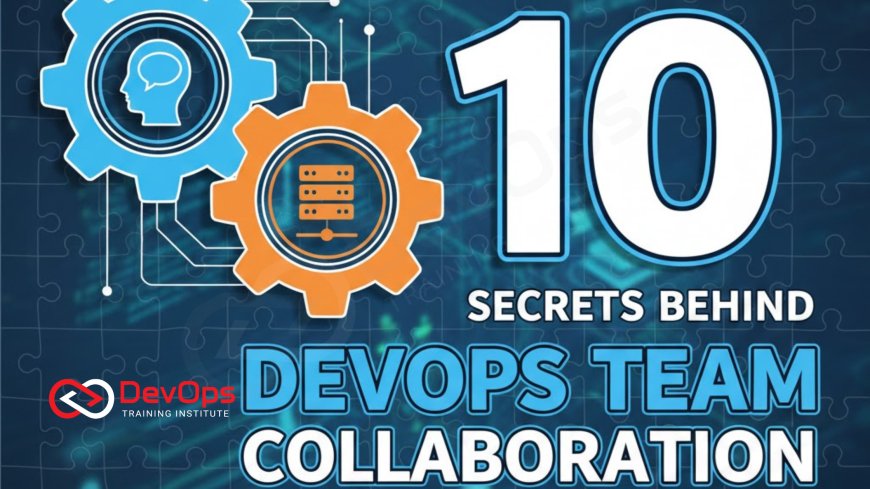
10 Secrets Behind DevOps Team Collaboration
Unlock the 10 critical secrets that drive exceptional DevOps team collaboration, moving beyond simple communication to deep, shared responsibility and cultural synergy. This guide details how to dismantle organizational silos, implement a blameless culture, enforce collective code ownership, and prioritize transparency through shared tools and integrated feedback loops. Learn the core principles that transform disparate Development, Operations, and Security teams into a unified, high-performing value stream, ensuring faster releases, reduced friction, and superior operational resilience in any cloud environment, proving that culture is the ultimate automation.
Introduction
At its core, the DevOps methodology is not a set of tools or a technology stack; it is a profound cultural and professional movement centered entirely on collaboration, communication, and shared responsibility. The ultimate goal is to remove the organizational, technical, and psychological barriers—or "silos"—that traditionally exist between Development (Dev) and Operations (Ops) teams. This friction often results in slow deployment times, increased errors, and a general lack of accountability for the end-to-end user experience. Successfully implementing DevOps requires understanding that automation, while essential, is simply a manifestation of a healthy, collaborative culture.
The transition from fragmented teams to a unified DevOps team collaboration requires intentional effort and the adoption of specific, often counter-intuitive, secrets that foster trust and psychological safety. When teams operate with high levels of trust, they share knowledge more freely, take calculated risks, and solve systemic problems faster than any siloed group ever could. These secrets move beyond simple mandates to "communicate more" and focus on structural and cultural shifts that hardwire collaboration into the daily workflow, ensuring that the velocity gained by automation is sustained by organizational harmony.
Mastering these secrets ensures that the engineering organization achieves a consistent, high-velocity delivery of value, relying on the combined strength of diverse technical skills—from application coding to deep knowledge of the underlying operating system and virtualized infrastructure—all working toward the single goal of operational excellence and customer satisfaction. The following 10 secrets reveal the foundational practices that distinguish world-class DevOps teams from those that merely run a few automation scripts.
Secret One: Blameless Culture and Psychological Safety
The single most powerful accelerator of collaboration is the establishment of a truly blameless culture. In traditional environments, when a production incident occurs, the first impulse is often to find the person or team responsible for the mistake. This fear of blame immediately stifles communication, encourages hiding failures, and ultimately prevents the organization from learning from its mistakes. A blameless culture shifts the focus entirely from "who" caused the problem to "what" systemic, process, or technical failures allowed the incident to occur.
The core practice here is the Blameless Post-Mortem. After every major incident, the entire team (Dev, Ops, Security) collaboratively documents the timeline, identifies root causes (which are usually systemic, such as faulty monitoring or a missing test), and establishes clear, actionable preventative measures. This process fosters psychological safety, meaning team members feel safe admitting errors and suggesting improvements without fear of reprisal, which is absolutely vital for promoting honest communication and driving continuous process improvement throughout the entire software lifecycle. When people are safe, they collaborate openly and trust the process, directly contributing to system resilience.
Secret Two: Shared Metrics and Unified Goals
Silos thrive when teams are measured by conflicting or independent metrics. The Development team might be rewarded for feature velocity (number of features shipped), while the Operations team is rewarded for stability (zero production incidents). This clash of incentives naturally encourages friction, as Dev prioritizes speed and Ops prioritizes caution. The secret to collaboration is dismantling these conflicting goals and aligning both teams around a single, shared metric focused on end-to-end customer value and system health.
Key shared metrics should align with SRE principles and DORA metrics, including:
- Lead Time for Changes: The time from code commit to successful production deployment (measuring flow).
- Deployment Frequency: How often the team successfully releases new code (measuring throughput).
- Change Failure Rate: The percentage of deployments that cause a service outage or major incident (measuring quality).
- Service Level Objectives (SLOs): Shared targets for customer-facing reliability (e.g., latency, error rate).
By using these unified metrics, both Dev and Ops win or lose together, forcing them to collaborate on finding the bottlenecks in the value stream and ensuring that code speed is balanced against necessary stability and resilience checks. This shared ownership creates natural synergy and fosters a single technical vision for product delivery.
Secret Three: Collective Code and Infrastructure Ownership
Collaboration fails when ownership ends at the deployment boundary. Traditionally, the Dev team "throws the code over the wall" to Ops, ending their responsibility once the code is built. The secret to DevOps collaboration is enforcing collective ownership for the entire application lifecycle, from the initial feature idea through to its performance and security in production. This means the Development team must have visibility into, and responsibility for, production monitoring, while the Operations team contributes to the application code itself.
This collective ownership is manifested through the following practices:
- Devs on Call: Development engineers participate in the on-call rotation for production incidents. This experience gives them immediate, painful feedback on the operational weaknesses of their code and incentivizes them to build more resilient applications, which is the most effective way to close the feedback loop between teams.
- Ops Writing Code: Operations and Platform engineers contribute directly to the application's configuration, deployment manifests, and infrastructure code (IaC), ensuring operational concerns (like security hardening and networking) are baked into the application from the start, rather than being retrofitted late in the cycle.
This shared burden fosters empathy and forces constant communication about architecture and operational requirements across the entire engineering organization, dismantling the technical friction between traditionally separate functions.
Secret Four: Unified Toolchains and Integrated Feedback Loops
Teams cannot collaborate effectively if they are working with different information on different platforms. The secret here is maximizing transparency by integrating a unified toolchain that shares data and provides fast feedback to everyone involved. The automated pipeline itself is the primary vehicle for collaboration, enforcing the process and standards agreed upon by the cross-functional team.
This includes:
- Shared Observability: Using a unified observability platform (centralized logging, Prometheus/Grafana metrics, tracing) that is equally accessible and understood by Dev, Ops, and Product teams. This eliminates the "war room" scenario where teams waste time arguing over whose monitoring tool is correct, allowing them to focus immediately on incident diagnosis.
- CI/CD as the Single Source of Truth: All deployments and configuration changes must flow through the central CI/CD pipeline, which serves as the single, auditable source of truth. Every change, whether it's an application update or an infrastructure change via Terraform, is visible to all teams via the pipeline's logs and status, promoting shared situational awareness and process visibility.
This shared ecosystem ensures that when a bug is found in production, the data needed to diagnose it is immediately available to the developer who wrote the code, drastically reducing the Mean Time to Resolution (MTTR) by accelerating the feedback loop and preventing communication delays across different teams.
Secret Five: Cross-Functional Training and T-Shaped Skills
Senior DevOps teams actively invest in breaking down technical silos by promoting cross-functional training. This means encouraging engineers to develop "T-Shaped Skills"—deep expertise in one area (the vertical bar, e.g., application development or database administration) combined with a broad understanding of related domains (the horizontal bar, e.g., IaC, cloud networking, CI/CD). The senior engineer, in particular, should drive this cultural necessity.
This shared technical literacy is crucial for efficient handoffs and mutual understanding:
- A developer understands how their application is packaged (Docker) and deployed (Kubernetes manifest), reducing reliance on Ops for every small detail.
- An Operations engineer understands basic application dependencies and logging frameworks, enabling them to suggest architectural improvements that enhance operational stability.
By fostering this shared knowledge base, the time wasted in translating technical requirements between disciplines is minimized. Furthermore, this broad knowledge base allows for better coverage during on-call rotation and ensures that team members can swap roles and assist in different stages of the pipeline, maximizing team resilience and collaboration efficiency.
Secret Six: The "You Build It, You Run It" Principle
The "You Build It, You Run It" mantra is a cultural game-changer for collaboration. It dictates that the team or engineer responsible for writing the code is also responsible for operating and maintaining that code in production. This principle creates immediate, powerful accountability and feedback, as developers who know they will be paged at 3 a.m. for an outage caused by their code are highly motivated to write cleaner, more resilient, and better-tested software that is inherently easier to operate.
This principle forces Dev and Ops to collaborate intensely on the non-functional requirements of the code (logging, monitoring hooks, resilience testing) from the very beginning of the development cycle. It ensures that operational concerns, such as the correct configuration of networking policies and adequate resource limits, are considered as primary features of the application, not as afterthoughts, directly reducing the friction and finger-pointing that characterizes siloed environments and ultimately benefiting the end user experience.
Secret Seven: Collaboration Table: Cultural vs. Technical Secrets
The success of the DevOps methodology requires a dual approach, balancing soft, cultural shifts with hard, technical integrations. This table highlights how the 10 secrets fall into these two essential categories, illustrating that collaboration is a product of both human factors and well-designed automation.
| Pillar | Collaboration Secret | Core Practice / Tool Focus | Impact on Friction |
|---|---|---|---|
| Cultural/People | Blameless Culture | Blameless Post-Mortems, Psychological Safety | Removes fear of failure; increases honest communication. |
| Cultural/People | Shared Metrics | Unified SLOs, DORA Metrics (Lead Time, MTTR) | Aligns Dev & Ops incentives; prevents conflicting goals. |
| Cultural/People | "You Build It, You Run It" | Devs on-call rotation, ownership of production stability | Creates empathy; forces early operational considerations. |
| Technical/Process | Collective Ownership | Shared Git repos for code/IaC, cross-discipline peer reviews | Ensures operational requirements are met in code design. |
| Technical/Process | Unified Toolchains | Integrated CI/CD (GitLab, Jenkins), central observability (Prometheus) | Maximizes transparency; speeds up incident diagnosis (MTTR). |
Secret Eight: Enforcing Collaboration Through Code Review
A senior DevOps Engineer uses the code review process—the mechanism that governs all code changes in Git—as the primary enforcement point for collaboration and standards. This involves making cross-discipline peer review mandatory for critical changes. For example, any application code that affects logging or configuration must be reviewed and approved by an Operations team member, and any Terraform or Kubernetes manifest must be approved by a Security team member before it can be merged to the main branch.
This process forces developers and operators to discuss trade-offs and requirements directly in the pull request thread, long before any code reaches a staging environment. It ensures that security best practices and operational considerations (like correct logging levels or the use of specific, hardened Linux base images) are baked into the design of the code rather than being added later. By making collaboration a mandated step in the automated workflow, the organization hardwires the collaborative culture into the very mechanism of software creation, improving overall code quality and resilience.
Secret Nine: Treat Legacy Systems as Shared Challenges
Legacy systems and complex infrastructure—often built on specific, aging Linux distributions or older virtualization technologies—are the most common source of friction between Dev and Ops. The traditional Ops team views them as their sole burden, while Dev teams are blocked from modernizing. The collaborative secret here is to treat the modernization of these legacy systems as a shared organizational challenge and a key driver for collaboration.
Senior DevOps Engineers lead this effort by using modern tools to gradually wrap or containerize legacy components, often using IaC to define the complex environments or microservices to break the monolith apart. This shared mission requires continuous consultation between the application owners (Dev) and the infrastructure guardians (Ops), fostering a sense of joint purpose and ensuring that both teams contribute their respective expertise to the transformation, rather than operating in isolated corners. The joint effort to modernize the system becomes the strongest unifier for the entire engineering organization, providing significant, visible wins for the team.
Secret Ten: Continuous Improvement via Automated Feedback
Collaboration is not a one-time setup; it is a continuous process fueled by data. The final secret is leveraging the automated pipeline to generate continuous, objective feedback that prompts ongoing collaboration. This means setting up real-time dashboards (Grafana) that display key performance indicators (KPIs) like pipeline duration, deployment failure rates, and mean time to repair (MTTR) in a shared, highly visible location.
When a metric degrades, the team is automatically notified and prompted to collaborate on the fix immediately, moving beyond simple technical issues to address process flaws. For example, if the pipeline build time increases by 20%, it triggers a collaborative session between Dev (who owns the code complexity) and Ops (who owns the build runner efficiency) to identify the root cause, which may be complex and often requires a deep understanding of the resource management of the underlying infrastructure, including concepts from full virtualization. This continuous, data-driven cycle ensures collaboration remains focused on measurable outcomes and process excellence.
Conclusion
The true success of DevOps lies not in mastering the latest technology, but in mastering the art of human collaboration. The 10 secrets detailed here—from the foundational necessity of a blameless culture and shared metrics to the technical enforcement of collective ownership and unified observability—provide the blueprint for transforming siloed teams into a unified, high-performing value stream. This cultural evolution is the ultimate form of automation, eliminating the human friction that traditionally bottlenecks software delivery.
By implementing these secrets, senior engineers drive continuous improvement, ensure psychological safety, and focus the entire organization on the singular goal of delivering reliable, high-quality service to the customer. Embrace these collaborative practices, and your DevOps team will not only accelerate its deployment time but also significantly improve its operational resilience, turning the complexity of modern systems into a source of continuous competitive advantage.
Frequently Asked Questions
What is a blameless post-mortem?
It is a documented review of a failure that focuses on systemic causes and process improvements, not on assigning personal fault, ensuring the team maximizes learning from the incident.
What is the purpose of shared SLOs?
Shared SLOs (Service Level Objectives) align Dev and Ops teams around common, customer-focused metrics (like latency and error rate), preventing conflicting priorities.
How does "Devs on Call" improve collaboration?
It forces developers to experience the operational impact of their code firsthand, fostering empathy and incentivizing them to build more resilient, production-ready applications.
What are T-Shaped Skills in DevOps?
T-Shaped Skills combine deep expertise in one area (e.g., coding) with a broad understanding of other domains (e.g., networking, IaC, and system administration), which facilitates cross-functional communication.
What is the benefit of a unified observability platform?
It ensures all teams (Dev, Ops, Security) use the same data for diagnosis, speeding up root cause analysis and eliminating time spent arguing over whose monitoring data is correct.
How does IaC help collaboration?
IaC (Infrastructure as Code) forces Dev and Ops to collaborate by defining infrastructure requirements in shared, version-controlled code that is managed and reviewed by both teams.
What is psychological safety?
Psychological safety is a shared belief held by team members that the team is a safe place for interpersonal risk-taking, allowing members to admit mistakes without fear of judgment.
How does code review enforce collaboration?
Mandatory cross-discipline code review ensures that operational and security requirements are discussed and approved by the Ops/Security team before code is merged to the main branch.
What is the importance of version control for collaboration?
Version control (Git) provides a single, auditable source of truth for both application and infrastructure code, which is foundational for transparency and collaboration across the entire team.
How do legacy systems challenge collaboration?
Legacy systems challenge collaboration because they are often isolated and require specialized, siloed knowledge, which is difficult to transfer and integrate into modern automated pipelines.
What is the difference between open source and proprietary Linux distributions?
The difference lies in community vs. vendor support, which affects licensing, update frequency, and the specific package management used by the underlying operating system.
Why are shared dashboards important?
Shared, highly visible dashboards ensure that all team members have shared situational awareness of key performance indicators, prompting immediate, collaborative action when metrics degrade.
What is the 'root directory' secret for system collaboration?
Understanding the root directory and the Linux file system hierarchy ensures all teams know where application configurations and logs are consistently stored, simplifying system administration and debugging.
How does virtualization knowledge aid collaboration?
Understanding virtualization (like KVM or VMware) helps Dev and Ops communicate effectively about infrastructure resource allocation, performance limitations, and the design of test environments.
What is the "You Build It, You Run It" principle?
It is the principle that the team or developer who writes the software code is also responsible for maintaining and operating it in the live production environment, fostering total ownership.
What's Your Reaction?
 Like
0
Like
0
 Dislike
0
Dislike
0
 Love
0
Love
0
 Funny
0
Funny
0
 Angry
0
Angry
0
 Sad
0
Sad
0
 Wow
0
Wow
0

![100+ Azure DevOps Interview Questions and Answers [Updated 2025]](https://www.devopstraininginstitute.com/blog/uploads/images/202509/image_140x98_68c40aa9a3834.jpg)





![Future Scope of DevOps Careers in Pune [Updated 2025]](https://www.devopstraininginstitute.com/blog/uploads/images/202510/image_140x98_68e3a84652312.jpg)