














![Kong Interview Preparation Guide [2025]](https://www.devopstraininginstitute.com/blog/uploads/images/202509/image_430x256_68dbb95326997.jpg)







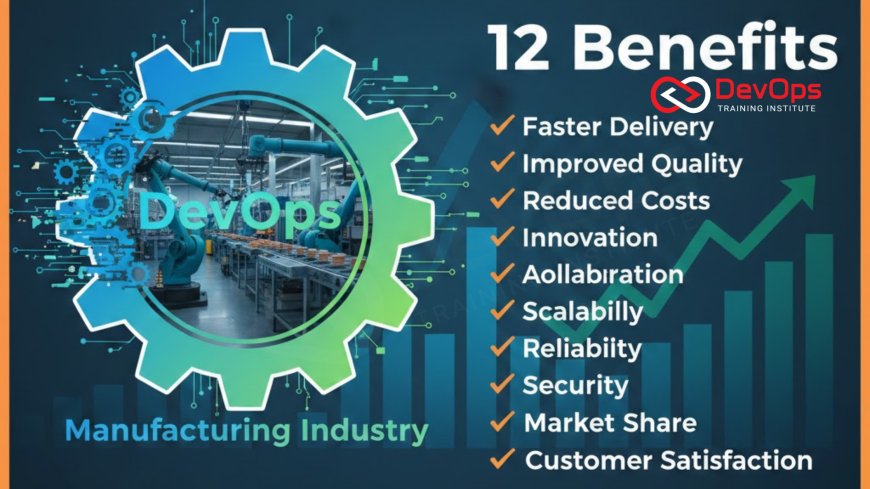
12 Benefits of DevOps Adoption in Manufacturing Industry
As the manufacturing industry pivots toward Industry 4.0 and smart factory models in 2025 and 2026, DevOps has emerged as a critical strategic lever. This comprehensive guide explores the twelve key benefits of DevOps adoption in manufacturing, from accelerating time-to-market for embedded software to reducing downtime in complex cyber-physical production systems. Learn how the integration of automated CI/CD pipelines, Infrastructure as Code, and AI-augmented monitoring can transform factory operations, enhance hardware competitiveness, and streamline regulatory compliance. Discover how bridging the gap between IT and production teams fosters a culture of innovation and operational excellence, ensuring long-term resilience and profitability in today’s rapidly digitizing global market.
Introduction to DevOps in the Industrial Sector
In the era of Industry 4.0, the boundaries between physical machinery and digital intelligence have all but vanished. Manufacturing is no longer just about assembly lines and raw materials; it is increasingly defined by the millions of lines of code that power robotics, IoT sensors, and enterprise resource planning systems. DevOps adoption in manufacturing is the process of applying high-velocity software engineering principles to the industrial environment. This shift allows manufacturers to manage the growing complexity of embedded software and connected devices with the same speed and precision as a modern tech startup.
By breaking down the traditional silos between IT development and factory floor operations, DevOps enables a more agile and responsive production model. As we move through 2025 into 2026, those who embrace these principles gain a massive competitive advantage by being able to iterate on hardware and software simultaneously. This guide explores twelve transformative benefits that DevOps brings to the manufacturing sector, providing a roadmap for achieving operational excellence and technical resilience in a world where software is the primary driver of industrial innovation and customer value.
Accelerated Time-to-Market for Smart Products
In a global market where consumer demands shift overnight, speed is the ultimate competitive asset. DevOps accelerates time-to-market by implementing automated CI/CD pipelines that handle the building, testing, and deployment of software updates in hours rather than months. For manufacturers producing smart, connected hardware, this means new features and security patches can be delivered to products in the field almost instantly. This rapid iteration cycle allows businesses to respond to competitor activity and market trends with unprecedented agility, ensuring their products remain relevant throughout their entire lifecycle.
This acceleration is supported by continuous development practices that favor small, frequent updates over massive, risky releases. By automating the mechanical parts of the delivery process, engineering teams are freed from manual "toil" and can focus on the creative aspects of product design. This efficiency directly impacts the bottom line by reducing the lead time between a new idea and a functional, revenue-generating product on the market. It turns the technical pipeline into a high-speed delivery mechanism that supports the broader business goal of rapid, customer-centric innovation in a demanding digital economy.
Reduction in System and Machine Downtime
Downtime on a factory floor is incredibly costly, often measured in thousands of dollars per minute. DevOps helps reduce this downtime by integrating real-time monitoring and AIOps-powered alerting into the production environment. These tools analyze streams of data from machinery and software to identify anomalies and predict potential failures before they occur. This proactive approach to maintenance ensures that issues are remediated during scheduled windows rather than causing unplanned outages that halt production lines and damage revenue streams for the organization.
When an incident does occur, DevOps automation enables a much faster response. By using Infrastructure as Code, teams can quickly provision new environments or roll back faulty configurations to a last-known healthy state. This drastically improves the Mean Time to Recovery (MTTR), which is a critical metric for any high-availability manufacturing operation. By bridging the gap between developers and operators, the team gains a unified view of the entire system, allowing for rapid root cause analysis and a more coordinated effort to restore services and maintain the continuous flow of the assembly line.
Enhanced Quality and Reliability of Embedded Systems
Embedded systems are the "brains" of modern machinery, but their complexity makes them prone to subtle bugs that can have catastrophic real-world consequences. DevOps improves the quality of these systems by introducing automated testing and "shift-left" validation into the development process. Every change is subjected to a rigorous suite of unit, integration, and performance tests before it is ever allowed near a physical device. This ensures that only the most stable and reliable code is deployed to production, significantly reducing the risk of hardware malfunctions caused by software errors.
Furthermore, the use of continuous verification ensures that the software continues to behave correctly even after it has been deployed to the field. By constantly monitoring the interaction between software and hardware, teams can identify edge cases and performance regressions that only manifest under real-world stress. This commitment to quality builds trust with customers and reduces the high costs associated with product recalls or expensive field repairs. It transforms the manufacturing process into a high-quality "production line" for software that matches the precision and excellence of the physical goods being produced.
Summary of DevOps Benefits in Manufacturing
| Benefit Area | Primary DevOps Driver | Impact on Manufacturing | Priority |
|---|---|---|---|
| Time-to-Market | CI/CD Automation | Faster feature releases | High |
| Operational Cost | Waste Elimination | Lower resource overhead | Medium |
| System Stability | Continuous Monitoring | Reduced equipment downtime | Critical |
| Compliance | Automated Auditing | Simplified regulatory checks | High |
| Scalability | Cloud Integration | Easier global expansion | Medium |
Improved Collaboration Between IT and OT
One of the most significant hurdles in modern manufacturing is the historical divide between Information Technology (IT) and Operational Technology (OT). DevOps directly addresses this by fostering a culture of shared responsibility and cross-functional teamwork. By using unified tools for communication and project management, such as Jira or Slack, developers and factory engineers can collaborate on a common platform. This increased visibility ensures that software updates are always aligned with the physical requirements and safety constraints of the production floor, leading to fewer conflicts and more efficient workflows.
This collaboration extends to the planning phase, where Agile methodologies like Scrum or Kanban are used to track both software tasks and hardware maintenance. When everyone is working toward the same goal—maximizing customer value—it becomes much easier to identify bottlenecks and resolve them before they impact production. This cultural change is a prerequisite for successful Industry 4.0 adoption, as it ensures that the organization's human talent is as integrated and synchronized as its automated systems. It turns technical and operational expertise into a single, cohesive force for industrial innovation and growth.
Streamlined Regulatory and Safety Compliance
Manufacturing is a heavily regulated industry where safety and environmental standards are paramount. DevOps streamlines the compliance process by automating the auditing of every change made to the system. Through version control and automated logging, organizations maintain an immutable record of what was changed, by whom, and when. This traceability is invaluable during regulatory inspections, as it allows teams to provide detailed reports with minimal manual effort. It transforms compliance from a time-consuming bottleneck into a continuous, automated background process.
Automated security scanning and policy-as-code enforcement ensure that every update adheres to internal and external safety standards. If a proposed change violates a safety rule or an environmental regulation, the pipeline can automatically block it before it ever reaches production. By utilizing admission controllers in their cloud clusters, manufacturers can enforce these standards at the gate, ensuring total governance and safety across their entire digital estate without slowing down the pace of innovation or delivery.
Benefits of DevOps for Manufacturing Operations
- Optimized Resource Allocation: DevOps automation takes care of repetitive tasks, allowing your team to focus on strategic work and innovation.
- Scalability and Flexibility: Easily scale your digital infrastructure to support new factory locations or increase production volume through cloud-native tools.
- Cost Efficiency: Significant long-term savings are achieved by reducing errors, eliminating waste, and optimizing cloud resource usage via FinOps.
- Continuous Improvement: Feedback loops embedded in the DevOps lifecycle allow for constant refinement of both software and production processes.
- Faster Incident Resolution: Automation enables rapid diagnosis and recovery, minimizing the duration and impact of any technical failures.
- Hardware Competitiveness: High-quality embedded software increases the value and performance of the end-product, making it more competitive.
- Data-Driven Decisions: Real-time telemetry provides rich insights from factory sensors, helping teams mitigate issues and optimize yields.
Implementing these benefits requires a disciplined approach to tool consolidation and platform adoption. By using a managed DevOps platform, manufacturers can reduce the complexity of their multi-vendor toolchains and focus on delivering core value. It is essential to treat your digital infrastructure with the same level of care and precision as your physical factory floor. As you become more proficient in these practices, you can explore advanced AI augmented devops trends to stay ahead of the technical curve and drive meaningful change across your entire industrial organization for years to come.
Conclusion: The Future of Software-Defined Manufacturing
In conclusion, the adoption of DevOps in the manufacturing industry is not just a technical curiosiy; it is a fundamental shift in the industrial operating model. From accelerating time-to-market and reducing downtime to improving collaboration and ensuring compliance, these twelve benefits provide a powerful roadmap for success in the era of Industry 4.0. By treating software as a core component of the production line, manufacturers can achieve new levels of efficiency, quality, and innovation. The transition to a DevOps-driven lifecycle ensures that your business remains agile and resilient in a world defined by rapid digital transformation.
As you move forward, consider who drives cultural change within your organization to ensure broad buy-in for these new practices. Staying informed about modern release strategies and the latest in industrial IoT security will be key to maintaining your competitive edge. Ultimately, the goal is to build a smarter factory that is powered by smarter software. By prioritizing automation, collaboration, and continuous improvement today, you are positioning your manufacturing business for long-term excellence and leadership in an increasingly complex and automated global industrial landscape.
Frequently Asked Questions
What is the primary role of DevOps in a manufacturing company?
DevOps integrates software development and operations to streamline production, improve machine reliability, and accelerate the delivery of smart product features.
How does DevOps help in reducing manufacturing production downtime?
It uses real-time monitoring and predictive analytics to detect issues early and automated recovery scripts to restore systems quickly after failure.
Is DevOps only for software or also for hardware products?
While focused on software, it significantly improves the value of hardware by ensuring the embedded systems and IoT features are high-quality and reliable.
What is Industry 4.0 and how does DevOps relate?
Industry 4.0 is the digitization of manufacturing; DevOps provides the necessary framework for the agile and automated software delivery that powers it.
How can DevOps improve the quality of embedded software?
By using automated testing and continuous integration, DevOps catches bugs early in the cycle before they are deployed to physical hardware devices.
Does adopting DevOps require changing the company culture?
Yes, it requires breaking down silos between IT and production teams to foster collaboration and shared responsibility for the entire product lifecycle.
What is Infrastructure as Code (IaC) in a factory setting?
IaC allows teams to manage and provision their digital infrastructure using code, ensuring environments are consistent and easily reproducible across different locations.
How does DevOps assist with regulatory and safety compliance?
It provides an automated audit trail of all changes and allows for security scans to be integrated directly into the release process.
Can small manufacturing firms benefit from DevOps adoption?
Absolutely, DevOps helps small firms move faster, reduce manual errors, and scale their digital systems efficiently as their production grows and expands.
What is the benefit of a CI/CD pipeline in manufacturing?
A CI/CD pipeline automates the building and testing of software, ensuring that updates are delivered to products and machinery safely and quickly.
How do AI and machine learning enhance DevOps in factories?
AI helps analyze vast amounts of sensor data to predict failures, optimize production yields, and automate root cause analysis during system incidents.
What is "shift-left" testing in the manufacturing industry?
Shift-left means moving testing and quality checks earlier in the development process to identify and fix issues as soon as they occur.
Does DevOps help in reducing cloud infrastructure costs?
Yes, by optimizing resource allocation and using automation, DevOps prevents waste and ensures that cloud spending remains aligned with production needs.
What are the most popular DevOps tools for manufacturers?
Common tools include Jenkins for CI/CD, Git for version control, Docker for containerization, and Prometheus or Grafana for real-time system monitoring.
What is the first step for a manufacturer to adopt DevOps?
The first step is usually to assess current processes, identify bottlenecks, and start by implementing version control and basic automated testing workflows.
What's Your Reaction?
 Like
0
Like
0
 Dislike
0
Dislike
0
 Love
0
Love
0
 Funny
0
Funny
0
 Angry
0
Angry
0
 Sad
0
Sad
0
 Wow
0
Wow
0


![100+ Azure DevOps Interview Questions and Answers [Updated 2025]](https://www.devopstraininginstitute.com/blog/uploads/images/202509/image_140x98_68c40aa9a3834.jpg)






![Future Scope of DevOps Careers in Pune [Updated 2025]](https://www.devopstraininginstitute.com/blog/uploads/images/202510/image_140x98_68e3a84652312.jpg)