

![Kong Interview Preparation Guide [2025]](https://www.devopstraininginstitute.com/blog/uploads/images/202509/image_430x256_68dbb95326997.jpg)


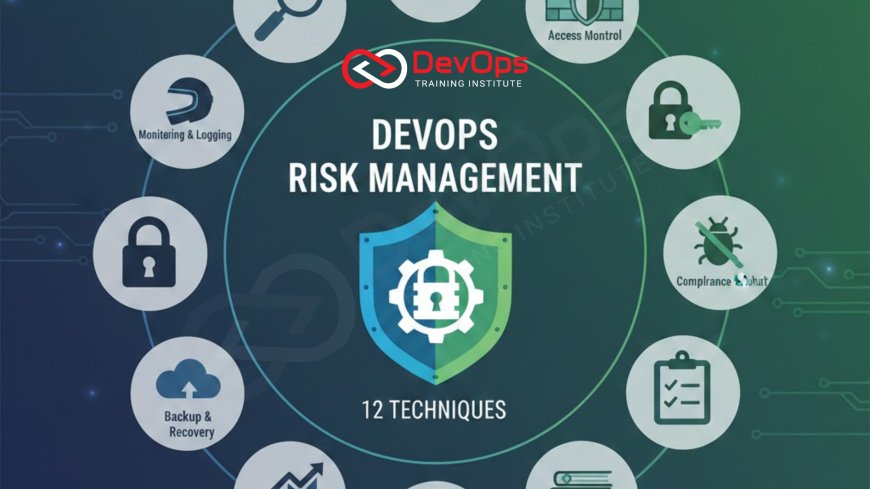
12 DevOps Risk Management Techniques
Master the 12 essential DevOps risk management techniques to build resilient, stable, and secure software delivery pipelines. This comprehensive guide covers proactive strategies like automated threat modeling, continuous security scanning, and policy-as-code enforcement, alongside reactive measures like sophisticated change rollback mechanisms and chaos engineering. Learn how to systematically identify, assess, and mitigate risks across the entire software development lifecycle, ensuring that high velocity and accelerated release cadence are achieved without compromising system reliability or security in cloud-native environments.
Introduction
In the high-velocity world of DevOps, speed is often prioritized, yet risk management is the critical discipline that ensures speed does not lead to disaster. Every code commit, every configuration change, and every deployment introduces potential risk—a bug, a security vulnerability, or an infrastructure misconfiguration. Effective DevOps organizations recognize that risk cannot be eliminated, but it must be systematically identified, assessed, and mitigated through automated processes integrated across the entire delivery pipeline. Risk management, in this context, is about building resilience and minimizing the blast radius of inevitable failures.
Traditional risk management relied on manual gatekeeping and lengthy approval processes, which are antithetical to the DevOps philosophy. Modern DevOps risk management relies on automation and continuous feedback, shifting responsibility for risk identification and mitigation directly to the development teams. This approach turns security and quality checks into instantaneous, automated controls. The goal is to move from slowing down the delivery process to building "fast lanes" that are inherently safe because risk mitigation is automated and continuous. The ultimate measure of success is the reduction of Mean Time to Recovery (MTTR) and the sustained integrity of the production environment.
This comprehensive guide details 12 essential DevOps risk management techniques, categorized into proactive (identifying and preventing risks) and reactive (managing and recovering from failures) strategies. By implementing these practices, you will establish a robust framework that allows your team to innovate rapidly while maintaining high levels of operational stability and security, turning potential weaknesses into verifiable strengths. Mastering these techniques is fundamental to operational excellence in any cloud-native or microservices environment, ensuring that high velocity is achieved safely and sustainably.
Pillar I: Proactive Risk Identification and Prevention (Shift Left)
Proactive risk management focuses on stopping vulnerabilities, bugs, and compliance issues before they are deployed. This is achieved by integrating automated checks early in the development lifecycle (shifting left), ensuring that security and quality are enforced by code rather than by human gatekeepers. These techniques are the first line of defense, transforming risk identification into an automated, continuous process.
1. Continuous Threat Modeling
Risk management starts with understanding potential threats. Continuous Threat Modeling formalizes the process of identifying potential security vulnerabilities and architectural weaknesses in an application or infrastructure design. Unlike traditional threat modeling, which is a one-time event, the continuous approach integrates tools and checks into the CI/CD pipeline to automatically validate security assumptions against the codebase with every change. This ensures that security testing is focused on the highest-risk areas and remains relevant as the application evolves. By embedding this practice, teams proactively manage risk instead of reacting to it later.
Technique: Use automated tools (e.g., OWASP Threat Dragon, specialized analyzers) to formalize threat documentation and tie specific security tests to relevant components. This ensures that every code change is assessed against known threats, following principles like those covered in continuous threat modeling guidelines.
2. Policy-as-Code (PaC) for Governance
Compliance and governance misconfigurations are major sources of risk. Policy-as-Code uses declarative languages (like Rego with OPA, or Checkov policies) to define security, operational, and financial rules. These policies are automatically enforced against Infrastructure as Code (IaC) files (e.g., Terraform, Kubernetes manifests) during the pull request and staging phases, preventing the provisioning of risky infrastructure (e.g., public S3 buckets, open firewalls, over-privileged roles) before deployment.
Technique: Codify all organizational rules (security, cost, performance) using OPA. Enforce OPA as a mandatory gate in the CI pipeline to fail the build if any IaC change violates the defined policies. This automates compliance checking and prevents configuration risks from reaching the live environment.
3. Automated Security Scanning (SAST/SCA/Secret Detection)
Integrate comprehensive, automated security scanning tools into the CI process. This includes SAST (Static Application Security Testing) for proprietary code, SCA (Software Composition Analysis) for third-party dependencies, and secrets detection to find hardcoded credentials. These tools provide instant feedback to the developer, ensuring that the source code and dependencies are free from known vulnerabilities before being merged into the main branch, thus protecting the software supply chain from the beginning.
Technique: Configure SAST to run on every commit or pull request. Use SCA tools like Snyk or Trivy to check dependencies against CVE databases and fail the build if high-severity vulnerabilities are found. This acts as a critical security gate, enforcing a secure-by-default posture.
4. Secrets Management and Least Privilege
The exposure of sensitive credentials is a massive security risk. Secrets Management involves moving all passwords, API keys, and tokens out of version control and build scripts. They should be stored in centralized vaults (e.g., HashiCorp Vault) and injected into the execution environment at runtime using short-lived, ephemeral credentials. Furthermore, enforce the Least Privilege Principle for build agents and deployed applications, minimizing the damage an attacker could inflict if a component is compromised.
Technique: Use IAM roles and service accounts with time-limited permissions to authenticate to the secrets vault. The credentials should be injected into the build agent's memory just before use and automatically revoked upon completion. This severely limits the attack surface presented by the pipeline itself.
5. Host and OS Hardening Verification
The foundation of cloud-native security lies in the underlying operating system and its configuration. The pipeline should automatically verify that the host nodes (e.g., Kubernetes workers) adhere to strict security baselines. This involves checking for disabled unnecessary services, strong access controls, and the correct configuration of kernel security modules. This verification must be integrated into the deployment process.
Technique: Use configuration management tools (Ansible) and IaC to define the secure state. Verify compliance with industry standards and best practices, such as those detailed in the RHEL 10 hardening best practices documentation, and fail the deployment if the target host environment is not adequately secured.
Pillar II: Reactive Risk Control and Recovery
Reactive risk management accepts that failures will occur and focuses on minimizing the damage and accelerating recovery. These techniques are crucial for maintaining system resilience and achieving a low MTTR—the ultimate measure of a robust operational practice. The goal here is safe, fast failure and automated recovery.
6. Automated, Immediate Rollback Mechanisms
The fastest way to resolve an incident caused by a deployment is to instantly revert the problematic change. Every deployment must include a validated, automated rollback mechanism that can revert the application and its associated configuration to the last known stable state. Rollbacks should be triggered automatically by monitoring systems detecting critical metrics violations (e.g., error rate spikes, latency surges) or manually via a single-command action.
Technique: Implement deployment strategies (Canary, Blue/Green) with automated failover logic. Use GitOps tools (Argo CD, Flux CD) to easily revert the desired state in Git, triggering a verified rollback to the previous commit, ensuring high integrity of the deployment process.
7. Advanced Deployment Strategies (Canary/Blue-Green)
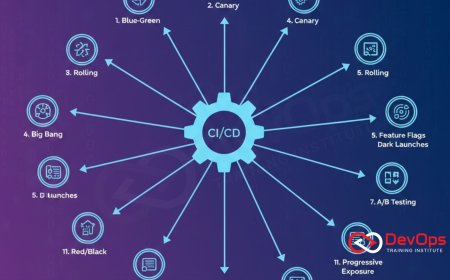
Avoid high-risk "big-bang" deployments. Canary Deployments expose new code to a small percentage of users first, gradually rolling it out only after continuous monitoring confirms stability. Blue/Green Deployments involve running the old and new versions simultaneously, switching traffic instantly only once the new environment is validated. These progressive delivery techniques significantly reduce the blast radius of any new bug or performance issue, ensuring that potential failures are isolated to a minimal user group.
Technique: Use Service Mesh (Istio) or Ingress Controllers (Nginx) for weighted traffic routing and splitting. Set up automated health checks and utilize real-time observability pillars (metrics, traces, logs) to continuously assess the performance of the new version before proceeding with the full traffic shift.
8. Chaos Engineering
Chaos Engineering is the practice of proactively injecting controlled failures into the production environment to test the system's resilience and build confidence in its recovery mechanisms. This technique shifts the organization from being surprised by failures to anticipating and hardening against them. By simulating resource exhaustion, network latency, or service failures, you validate the effectiveness of circuit breakers, auto-scaling, and failover logic under real-world conditions.
Technique: Use dedicated chaos tools (e.g., Chaos Mesh, Gremlin) to run controlled experiments that target specific components, verifying that the system correctly isolates the failure and recovers autonomously, ensuring that the system is resilient and not just functional.
9. Observability for Rapid MTTR
Comprehensive observability is essential for reducing MTTR. Without high-fidelity metrics, traces, and structured logs, engineers spend valuable time guessing the source of the failure. An effective observability strategy ensures that every alert is actionable and instantly correlated with the exact code change or resource consumption event that caused the issue.
Technique: Ensure all services are instrumented with OpenTelemetry. Implement AIOps techniques to correlate alerts and automate RCA. Use tracing to instantly pinpoint which service call introduced the latency or error, confirming the fastest path to diagnosis, as detailed in observability pillar analysis.
10. Immutable Infrastructure and Consistency
Immutable Infrastructure treats servers and containers as disposable entities—they are never modified after deployment. Any change requires provisioning a new, fully configured instance. This mitigates configuration drift, a major source of production risk. Using tools like Terraform and Docker ensures consistency and predictability across environments, significantly simplifying troubleshooting when failures occur.
Technique: All infrastructure and application components must be deployed via IaC and image artifacts. Avoid manual SSH access to production hosts. Any change to the host configuration must follow the GitOps workflow, applying consistent configurations defined in Git, which is also required for managing secure configurations like those for RHEL 10 firewall management.
Pillar III: Governance and Continuous Improvement
Risk management is a continuous process that requires a dedicated feedback loop. These practices ensure that the organization learns from failures, codifies that learning into processes, and maintains the integrity of the delivery system over time.
11. Comprehensive Post-Mortem Culture (Blameless)
After every significant incident, conduct a blameless post-mortem (incident review). The goal is to identify systemic and procedural root causes, not individual mistakes. The output must be a list of concrete, high-priority action items (code fixes, monitoring improvements, process changes) that are fed directly back into the development backlog, ensuring that the system continuously learns and hardens against recurrence. This is the ultimate feedback loop for reliability.
12. Repository Security and Compliance
The Git repository is the most sensitive asset. Implement strict governance over access, review, and merging policies. Enforce branch protection rules that require successful CI tests and code review approval before merging to the main branch. Regularly audit repository access logs and use tools to scan repository history for inadvertently committed secrets. This defense must be layered with encryption, access controls, and auditing, ensuring that the entire software supply chain is protected, which also requires strong security practices for host access and management, similar to those for configuring SSH keys security in RHEL 10 servers.
Conclusion
DevOps risk management is the essential counterweight to velocity. By systematically applying these 12 techniques, organizations can move from a state of chaotic, reactive incident response to one of predictable, proactive resilience. The combination of shift-left security practices (Threat Modeling, PaC, SAST) and advanced recovery mechanisms (Automated Rollback, Canary Deployments, Chaos Engineering) creates a delivery pipeline that is inherently safe and fast.
The core philosophy must be: Automate Risk Mitigation. Every single risk control—from validating IaC configurations to checking dependencies and monitoring production health—must be integrated into the automated pipeline. This ensures that security and reliability are built-in, not bolted-on, allowing engineering teams to confidently achieve high-velocity deployments with minimal friction and maximum confidence. By embracing immutable infrastructure, strong secrets management, and a blameless post-mortem culture, you build a resilient foundation that ensures sustained operational excellence in the face of continuous change, ultimately transforming risk from a threat into a manageable, measurable variable in your software delivery process.
Frequently Asked Questions
What is the ultimate goal of DevOps risk management?
The ultimate goal is to maintain high service reliability and security while achieving a fast release cadence, primarily measured by minimizing the Mean Time to Recovery (MTTR) from incidents.
How does Policy-as-Code prevent infrastructure risk?
PaC codifies security and governance rules (e.g., no public ports) and automatically scans IaC files, blocking any deployment that attempts to provision non-compliant infrastructure configurations before they go live.
Why are Canary and Blue/Green deployments considered risk management techniques?
They limit the blast radius of a failure by exposing new code to only a small subset of users or a separate environment, allowing for rapid detection and rollback before all users are impacted.
What is the purpose of continuous threat modeling in the CI/CD pipeline?
It proactively identifies potential security vulnerabilities in the evolving application design and ensures that specific security tests are created and run to mitigate those identified threats with every code change.
How does Chaos Engineering improve risk posture?
Chaos Engineering proactively injects controlled failures into the system to expose weak spots, validating the recovery mechanisms (circuit breakers, auto-scaling) under real-world conditions before a genuine incident occurs.
Why is Immutable Infrastructure vital for recovery?
Immutability prevents configuration drift, simplifying troubleshooting and recovery, as you can instantly replace a failed component with a verified, known-good instance, accelerating the MTTR.
What foundational security practice is covered by RHEL 10 firewall management in the pipeline?
The IaC pipeline verifies and applies consistent, secure firewall rules to host nodes, preventing unauthorized network access to the underlying infrastructure, which is a key host-level security control.
What is the role of the blameless post-mortem in risk management?
It identifies systemic root causes of incidents and translates those findings into concrete, high-priority code and process improvements, driving a continuous learning loop that hardens the system against future failures.
How does automated SSH keys security contribute to pipeline security?
It ensures that programmatic and human access to sensitive host nodes is strictly controlled using cryptographically secure, version-controlled keys rather than passwords, minimizing the risk of credential compromise and unauthorized access.
How are secrets management and least privilege linked in risk mitigation?
Secrets management secures credentials, while least privilege ensures that even if a build agent accesses a secret, its permissions are so restricted that it cannot cause widespread damage, providing defense-in-depth.
What security practice is addressed by SAST and SCA?
They address software supply chain risk by automatically scanning proprietary code and open-source dependencies for known security vulnerabilities and compliance issues early in the CI process.
How does observability aid in reactive risk management?
High-fidelity metrics, logs, and traces provide the necessary data to instantly identify the source, scope, and impact of a failure, enabling engineers to quickly diagnose the root cause and initiate the correct automated recovery procedure.
How does GitOps enhance risk control?
GitOps makes all infrastructure and configuration changes traceable, auditable, and subject to peer review via Git, ensuring that every deployment follows a controlled process and simplifying rollbacks to a known-good state.
Why should developers integrate testing hooks for chaos engineering?
Testing hooks allow developers to simulate failures in non-production environments to validate that their resilience code (circuit breakers, retries) works as intended, proving the code is battle-ready before it hits production.
What risk is mitigated by enforcing RHEL 10 hardening best practices?
This practice mitigates the risk of compromise at the host operating system level, ensuring a minimal attack surface and strong security defaults for the environment running containers and microservices.
What's Your Reaction?
 Like
0
Like
0
 Dislike
0
Dislike
0
 Love
0
Love
0
 Funny
0
Funny
0
 Angry
0
Angry
0
 Sad
0
Sad
0
 Wow
0
Wow
0

![100+ Azure DevOps Interview Questions and Answers [Updated 2025]](https://www.devopstraininginstitute.com/blog/uploads/images/202509/image_140x98_68c40aa9a3834.jpg)






![Future Scope of DevOps Careers in Pune [Updated 2025]](https://www.devopstraininginstitute.com/blog/uploads/images/202510/image_140x98_68e3a84652312.jpg)