

![Kong Interview Preparation Guide [2025]](https://www.devopstraininginstitute.com/blog/uploads/images/202509/image_430x256_68dbb95326997.jpg)



18 Cloud Networking Concepts DevOps Engineers Must Know
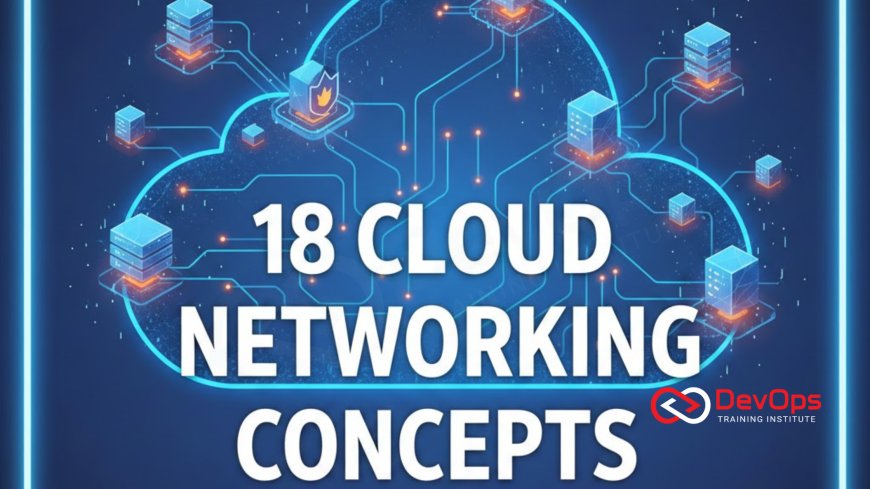
In the complex digital landscape of 2026, a deep understanding of cloud networking is the primary differentiator for elite DevOps professionals. This comprehensive guide explores eighteen essential cloud networking concepts, ranging from VPC architecture and subnetting to global load balancing and zero-trust security. Learn how to design resilient, high-performance infrastructures that support massive scale while maintaining absolute security and compliance. Discover how to leverage advanced networking protocols and automated configuration strategies to eliminate bottlenecks and ensure seamless connectivity across multi-cloud environments. Master these fundamental pillars to transform your technical expertise and lead your engineering team toward operational excellence in today's demanding and highly automated global software market.
Introduction to the Cloud Networking Foundation
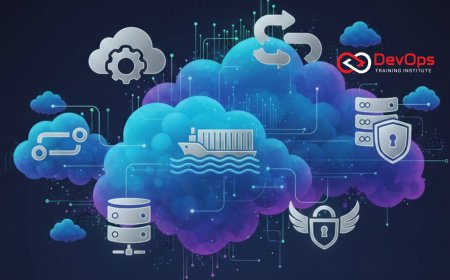
Cloud networking is the invisible infrastructure that connects modern applications to their users and to each other. For a DevOps engineer in 2026, networking is no longer a separate hardware concern managed by a different department; it is a programmable resource defined by code. Understanding the core concepts of how data moves across virtual networks is essential for building systems that are both fast and secure. Whether you are managing a single region setup or a global multi-cloud environment, the network is the primary factor that determines your application's latency, reliability, and security posture.
As we move toward more autonomous and distributed systems, the complexity of the network layer continues to grow. Concepts like software-defined networking and overlay networks have replaced traditional cables and physical switches. To master this landscape, you must move beyond the basics of IP addresses and ports to understand high-level architectural patterns like transit gateways and service meshes. This guide provides a detailed look at eighteen critical concepts that form the technical backbone of modern cloud operations, ensuring you have the technical confidence to design and troubleshoot the networks of the future.
Virtual Private Cloud (VPC) and Subnetting
A Virtual Private Cloud (VPC) is your own private segment of a public cloud provider's network. It allows you to define a virtual network environment where you have complete control over your IP address range, subnets, and routing tables. Subnetting is the practice of dividing your VPC's IP range into smaller, isolated sections. This is a fundamental technique for organizing your resources; for example, you can place your web servers in a public subnet with internet access and your databases in a private subnet with no direct route to the outside world.
Effective VPC design is a prerequisite for security and system resilience. By creating logical boundaries between different tiers of your application, you can implement fine-grained access controls. DevOps engineers use Infrastructure as Code to provision these environments, ensuring that every cluster state is consistent across development and production. Mastering CIDR notation and routing logic ensures that your services can communicate efficiently while remaining protected from unauthorized access. It is the first step in building a "secure-by-design" infrastructure that can scale organically alongside your organization's digital growth and demands.
Load Balancing and Traffic Management
Load balancing is the process of distributing incoming network traffic across a group of backend servers or services. This ensures that no single resource becomes a bottleneck and that your application remains highly available even if individual instances fail. Modern cloud providers offer various types of load balancers, including Application Load Balancers (Layer 7) for HTTP traffic and Network Load Balancers (Layer 4) for high-performance TCP traffic. These tools act as the "traffic police" for your infrastructure, ensuring a smooth and predictable experience for your users.
Beyond simple distribution, advanced traffic management includes features like SSL termination, session persistence, and path-based routing. These capabilities allow you to implement sophisticated release strategies like canary deployments and blue-green releases. By directing a small percentage of traffic to a new version, you can validate its performance before a full rollout. This data-driven approach to networking is a vital part of modern continuous verification, providing you with the control needed to ship code faster and more safely than ever before in today's competitive and fast-moving global digital market.
DNS and Global Content Delivery
The Domain Name System (DNS) is the "phonebook" of the internet, translating human-readable names like example.com into the IP addresses that computers use to find each other. In the cloud, DNS is a powerful tool for global traffic steering. Content Delivery Networks (CDNs) take this a step further by caching your static content at "edge" locations closer to your users. This drastically reduces latency and improves the performance of your web applications, which is a critical factor for user retention and overall business success in a global digital economy.
For DevOps engineers, managing DNS records and CDN configurations is a daily task that impacts both availability and security. Techniques like Geo-DNS allow you to route users to the nearest healthy data center, improving the user experience during regional outages. Furthermore, CDNs provide built-in protection against DDoS attacks by absorbing malicious traffic at the edge. Integrating these concepts into your cloud architecture patterns ensures that your application is not only fast but also resilient against external threats and localized hardware failures in the data center.
18 Essential Cloud Networking Concepts Comparison
| Concept Name | Primary Focus | Primary Benefit | Technical Layer |
|---|---|---|---|
| VPC | Isolation | Network Security | Layer 3 |
| Anycast IP | Global Routing | Reduced Latency | Layer 3 |
| Security Groups | Firewalling | Access Control | Layer 4 |
| VPC Peering | Connectivity | Internal Communication | Layer 3 |
| Service Mesh | Microservices | Observability & Security | Layer 7 |
Network Security Groups and ACLs
Network security in the cloud is achieved through multiple layers of defense. Security Groups act as a virtual firewall for your individual server instances, controlling inbound and outbound traffic at the port level. Network Access Control Lists (ACLs) provide a secondary layer of protection at the subnet level. Unlike Security Groups, which are stateful, ACLs are stateless, meaning they don't automatically allow return traffic. This combination of tools allows you to implement a least-privilege security model across your entire network architecture.
Understanding the difference between stateful and stateless filtering is a critical skill for incident handling and troubleshooting connectivity issues. DevOps professionals must be able to configure these rules to allow only necessary traffic, such as port 443 for web traffic or port 22 for administrative access from trusted IP ranges. By utilizing admission controllers in your Kubernetes clusters, you can also enforce network policies that restrict traffic between specific microservices, providing a robust defense against lateral movement during a security breach.
Hybrid Connectivity: VPN and Direct Connect
Many organizations operate in a hybrid cloud environment, where their public cloud resources must communicate with an on-premises data center. A Virtual Private Network (VPN) provides a secure, encrypted tunnel over the public internet for this purpose. For higher performance and lower latency, services like AWS Direct Connect or Azure ExpressRoute provide a dedicated physical connection between your data center and the cloud provider. These technologies are essential for cloud migration projects and for applications that require a stable connection to legacy internal systems.
Designing a hybrid network requires a strong understanding of routing protocols like BGP (Border Gateway Protocol). BGP allows your on-premises network and your cloud VPC to share routing information automatically, ensuring that traffic always finds the most efficient path. By maintaining continuous synchronization between your local and cloud routing tables, you avoid the manual overhead of managing static routes. This level of networking expertise is a key part of choosing who drives cultural change by enabling seamless collaboration between traditional IT and modern cloud teams.
Cloud Networking Best Practices for Engineers
- Adopt Zero Trust: Never trust internal traffic by default; use mutual TLS and strict network policies for all service-to-service communication.
- Optimize for Latency: Use regional endpoints and CDNs to keep your application data as close to the end user as possible.
- Implement Observability: Use flow logs and specialized networking monitors to track traffic patterns and identify potential security threats or bottlenecks.
- Manage Secrets Securely: Use secret scanning tools to ensure that no network credentials or API keys are ever exposed in your automation code.
- Plan for High Availability: Design your VPC across multiple availability zones to ensure your network remains functional during a localized data center failure.
- Standardize with IaC: Use Terraform or Pulumi to define your networking infrastructure, ensuring that your cluster states are reproducible and auditable.
- Leverage Container Networking: Check if you should use containerd or other efficient runtimes to minimize the overhead of virtual networking for your containerized apps.
Building a world-class cloud network is an iterative process that requires a commitment to technical excellence and a focus on security. It is important to remember that the network is the foundation upon which all other application layers are built. By staying informed about AI augmented devops trends, you can explore automated networking tools that can predict and remediate issues before they impact your users. This synergy between human expertise and automated intelligence is the key to maintaining a resilient and high-performing infrastructure in the fast-paced and ever-changing digital economy of 2026.
Conclusion on Mastering Cloud Networking
In conclusion, the eighteen cloud networking concepts discussed in this guide provide a comprehensive roadmap for any DevOps engineer looking to master the modern cloud landscape. From the foundational logic of VPCs and subnets to the global scale of CDNs and hybrid connectivity, these pillars of networking are essential for building secure, scalable, and resilient applications. By treating your network as a programmable resource and adopting a security-first mindset, you ensure that your infrastructure is a powerful engine for your business's growth and innovation.
As you move forward, consider how why are chatops techniques gaining traction in network troubleshooting and management can improve your team's coordination and speed. The transition to a cloud-native networking model is a significant step toward achieving true operational excellence. By prioritizing these concepts today, you are preparing yourself for the challenges of tomorrow, ensuring that your organization remains competitive in a world where technical performance and security are the primary benchmarks for success. Master the network, and you master the cloud.
Frequently Asked Questions
What is a VPC and why is it important in cloud DevOps?
A VPC is a private virtual network segment that provides isolation and security, allowing you to control your own cloud resources and IP addressing.
What is the main difference between a public and a private subnet?
A public subnet has a direct route to an internet gateway, while a private subnet does not, making it more secure for databases and internal tools.
How does a load balancer improve application availability?
A load balancer distributes incoming traffic to multiple healthy instances, ensuring that if one fails, the application remains accessible to the users.
What is DNS propagation and why does it take time?
DNS propagation is the process where global DNS servers update their caches with your new record information, which can take several hours to complete.
What is the purpose of a Content Delivery Network (CDN)?
A CDN caches static content at edge locations close to the end users, reducing latency and speeding up the loading time of web applications.
What are CIDR blocks and how are they used?
CIDR blocks define a range of IP addresses for your network; they are used to allocate IP space for VPCs and their individual subnets.
How do Security Groups differ from Network ACLs?
Security Groups are stateful and apply to individual instances, while Network ACLs are stateless and apply at the subnet level for broader protection.
What is a VPN tunnel in the context of cloud networking?
A VPN tunnel is an encrypted connection that allows for secure communication between your on-premises data center and your virtual private cloud network.
What is a Service Mesh and when should I use one?
A Service Mesh manages communication between microservices; you should use one when managing complex applications with hundreds of service-to-service interactions.
What is Latency and how can I reduce it for my users?
Latency is the delay in network communication; you can reduce it by using regional deployments, CDNs, and optimized routing protocols across your global network.
How does BGP work in hybrid cloud environments?
BGP (Border Gateway Protocol) automatically shares routing information between your local network and the cloud, ensuring traffic uses the most efficient path.
What is a Reverse Proxy and how does it help?
A Reverse Proxy sits in front of your web servers, handling tasks like SSL termination and load balancing to improve security and performance.
What is Microsegmentation in cloud security?
Microsegmentation is the practice of creating tiny, isolated network segments for each workload to prevent the lateral movement of attackers during a breach.
Can I use the same IP range for multiple VPCs?
Technically yes, but it is highly discouraged if you plan to peer those VPCs or connect them to the same on-premises network later.
What is the first step in troubleshooting a networking issue?
The first step is to check the security groups and routing tables for any misconfigurations that might be blocking the expected traffic between resources.
What's Your Reaction?
 Like
0
Like
0
 Dislike
0
Dislike
0
 Love
0
Love
0
 Funny
0
Funny
0
 Angry
0
Angry
0
 Sad
0
Sad
0
 Wow
0
Wow
0


![100+ Azure DevOps Interview Questions and Answers [Updated 2025]](https://www.devopstraininginstitute.com/blog/uploads/images/202509/image_140x98_68c40aa9a3834.jpg)






![Future Scope of DevOps Careers in Pune [Updated 2025]](https://www.devopstraininginstitute.com/blog/uploads/images/202510/image_140x98_68e3a84652312.jpg)