


![Kong Interview Preparation Guide [2025]](https://www.devopstraininginstitute.com/blog/uploads/images/202509/image_430x256_68dbb95326997.jpg)

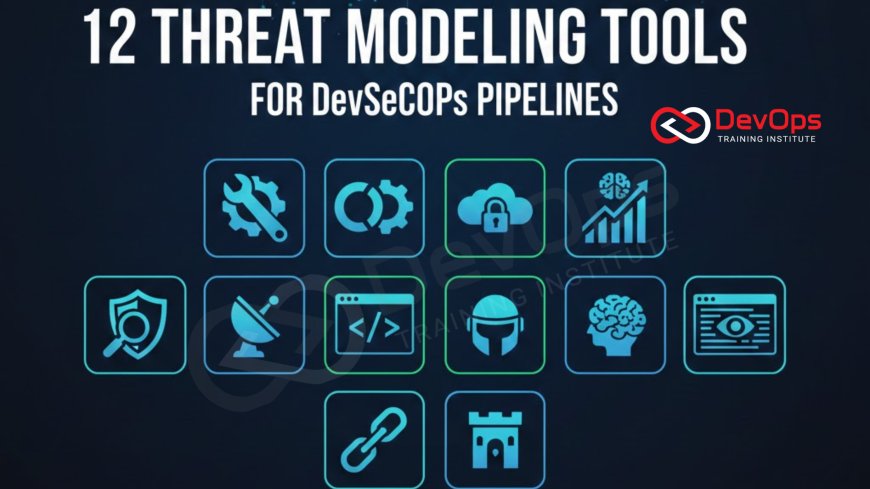
12 Threat Modeling Tools for DevSecOps Pipelines
Discover the most effective threat modeling tools specifically designed for modern DevSecOps pipelines in this comprehensive guide. We explore how identifying security vulnerabilities early in the software development lifecycle can save time, reduce costs, and protect your critical data. This detailed article covers twelve essential tools that help engineering teams visualize threats, automate security analysis, and build more resilient applications. Learn how to integrate these solutions seamlessly into your automated workflows to ensure a secure and efficient delivery process for your organization.
Introduction to Threat Modeling in DevSecOps
In the modern era of rapid software delivery, security can no longer be an afterthought or a final step before release. Threat modeling is a proactive engineering technique that involves identifying potential security risks and vulnerabilities at the design stage. By visualizing the system architecture and understanding how data flows between different components, teams can anticipate how an attacker might attempt to compromise the application. This forward thinking approach allows developers and security professionals to build defenses into the system from the very beginning.
Integrating threat modeling into a DevSecOps pipeline ensures that security is baked into the automated workflow. This transition from manual security reviews to automated threat analysis helps teams maintain high velocity without sacrificing safety. As applications become more complex and distributed, having a structured way to evaluate risks becomes essential. This article will guide you through twelve powerful tools that empower teams to perform threat modeling efficiently, helping you protect your digital assets in an increasingly hostile online environment. Understanding how does devsecops integrate security into every stage is the first step toward a mature security posture.
The Importance of Early Threat Identification
Identifying a security flaw after a product has been deployed is significantly more expensive and time consuming than catching it during the design phase. When a vulnerability is found early, it can often be fixed by simply changing a configuration or refining a piece of logic in the architectural diagram. However, once the code is written and integrated, a fix might require extensive refactoring, retesting, and redeployment, which can disrupt the entire development schedule and delay important business objectives.
By using threat modeling tools, teams adopt a mindset of prevention rather than reaction. This proactive stance is a core component of shift left testing, where security and quality checks are moved to the earliest possible stages of the development cycle. It empowers developers to understand the security implications of their choices, leading to more secure code and a more knowledgeable engineering culture. Ultimately, early identification reduces the risk of data breaches and builds trust with users who rely on your software to be safe and reliable. This aligns perfectly with the philosophy of why is shift left testing a critical strategy for faster delivery in modern pipelines.
Core Methodology Behind Threat Modeling Tools
Most professional threat modeling tools are built upon established frameworks that provide a structured way to think about security. One of the most common frameworks is STRIDE, which stands for Spoofing, Tampering, Repudiation, Information Disclosure, Denial of Service, and Elevation of Privilege. By checking every component of a system against these six categories, engineers can systematically uncover weaknesses. These tools often provide templates and libraries of known threats to help teams get started quickly without needing to be cybersecurity experts themselves.
Another popular method is the use of Data Flow Diagrams. These diagrams illustrate how information moves through an application, highlighting trust boundaries where data moves from an untrusted source to a trusted internal component. Modern tools automate the creation of these diagrams by analyzing code or infrastructure definitions. This automation is particularly useful in platform engineering environments where infrastructure changes frequently. By visualizing these flows, teams can identify exactly where encryption, authentication, or input validation is missing, ensuring that no part of the system is left exposed to potential attackers. This is a vital part of what is the role of platform engineering in scalable devops environments today.
Automation and Integration in the Pipeline
For threat modeling to be effective in a fast paced environment, it must be integrated directly into the tools that developers use every day. Modern security solutions now offer plugins for integrated development environments and command line interfaces that can be triggered by a code commit or a pull request. This means that as soon as a developer proposes a change to the architecture, an automated scan can check for new threats. This immediate feedback loop is critical for maintaining security at the speed of DevOps.
Beyond simple alerts, these tools can also integrate with issue tracking systems to automatically create tickets for identified risks. This ensures that security tasks are prioritized alongside feature development and bug fixes. When threat modeling is automated, it becomes a continuous process rather than a static document that sits on a shelf. This continuous approach allows the security posture of an application to evolve as new features are added and as the threat landscape changes, providing a persistent defense against modern cyber threats. This high level of automation is often managed through a gitops approach for consistency.
Table: Top Threat Modeling Tools for DevSecOps
| Tool Name | Primary Focus | Best Use Case | Key Benefit |
|---|---|---|---|
| OWASP Threat Dragon | Open-source diagrams | Small to medium teams | Highly accessible and community driven. |
| IriusRisk | Automated risk analysis | Enterprise scale pipelines | Integrates directly with Jira and CI/CD. |
| ThreatModeler | Cloud infrastructure | AWS/Azure/GCP environments | Automates cloud drift security analysis. |
| Microsoft TMT | Desktop based modeling | Windows centric applications | Established tool with vast STRIDE knowledge. |
| Snyk (via Helios) | Developer centric security | Real-time code analysis | Focuses on vulnerabilities in the code flow. |
| SD Elements | Compliance and policy | Regulated industries | Translates threats into specific requirements. |
Visualizing Threats Through Diagrams
A primary feature of most threat modeling tools is the ability to create visual representations of a system. These diagrams are more than just pictures; they are interactive maps that define how different services communicate. When you see a visual link between a public facing web server and a sensitive database, the risk of a direct attack becomes much more obvious. Visualizing these relationships helps team members from different backgrounds, such as developers, testers, and product owners, to have a shared understanding of the security landscape.
Good visualization tools allow users to drag and drop components like load balancers, firewalls, and storage buckets onto a canvas. The tool then automatically suggests potential threats based on the connections made. For example, if a data flow crosses a boundary from a private network to the public internet without an encryption icon, the tool will flag a potential information disclosure risk. This visual feedback is far more effective than reading through a long list of security requirements, as it allows engineers to see exactly where the defenses need to be strengthened. This transparency is also helpful for FinOps teams to see if security resources are being utilized efficiently. Check out how does finops help optimize cloud spend to learn more.
Bridging the Gap Between Observability and Security
There is a growing connection between how we monitor applications and how we secure them. While monitoring focuses on the health and performance of a system, security analysis looks for malicious patterns within that same data. Threat modeling tools can use data from observability platforms to validate if the actual behavior of the system matches the intended design. If a data flow appears in the monitoring logs that was not identified during the threat modeling phase, it could indicate a new vulnerability or an unauthorized change.
Using live data to inform threat models makes them more accurate and dynamic. Instead of relying on a static diagram created months ago, teams can use real time insights to see how traffic is actually moving through the network. This convergence allows for a more holistic view of system reliability. For example, a sudden spike in traffic might be a performance issue or a denial of service attack. By understanding the difference through observability, teams can respond with the appropriate corrective action. You can explore what are the key differences between observability and monitoring for more context.
Scaling Security with Policy as Code
As organizations grow, manual security reviews become a major bottleneck. To overcome this, many threat modeling tools are adopting a policy as code approach. This involves defining security rules and threat patterns in a machine readable format that can be automatically enforced across all projects. This ensures that every new application follows the same security standards, regardless of which team is building it. It also allows security experts to update policies in one place and have them instantly applied across the entire organization.
This scalable approach is particularly beneficial for managing complex deployments. For instance, when using canary releases to roll out a new feature, policy as code can ensure that the new version meets all threat modeling requirements before it ever reaches a subset of real users. If the tool detects a new threat in the canary version, it can automatically halt the deployment. This level of control provides a safety net that allows for rapid innovation without compromising the security of the production environment. This is closely related to how do canary releases reduce risk in production deployments today.
Advanced Features and Future Trends
The future of threat modeling tools is increasingly focused on artificial intelligence and machine learning. These advanced technologies can analyze millions of data points to predict new attack vectors that humans might overlook. We are also seeing a shift toward tools that can automatically generate code fixes for identified threats. Instead of just telling you that an input is vulnerable to injection, the tool might suggest a specific sanitization library or an updated configuration setting to resolve the issue immediately.
Another emerging trend is the integration of threat modeling with chaos engineering. By intentionally injecting failures and simulating attacks, teams can verify if their threat models are accurate and if their defenses are effective. This experimental approach helps build highly resilient systems that can withstand even the most sophisticated attacks. As the digital landscape continues to evolve, these tools will become even more integrated, providing a seamless and automated security experience for every developer. Discover how can chaos engineering improve resilience in devops pipelines to stay ahead of the curve.
Conclusion
In conclusion, threat modeling is a fundamental practice for any organization committed to building secure and reliable software. By identifying risks early in the DevSecOps pipeline, teams can save resources, protect their reputation, and ensure the safety of their users. The twelve tools we have discussed provide a variety of ways to visualize, analyze, and automate security, making it easier than ever to integrate threat modeling into your daily workflow. Whether you choose an open source solution like Threat Dragon or an enterprise platform like IriusRisk, the key is to start early and make security a continuous part of your development process. As you move forward, remember that security is a shared responsibility that requires collaboration across the entire engineering team. By leveraging these powerful tools and adopting a proactive mindset, you can navigate the complexities of modern software delivery with confidence, knowing that your applications are built on a solid and secure foundation.
Frequently Asked Questions
What is the best threat modeling tool for beginners?
OWASP Threat Dragon is an excellent choice for beginners because it is free, open-source, and has a very user-friendly interface.
How often should we perform threat modeling?
Threat modeling should be a continuous process performed whenever there is a significant change to the architecture or new features are added.
Does threat modeling replace security scanning?
No, threat modeling is a design-time activity that identifies architectural risks, while security scanning finds vulnerabilities in the actual written code.
Can threat modeling be automated?
Yes, modern tools can automate the creation of diagrams and the identification of threats by analyzing your code and infrastructure definitions.
What is STRIDE in threat modeling?
STRIDE is a framework for identifying threats: Spoofing, Tampering, Repudiation, Information Disclosure, Denial of Service, and Elevation of Privilege.
Do I need to be a security expert to use these tools?
Many modern tools are designed for developers and provide built-in libraries and templates to guide you through the process effectively.
What is a trust boundary?
A trust boundary is a point in a diagram where data transitions from an untrusted source to a trusted internal system component.
How does threat modeling save money?
By finding and fixing security flaws during the design phase, you avoid the high cost of refactoring code after a deployment.
What is the output of a threat model?
The primary output is a list of potential threats along with recommended mitigation strategies to secure the system against those risks.
Can threat modeling help with compliance?
Yes, many tools generate reports that help prove to auditors that you have a structured process for identifying and managing security risks.
What is Data Flow Diagramming?
It is a visual technique used to show how information moves through a system, identifying where data enters, leaves, and is stored.
Is Microsoft Threat Modeling Tool still relevant?
Yes, it remains a powerful and widely used tool, especially for teams working on Windows-based applications and traditional desktop software environments.
Can I integrate threat modeling with Jira?
Most enterprise-grade threat modeling tools offer direct integration with Jira to automatically create and track security-related tasks for the team.
What is the difference between a threat and a vulnerability?
A threat is a potential negative event, while a vulnerability is a specific weakness in your system that a threat could exploit.
Does threat modeling work for cloud-native apps?
Yes, tools like ThreatModeler are specifically designed to analyze cloud infrastructure and handle the dynamic nature of microservices and containers.
What's Your Reaction?
 Like
0
Like
0
 Dislike
0
Dislike
0
 Love
0
Love
0
 Funny
0
Funny
0
 Angry
0
Angry
0
 Sad
0
Sad
0
 Wow
0
Wow
0

![100+ Azure DevOps Interview Questions and Answers [Updated 2025]](https://www.devopstraininginstitute.com/blog/uploads/images/202509/image_140x98_68c40aa9a3834.jpg)





![Future Scope of DevOps Careers in Pune [Updated 2025]](https://www.devopstraininginstitute.com/blog/uploads/images/202510/image_140x98_68e3a84652312.jpg)