























![Kong Interview Preparation Guide [2025]](https://www.devopstraininginstitute.com/blog/uploads/images/202509/image_430x256_68dbb95326997.jpg)









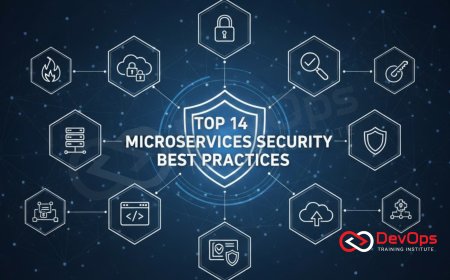

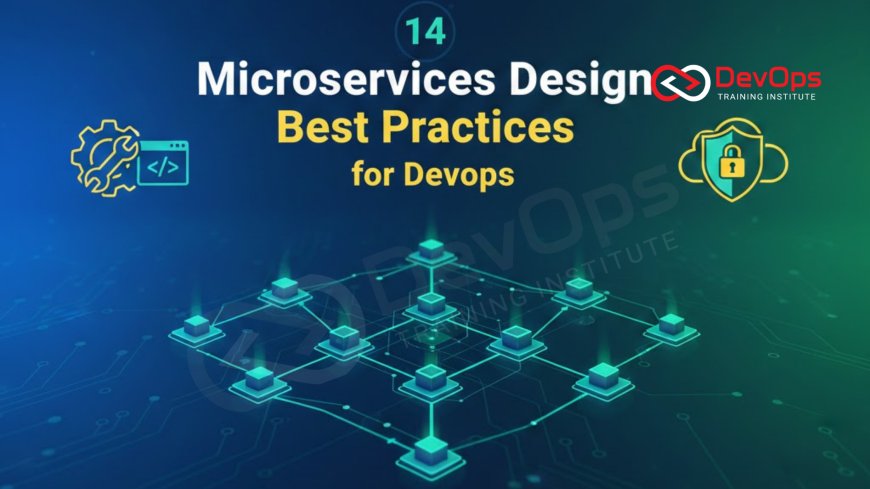
14 Microservices Design Best Practices for DevOps
Master the essential fourteen microservices design best practices tailored specifically for modern DevOps environments to achieve unprecedented agility and system resilience. This comprehensive guide details strategic approaches such as domain driven design, decentralized data management, and automated observability that empower engineering teams to build scalable and maintainable distributed systems. Learn how to bridge the gap between complex software architecture and streamlined operational workflows to ensure high availability and rapid delivery cycles in twenty twenty six. Discover the roadmap to optimizing your cloud native applications while maintaining peak performance and security across every service in your infrastructure today.
Introduction to Microservices in a DevOps World
The transition from monolithic architectures to microservices has redefined the way modern software is built and operated. In a DevOps context, microservices allow teams to decouple their development cycles, enabling faster deployments and more localized scaling. However, this architectural shift introduces significant complexity that requires a disciplined approach to design and management. Without a clear set of guiding principles, the benefits of microservices can quickly be overshadowed by the overhead of managing hundreds of interconnected components across a distributed network environment.
Success in a microservices ecosystem depends on the synergy between architectural design and operational automation. DevOps teams must ensure that each service is built for independence, observability, and resilience from the very first line of code. This guide outlines the fourteen most critical best practices that bridge the gap between high level design and day to day operations. By following these principles, organizations can create a technical foundation that supports rapid innovation while maintaining the high standards of stability and security required for enterprise scale production systems in twenty twenty six.
Embracing the Single Responsibility Principle
The single responsibility principle is the cornerstone of effective microservices design. It dictates that each service should focus on one specific business capability and do it exceptionally well. When services are designed with a narrow scope, they become easier to understand, test, and maintain over time. This clarity reduces the risk of accidental regressions when making changes and allows developers to innovate within a service without affecting the broader system. It is the literal application of "do one thing and do it well" at the architectural level for the entire organization.
In a DevOps environment, adhering to this principle simplifies the creation of automated pipelines. Since each service has a clearly defined purpose, the associated testing and deployment workflows can be highly specialized and efficient. This modularity also enables teams to scale specific functions independently. For example, if your order processing logic is separated from your user profile management, you can scale the order service during a holiday sale without wasting resources on the profile service. This targeted approach to resource management is essential for optimizing cloud architecture patterns and maintaining cost efficiency in large scale environments.
Designing Around Business Domains
Domain driven design is a powerful methodology that helps teams identify the natural boundaries between different parts of a complex application. By aligning microservices with specific business domains, you ensure that the technical structure reflects the actual goals of the organization. This alignment makes it easier for developers to communicate with business stakeholders and ensures that technical changes are driven by real world needs. It also helps in identifying the bounded contexts where a specific data model is valid, preventing the leakage of internal implementation details between different services.
When services are built around domains, the communication between them becomes more intuitive and purposeful. This reduces the "chattiness" that often plagues poorly designed microservices architectures. DevOps teams benefit from this approach because it creates a more stable set of service interfaces that are less likely to change frequently. By focusing on the domain, you can also better implement cultural change by forming "two pizza teams" that take full ownership of a specific business area. This end to end ownership is a key driver of productivity and quality in modern engineering organizations aiming for high velocity.
Implementing Decentralized Data Management
One of the most challenging but necessary practices in microservices is decentralized data management. Each service should ideally own its own private data store, which no other service can access directly. This ensures that the internal schema of a service can evolve independently without breaking other parts of the system. Direct database sharing is a major anti pattern that leads to tight coupling and prevents services from being truly autonomous. By encapsulating data access within the service API, you create a clear contract that simplifies continuous synchronization across the entire technical stack.
This practice also allows you to choose the best database technology for each specific task. A search service might use a document store like Elasticsearch, while a financial service might require the strict ACID properties of a relational database. Managing these diverse data stores requires a robust DevOps strategy for backup, recovery, and monitoring. While it increases the complexity of data consistency, patterns like the Saga pattern can be used to manage distributed transactions across multiple services. This approach ensures that your cloud architecture patterns remain flexible and resilient to the unique demands of each individual microservice.
Key Microservices Design Metrics
| Metric Category | Key Performance Indicator | Target Goal | DevOps Tooling |
|---|---|---|---|
| Deployment Frequency | Deployments per day per service | Multiple times daily | Jenkins, GitLab CI |
| MTTR | Mean Time to Recovery | Under 60 minutes | PagerDuty, Datadog |
| Change Failure Rate | Percentage of failed releases | Less than 5 percent | Spinnaker, ArgoCD |
| Observability Coverage | Percentage of services traced | 100 percent | Jaeger, OpenTelemetry |
| Lead Time for Change | Commit to production time | Under 4 hours | GitHub Actions |
Prioritizing API First Development
An API first approach ensures that the interfaces between services are well thought out and treated as formal contracts. Before writing any implementation code, teams should define the API using standards like OpenAPI or gRPC. This allows different teams to work in parallel; while one team builds the service, another can build the client using mocked versions of the API. This decoupling of development tasks significantly increases the overall velocity of the engineering organization. It also ensures that the release strategies for different services remain independent and predictable over the long term.
In a DevOps environment, well defined APIs are essential for automated testing and service virtualization. Contract testing can be used to ensure that a change in one service does not break its consumers, providing an early warning system in the CI CD pipeline. By maintaining strict versioning of your APIs, you can introduce new features without forcing all your consumers to upgrade simultaneously. This backward compatibility is critical for maintaining stability in a large, moving ecosystem where different parts of the application are owned by different teams. It is the glue that holds a distributed system together effectively.
Leveraging API Gateways for Centralized Control
An API gateway acts as the entry point for all external requests, providing a single location to handle cross cutting concerns like authentication, rate limiting, and request routing. Instead of each microservice implementing its own security logic, the gateway handles these tasks consistently across the entire platform. This reduces the duplication of code and ensures that security policies are applied uniformly. The gateway can also perform request transformation and response aggregation, simplifying the interaction for client applications like mobile apps or web frontends.
From a DevOps perspective, the API gateway is a vital tool for observability and traffic management. It provides a centralized place to collect logs and metrics on all incoming traffic, giving you a high level view of system health. You can also use the gateway to implement advanced release strategies like canary deployments or blue green releases by gradually shifting traffic between different versions of a service. This level of control is essential for minimizing the impact of potential issues during a production rollout. It effectively turns your network edge into a programmable layer that enhances both security and operational flexibility.
Essential Best Practices for Service Resilience
- Circuit Breakers: Implement circuit breakers to stop cascading failures when a downstream service becomes unresponsive or slow.
- Service Discovery: Use automated service discovery tools like Consul or Kubernetes DNS to manage the dynamic locations of service instances.
- Asynchronous Messaging: Prefer asynchronous communication using message brokers like Kafka to decouple services and improve overall system availability.
- Health Checks: Ensure every service provides a standardized health check endpoint that monitoring tools and load balancers can query in real time.
- Distributed Tracing: Integrate distributed tracing using OpenTelemetry to visualize the path of requests across multiple services for easier debugging.
- Immutable Infrastructure: Use containerization and IaC to ensure that your environments are reproducible and free from configuration drift.
- Security at the Edge: Utilize admission controllers to enforce security and resource policies automatically within your orchestration platform.
Implementing these resilience patterns is non negotiable for any team running microservices in production. They provide the necessary safeguards to ensure that a failure in one small part of the system does not lead to a global outage. DevOps teams should also focus on continuous verification to ensure these resilience mechanisms are working as expected under real world conditions. By embracing these practices, you build a "self healing" infrastructure that can automatically respond to anomalies and maintain a high quality experience for your end users regardless of individual component failures.
Conclusion: Building a Resilient Future
In conclusion, the successful implementation of microservices requires a careful balance of architectural discipline and operational automation. By following these fourteen best practices, from domain driven design to automated observability, you can build a system that is both highly scalable and remarkably resilient. The key is to treat each service as an autonomous unit while ensuring they are all governed by consistent standards for communication and security. As you move forward, remember that microservices are not a goal in themselves, but a means to achieve greater agility and faster delivery for your business.
The role of DevOps in this journey is to provide the platform and tooling that make these best practices easy to follow. Integrating ChatOps techniques into your incident handling can further improve team collaboration during complex distributed outages. As artificial intelligence continues to influence the industry, look for ways to leverage AI augmented devops to automate the optimization of your microservices network. By staying focused on these core principles today, you are preparing your organization for the technical challenges of twenty twenty six and beyond, ensuring that your architecture remains a powerful engine for growth and innovation.
Frequently Asked Questions
What is the single biggest challenge in microservices design today?
The biggest challenge is managing the operational complexity of distributed systems while ensuring consistent data integrity across multiple independent services.
How do I decide when to split a service?
Split a service when it has multiple business responsibilities or when different parts of it need to scale at different rates.
Should every microservice have its own database?
Yes, giving each service its own database ensures loose coupling and allows each service to choose the most appropriate storage technology.
What is the role of an API gateway in microservices?
The gateway acts as a single entry point that manages security, routing, and rate limiting for all incoming external client requests.
How does distributed tracing help DevOps teams?
It allows teams to track the path of a request across services, making it much easier to identify bottlenecks and failures.
What are the best protocols for inter-service communication?
REST and gRPC are common for synchronous calls, while message brokers like Kafka are preferred for highly scalable asynchronous communication patterns.
How can I ensure security in a microservices architecture?
Implement zero trust security, use mTLS for service communication, and integrate automated security scanning into every single CI CD pipeline.
Is it possible to use different languages for different services?
Yes, this is one of the main benefits, allowing teams to choose the best language and tool for their specific business domain.
What is the difference between orchestration and choreography?
Orchestration uses a central controller to manage interactions, while choreography lets services respond to events independently without a central manager.
How does containerization support microservices?
Containers provide a consistent environment for services to run, making it easy to deploy and scale them across various cloud infrastructures.
What is a circuit breaker in software architecture?
A circuit breaker stops requests to a failing service, preventing the failure from cascading and allowing the service time to recover.
How often should microservices be deployed?
Microservices should be deployed as frequently as needed, often multiple times a day, to provide rapid feedback and deliver new features.
What is the benefit of domain-driven design?
It helps align technical service boundaries with actual business capabilities, making the system more intuitive and easier for teams to manage.
Can microservices be used for small applications?
Usually, microservices are overkill for small apps; they are best suited for large, complex systems that require independent team scaling.
How do I manage configuration across hundreds of services?
Use a centralized configuration management tool or secret manager to provide services with their settings at runtime without manual intervention.
What's Your Reaction?
 Like
0
Like
0
 Dislike
0
Dislike
0
 Love
0
Love
0
 Funny
0
Funny
0
 Angry
0
Angry
0
 Sad
0
Sad
0
 Wow
0
Wow
0





![100+ Azure DevOps Interview Questions and Answers [Updated 2025]](https://www.devopstraininginstitute.com/blog/uploads/images/202509/image_140x98_68c40aa9a3834.jpg)






![Future Scope of DevOps Careers in Pune [Updated 2025]](https://www.devopstraininginstitute.com/blog/uploads/images/202510/image_140x98_68e3a84652312.jpg)