

![Kong Interview Preparation Guide [2025]](https://www.devopstraininginstitute.com/blog/uploads/images/202509/image_430x256_68dbb95326997.jpg)


15 Best Security Practices for CI/CD Pipelines
Adopt the top 15 security practices for your Continuous Integration and Continuous Delivery pipelines to build a truly robust DevSecOps culture. This guide explores essential techniques, including automated static analysis, secrets management, infrastructure hardening, and artifact integrity checks, ensuring security is baked into every stage of your software delivery process. Learn how to implement security gates, manage container images, enforce least-privilege access for build agents, and leverage configuration management to protect your production environment from the source. Prioritize security from code commit to deployment to accelerate your release cadence while maintaining enterprise-level compliance and trust, mitigating risks before they reach production. This holistic approach ensures faster, safer, and more reliable deployments.
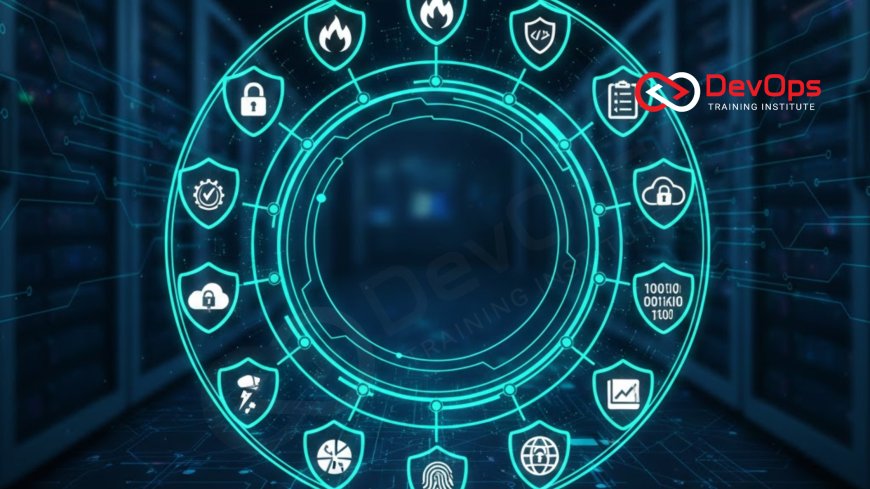
Introduction
The core philosophy of DevOps is acceleration: shortening the time from code commit to deployment. However, this velocity introduces inherent risks if security is not integrated directly into the Continuous Integration and Continuous Delivery (CI/CD) pipeline. Relying on traditional, manual security audits performed just before deployment, often called "security gatekeeping," simply bottlenecks the process and defeats the purpose of CI/CD. The modern approach, **DevSecOps**, demands that security checks, scans, and validations are automated and shifted left, meaning they occur early and often throughout the entire delivery lifecycle. Integrating security into every step ensures that vulnerabilities are caught when they are cheapest and fastest to fix, minimizing the risk that insecure code reaches production.
A secure CI/CD pipeline must be treated as a critical production environment itself, as it handles sensitive data, controls access to production infrastructure, and builds the deployable artifacts. Any compromise in the pipeline—such as a vulnerability in a build tool or a leak of a secret—can grant attackers direct access to your codebase, testing environments, or even your live applications. Therefore, hardening the pipeline is a two-fold task: first, securing the process and the tools themselves; and second, automating security testing to validate the quality and integrity of the application code and infrastructure that passes through it. Without this foundational commitment to security, the CI/CD pipeline becomes the single greatest point of failure for an organization's overall security posture.
This comprehensive guide details 15 essential security practices that form the backbone of a robust DevSecOps strategy. These practices span multiple layers, from foundational principles like least privilege access and environment segmentation to advanced techniques like software composition analysis and continuous policy enforcement. By implementing these measures, you will transform your CI/CD pipeline from a security liability into an enforced security control plane, enabling your teams to achieve a high-velocity release cadence without sacrificing enterprise-level assurance. Adopting this holistic approach is essential for any organization operating in the cloud-native space, where trust and rapid delivery must go hand-in-hand to stay competitive and secure against evolving threats.
Foundational Security Practices: Shift Left
Shifting security left requires integrating automated checks into the earliest stages of the CI process, starting the moment a developer commits code. This ensures that security is a concern for everyone, not just a final operations check. The following practices establish automated security feedback loops that empower developers to fix issues immediately, drastically reducing the cost and time associated with security remediation later in the cycle. By embedding these practices directly into the source code management (SCM) system and the initial build steps, you enforce a secure-by-default environment for every development task and prevent basic flaws from accumulating into significant technical debt.
The key here is speed and context. Security feedback must be delivered directly to the developer, ideally in their Integrated Development Environment (IDE) or within the pull request workflow. This immediate feedback loop is critical for ensuring that security issues are treated as code quality issues, fixing them before they are merged into the main branch. This approach requires using fast, incremental analysis tools that minimize build time and provide highly accurate results. Slow or noisy security tools will inevitably be ignored or bypassed by developers prioritizing delivery speed, thus defeating the "shift left" objective. Therefore, continuous refinement of the tools and rulesets based on performance and accuracy metrics is a necessary operational task within DevSecOps.
1. Automated Static Analysis (SAST) in CI
Implement **Static Application Security Testing (SAST)** tools to scan proprietary application code for common security vulnerabilities (e.g., SQL injection, buffer overflows, broken authentication) every time a developer commits code or opens a pull request. This analysis is performed without executing the code, making it fast and efficient. The SAST tool should block the merge or fail the build if high-severity vulnerabilities are found, enforcing a strict quality gate. This proactive check ensures that flaws are never integrated into the main branch, stopping them at their source.
2. Software Composition Analysis (SCA)
SCA tools are essential for analyzing third-party, open-source libraries and dependencies used by the application. Most modern applications are composed of over 80% open-source components, making dependency security a massive risk vector. SCA tools automatically check these dependencies against public vulnerability databases (CVEs) during the build process. The pipeline must fail if critical vulnerabilities are found in any external package, or if licenses conflict with organizational policy. This practice is vital for ensuring that known weaknesses are not pulled into your production artifacts.
3. Secrets Detection in Source Code
A highly prevalent security risk is the accidental hardcoding of sensitive credentials (API keys, passwords, tokens) in source code or configuration files. Implement specialized **secrets detection** tools to scan every commit and pull request for these secrets. If a secret is detected, the workflow must be instantly halted, and the commit should be blocked from entering the repository history. If a secret does slip through, an automated process should be triggered to instantly revoke the exposed credential, minimizing the window of exposure and ensuring that exposed secrets are immediately invalidated before they can be exploited. This is a non-negotiable security guardrail.
Code and Artifact Integrity
Once the code has been successfully merged, the CI/CD pipeline must ensure that the resulting artifacts (container images, binaries, packages) are verifiably clean, tamper-proof, and correctly configured for security. This phase focuses on maintaining integrity and trust throughout the build process and ensuring that the final deployable asset is ready for the production environment. These practices secure the transition from source code to executable application, preventing supply chain attacks that exploit the build environment itself. Using standardized, secure base images is the first step in creating a trusted artifact chain that reduces external dependencies and enforces internal best practices.
The integrity of the artifact must be maintained through digital signatures and verification checks. This means that every step in the pipeline that produces an output must sign that output, and every subsequent step that consumes that output must verify the signature. This process creates an unbroken chain of custody, ensuring that no malicious code was injected between the build agent and the deployment target. Furthermore, strict adherence to container best practices, such as minimizing the attack surface and running processes with the lowest possible privileges, ensures that the final artifact is inherently resilient against common container breakouts or exploits. These measures ensure the trust placed in the production environment is not misplaced.
4. Use Minimal and Trusted Base Images
For containerized applications, the choice of the base image is fundamental to security. Always use minimal, official, or internally approved base images (e.g., Alpine, scratch, or hardened enterprise images) that contain only necessary components. Minimize the number of layers and avoid running unnecessary package managers or services in the final image. This reduces the attack surface and minimizes vulnerabilities inherited from the base operating system. Teams should continuously audit and update their base image selection based on vulnerability reports and internal hardening requirements, ensuring that the foundation of the application is as secure as possible.
5. Container Image Scanning (Vulnerability Check)
After the application code is compiled and packaged into a container image, perform a full **Vulnerability Scanning** of the resulting image using tools like Clair, Trivy, or container vendor-specific scanners. This scan checks all included OS packages, libraries, and dependencies against known CVE databases. The pipeline must block the deployment of any image containing high-severity or critical vulnerabilities, especially if known fixes are available. This acts as a critical quality gate before the image is pushed to the final registry. Furthermore, a system should be in place to monitor the **Container Registry** for vulnerabilities in existing images, triggering alerts when new CVEs are discovered in already deployed versions.
6. Immutable Artifacts and Digital Signatures
Ensure that all deployable artifacts (container images, binaries) are treated as **immutable**. Once built, they should never be modified. Use digital signing tools (e.g., Notary, Cosign) to cryptographically sign every image before pushing it to the registry. The deployment environment (e.g., Kubernetes admission controller) must then be configured to **verify** the signature of the image against a trusted key before it is allowed to run. This practice prevents tampering, unauthorized deployments, and supply chain attacks by confirming the identity and integrity of the artifact throughout the delivery process.
Environment and Secrets Protection
The CI/CD environment itself, including build servers, agents, and storage, must be strictly protected, as it holds the keys to the kingdom—secrets and access credentials necessary for deployment. These practices focus on securing the pipeline's operational plane, ensuring that access to production environments is tightly controlled and that sensitive information is never exposed directly in logs, scripts, or environment variables. Implementing robust secrets management is perhaps the single most critical security practice in this phase, as credentials are the primary target for attackers seeking to pivot from the pipeline to the production infrastructure. This includes ensuring that only ephemeral, limited-scope credentials are ever available to the build agents, minimizing the window of potential exploitation.
The principle of least privilege must be rigorously applied to every pipeline component. Build agents should only have the exact permissions required for their specific task (e.g., building code, running tests) and absolutely no direct access to production databases or sensitive cloud resources. Environment segmentation, using dedicated networks and temporary execution spaces, further contains the impact of any potential compromise. Integrating these controls means treating the pipeline's infrastructure with the same level of scrutiny and hardening applied to production hosts, recognizing that a build agent compromise is effectively equivalent to a full production environment breach. Continuous auditing of access policies and credential usage ensures these critical security controls remain effective and current.
7. Implement Least Privilege for Build Agents
Every CI/CD build agent or pipeline runner must operate under the principle of **Least Privilege**. Grant agents only the minimum permissions necessary for their current task (e.g., read-only access to source code, permission to push to a staging registry, but *not* permission to delete production databases). Use ephemeral, short-lived credentials (like IAM roles or temporary tokens) that are automatically revoked after the pipeline run is complete. Avoid using a single, static admin account for all pipeline tasks, as this is a massive security liability and single point of failure that bypasses all security segregation efforts.
8. Robust Secrets Management
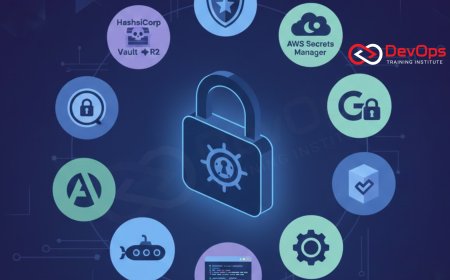
Never store secrets in plain text within the SCM, CI/CD configuration files, or build logs. Use dedicated, centralized **Secrets Management** tools (e.g., HashiCorp Vault, AWS Secrets Manager, Azure Key Vault) that inject credentials into the build agent's memory at runtime. Access to these secrets must be strictly controlled, authenticated via the pipeline's IAM role or temporary service account, and automatically revoked upon completion. This prevents secrets from being exposed via code inspection or compromised build logs, ensuring that the sensitive credentials never persist longer than absolutely necessary. Automated secret rotation should also be enforced on a regular schedule.
9. Pipeline/Environment Segmentation
Isolate your CI/CD environments from each other and from the production environment using network segmentation and access controls. **Staging and Testing** environments should be physically or logically separated from Production. Furthermore, ensure that the build agents and their host machines are only reachable via secure, private networks and have strict egress controls. Use ephemeral build environments (e.g., containers or temporary VMs) that are destroyed after each run, preventing potential malware or lingering malicious code from persisting between builds and contaminating subsequent deployments with silent vulnerabilities.
Table: Security Tools & Integration
The following table summarizes key security practices and corresponding tool categories, illustrating where automation should be integrated within the CI/CD pipeline to ensure maximum coverage and effective "shift left" security. This provides a quick reference for the DevSecOps engineer looking to select and implement appropriate tooling at the right stages of the delivery process. Choosing the right tool for the job is essential, but integrating it seamlessly and automating the execution is what truly makes the practice continuous and effective.
| Practice Category | CI/CD Stage | Description | Example Tools/Tech |
|---|---|---|---|
| Shift Left Code Analysis | Commit / Pull Request | Scanning source code for vulnerabilities and hardcoded secrets. | SonarQube, Bandit, Gitleaks, Checkmarx |
| Dependency Integrity | Build | Checking third-party libraries against public CVE databases. | Dependency-Check, Snyk, Black Duck, OWASP CycloneDX |
| Artifact Integrity | Build / Publish | Scanning container images and signing final artifacts. | Clair, Trivy, Notary, Cosign |
| Configuration Security | Test / Deploy | Validating infrastructure-as-code (IaC) files and runtime policies. | Checkov, Terrascan, Open Policy Agent (OPA) |
| Secrets Management | Runtime Injection | Injecting short-lived credentials into agent memory only when needed. | HashiCorp Vault, AWS Secrets Manager, Azure Key Vault |
Runtime and Network Hardening
The deployment phase is the moment your artifacts become live services, and security must be enforced not just in the code, but in the runtime environment where the application lives. This layer focuses on ensuring that the target environment (VMs, Kubernetes nodes, cloud accounts) is configured securely to host the application. It’s about leveraging the security features of the underlying operating system and cloud provider to create strong defense-in-depth, preventing compromises that originate from the runtime context. This includes validating that the security configurations, like firewall rules and access lists, are correctly applied before the application starts accepting live traffic.
For containerized applications, this phase ensures that the container runtime is restricted as much as possible, using security contexts and network policies to isolate pods and services. This is where the principles of least privilege extend from the build agent to the deployed application itself. Failure to secure the runtime environment means that even a perfectly built, secure application could be exploited if its host system or network configuration is weak. Therefore, a comprehensive DevSecOps pipeline must include automated steps that verify and apply these hardening measures at the moment of deployment, ensuring that security best practices are consistently applied to every host and container running the application.
10. IaC Security and Policy Enforcement
Infrastructure as Code (IaC) files (e.g., Terraform, CloudFormation, Kubernetes manifests) define your production environment's security posture. Implement automated policy enforcement tools (e.g., Checkov, Open Policy Agent (OPA)) to scan IaC files for misconfigurations (e.g., public S3 buckets, unsecured ports, over-privileged IAM roles) *before* deployment. This shifts security left for the infrastructure layer, ensuring that the environment is secure by design. Policy-as-Code is a powerful method for preventing infrastructure vulnerabilities from being accidentally provisioned into the production cloud account, making security governance fully automated and auditable.
11. Runtime Security Context and Least Privilege
For containerized applications, enforce strict runtime security contexts within Kubernetes manifests. This includes:
- Running containers as a non-root user (`runAsUser`).
- Setting the filesystem to read-only where possible.
- Dropping unnecessary Linux capabilities.
- Enforcing strong access controls with AppArmor or **SELinux**.
These practices minimize the damage an attacker can inflict if a container is compromised. The CI/CD pipeline should include a step to validate that all deployment manifests adhere to these strict runtime security policies, failing the build if a container is configured with excessive permissions or an insecure user context.
12. Automated Host and OS Hardening
Ensure that the underlying host operating systems and cloud VMs (e.g., your Kubernetes nodes) are provisioned with secure, standardized configurations. The CI/CD process should trigger or verify the application of configuration management scripts (e.g., Ansible, Chef) that implement operating system hardening before application deployment. This involves: disabling unnecessary services, configuring logging, enforcing access controls, and applying strong firewall rules. This practice of host hardening is essential, especially when dealing with operating systems like RHEL, where following RHEL 10 hardening best practices is necessary for maintaining a minimal attack surface and ensuring full compliance.
Advanced Governance and Compliance
The final layer of CI/CD security involves setting up the framework for governance, auditing, and proactive defense against new threats. These practices move beyond simple bug detection to establish a continuous learning and adaptation loop for the security process itself. This includes ensuring that all actions within the pipeline are traceable and that security requirements are continually adapted based on intelligence and threat modeling. These controls are vital for meeting regulatory compliance mandates (like SOC 2, HIPAA, or GDPR) and demonstrating that the organization has robust, auditable processes for securing its software supply chain, a necessity for enterprise-grade operations.
A crucial part of advanced security governance is establishing a security-conscious application architecture. The use of robust, secure-by-default components, such as API gateways that centralize authentication and traffic control, can significantly offload security burdens from individual microservices. Furthermore, embracing techniques like **continuous threat modeling** ensures that security testing is always relevant and focused on the highest-risk areas of the application. By integrating these advanced practices, organizations can confidently manage regulatory risk and adapt their security posture dynamically, staying ahead of emerging threats and maintaining a high level of technical assurance across the platform. This proactive approach turns security into a competitive advantage rather than a costly overhead.
13. Comprehensive Audit Trails and Immutability
Treat your CI/CD pipelines as an auditable system. Ensure every action, code change, approval, security scan result, and deployment event is logged to an immutable, centralized location with full timestamps and user/service identity. This provides a complete forensic trail necessary for incident response and regulatory compliance. The logs must be protected and stored according to strict **log management best practices**, ensuring their integrity and availability for future audits. Tools must also be configured to immediately alert on any unauthorized modification attempts to the pipeline configuration or execution environment itself.
14. Continuous Threat Modeling and Policy Update
Security policies should not be static. Implement **continuous threat modeling** as an iterative, automated process that feeds back into the CI/CD pipeline. Use vulnerability and incident data to inform and update security policy-as-code rules, ensuring that new attack vectors discovered in production are immediately incorporated as automated checks in development. This continuous feedback loop ensures that security controls remain relevant and focused on current threats, hardening the pipeline against zero-day exploits and novel attack patterns, reflecting a mature and highly adaptive security program that learns and evolves autonomously.
15. Secure Microservices Communication (API Gateways and Service Mesh)
In distributed systems, deployment reliability is often tied to secure service communication. Use a service mesh (e.g., Istio, Linkerd) to enforce automated mutual TLS (mTLS) encryption between all services, eliminating plain-text traffic within the cluster. Furthermore, centralize authentication and authorization at the edge using robust **API Gateways**, which simplifies security enforcement for individual microservices and provides a single, observable point for ingress traffic control. This practice offloads security burdens from developers and centralizes core networking and security policies, making management easier.
Securing the Infrastructure Foundation
A chain is only as strong as its weakest link, and often the weakest link in a cloud-native application is the underlying operating system that hosts the containers or the base image from which they are built. Ignoring the security of the host OS is a critical mistake that can negate all application-level security efforts. This section emphasizes the crucial need to integrate OS-level security practices directly into the pipeline's provisioning and validation stages, ensuring consistency from the hardware layer up to the application code. This includes ensuring that the host OS is configured with the highest security defaults and that necessary security modules are active and correctly policy-driven. Implementing this requires expertise in system administration and IaC.
For enterprise-grade operating systems like RHEL, the security features available at the kernel level are essential lines of defense. Modules like **SELinux** provide mandatory access controls that restrict what processes can access, even if they escape a container. The CI/CD pipeline must verify that such security enhancements are active and that the application's configuration does not conflict with them. Furthermore, the pipeline should leverage the operating system's built-in security features, such as cryptographic modules and advanced auditing capabilities. Ensuring that the pipeline enforces these policies means that the integrity and confidentiality of the host environment are protected against misconfigurations that could be exploited by malicious containers or processes.
Therefore, a complete DevSecOps pipeline must include automated checks for security features that go beyond the application stack. This includes integrating compliance checks for the kernel version, verifying that critical host-level services are disabled, and ensuring that the underlying **RHEL 10 security enhancements** are successfully applied to all worker nodes before any application pods are scheduled onto them. This continuous OS-level security validation, performed automatically by the CI/CD pipeline using IaC tooling and configuration management, provides the ultimate assurance that the entire software supply chain—from code commit to physical hardware—is secured against unauthorized access and known vulnerabilities. This holistic security posture is the hallmark of a mature DevSecOps implementation.
Conclusion
The acceleration brought by CI/CD pipelines makes the integration of security an absolute necessity, not an optional step. The 15 best practices discussed—from shifting security left with SAST/SCA and protecting secrets with centralized vaults to enforcing runtime policies with least privilege and automating host hardening—collectively form a robust **DevSecOps** control plane. By embedding security at every stage, you transform your pipeline from a potential security liability into a powerful mechanism for continuous assurance, ensuring that the software you deliver is both fast and fundamentally reliable. This holistic commitment to security-by-design minimizes the attack surface across the entire application and infrastructure stack.
Achieving this level of pipeline security requires an organizational shift and a commitment to automation. Treat your security policies as code, enforce them with automated gates, and ensure that every developer is empowered with immediate feedback on the security posture of their contributions. The focus must be on continuous learning, leveraging comprehensive audit trails and **continuous threat modeling** to adapt policies dynamically against emerging threats. By automating security validation across every layer, from the dependency tree to the host operating system, you ensure that the integrity and confidentiality of your systems are maintained even at high velocity, which is non-negotiable for enterprise operations.
Ultimately, the investment in these security practices is an investment in stability, compliance, and competitive advantage. A secure CI/CD pipeline is one that can confidently manage high-frequency deployments, enabling teams to achieve a consistent and predictable **release cadence**. By integrating best practices like immutable artifacts, policy-as-code, and strict identity management, you build a resilient foundation for your cloud-native systems, ensuring that trust is maintained with every deployment and that the promise of DevSecOps—speed with security—is fully realized throughout the entire software supply chain. Making security a foundational element of development ensures your application is fortified against the modern threat landscape.
Frequently Asked Questions
What is the "shift left" security principle in CI/CD?
It means integrating automated security testing (like SAST and SCA) into the earliest stages of the development cycle, such as code commit or pull requests, rather than waiting until deployment.
Why should secrets never be hardcoded in CI/CD configuration files?
Hardcoding secrets risks exposure if the repository or build logs are compromised, providing attackers with direct access to production resources. Secrets managers are necessary.
What is the purpose of Software Composition Analysis (SCA) in the pipeline?
SCA scans third-party, open-source dependencies and libraries against public vulnerability databases to prevent known weaknesses from being packaged into the final artifact.
How do API Gateways improve microservices deployment security?
**API Gateways** centralize authentication and authorization at the edge, simplifying security enforcement for individual microservices and providing a single, controllable ingress point for traffic.
What is policy-as-code (PaC) in the context of IaC security?
PaC defines security and compliance rules in code (e.g., OPA), which are automatically enforced by the pipeline to prevent misconfigurations in infrastructure provisioning.
Why must build agents operate under the principle of least privilege?
Granting minimum necessary permissions ensures that if a build agent is compromised, the attacker's ability to pivot or cause damage to production environments is strictly limited.
What is the role of digital signatures on artifacts?
Digital signatures cryptographically verify the integrity and origin of an artifact, ensuring it has not been tampered with between the build agent and the final deployment target.
What is continuous threat modeling?
It is the iterative process of identifying threats and vulnerabilities in the application and feeding that intelligence back to update automated security checks in the pipeline.
How does RHEL 10 security enhancements factor into pipeline security?
The pipeline must include automated IaC checks to verify that all underlying host nodes are provisioned with RHEL's built-in security enhancements, such as kernel hardening and default access controls.
Why is SELinux important for container runtime security?
SELinux provides mandatory access controls at the host OS level, restricting what processes (including those within containers) can access, serving as a critical layer of defense against container breakouts.
How do service meshes enhance microservices security?
Service meshes automatically enforce mutual TLS (mTLS) encryption between all services, providing network-level security and strong identity control, eliminating clear-text traffic within the cluster.
What must be included in a secure audit trail for a CI/CD pipeline?
It must include every action, code change, user identity, timestamps, security scan result, and deployment event, logged immutably for forensic analysis and compliance.
What is the importance of host hardening in the CI/CD context?
Host hardening ensures that the underlying VMs or nodes hosting the pipeline agents and applications are securely configured, minimizing the risk of compromise at the infrastructure layer.
What are log management best practices for CI/CD audit trails?
Best practices include centralizing logs, using immutable storage, ensuring structured log formats, and implementing strict access controls to protect sensitive audit data.
What is the ultimate goal of implementing hardening best practices at the OS layer?
The goal is to provide a minimal attack surface and a strong defense-in-depth, ensuring that even if a container is exploited, the underlying operating system resists compromise and further lateral movement.
What's Your Reaction?
 Like
0
Like
0
 Dislike
0
Dislike
0
 Love
0
Love
0
 Funny
0
Funny
0
 Angry
0
Angry
0
 Sad
0
Sad
0
 Wow
0
Wow
0

![100+ Azure DevOps Interview Questions and Answers [Updated 2025]](https://www.devopstraininginstitute.com/blog/uploads/images/202509/image_140x98_68c40aa9a3834.jpg)






![Future Scope of DevOps Careers in Pune [Updated 2025]](https://www.devopstraininginstitute.com/blog/uploads/images/202510/image_140x98_68e3a84652312.jpg)