
















![Kong Interview Preparation Guide [2025]](https://www.devopstraininginstitute.com/blog/uploads/images/202509/image_430x256_68dbb95326997.jpg)








15 Useful Open-Source Scripts for DevOps Teams
Discover a comprehensive list of fifteen essential open source scripts tailored for modern operations and development professionals. This detailed guide explores how automation through scripting enhances system reliability, optimizes cloud infrastructure, and streamlines continuous delivery workflows. Learn about practical tools for log management, security auditing, and container orchestration that help reduce manual toil while ensuring your engineering environment remains performant and secure in today’s complex digital landscape.
Introduction to DevOps Scripting and Automation
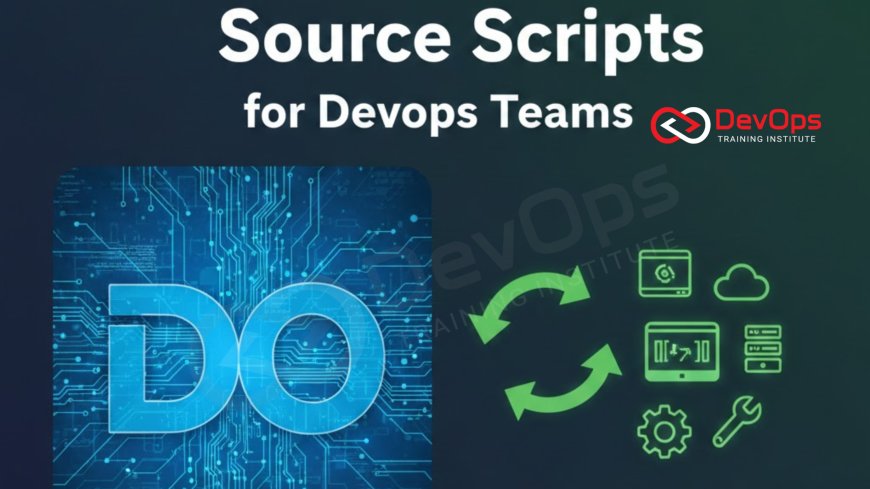
In the fast paced world of modern software delivery, the ability to automate repetitive tasks is a core requirement for any engineering team. Scripting serves as the primary tool for bridging gaps between different software platforms and hardware resources. By leveraging open source scripts, teams can avoid reinventing the wheel and instead focus on high value activities like architectural design and system optimization. These scripts act as reliable digital assistants that perform mundane chores with precision and consistency every single day.
Effective automation starts with identifying processes that are prone to human error or consume excessive time. Whether it is managing server configurations or cleaning up temporary data, a well written script provides a repeatable method for maintaining system health. This blog post explores fifteen highly useful scripts that every professional should consider adding to their toolkit. We will discuss how these small pieces of code contribute to a more robust and scalable environment, ultimately leading to better software and happier engineering teams across the globe.
The Strategic Value of Open Source Scripts
Open source scripts offer a unique advantage because they are vetted by a community of thousands of engineers who have faced similar challenges. This collective intelligence ensures that the scripts are not only functional but also optimized for security and performance. When a team adopts an open source solution, they gain access to best practices that might have taken years to develop internally. This collaborative approach significantly accelerates the speed at which a company can modernize its infrastructure and improve its delivery speed.
Furthermore, using scripts allows for a high degree of customization that proprietary tools often lack. A team can take a standard log rotation script and modify it to suit their specific storage requirements or alerting preferences. This flexibility is essential for complex environments where one size fits all solutions rarely work. By building a library of reusable scripts, an organization creates a culture of automation that reduces technical debt and makes the onboarding process for new engineers much smoother and more efficient for everyone involved.
Infrastructure Management and Server Maintenance
Maintaining a fleet of servers requires constant vigilance and routine maintenance to prevent outages and performance degradation. Scripts designed for server health checks can automatically monitor disk space, memory usage, and CPU temperature, sending alerts before a critical failure occurs. These proactive measures are the foundation of high availability systems. Instead of reacting to a crash, engineers can address potential issues during normal business hours, significantly reducing stress and improving overall work life balance for the entire team.
Another critical area for automation is configuration management. Scripts can ensure that every server in a cluster has the same security patches, user accounts, and environmental variables. This consistency is vital for achieving a stable platform engineering experience. When every node is configured identically, troubleshooting becomes much simpler because you can eliminate configuration drift as a potential cause of application errors. This systematic approach to server management allows small teams to manage hundreds of machines with the same level of care as a single server.
Streamlining CI CD Pipelines with Scripting
The journey from code commit to production is paved with automated scripts that handle building, testing, and deploying applications. These scripts ensure that every change goes through a rigorous validation process before reaching the end user. By automating these steps, teams can release updates multiple times a day with high confidence. The removal of manual steps in the deployment process is perhaps the single most important factor in increasing the velocity of a modern software development organization today.
A key aspect of a modern pipeline is integrating security directly into the automation flow. This is often described as devsecops because it makes security a shared responsibility throughout the lifecycle. Scripts can automatically scan code for secrets, check dependencies for known vulnerabilities, and verify that container images meet corporate compliance standards. By catching these issues early, the team avoids the costly and time consuming process of fixing security flaws after the application has already been deployed to a live production environment.
Table: Categorization of Useful DevOps Scripts
| Script Category | Primary Focus | Target System | Key Benefit |
|---|---|---|---|
| Disk Cleanup | Storage Management | Linux Servers | Prevents disk full outages. |
| Backup Automation | Data Protection | Databases | Ensures quick data recovery. |
| Container Pruning | Resource Optimization | Docker/Kubernetes | Reclaims unused memory/CPU. |
| Log Analysis | Issue Detection | Application Logs | Identifies hidden error patterns. |
| SSL Renewal | Security Compliance | Web Servers | Maintains encrypted connections. |
Monitoring and Observability Enhancements
Effective monitoring requires more than just knowing if a server is alive; it requires understanding the internal state of your applications. Custom scripts can extract deep insights from application logs and system metrics, providing a clearer picture of performance. These scripts can aggregate data from multiple sources and present it in a format that is easy for engineers to analyze. This helps in distinguishing between simple observability and basic monitoring, allowing for better troubleshooting during complex system failures.
Scripts can also be used to automate the response to specific alerts. For example, if a script detects that a service is consuming too much memory, it could automatically restart that specific component or trigger a horizontal scaling event. This type of automated remediation reduces the need for human intervention during minor incidents, allowing the team to focus on resolving the root cause of the issue. By building intelligence into the monitoring layer, an organization can achieve a much higher level of reliability and operational excellence for their digital services.
Resilience Through Automated Testing
Resilience is the ability of a system to recover from unexpected events. Scripts can be used to intentionally inject failures into a test environment to see how the application behaves. This proactive approach helps engineers identify weak points in their architecture that could lead to widespread outages. By automating these tests, a team can ensure that their resilience measures are working correctly before a real disaster strikes in the production environment.
Many teams are now incorporating chaos engineering as a standard part of their development workflow. Scripts can automate the process of killing random pods, introducing network latency, or simulating a region failure in the cloud. These automated experiments provide valuable data on how long it takes for the system to recover and whether users experience any noticeable downtime. This level of preparedness is essential for any company that prides itself on providing a dependable service to its customers at all times.
Cloud Spend and Resource Optimization
As companies move their workloads to the cloud, the cost of infrastructure can quickly spiral out of control if not managed properly. Scripts are essential for identifying unused or underutilized resources, such as orphaned disks, idle load balancers, or over provisioned virtual machines. By running these optimization scripts on a regular schedule, a team can achieve significant savings on their monthly cloud bill without impacting application performance or developer productivity.
This focus on financial accountability is a core part of finops which encourages collaboration between engineering and finance departments. Scripts can generate detailed reports that show exactly where the money is being spent, making it easier for managers to allocate budgets effectively. Automation can also be used to shut down non production environments during nights and weekends, which is one of the simplest ways to reduce cloud costs. These scripts turn infrastructure management into a data driven process that aligns technical activities with business objectives.
List of 15 Useful Scripts for Your Toolkit
The following list includes fifteen practical scripts that cover a wide range of operational needs. Each script is designed to solve a specific problem and can be easily adapted to fit your unique environment and requirements.
- Docker System Prune: A script to remove stopped containers, unused networks, and dangling images to save disk space.
- Database Daily Backup: Automates the creation of database dumps and uploads them to secure offsite cloud storage.
- Log Rotation and Compression: Manages log files by rotating them daily and compressing old logs to preserve storage.
- Dead Link Checker: Scans your documentation or website for broken URLs to ensure a good user experience.
- SSH Key Auditor: Checks which users have access to specific servers and reports on any unauthorized or old keys.
- S3 Bucket Cleanup: Identifies and deletes temporary files or old versions in cloud storage buckets to reduce costs.
- Memory Leak Detector: Monitors process memory usage over time and alerts if a specific application is slowly consuming more RAM.
- SSL Certificate Expiry Notifier: Warns you weeks in advance when a website certificate is about to expire to prevent security warnings.
- Kubernetes Pod Restarter: A simple script to restart pods that have entered a crash loop back off state automatically.
- Nginx Log Parser: Extracts valuable traffic statistics and error rates from web server logs for quick analysis.
- IAM Permission Scanner: Audits cloud users for excessive permissions that could lead to security risks if accounts are compromised.
- Zombie Process Killer: Finds and removes dead processes that are still occupying system resources on a Linux host.
- Git Repository Archiver: Automatically clones and zips your important code repositories for an extra layer of backup.
- Environment Variable Sync: Ensures that local development settings match the configuration stored in your central secret manager.
- Cloud Instance Scheduler: Turns off development and staging servers during non business hours to save on compute costs.
Implementing these scripts as part of your gitops workflow ensures that your automation is versioned and transparent. This allows multiple team members to contribute to the script library, leading to continuous improvement and knowledge sharing across the department. As you add more scripts to your toolkit, you will find that the time spent on manual maintenance decreases, giving you more freedom to innovate and build the next generation of software products for your organization.
Conclusion
The use of open source scripts is a foundational practice for any high performing operations team. By automating routine tasks like server maintenance, log management, and security auditing, engineers can significantly reduce the risk of human error and improve the reliability of their systems. We have explored fifteen essential scripts that provide a starting point for building a more efficient and cost effective infrastructure. These tools not only save time and money but also foster a culture of automation that is essential for scaling a modern technology business. As you begin to implement these scripts, remember to document your code and share your findings with the wider community. The true power of open source lies in the ability for everyone to learn from each other and build better systems together. Investing time in scripting today will pay massive dividends in the future, allowing your team to handle larger workloads and more complex challenges with ease and confidence.
Frequently Asked Questions
What language is best for writing DevOps scripts?
Bash is the most common for simple tasks while Python is preferred for complex logic and interacting with cloud provider APIs.
How do I schedule my scripts to run automatically?
You can use a tool called cron on Linux systems to schedule scripts to run at specific times or intervals daily.
Is it safe to use scripts from the internet?
Always review any code you download from the internet to ensure it does not contain malicious commands or insecure coding practices before running.
How can I manage secrets in my automation scripts?
Never hardcode passwords in scripts; instead use environment variables or a dedicated secret management tool to handle sensitive credentials securely at all times.
What is a log rotation script?
It is a script that renames old log files and creates new ones to prevent a single file from growing too large over time.
Can scripts help with cloud cost optimization?
Yes scripts can identify idle resources or shut down servers during the night to help your organization save significant money on cloud bills.
Why should I use version control for my scripts?
Storing scripts in a repository like Git allows you to track changes, collaborate with your team, and roll back if a mistake occurs.
What does a container pruning script do?
It removes unused images and stopped containers to free up disk space and memory on the host machine running your applications today.
How do I debug a bash script?
You can use the minus x flag when running a bash script to see every command and its output as it executes on screen.
What is a health check script?
A script that periodically pings a service or URL to verify it is active and sends an alert if it receives an error code.
Can I automate SSL certificate renewals?
Yes tools like Certbot use scripts to automatically renew certificates before they expire so your website stays secure without any manual work involved.
What is configuration drift?
Configuration drift happens when servers that should be identical slowly become different due to manual changes or missed updates over a long period.
How do scripts integrate with CI CD pipelines?
Pipelines use scripts as individual steps to compile code, run automated tests, and package the final application into a deployable container image.
What is an idempotent script?
An idempotent script is one that can be run multiple times without changing the result beyond the first time it was successfully executed.
Should I document my automation scripts?
Yes documentation is critical so that other engineers understand what the script does and how to use it safely in different environments.
What's Your Reaction?
 Like
0
Like
0
 Dislike
0
Dislike
0
 Love
0
Love
0
 Funny
0
Funny
0
 Angry
0
Angry
0
 Sad
0
Sad
0
 Wow
0
Wow
0



![100+ Azure DevOps Interview Questions and Answers [Updated 2025]](https://www.devopstraininginstitute.com/blog/uploads/images/202509/image_140x98_68c40aa9a3834.jpg)






![Future Scope of DevOps Careers in Pune [Updated 2025]](https://www.devopstraininginstitute.com/blog/uploads/images/202510/image_140x98_68e3a84652312.jpg)