

![Kong Interview Preparation Guide [2025]](https://www.devopstraininginstitute.com/blog/uploads/images/202509/image_430x256_68dbb95326997.jpg)

18 DevSecOps Principles for Secure Development
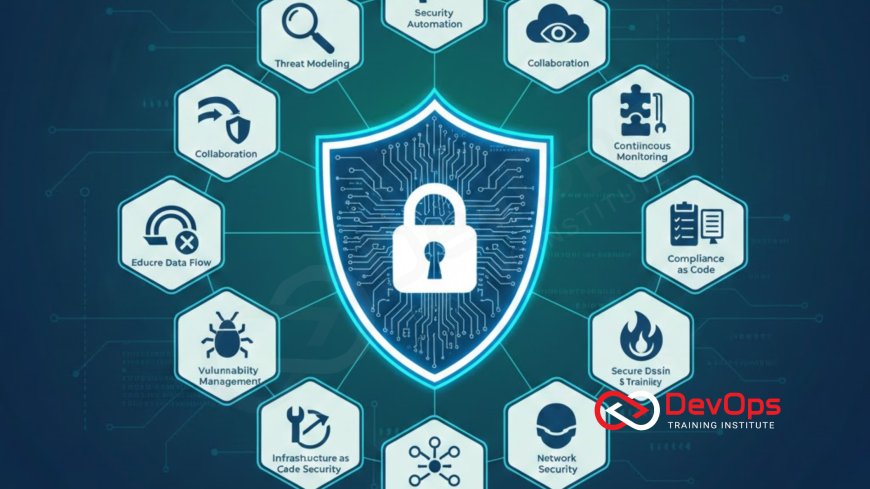
Master the 18 essential DevSecOps principles that integrate security seamlessly across the entire software development lifecycle, transforming it from a bottleneck into a core, collaborative function. Learn how to implement "Shift Left," automate security scanning (SAST/DAST), adopt Policy-as-Code (PaC), and enforce least privilege access across infrastructure and applications. These principles are vital for building highly resilient, compliant, and attack-resistant systems in the cloud-native era, moving security away from manual, late-stage checks to continuous, automated validation, ensuring faster delivery without compromising enterprise integrity or customer trust.
Introduction
In the age of rapid development, where code is deployed multiple times a day using automated Continuous Integration/Continuous Delivery (CI/CD) pipelines, security cannot afford to be an afterthought. The traditional model, where security teams acted as manual gatekeepers, performing lengthy audits just before a major release, is fundamentally incompatible with the high velocity demanded by modern business. This tension between speed and safety is what DevSecOps was created to resolve. DevSecOps is the cultural, philosophical, and technical movement that seeks to integrate security practices seamlessly into every stage of the development lifecycle, from initial design and coding all the way through to production monitoring and feedback.
The core concept of DevSecOps is often summarized as "Shift Left"—moving security testing, analysis, and awareness activities as far left (early) in the CI/CD pipeline as possible. This approach ensures that vulnerabilities are caught when they are cheapest and easiest to fix, preventing security debt from compounding and drastically reducing the risk profile of the delivered software. Implementing a successful DevSecOps practice requires a fundamental cultural transformation, turning security from a slow, bureaucratic bottleneck into a core, shared responsibility of every member of the engineering team, including developers, operations staff, and dedicated security engineers. This comprehensive guide outlines the 18 essential principles required to build a mature, resilient, and attack-resistant development ecosystem, ensuring that security is truly baked in, not bolted on.
Phase 1: Culture and Collaboration (The Human Element)
DevSecOps begins with people and processes, not tools. Without a foundation of mutual understanding, shared goals, and non-punitive accountability, no amount of automation can fully secure an organization. These initial principles focus on bridging the traditional chasm between Development, Operations, and Security teams, fostering a collaborative environment where security is a shared mandate, not a separate department’s burden. This human element is the ultimate enabler of all subsequent technical automation.
The cultural framework is built on:
1. Shared Responsibility and Ownership: Security is the job of everyone, not just the security team. Developers must own the security of their code; Operations must own the security of the infrastructure; and Security teams must own the process and tooling. This shared accountability ensures a holistic approach to risk mitigation across the entire service lifespan.
2. Fostering Security Champions: Designate individuals within development and operations teams who receive specialized security training and act as internal resources and advocates. These champions bridge the communication gap, disseminate best practices, and translate security requirements into actionable engineering tasks for their respective teams, providing local expertise and accelerating adoption.
3. Blameless Culture for Security Incidents: When a vulnerability or breach occurs, the focus must immediately shift from finding who to blame to understanding the systemic process failure that allowed the issue to happen. Blameless post-mortems encourage transparency, honesty, and a commitment to continuous learning, enabling the team to implement effective, long-term preventative measures without fear of punishment.
4. Security Education and Training: Provide continuous, role-specific training for all engineering staff. Developers need secure coding practices (e.g., OWASP Top 10); operations staff need cloud security configuration training; and security engineers need automation and coding skills. This ongoing education ensures that expertise evolves alongside technology and threat landscapes.
5. Treating Security as Code and Feature: Security requirements must be written as clear, testable acceptance criteria within the development backlog (e.g., "The API endpoint must only accept HTTPS traffic on port 443"). This ensures security is integrated into the planning and estimation process from the start, rather than being treated as a last-minute non-functional requirement that derails the project timeline.
Phase 2: Secure Design and Planning (Shift Left Strategy)
The "Shift Left" philosophy mandates that security thinking must begin at the earliest stages of the software development lifecycle: design, planning, and code commitment. Finding a vulnerability in the production environment can cost 100 times more than fixing it in the coding phase. These principles focus on preventative measures, architectural analysis, and integrating security feedback directly into the developer's workflow, making security proactive rather than reactive, accelerating the secure delivery process by catching problems early.
6. Automated Threat Modeling: Treat threat modeling as a continuous, living document, not a one-time exercise. Automated threat modeling tools can analyze application architecture and code dependencies to proactively identify potential attack vectors and required controls (e.g., injection risks, unauthorized access points) before the application is even fully designed. This strategic analysis guides developers to make secure architectural decisions from the beginning.
7. Security Requirements Definition: Mandate the definition of clear, non-negotiable security requirements for every new feature or service. These requirements must cover authorization, authentication, data handling, and compliance needs, ensuring that security is integrated into the planning and budgeting phase, and is reviewed alongside functional requirements before coding commences.
8. Use of Secure Software Libraries and Frameworks: Mandate the use of pre-approved, secure-by-default components and libraries. By relying on vetted, well-maintained frameworks, developers inherently reduce common security risks. Centralizing dependency management and using tools that actively block known vulnerable libraries significantly reduces the risk profile of the final application, minimizing the initial attack surface area.
Phase 3: Automated Security Testing in CI/CD
This phase represents the heart of the technical DevSecOps implementation, where security checks are fully integrated as mandatory, automated gates within the CI/CD pipeline. Every code commit triggers a sequence of tests designed to provide immediate, actionable feedback to the developer, preventing insecure code from ever progressing to staging or production. This automation is non-negotiable for achieving high-velocity, reliable software delivery while maintaining quality and security standards.
9. Static Application Security Testing (SAST): Integrate SAST tools directly into the CI pipeline's build stage. SAST analyzes application source code, byte code, or binary code for security vulnerabilities (e.g., hardcoded credentials, SQL injection flaws) without executing the program. Crucially, the pipeline should be configured to fail the build if high-severity vulnerabilities are detected, enforcing a "fail fast" methodology that minimizes security debt accumulation.
10. Dynamic Application Security Testing (DAST): Run DAST tools against the running application in staging or testing environments. DAST simulates external attacks (e.g., probing for cross-site scripting flaws, API abuse) to identify security vulnerabilities. This check complements SAST by validating the application in its live operational context, which is particularly effective for identifying configuration errors or authentication flaws.
11. Software Composition Analysis (SCA): Automatically scan all application dependencies, including third-party libraries and frameworks, for known vulnerabilities and licensing issues. SCA tools continuously monitor and alert teams when a new vulnerability is discovered in an old, deployed library, providing immediate visibility and prioritization for patching cycles, which is critical since most security flaws originate in third-party code.
12. Infrastructure as Code (IaC) Scanning: Scan configuration files (Terraform, CloudFormation, Ansible) using security analysis tools (e.g., Checkov, tfsec) before they are deployed to provision cloud resources. This principle ensures that infrastructure is secure and compliant from the outset, identifying misconfigurations like overly permissive firewall rules or unencrypted storage buckets, effectively applying security to the entire cloud infrastructure definition.
| Category | Principle # | Core DevSecOps Practice | Security Goal Achieved |
|---|---|---|---|
| Culture & Collaboration | 1, 3, 4 | Shared Responsibility, Blameless Culture, Continuous Training | Institutionalizing security accountability and fostering proactive behavior across teams. |
| Shift Left & Design | 6, 7, 8 | Threat Modeling, Secure Requirements, Use of Vetted Libraries | Preventing security flaws at the architectural and coding stage, minimizing technical debt. |
| CI/CD Automation | 9, 10, 11, 12 | SAST, DAST, SCA, IaC Scanning | Automating security checks into the pipeline as mandatory quality gates, enforcing "fail fast." |
| Runtime & Operations | 13, 14, 15, 16, 17 | Secrets Management, Least Privilege, Immutable Infra, Policy as Code, Runtime Monitoring | Securing the live environment against lateral movement, reducing blast radius, and ensuring compliance. |
Phase 4: Security in Operations and Runtime
Security challenges do not end once the application is in production; the operational phase is where true system resilience is constantly tested by evolving threats and complex network environments. These principles focus on securing the deployed application and infrastructure against compromise, minimizing the "blast radius" of any breach, and ensuring continuous, real-time threat detection and automated response mechanisms. They address the crucial final stages of the pipeline where services are exposed to the public.
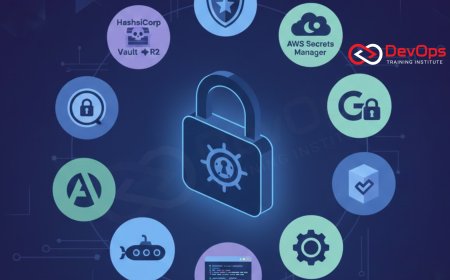
13. Centralized Secrets Management: Never store sensitive credentials (API keys, database passwords, tokens) in plaintext files, code repositories, or local environments. A centralized secrets management solution (HashiCorp Vault, AWS Secrets Manager, Azure Key Vault) must be used to inject credentials at runtime, ensuring that secrets are encrypted, version-controlled, auditable, and dynamically rotated, significantly reducing the risk of accidental exposure.
14. Principle of Least Privilege: Enforce the principle of least privilege (PoLP) across users, services, and infrastructure components. Users and machines should only be granted the minimum necessary permissions to perform their required tasks, limiting lateral movement in case of a breach. This includes rigorously defining and scoping IAM roles and network access controls, ensuring that services cannot access data or systems beyond their defined operational necessity.
15. Immutable Infrastructure: Mandate the use of immutable infrastructure, where once an instance or container is deployed, it is never patched or modified in place. Any change requires provisioning a new, fully scanned, and correctly configured artifact to replace the old one. This simplifies rollback, eliminates configuration drift, and ensures that the running environment is built from a single source of truth, making the entire system much more predictable and resilient.
16. Policy-as-Code (PaC) Enforcement: Use tools like Open Policy Agent (OPA) to enforce security and compliance policies at runtime and at the CI/CD level. PaC allows security teams to write governance rules (e.g., "all S3 buckets must be encrypted," "only approved container images may run") as version-controlled code, automating compliance checks and preventing human error from leading to policy violations, transforming manual audits into continuous validation.
17. Continuous Security Monitoring and Logging: Implement real-time monitoring of application behavior, network traffic, and system logs to detect anomalies and potential intrusions. Advanced monitoring and logging (including the capture of network traffic flows) must provide immediate alerts on indicators of compromise, such as unusual activity on specific exploited ports, excessive login failures, or unauthorized access attempts to restricted data stores.
Phase 5: Governance and Continuous Feedback Loop
The final set of principles closes the loop, ensuring that security findings from production flow back to the development team quickly and intelligently, driving continuous improvement and process refinement. This phase integrates security metrics into the overall business value stream and provides the governance necessary to sustain the practice across large, complex organizations.
18. Automated Incident Response and Remediation: Build automated workflows that instantly respond to critical security alerts (e.g., automatically isolating a compromised container, rotating a leaked credential, or blocking a malicious IP address). This capability drastically reduces the Mean Time to Respond (MTTR) and minimizes the blast radius of security incidents, allowing the human response team to focus solely on investigation and long-term resolution, rather than initial containment.
Conclusion
The adoption of these 18 principles marks a critical evolution in the security posture of any modern technology organization. DevSecOps is a comprehensive journey that transitions security from a slow, late-stage afterthought to a continuous, automated, and shared responsibility that is deeply integrated into the development process. By focusing on cultural collaboration, shifting security left into the design phase, automating testing within the CI/CD pipeline, and rigorously securing the runtime environment, organizations can achieve high-velocity software delivery without compromising on integrity or customer trust.
These principles create a fortified and resilient software delivery lifecycle where security is inherent in the design, enforced by code, and continuously monitored in production. Investing in this transformation is not merely a technical upgrade; it is a strategic necessity that protects the business from escalating cyber threats, ensures regulatory compliance, and ultimately accelerates the delivery of business value through highly reliable and secure applications. The DevSecOps practice ensures that security is truly baked into the very DNA of the product.
Frequently Asked Questions
What is the primary goal of the "Shift Left" philosophy?
The primary goal is to find and fix security vulnerabilities earlier in the development lifecycle, when they are cheapest and easiest to remediate.
What is the difference between SAST and DAST?
SAST (Static) analyzes code without running the app; DAST (Dynamic) analyzes the running application to simulate attacks in a live environment.
What does Policy-as-Code (PaC) mean?
PaC means writing governance, security, and compliance rules as version-controlled code, automating checks, and enforcing policies at runtime.
Why is a blameless culture important for DevSecOps?
A blameless culture encourages teams to report security flaws and system failures honestly, ensuring maximum learning and preventing recurrent issues.
What is the purpose of Infrastructure as Code (IaC) scanning?
IaC scanning checks configuration files (Terraform) for security misconfigurations like overly permissive firewall rules before infrastructure is provisioned.
How should secrets be managed in a secure pipeline?
Secrets must be stored in a centralized, encrypted vault and injected dynamically at runtime, never committed to the source code repository or stored in plaintext.
What is the Principle of Least Privilege?
It ensures that every user, service, or machine is only granted the minimum access permissions necessary to perform its specific required tasks, limiting potential damage.
Who should be a "Security Champion"?
A Security Champion is an engineer embedded within a product team who receives extra security training and advocates for security practices locally within their team.
What does continuous security monitoring involve?
It involves real-time analysis of application behavior, network traffic, and logs to detect anomalies and potential intrusions instantly in the production environment.
What risk does Software Composition Analysis (SCA) mitigate?
SCA mitigates the risk introduced by using vulnerable or outdated third-party open-source libraries and dependencies with known security flaws.
How does DevSecOps relate to the OSI model's layers?
DevSecOps principles address security across all OSI layers, from securing application logic (Layer 7) to managing network access controls (Layer 3/4).
Why is continuous security education necessary?
Continuous education is necessary because technology evolves rapidly, and engineers must stay current with the latest secure coding practices and emerging cyber threats.
What is automated incident response?
It involves building automated workflows that instantly respond to critical alerts (e.g., isolating a compromised host or rotating a leaked key) to minimize the impact of an attack.
How should development teams define security requirements?
They should define security requirements as clear, testable acceptance criteria within the development backlog, treating them as integral features of the system.
What is the primary technical advantage of immutable infrastructure?
The primary advantage is that it eliminates configuration drift and simplifies rollbacks, making the production environment highly predictable, auditable, and resilient against unexpected changes.
What's Your Reaction?
 Like
0
Like
0
 Dislike
0
Dislike
0
 Love
0
Love
0
 Funny
0
Funny
0
 Angry
0
Angry
0
 Sad
0
Sad
0
 Wow
0
Wow
0

![100+ Azure DevOps Interview Questions and Answers [Updated 2025]](https://www.devopstraininginstitute.com/blog/uploads/images/202509/image_140x98_68c40aa9a3834.jpg)





![Future Scope of DevOps Careers in Pune [Updated 2025]](https://www.devopstraininginstitute.com/blog/uploads/images/202510/image_140x98_68e3a84652312.jpg)