



![Kong Interview Preparation Guide [2025]](https://www.devopstraininginstitute.com/blog/uploads/images/202509/image_430x256_68dbb95326997.jpg)





20 DevOps Architect Responsibilities Explained
Explore the 20 crucial responsibilities of a modern DevOps Architect, the role that bridges technical strategy with cultural implementation. This guide details key duties, including designing CI/CD pipelines, driving security and governance through DevSecOps, selecting and standardizing toolchains, and leading cloud migration strategies. Learn how an Architect ensures system reliability, scalability, and performance while fostering a continuous improvement culture. Master the strategic and technical demands of this high-impact role to accelerate business value and maintain operational excellence in any cloud-native environment.
Introduction
The DevOps Architect is the strategic engine of modern software delivery. This high-impact role is the nexus between high-level business goals and ground-level technical execution. Unlike a traditional operations manager or a specialized software engineer, the DevOps Architect possesses a panoramic view of the entire software delivery lifecycle (SDLC), from initial code commit to production monitoring and governance. Their primary mandate is to design, implement, and govern the integrated system—the culture, the tools, and the automated processes—that enables an organization to deliver value with speed, quality, and reliability.
In a cloud-native world defined by microservices, ephemeral infrastructure, and rapid change, the Architect's role is more complex and vital than ever. They are the ones who decide which container orchestration platform to use, how security is baked into the pipeline, and what metrics truly define service health. They operate as both technical visionaries and cultural change agents, breaking down silos and mentoring teams on the principles of continuous integration, continuous delivery, and Site Reliability Engineering (SRE).
This comprehensive guide details 20 critical responsibilities that define the scope and impact of the DevOps Architect role. We've categorized these duties across four pillars: Strategy & Culture, CI/CD & Automation, Security & Governance, and Reliability & Observability. Mastering these responsibilities is key to succeeding in this demanding field and driving the operational maturity of any high-velocity technology organization. Let’s explore the strategic and technical demands placed upon the modern DevOps Architect, whose decisions fundamentally shape the entire engineering organization.
Pillar I: Strategy and Culture Leadership
The Architect's role begins not with code, but with strategy. They define the direction, lead the cultural shift, and ensure all technical choices align with business objectives. These responsibilities require strong communication, organizational empathy, and technical foresight.
1. Defining the DevOps Strategy and Roadmap
The Architect must translate business objectives (e.g., "reduce time-to-market," "achieve 99.99% uptime") into a concrete, multi-year technical roadmap. This involves identifying key automation opportunities, setting priorities, and forecasting the necessary tooling investments. This roadmap serves as the blueprint for the entire engineering transformation.
2. Leading Cultural Transformation and Mentorship
The role is inherently cultural. The Architect acts as a change agent, breaking down traditional silos between Development, Operations, and Security teams. They establish shared goals, promote shared ownership, and mentor engineering teams on DevOps principles, emphasizing collaboration and continuous feedback loops.
3. Toolchain Selection and Standardization
They are responsible for selecting the core technology stack—the CI/CD pipeline tools (e.g., Jenkins, GitLab CI), the IaC framework (e.g., Terraform), the logging platform, and the container runtime. The goal is standardization and integration, ensuring the chosen tools work seamlessly together and minimize complexity for engineering teams across the organization.
4. Driving Cloud Migration and Adoption Strategy
For organizations moving to the cloud, the Architect designs the migration strategy, determining which services move first, the chosen cloud provider (AWS, Azure, GCP), and the architectural patterns (e.g., serverless, microservices on Kubernetes) that will be used. This sets the foundation for all future cloud operations.
5. Defining the Release Cadence and Change Management
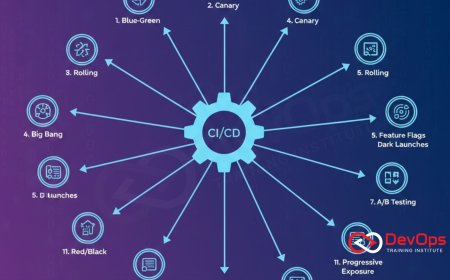
The Architect works closely with product and engineering leaders to define the optimal software release cadence—how often code goes to production. They design change management policies, utilizing techniques like Canary or Blue/Green deployments, to ensure high velocity without compromising system stability. Understanding who defines the release cadence and formalizing the process is a core duty.
Pillar II: CI/CD and Automation Design
These responsibilities focus on the technical design and implementation of automated workflows. The Architect is the chief designer of the automated factory that builds, tests, and deploys all software and infrastructure.
6. Designing End-to-End CI/CD Pipelines
They create the blueprints for the full automation pipeline, from code commit to production deployment. This involves defining stages for building, testing, artifact management (e.g., container registry), and deployment using GitOps or other automated continuous delivery models.
7. Implementing Infrastructure as Code (IaC) Standards
The Architect drives the "everything as code" mandate. They establish best practices for IaC (Terraform, Ansible), ensuring all infrastructure provisioning is idempotent, testable, and version-controlled. This consistency is essential for rapid environment creation and preventing configuration drift.
8. Managing Container Orchestration Architecture
They design the container architecture, primarily centered on Kubernetes. This includes defining cluster topology, networking (CNI), storage solutions, and the implementation of advanced traffic management (Ingress Controllers, Service Mesh) to support complex microservices communication.
9. Automating Environment Provisioning (On-Demand)
The Architect designs the automation that enables teams to provision full, production-like testing environments on demand (ephemeral environments). This speeds up testing, reduces cost, and ensures developers always have a high-fidelity sandbox for validation before code is merged.
10. Leading Configuration Management and Host Hardening
They define how server configurations (VMs, cloud instances, or Kubernetes nodes) are managed and maintained. This involves ensuring consistent application of system policies, security patches, and hardening profiles, often utilizing configuration management tools like Ansible to enforce standards, including those necessary for securing the base OS. Ensuring consistent host setup is critical for stability and security.
Pillar III: Security and Governance (DevSecOps)
The Architect integrates security into every phase of the pipeline, moving from traditional security audits to a proactive, automated DevSecOps model. They are responsible for codifying and enforcing security and compliance policy across the entire deployment surface.
11. Architecting the DevSecOps Framework
They embed security gates throughout the CI/CD pipeline: automating Static Analysis (SAST), Software Composition Analysis (SCA), and container vulnerability scanning. The goal is to catch security flaws immediately upon code commit, adhering to the "shift left" principle.
12. Designing Secrets Management Solutions
The Architect designs and implements centralized Secrets Management solutions (e.g., HashiCorp Vault, cloud key vaults). They ensure that credentials and sensitive data are injected into the pipeline and applications securely at runtime, preventing hardcoding and managing secret rotation automatically, which is essential for security.
13. Enforcing Policy-as-Code (PaC) and Governance
They codify security and compliance rules using tools like Open Policy Agent (OPA) and integrate them to block non-compliant deployments at the IaC and Kubernetes manifest stages. This ensures that only infrastructure and application changes meeting defined governance standards are ever applied. Policy-as-Code is the backbone of automated governance.
14. Implementing Continuous Threat Modeling
The Architect champions continuous threat modeling as an iterative process, constantly reviewing application architecture and operational data to anticipate new vulnerabilities. They ensure that new intelligence is immediately translated into automated security checks within the pipeline, making security proactive and adaptive. Understanding how the application interacts with the platform is key to this role.
15. Designing Secure Access and Auditing
They establish centralized identity and access management (IAM) across all tools and environments. This includes defining strict least-privilege roles for CI/CD agents and ensuring comprehensive, immutable audit trails for all configuration and deployment changes, critical for regulatory compliance and forensic analysis. This requires defining the security boundaries for all interactions, including low-level access via protocols like SSH keys security in RHEL 10 nodes.
Pillar IV: Reliability and Observability
These duties focus on the operational health of running systems, ensuring high availability and the ability to diagnose incidents rapidly. The Architect instills the principles of SRE to make operations data-driven and predictable.
16. Defining Service Level Objectives (SLOs) and SLIs
They work with product teams to define measurable Service Level Indicators (SLIs, e.g., latency, error rate) and set aspirational but achievable Service Level Objectives (SLOs, e.g., 99.95% availability). These metrics guide the team's operational priorities and define the system's acceptable failure rate.
17. Architecting the Observability Stack
The Architect designs the unified observability platform, ensuring the seamless collection and correlation of the three observability pillars: metrics (Prometheus), logs (ELK/Loki), and traces (OpenTelemetry). They ensure that engineering teams have the visibility needed to diagnose production issues quickly. Mastery over these data types is essential for maintaining service health, and understanding the role of the observability pillar is key for incident response.
18. Implementing Automated Incident Response and Remediation
They design automated runbooks and self-healing systems. This includes configuring smart alerts (based on SLOs, not resource thresholds) and automated remediation scripts (e.g., auto-scaling, restarting failed Pods, or executing predefined actions via Ansible) to reduce manual toil and accelerate MTTR.
19. Driving Performance Engineering and Cost Optimization (FinOps)
The Architect continuously analyzes application performance, identifying bottlenecks and driving cost optimization efforts (FinOps). This involves optimizing resource allocation, managing cloud wastage (idle resources), and ensuring that IaC provisioning is fiscally responsible (e.g., using spot instances where appropriate). Tools like Infracost are vital here.
20. Establishing Post-Mortem and Continuous Improvement Processes
They formalize the post-mortem process after every major incident, focusing on systemic causes rather than individual blame. They ensure that reliability improvements (e.g., implementing circuit breakers, adding more logging) are prioritized back into the engineering backlog, fostering a crucial culture of continuous learning and system hardening, ensuring that the team learns from every failure.
Conclusion
The DevOps Architect is the linchpin of the modern technology organization, responsible for driving both cultural transformation and technical excellence. The 20 responsibilities detailed—from defining the CI/CD pipeline and enforcing DevSecOps governance to architecting the observability stack and leading SRE practices—demonstrate the breadth and strategic depth required of this role. The Architect provides the vision and the technical blueprint for the continuous flow of value, ensuring that the organization can scale efficiently while maintaining resilience and a predictable release cadence.
Success in this role demands T-shaped expertise: deep technical mastery in areas like Kubernetes and IaC, combined with strong leadership, communication, and strategic vision. By focusing on automation, security-by-design, and data-driven reliability, the DevOps Architect transforms operations from a cost center into a competitive advantage. Their work creates a resilient, self-healing platform where development and operations teams are truly integrated, making high-velocity delivery the norm.
For aspiring Architects, the path requires mastering tool integration, understanding cultural change mechanisms, and prioritizing service reliability above all else. By fulfilling these 20 duties, the DevOps Architect not only enables faster software delivery but fundamentally hardens the organization's entire technological foundation against failure and threat, ensuring that critical infrastructure, including the underlying operating system setup validated by the RHEL 10 setup guide, is secure, consistent, and continuously managed. This holistic view is the essence of architectural leadership in DevOps.
Frequently Asked Questions
What is the primary difference between a DevOps Engineer and a DevOps Architect?
The Engineer focuses on implementing and maintaining specific tools and automation; the Architect focuses on defining the strategy, designing the end-to-end system, and leading cultural change.
What are SLOs and SLIs, and who defines them?
SLIs (Indicators) are metrics like latency or error rate. SLOs (Objectives) are the reliability goals (e.g., 99.9% uptime). The Architect defines them in collaboration with Product Management.
Why is toolchain selection a key responsibility?
The Architect standardizes the toolchain to ensure seamless integration, reduce complexity, and provide consistent, reliable performance across all engineering teams.
How does the Architect enforce DevSecOps?
By embedding automated security checks (SAST, SCA) directly into the CI/CD pipeline and implementing Policy-as-Code to block non-compliant deployments early in the lifecycle.
What is the importance of IaC standards?
IaC standards ensure that infrastructure is provisioned idempotently, is testable, and is version-controlled, which is vital for enabling rapid, consistent, and reliable environment creation.
How does the Architect manage cloud costs (FinOps)?
They drive cost optimization by analyzing resource usage, implementing automated resource management (shutdowns), and ensuring IaC provisioning is fiscally responsible.
What is the purpose of continuous threat modeling in architecture?
It's an iterative process of reviewing system architecture to anticipate vulnerabilities, feeding that intelligence back to update security controls and hardening policies, making security proactive.
How does the Architect use RHEL 10 log management best practices?
They design the logging infrastructure to ensure logs from all containers and host nodes are centrally collected, structured, and securely stored for audit trails and faster incident diagnosis.
What is the role of GitOps in the Architect's strategy?
GitOps makes Git the single source of truth for the entire system's desired state, providing a fully traceable, auditable, and automated path for all infrastructure and application changes, ensuring deployment reliability.
How does the Architect address infrastructure consistency?
By enforcing IaC standards and using configuration management tools like Ansible to automate host hardening and system policy application across all environments, ensuring consistency from the underlying OS to the application layer.
What is the difference between automated runbooks and traditional documentation?
Automated runbooks are executable code (scripts, IaC) that automatically remediate known issues or perform complex operational tasks, accelerating MTTR beyond what manual documentation allows.
How does the Architect ensure security for low-level access?
By enforcing strict IAM policies for all users and tools, using centralized secret management, and standardizing secure access methods like SSH keys security in RHEL 10 nodes for maintenance access.
Why is the observability pillar architecture critical?
It ensures that metrics, logs, and traces are collected and correlated seamlessly, providing the necessary visibility for engineers to quickly pinpoint root causes of performance degradation or system failures.
What is the Architect's role in the post-mortem process?
The Architect establishes the process to ensure post-mortems focus on systemic causes, translating incident findings into prioritized engineering work (e.g., implementing circuit breakers) to continuously harden the system.
How does the Architect use API Gateways simplify deployment in the overall architecture?
They centralize services like authentication and rate limiting at the edge (Gateway), offloading these concerns from individual microservices and simplifying the deployment requirements for development teams, improving development velocity.
What's Your Reaction?
 Like
0
Like
0
 Dislike
0
Dislike
0
 Love
0
Love
0
 Funny
0
Funny
0
 Angry
0
Angry
0
 Sad
0
Sad
0
 Wow
0
Wow
0

![100+ Azure DevOps Interview Questions and Answers [Updated 2025]](https://www.devopstraininginstitute.com/blog/uploads/images/202509/image_140x98_68c40aa9a3834.jpg)





![Future Scope of DevOps Careers in Pune [Updated 2025]](https://www.devopstraininginstitute.com/blog/uploads/images/202510/image_140x98_68e3a84652312.jpg)