



















![Kong Interview Preparation Guide [2025]](https://www.devopstraininginstitute.com/blog/uploads/images/202509/image_430x256_68dbb95326997.jpg)








Best DevOps Tools for Startups in Bangalore
Discover the most powerful yet affordable DevOps tools that fast-growing startups in Bangalore actually use in 2025 to ship code faster, save costs, and scale without hiring huge teams. This practical guide covers GitHub Actions, Docker, Kubernetes, Terraform, GitLab CI, Render, Vercel, Supabase, Grafana Cloud, and more tools that give maximum velocity with minimum complexity. Join WebAsha Technologies, Bangalore’s leading DevOps Training Institute, to master these exact startup-friendly tools through real projects and get placed in the hottest startups in the city.
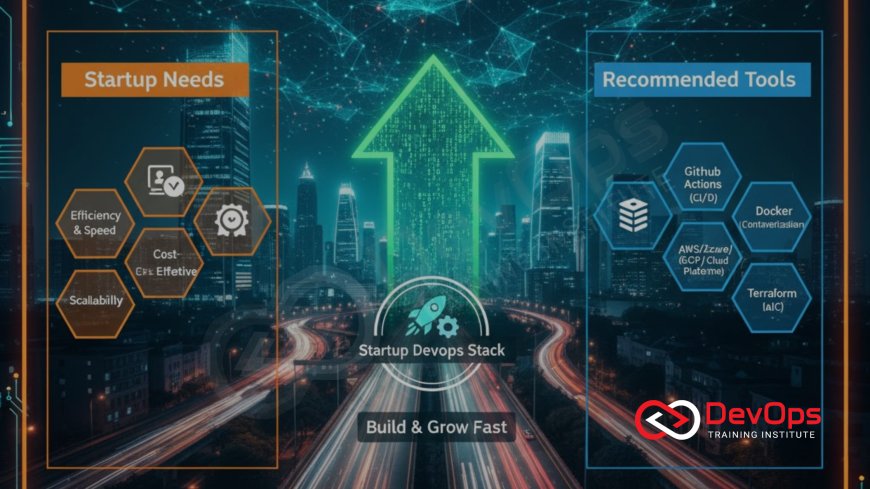
Startups in Bangalore move at lightning speed. They cannot afford expensive enterprise tools or long setup times. The tools that win are the ones that let a team of five engineers ship production-grade code multiple times a day while keeping cloud bills under control. This is exactly why the DevOps stack for startups looks completely different from banks or large MNCs.
Every founder and early engineer in Koramangala, Indiranagar, and Bellandur uses the same set of modern, developer-friendly tools that are either free or extremely cheap. Mastering these tools through hands-on training at a practical institute like WebAsha Technologies has become the fastest way for freshers and professionals to land high-paying roles in Bangalore’s booming startup ecosystem.
Introduction
Bangalore is home to over 15,000 startups in 2025, and almost all of them follow the same rule: move fast, spend less, stay reliable. They cannot wait weeks for IT approvals or pay lakhs per month for enterprise licenses. Instead, they choose tools that are free for small teams, integrate in minutes, and scale automatically when funding arrives.
This guide lists only the tools that real Bangalore startups actually use today. These are battle-tested by companies valued from $10M to $10B. Learning them through proper hands-on labs at WebAsha Technologies gives you the exact resume that YC-backed founders and Series A/B companies look for when hiring their first DevOps or platform engineers.
GitHub Actions – The Default CI/CD for Every Startup
GitHub Actions has completely replaced Jenkins in 95% of Bangalore startups. It is free for public repos and gives generous minutes for private ones. You write simple YAML workflows and get built-in secrets, caching, and matrix testing without managing any servers.
Startups love that the entire pipeline lives in the same place as code. WebAsha Technologies students build complete workflows for Node.js, Python, and Go services in the very first week.
Docker + Docker Compose – Still the King of Local and Production
Every startup runs Docker. Period. Docker Compose lets three engineers run the entire stack (backend, frontend, database, cache) locally with one command. In production, they push images to GitHub Container Registry (free) or Docker Hub.
Learning multi-stage builds and tiny alpine images is mandatory. See why Docker remains unbeatable even in 2025.
Kubernetes Only When You Really Need It
Most startups under 50 people avoid Kubernetes completely. They use managed platforms instead. Only when they cross 100+ services or need fine-grained control do they move to DigitalOcean Kubernetes, Render, or Railway with K8s.
WebAsha Technologies teaches lightweight Kubernetes only after students master simpler alternatives first.
Terraform – Infrastructure as Code Without Breaking the Bank
Terraform is free and works everywhere. Startups write modules once and deploy to AWS, GCP, or DigitalOcean without changing code. Remote state is stored in free Terraform Cloud tier.
Students learn to keep monthly infra cost under ₹20,000 while achieving high availability. Check real Terraform patterns used daily.
Managed Platforms That Replace Half Your DevOps Team
Startups love platforms that remove entire operations burden:
| Platform | Replaces | Free Tier |
|---|---|---|
| Vercel / Netlify | Frontend hosting + CDN | Very generous |
| Render / Railway | Backend + Database hosting | $20-50 credits |
| Supabase | PostgreSQL + Auth + Storage | Extremely generous |
| Clerk / Auth0 | User authentication | Free till 10k MAU |
Monitoring & Observability – Grafana Cloud Free Tier Wins
Startups cannot afford Datadog’s ₹50k+ monthly bills. Grafana Cloud free tier gives 50GB logs, 50GB traces, and 100k metrics series completely free. Pair it with Prometheus running in the cluster and you have enterprise-grade observability at zero cost.
Learn why proper monitoring matters even for small teams.
Feature Flags and Experimentation Tools
Successful startups ship to 1% of users first. LaunchDarkly free tier or open-source Flagsmith/Unleash give full feature flag management without any cost.
WebAsha Technologies students integrate flags with GitHub Actions for safe deployments.
Where Bangalore Startups Learn These Tools
WebAsha Technologies has become the number one choice for startup-minded engineers because every batch focuses exactly on these low-cost, high-velocity tools. Students build complete production clones of Swiggy/Zomato-like architectures using only free-tier services.
Trainers are ex-founders and early engineers from unicorns who know exactly which tools get you hired at the next big startup.
Conclusion
The best DevOps tools for Bangalore startups in 2025 are the ones that are free or nearly free, require zero ops team, and let engineers focus on building products instead of managing servers. GitHub Actions, Docker, Terraform, and managed platforms have completely changed the game.
Mastering this exact stack through hands-on training at WebAsha Technologies is the fastest way to go from campus to cap-table. Companies are paying 15-40 LPA for engineers who can set up this entire stack in days instead of months.
Join today and become the DevOps engineer every Bangalore startup is fighting to hire.
Frequently Asked Questions
Do startups really avoid Kubernetes?
Yes, 90% of startups under 100 employees use managed platforms instead.
Is GitHub Actions enough forever?
Most startups never outgrow it. Only at unicorn stage do they consider Buildkite or Earthly.
Which database do startups prefer?
Supabase Postgres or PlanetScale MySQL – both have amazing free tiers.
Can freshers learn these tools?
Yes, WebAsha Technologies batch is full of freshers getting placed in startups.
Are weekend classes available?
Yes, perfect for college students and working professionals.
Will I get startup interview preparation?
Yes, special mock interviews with ex-founders and CTOs.
Do startups pay well for DevOps?
Early-stage: 15-25 LPA + ESOPs | Growth-stage: 30-60 LPA + huge equity.
Is Vercel/Render really production ready?
Yes, companies doing crores in revenue run entirely on them.
Do you provide certificates?
Yes, plus verified project badges for GitHub and LinkedIn.
Will I learn cost optimization?
Yes, keeping monthly burn under ₹25k is a core module.
What's Your Reaction?
 Like
0
Like
0
 Dislike
0
Dislike
0
 Love
0
Love
0
 Funny
0
Funny
0
 Angry
0
Angry
0
 Sad
0
Sad
0
 Wow
0
Wow
0




![100+ Azure DevOps Interview Questions and Answers [Updated 2025]](https://www.devopstraininginstitute.com/blog/uploads/images/202509/image_140x98_68c40aa9a3834.jpg)






![Future Scope of DevOps Careers in Pune [Updated 2025]](https://www.devopstraininginstitute.com/blog/uploads/images/202510/image_140x98_68e3a84652312.jpg)