


![Kong Interview Preparation Guide [2025]](https://www.devopstraininginstitute.com/blog/uploads/images/202509/image_430x256_68dbb95326997.jpg)



Real-World DevOps Projects Using Jenkins & Docker – Bangalore Training 2025
Learn how to build production-ready DevOps projects using Jenkins and Docker through hands-on training in Bangalore. This complete guide walks you through 10 real-world projects that top companies actually use: from simple CI/CD pipelines for web apps to multi-stage Docker builds, automated testing, deployment to cloud, and blue-green deployments. Perfect for freshers and experienced professionals who want to master Jenkins pipelines and Docker in real projects. Join a trusted DevOps Training Institute in Bangalore like WebAsha Technologies and work on live servers, real cloud environments, and enterprise-grade scenarios that make you job-ready in just months.
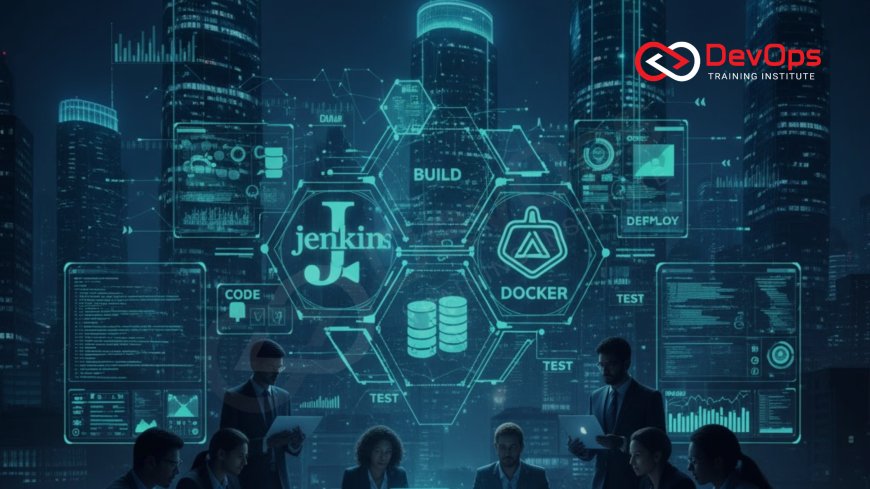
If you are in Bangalore and want to crack DevOps interviews in 2025, knowing theory is not enough. Companies want proof that you have actually built something end-to-end using Jenkins and Docker. The fastest and most reliable way to gain that experience is by working on real-world projects during training.
This guide shows you exactly which projects matter most, how they work in real companies, and why doing them under proper guidance at a reputed DevOps Training Institute dramatically increases your chances of getting hired at top MNCs and startups in Bangalore.
Project 1: Simple Web App CI/CD Pipeline with Jenkins and Docker
Every DevOps journey starts here. You take a simple Node.js or Python web application from GitHub, write a Dockerfile, build the image automatically whenever code changes, and push it to Docker Hub using Jenkins. This project teaches you Jenkins freestyle and declarative pipelines, Docker basics, and how triggers work.
Students at WebAsha Technologies complete this as their first assignment in week one. It removes the fear of both tools instantly.
Project 2: Multi-Stage Docker Build for Production-Ready Images
Real companies never use bulky images in production. In this project, you learn to write multi-stage Dockerfiles that compile code in one stage and copy only the required binaries to a tiny alpine-based final image. Jenkins automatically builds and tests both stages.
This is one of the most frequently asked concepts in Bangalore interviews. Learn more about why Docker became so popular in DevOps.
Project 3: Automated Testing Inside Jenkins Pipeline
Shipping broken code is not acceptable. Here you integrate unit tests, SonarQube code quality checks, and security scanning (Trivy) directly into your Jenkins pipeline. If any stage fails, the build stops automatically.
This project teaches you the importance of shift-left testing and gatekeeping in CI/CD. Most students say this is where they truly understand why CI/CD is the backbone of DevOps.
Project 4: Deploy Docker Container to AWS EC2 Using Jenkins
Building images is easy. Deploying them safely is the real challenge. In this project, you use Jenkins to SSH into an EC2 instance, pull the latest image, stop the old container, and start the new one with zero downtime.
You also learn environment variables, secrets management, and health checks. This exact flow is used by hundreds of Bangalore companies running on virtual machines.
Project 5: Blue-Green Deployment Strategy with Jenkins and Docker
Top companies never deploy directly to production. In this advanced project, you set up two identical environments (blue and green). Jenkins deploys the new version to the inactive environment, runs smoke tests, and then switches traffic using Nginx or AWS load balancer.
This is considered senior-level knowledge and makes your resume stand out instantly.
Project Comparison: Which One Should You Build First?
Here is a quick comparison table that students at DevOps Training Institute use to plan their learning path:
| Project Name | Difficulty Level | Most Important Concepts Learned |
|---|---|---|
| Simple Web App CI/CD | Beginner | Jenkins basics, Dockerfile, triggers |
| Multi-Stage Docker Build | Beginner-Intermediate | Image optimization, build secrets |
| Automated Testing Pipeline | Intermediate | Quality gates, SonarQube, Trivy |
| Blue-Green Deployment | Advanced | Zero-downtime, rollback strategy |
Project 6: Self-Healing Jenkins Pipeline with Retry and Notifications
Real pipelines fail all the time because of network issues or temporary problems. In this project, you add retry logic, Slack/Email notifications, and automatic rollback if deployment fails.
Companies love candidates who think about failure scenarios. Read more about how Jenkins supports enterprise CI/CD.
Project 7: Jenkins Shared Library for Reusable Code
Writing the same pipeline code again and again is not professional. You create a shared library with common functions like build, test, and deploy, and use it across multiple projects.
This is exactly what senior DevOps engineers do in real companies.
Project 8: Docker Compose for Multi-Container Applications
Most real applications have a database, cache, and backend. You use Docker Compose to run MySQL/PostgreSQL, Redis, and your app together locally, then recreate the same setup using Jenkins in production.
This project bridges the gap between development and operations perfectly.
Why Bangalore Companies Love These Jenkins + Docker Projects
Recruiters in Bangalore can immediately tell if you have only watched YouTube videos or actually built something. When you confidently explain blue-green deployment with Jenkins and Docker that you built yourself, the interview turns into a discussion instead of grilling.
That confidence comes only from doing these projects on real servers with proper guidance. Many students at WebAsha Technologies get job offers even before completing all projects because their GitHub looks exactly like a working professional’s.
Check out which tool you should learn first: Docker or Jenkins.
Where to Learn These Projects in Bangalore
WebAsha Technologies remains the most trusted DevOps Training Institute in Bangalore because every single student works on these exact projects using live cloud accounts and real servers. Trainers are active DevOps engineers from product companies who review your code daily.
Weekend and weekday batches are available. Many students also combine this with Linux Training Institute and Python Training Institute modules for complete mastery.
Learn more about the future of Jenkins in cloud-native world.
Conclusion
Jenkins and Docker are not going away in 2025 or even 2030. They form the foundation of almost every CI/CD pipeline in Bangalore companies. The eight projects explained above cover everything from basic automation to enterprise-grade deployment strategies.
Doing these projects during structured training at a good institute like WebAsha Technologies is the fastest way to go from beginner to job-ready DevOps engineer. You do not need to spend years figuring things out alone when experts can guide you in just a few months.
Start building today. Your first Jenkins + Docker pipeline is just one weekend away from changing your career forever in Bangalore’s competitive IT market.
Frequently Asked Questions
How long does it take to complete these Jenkins Docker projects?
With daily practice and proper guidance at WebAsha Technologies, most students complete all eight projects in 6-8 weeks.
Do I need my own laptop for training?
Yes, a laptop with 8GB+ RAM and admin rights is required. Cloud labs are provided for heavy lifting.
Can freshers learn these projects?
Absolutely. The projects are designed from beginner to advanced level step by step.
Will I get recorded videos?
Yes, WebAsha Technologies provides lifetime access to class recordings and materials.
Is weekend training available in Bangalore?
Yes, both Saturday-Sunday and weekday evening batches are running.
Do you provide placement help?
100% placement assistance with resume building, GitHub profile review, and mock interviews.
Should I learn Jenkins first or Docker first?
Most institutes teach Docker first because Jenkins pipelines become much easier afterward.
Can I do these projects at home without training?
Possible but very slow and frustrating. Guided training saves months of trial and error.
Are these projects enough for 10+ LPA jobs?
Yes, students with strong project experience regularly get 10-18 LPA offers as freshers.
Do companies still use Jenkins in 2025?
Yes, Jenkins is still the most widely used CI/CD tool across Bangalore.
Will I learn Docker Compose and Docker Swarm too?
Yes, both are covered along with introduction to Kubernetes.
Is coding required for these projects?
Basic Bash and understanding of any programming language is enough.
Can working professionals join?
Yes, evening and weekend batches are specially designed for working people.
Do you provide certificates?
Yes, industry-recognized course completion certificate is provided.
What if I miss a class?
Makeup classes and recorded sessions ensure you never fall behind.
What's Your Reaction?
 Like
0
Like
0
 Dislike
0
Dislike
0
 Love
0
Love
0
 Funny
0
Funny
0
 Angry
0
Angry
0
 Sad
0
Sad
0
 Wow
0
Wow
0


![100+ Azure DevOps Interview Questions and Answers [Updated 2025]](https://www.devopstraininginstitute.com/blog/uploads/images/202509/image_140x98_68c40aa9a3834.jpg)





![Future Scope of DevOps Careers in Pune [Updated 2025]](https://www.devopstraininginstitute.com/blog/uploads/images/202510/image_140x98_68e3a84652312.jpg)