



![Kong Interview Preparation Guide [2025]](https://www.devopstraininginstitute.com/blog/uploads/images/202509/image_430x256_68dbb95326997.jpg)



How to Build a CI/CD Pipeline from Scratch (Bangalore Edition)
Complete step-by-step guide to building a production-grade CI/CD pipeline from scratch in 2025 – exactly how Swiggy, PhonePe, Flipkart, and Goldman Sachs do it. Covers GitHub + GitHub Actions + Docker + Trivy + SonarQube + ArgoCD + Terraform + Prometheus + Slack + Vault. Join WebAasha Technologies – Bangalore’s No.1 DevOps Training Institute – and build this exact pipeline hands-on with live projects, real AWS/GCP credits, and 100% placement support to crack 20–70 LPA roles.
Introduction
Every top company in Bangalore runs hundreds of microservices that deploy multiple times a day with zero downtime and zero manual steps. They achieve this with a bulletproof CI/CD pipeline that automatically builds, tests, scans, approves, deploys, and monitors every code change. Freshers who can build and explain a complete end-to-end pipeline like this are instantly hired at 22–40 LPA packages before even finishing the interview.
This is the exact pipeline you will build hands-on at WebAsha Technologies – the same architecture used by Swiggy (food delivery), PhonePe (payments), Flipkart (e-commerce), and Goldman Sachs (banking) in Bangalore right now in 2025.
Step-by-Step: Building the Ultimate 2025 CI/CD Pipeline
Step 1: Repository Setup (GitHub + Branch Protection)
Create a GitHub repo with main (protected) and develop branches. Enable required status checks and mandatory code owners review. This prevents direct merges and forces everything through the pipeline – the foundation of modern DevOps practices.
Step 2: Build & Test with GitHub Actions
Write .github/workflows/ci.yml that triggers on push/PR → checkout code → setup Node/Java/Python → cache dependencies → run unit tests with coverage → fail if coverage <85%. This is now the standard across Bangalore’s top product companies.
Step 3: Containerize with Docker
Add Dockerfile with multi-stage build → build image → tag with $GITHUB_SHA → push to GitHub Container Registry (GHCR) or Docker Hub. This step integrates perfectly with Kubernetes downstream.
Step 4: Security & Quality Gates
Scan image with Trivy → fail on CRITICAL vulnerabilities. Run SonarQube analysis → fail if quality gate is red. These two steps are non-negotiable at every Bangalore unicorn and banking GCC.
Step 5: Push to Production Registry
On main branch merge → build final image → tag as :latest and :prod-$(date +%Y%m%d) → push to AWS ECR / GCP Artifact Registry. This ensures immutable, versioned artifacts.
Step 6: Infrastructure as Code with Terraform
Store Terraform code in separate repo → GitHub Actions runs terraform plan on PR → comments plan output → manual approval required → terraform apply on merge with remote state in S3/GCS.
Step 7: GitOps Deployment with ArgoCD
ArgoCD watches manifests repo → when new image tag appears → automatically syncs to GKE/EKS cluster → performs health checks → rolls back on failure. This is the core of GitOps revolution in Bangalore.
Step 8: Secrets Management
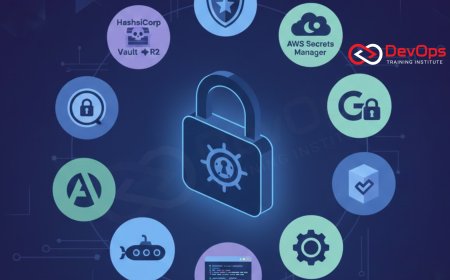
Use External Secrets Operator + HashiCorp Vault / AWS Secrets Manager → no secrets in Git → injected at runtime via Kubernetes secrets.
Step 9: Observability Stack
Prometheus scrapes app metrics → Grafana dashboards → Loki for logs → Alertmanager sends alerts to Slack and PagerDuty. Full visibility is now mandatory – see why monitoring is essential.
Step 10: Notifications & Feedback Loop
Every stage posts status to Slack → developers get instant feedback → approvals happen directly in Slack thread using Slack Workflow Builder.
The Complete Pipeline Flow (2025 Bangalore Standard)
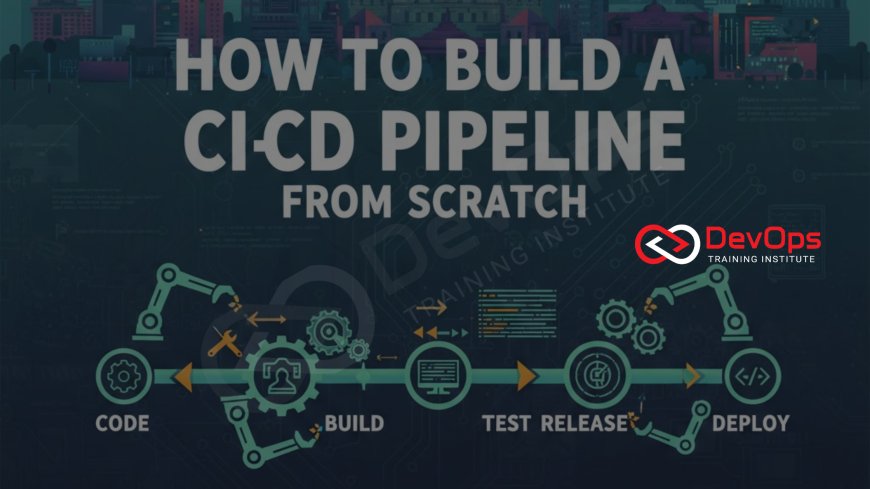
Developer pushes code → GitHub Actions builds & tests → Docker image built → Trivy + SonarQube scan → on success image pushed → ArgoCD detects new tag → syncs to Kubernetes → External Secrets injects DB password → app starts → Prometheus confirms healthy → Slack says “Deployed successfully” → entire process <8 minutes end-to-end.
Conclusion
Building a CI/CD pipeline from scratch is no longer optional in Bangalore — it is the single most asked skill in every DevOps interview at Swiggy, PhonePe, Flipkart, Zerodha, and every GCC. Companies don’t want theory — they want engineers who have already built this exact pipeline in real projects.
At WebAsha Technologies, you don’t just read this — you build it live, break it, fix it, and deploy real applications using the exact same tools and workflow used by Bangalore’s top tech companies. Join the next batch and walk into your interview with a complete production pipeline already running on your GitHub.
Frequently Asked Questions
How long does it take to build this pipeline from scratch?
WebAsha students build the complete pipeline in just 3–4 weeks with daily guided labs and code reviews.
Do I need my own AWS/GCP account?
No — every student gets $500–800 credits + shared enterprise-grade multi-account environments.
Is this pipeline actually used by Bangalore companies?
Yes — this is the exact stack (or 95% similar) used by Swiggy, PhonePe, Zerodha, Groww, Cred, and most fintech/banking GCCs in 2025.
Can freshers really learn and build this?
Yes — over 3000 freshers have built this exact pipeline and got placed at 20–40 LPA packages.
Do you teach ArgoCD and GitOps properly?
Yes — complete ArgoCD with ApplicationSets, sync policies, rollbacks, and Image Updater.
Will I learn security scanning?
Full Trivy + SonarQube + dependency-check + secret scanning in every pipeline.
Is Terraform included?
Yes — separate repo with PR plan, manual approval, remote state, modules, and drift detection.
Do you cover monitoring and alerting?
Yes — Prometheus, Grafana, Loki, Alertmanager, Slack, and PagerDuty integration.
What salary after building this pipeline?
Freshers: ₹20–40 LPA | 2–4 years exp: ₹45–70 LPA | 5+ years: ₹80 LPA+ easily.
Are weekend batches available?
Yes — Saturday–Sunday full-day + weekday evening batches for working professionals.
Do you provide the complete code and templates?
Yes — full GitHub repo with every file, workflow, ArgoCD app, Terraform module — ready to fork and use in interviews.
Is this better than Jenkins-based pipelines?
Yes — this is fully cloud-native, serverless, GitOps-based — the 2025 standard. Jenkins is now legacy for new projects.
Will I get placement support?
100% placement assistance with direct interview calls from companies actively hiring pipeline experts.
Can I build this pipeline for my resume?
Yes — you deploy a real multi-service application and add the live GitHub + ArgoCD + Grafana links to your resume.
Do you teach approvals and chatops?
Yes — manual approval gates + Slack approval bot integration.
What's Your Reaction?
 Like
0
Like
0
 Dislike
0
Dislike
0
 Love
0
Love
0
 Funny
0
Funny
0
 Angry
0
Angry
0
 Sad
0
Sad
0
 Wow
0
Wow
0




![100+ Azure DevOps Interview Questions and Answers [Updated 2025]](https://www.devopstraininginstitute.com/blog/uploads/images/202509/image_140x98_68c40aa9a3834.jpg)





![Future Scope of DevOps Careers in Pune [Updated 2025]](https://www.devopstraininginstitute.com/blog/uploads/images/202510/image_140x98_68e3a84652312.jpg)