


![Kong Interview Preparation Guide [2025]](https://www.devopstraininginstitute.com/blog/uploads/images/202509/image_430x256_68dbb95326997.jpg)

18 DevOps Trends Based on AI & Machine Learning
Explore the top 18 transformative DevOps trends powered by Artificial Intelligence (AI) and Machine Learning (ML) in 2025. This comprehensive guide details how AI is revolutionizing continuous delivery, observability, security, and incident management. Learn about AIOps for predictive alerting, intelligent automation, AI-driven code testing, continuous threat modeling, and FinOps optimization. These trends are essential for modernizing your pipeline, accelerating release cadence, and achieving unprecedented levels of automation, reliability, and security in cloud-native environments, proving that AI is the next frontier for operational excellence and efficiency.
Introduction
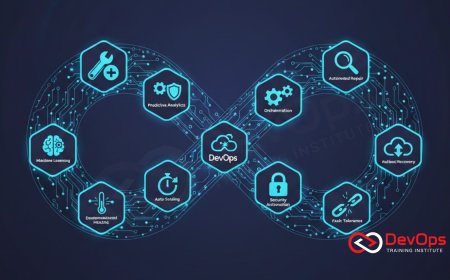
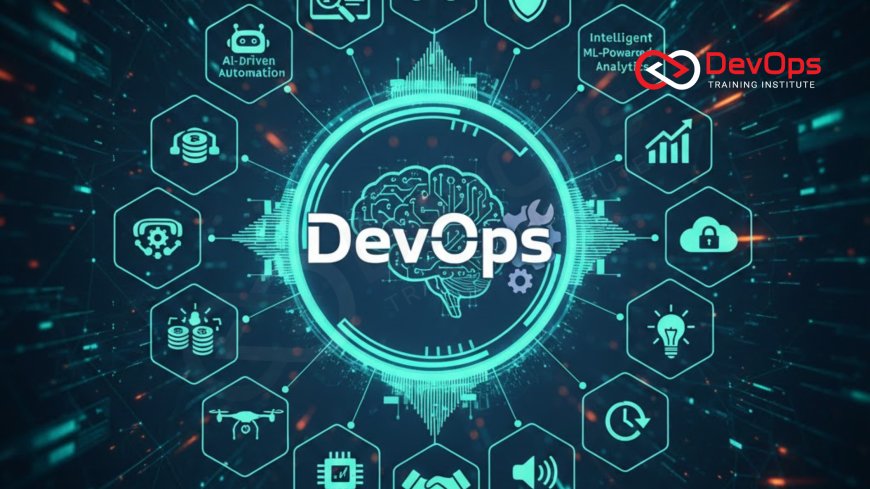
The convergence of DevOps and Artificial Intelligence (AI) is creating the next major revolution in software delivery, commonly known as AIOps or Intelligent Automation. DevOps brought speed, agility, and continuous flow; AI and Machine Learning (ML) now bring intelligence, predictive capability, and self-optimization. In 2025, these technologies are moving beyond simple data aggregation to fundamentally redesign how we build, test, deploy, monitor, and secure cloud-native systems. This shift is essential because the complexity and data volume generated by modern microservices architectures and Kubernetes environments have simply outpaced human capacity for manual monitoring and diagnosis.
AI's primary role in DevOps is to enhance decision-making and automate complex, non-linear tasks. This includes reducing the noise from mountains of monitoring alerts, identifying subtle anomalies that precede major incidents, automating root cause analysis (RCA), and embedding security checks that learn from previous exploits. The result is a dramatic improvement in operational efficiency, a reduction in the time engineers spend on "toil," and a measurable increase in system reliability—the core goal of the SRE (Site Reliability Engineering) discipline. The adoption of AI/ML is transforming DevOps from a set of practices into a highly autonomous engineering system.
This comprehensive guide details 18 critical DevOps trends powered by AI and ML that you must know to stay competitive. We've organized these trends across the entire software delivery lifecycle, from development and testing to monitoring and governance. Mastering these concepts will position you at the forefront of the industry, enabling you to build highly resilient, predictive, and intelligent systems that can adapt and heal themselves automatically, ensuring a sustainable and accelerated flow of value.
Pillar I: Intelligent Monitoring and Incident Response (AIOps)
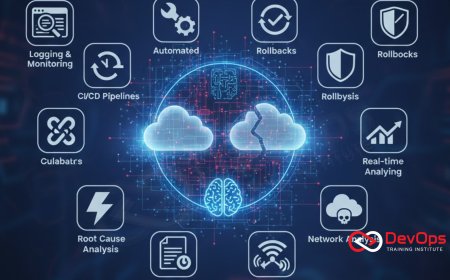
AIOps is the application of ML and big data analytics to operational challenges, primarily focused on monitoring and incident management. The goal is to move from reactive alerting to proactive, predictive anomaly detection and automated RCA, drastically reducing the Mean Time to Resolution (MTTR).
1. Predictive Alerting and Anomaly Detection
AI/ML models analyze historical metrics and log patterns to establish dynamic baselines for normal system behavior. These models can then predict potential failures (e.g., resource exhaustion or increased latency) or instantly detect subtle anomalies that fall outside the learned baseline, long before static thresholds are breached. This allows engineering teams to intervene proactively, preventing outages rather than reacting to them.
2. Noise Reduction and Alert Correlation
AI aggregates and correlates thousands of related alerts (metrics, logs, traces) that often flood a monitoring system during an incident, grouping them into a single, cohesive incident ticket. This drastically reduces alert fatigue and allows engineers to focus on the signal rather than the noise, accelerating the initial triage and reducing MTTA (Mean Time to Acknowledge).
3. Automated Root Cause Analysis (RCA)
ML algorithms analyze the sequence of events, configuration changes, and dependency maps across logs and traces leading up to a failure. They identify the most probable root cause (e.g., a specific deployment, a recent resource exhaustion, or a slow database query) and present it to the engineer, speeding up the diagnostic phase by recommending the likely source of failure across the observability pillars.
4. Self-Healing Infrastructure
The ultimate goal of AIOps is automated remediation. Simple self-healing (e.g., container restart) is already common, but AI extends this by automatically triggering complex runbooks, rolling back specific services, or adjusting resource allocations (Kubernetes HPA configurations) based on the diagnosed root cause and historical success rates of similar remediation actions, ensuring a more intelligent and tailored response to failures.
5. Natural Language Processing (NLP) for Post-Mortems
NLP is used to analyze historical post-mortem documents and incident reports, extracting key failure patterns, recommended fixes, and common failure categories. This structured data is then used to refine AIOps models, improve automated runbooks, and prioritize reliability work in the development backlog, institutionalizing the continuous learning process within the organization.
Pillar II: CI/CD, Testing, and Quality Assurance
AI is transforming the quality assurance lifecycle, automating the creation, execution, and maintenance of tests. This enables faster deployment cycles by increasing confidence in code changes and eliminating the bottleneck of manual testing and flaky automation suites.
6. AI-Driven Test Generation
ML models analyze application usage data, code changes, and test coverage gaps to automatically generate new, highly effective test cases. This includes generating synthetic user data, creating complex API request sequences, or suggesting missing unit tests, significantly improving test coverage and reliability with minimal human effort.
7. Intelligent Test Selection and Prioritization
For large codebases, running the entire test suite on every commit is slow. AI identifies the specific tests most likely to fail based on the files and modules changed in a commit, prioritizing and executing only that subset of tests. This dramatically reduces CI pipeline execution time while maintaining high confidence in the validation process, enabling faster feedback loops for developers.
8. Flaky Test Remediation
ML identifies and isolates "flaky" tests—those that fail inconsistently without a code change. By analyzing execution patterns, timing dependencies, and environmental factors, AI helps diagnose the root cause of flakiness and can automatically suggest code fixes or temporary deactivation, improving the reliability of the entire test suite and boosting developer trust in the pipeline results.
9. Dynamic Feature Flagging and Canary Rollouts
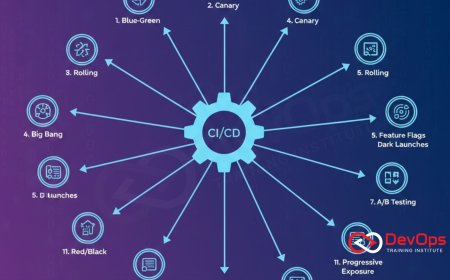
AI optimizes the deployment risk for new features. Instead of relying on static percentages for Canary rollouts, ML analyzes real-time production metrics (latency, errors) from the new version and automatically adjusts the traffic split (e.g., 1% to 5% to 0% if errors spike) based on predicted impact. This maximizes the speed of adoption while minimizing the blast radius of potential failures, ensuring a highly controlled and safe Continuous Delivery process.
Pillar III: Security and Governance (DevSecOps)
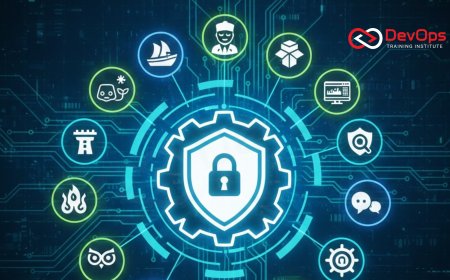
Security is shifting from being a set of manual checks to a continuous, intelligent, and proactive process. AI and ML are essential for handling the massive volume of threat data and detecting subtle attack patterns that traditional signature-based security tools often miss.
10. AI-Powered Vulnerability Scanning (SAST/SCA)
ML enhances static analysis tools by learning from vast datasets of known vulnerabilities and code patterns. This allows scanners to detect complex logical vulnerabilities and zero-day exploits with greater accuracy and fewer false positives than traditional rule-based engines, improving the effectiveness of early-stage security checks.
11. Intelligent Secret Management
AI systems monitor access patterns to centralized Secrets Management tools (e.g., HashiCorp Vault). If a service or user attempts to access a secret outside its normal time window, location, or request frequency, the AI instantly flags the anomaly, potentially revokes the token, and alerts the security team. This continuous monitoring strengthens the security posture around critical credentials.
12. Continuous Security Policy Evolution
ML models analyze audit logs, compliance reports, and incident data to identify weaknesses in current Policy-as-Code rules (e.g., OPA). The AI suggests or even automatically generates new, updated policies to patch configuration gaps or enforce new compliance standards, driving a continuous cycle of security hardening across the Infrastructure as Code (IaC) layer, ensuring that configurations like those for RHEL 10 security enhancements are always optimal.
13. Runtime Behavior Anomaly Detection
ML establishes a trusted baseline of a running application's runtime behavior (e.g., network calls, system calls, resource usage). Any deviation from this baseline is flagged as a potential attack, providing sophisticated detection against fileless malware, container breakouts, and zero-day exploits that bypass traditional firewall or antivirus solutions. This real-time behavioral monitoring is a powerful defense mechanism.
Pillar IV: Data, Infrastructure, and FinOps
Beyond application and operations, AI is optimizing the infrastructure itself—both the compute resources running the applications and the data pipelines required for AI model training—bridging the gap between DevOps and the data science world (MLOps).
14. Automated Capacity Planning and Scaling
AI models analyze historical load patterns, seasonality, and application behavior to predict future traffic needs with high accuracy. This enables predictive auto-scaling (e.g., pre-scaling Kubernetes Pods or cloud VMs before a peak traffic event begins), optimizing resource allocation and preventing performance degradation caused by sudden, unforeseen load spikes.
15. ML-Powered FinOps Optimization
AI analyzes resource utilization and billing data, identifying waste, recommending cost-saving adjustments (e.g., rightsizing containers, identifying idle resources, suggesting optimal instance purchasing models), and automatically implementing non-critical recommendations. This continuous, intelligent optimization is critical for large-scale cloud deployments where cost control is paramount, directly translating operational efficiency into financial savings.
16. MLOps Platforms and CI/CD for Models
The MLOps trend formalizes the DevOps practices for machine learning systems. This includes versioning data, automating the training, testing, and deployment of ML models into production, and continuously monitoring their performance (model drift). CI/CD pipelines are extended to manage not just code and infrastructure, but also data and models, creating an integrated, automated lifecycle for the entire AI system.
17. AI-Assisted Log Management and Analysis
AI/ML algorithms automatically cluster and categorize logs, identifying patterns, extracting entities, and highlighting unusual events within massive volumes of unstructured log data. This accelerates forensic analysis during an incident and aids in continuous threat detection by flagging anomalies buried deep within the application logs, which are often too voluminous for human analysis, ensuring that critical data is not missed.
18. Intelligent Infrastructure as Code (IaC)
AI/ML systems analyze existing IaC (Terraform, CloudFormation) configurations and automatically suggest optimizations for cost, security, or performance. For complex infrastructure changes, AI can even generate initial IaC code snippets based on a high-level requirement, or refactor existing modules for greater reusability and compliance with hardening standards, such as those covered in RHEL 10 hardening best practices, applied via automation.
Conclusion
AI and Machine Learning are no longer aspirational concepts in DevOps; they are becoming essential operational components that drive the next wave of productivity, resilience, and security. The 18 trends explored—from predictive AIOps and automated RCA to intelligent testing and MLOps platforms—demonstrate a fundamental shift toward self-optimizing, self-healing systems. By automating intelligence, organizations can achieve operational standards that were previously unattainable through human effort alone, ensuring stability in complex, high-velocity, cloud-native environments.
The future of DevOps requires every engineer to become skilled in integrating and leveraging these AI/ML capabilities. This involves instrumenting applications with comprehensive telemetry (metrics, logs, traces), designing systems that are MLOps-ready, and embracing tools that provide AI-driven insights and automation. The focus moves from writing automation to governing intelligent systems that optimize themselves, allowing teams to dedicate time to strategic feature development and architectural innovation rather than constant reactive maintenance. Investing in these AI-driven practices is the key to unlocking the full potential of your cloud-native infrastructure and accelerating your career in the coming years.
Embrace these 18 trends as your strategic roadmap for 2025. By implementing intelligent automation in security, optimizing costs with FinOps tools, and achieving predictive reliability with AIOps, you will ensure your software delivery pipeline is not just fast, but smart, resilient, and continuously improving. This commitment to intelligent automation transforms the DevOps continuous delivery pipeline into a high-performance, self-driving engine of business value, ensuring that speed is always delivered with stability and foresight, positioning your organization for market leadership in the dynamic cloud landscape.
Frequently Asked Questions
What is AIOps and its main goal?
AIOps is the application of AI/ML to IT operations. Its main goal is to move from reactive alerting to proactive, predictive anomaly detection and automated incident response.
How does AI reduce alert fatigue during an incident?
AI correlates thousands of related alerts (metrics, logs, traces) into a single, cohesive incident ticket, filtering out noise and presenting only the necessary information for diagnosis.
What is the difference between a static threshold and predictive alerting?
A static threshold is a fixed limit (e.g., 80% CPU). Predictive alerting uses ML to learn a dynamic baseline and forecast failures before the static limit is reached.
How does AI help with continuous threat modeling?
AI analyzes logs and security events to continuously identify new attack vectors and policy gaps, automatically feeding this intelligence back to update security rules and controls.
What is MLOps, and how does it relate to CI/CD?
MLOps is the application of DevOps principles to machine learning. It extends CI/CD pipelines to manage the versioning, training, testing, and deployment of ML models.
How does AI contribute to FinOps (cloud cost management)?
AI analyzes resource utilization and billing data to recommend and often automatically implement cost-saving adjustments, such as rightsizing resources and identifying idle infrastructure.
What is the purpose of intelligent test selection in CI/CD?
It uses ML to analyze code changes and historical data to run only the subset of tests most likely to fail, significantly reducing pipeline execution time while maintaining confidence.
How does AI enable sophisticated Canary Deployments?
AI dynamically adjusts the traffic split to the new Canary version based on real-time performance metrics and predicted risk, maximizing adoption speed while minimizing the blast radius if errors occur.
How is AI/ML used to improve log management and analysis?
AI automatically clusters logs, categorizes events, and flags subtle anomalies within massive log volumes, accelerating forensic analysis and proactive issue detection that is too voluminous for human processing.
What is the ultimate benefit of AIOps for the Mean Time to Resolution (MTTR)?
AIOps dramatically reduces MTTR by providing predictive alerts that prevent failures and automating root cause analysis and remediation, leading to faster diagnosis and resolution.
How does AI contribute to Infrastructure as Code (IaC) productivity?
AI systems analyze IaC and suggest optimizations for cost, security, or compliance, and can even generate code snippets, accelerating development and maintaining quality and adherence to standards like RHEL 10 security enhancements.
What is runtime behavior anomaly detection?
It involves ML establishing a baseline of normal application activity (network, system calls) and instantly flagging any deviation as a potential security breach or exploit attempt, providing defense against zero-day attacks.
How does AI help with configuration drift detection in GitOps?
AI analyzes configuration changes and system telemetry to quickly identify unauthorized or anomalous drift in the live state that isn't reflected in Git, improving the integrity of the GitOps model.
What foundational data is needed to train an AIOps model?
A comprehensive set of historical telemetry data, including structured metrics, logs, and distributed traces, along with historical incident tickets and post-mortem reports, is required to train effective AIOps models.
What is the key takeaway for a DevOps engineer regarding these trends?
The key is to focus on instrumentation (generating high-quality metrics, logs, and traces) and governance (managing the intelligent automation systems), leveraging AI as a force multiplier for operational tasks.
What's Your Reaction?
 Like
0
Like
0
 Dislike
0
Dislike
0
 Love
0
Love
0
 Funny
0
Funny
0
 Angry
0
Angry
0
 Sad
0
Sad
0
 Wow
1
Wow
1


![100+ Azure DevOps Interview Questions and Answers [Updated 2025]](https://www.devopstraininginstitute.com/blog/uploads/images/202509/image_140x98_68c40aa9a3834.jpg)





![Future Scope of DevOps Careers in Pune [Updated 2025]](https://www.devopstraininginstitute.com/blog/uploads/images/202510/image_140x98_68e3a84652312.jpg)