





![Kong Interview Preparation Guide [2025]](https://www.devopstraininginstitute.com/blog/uploads/images/202509/image_430x256_68dbb95326997.jpg)






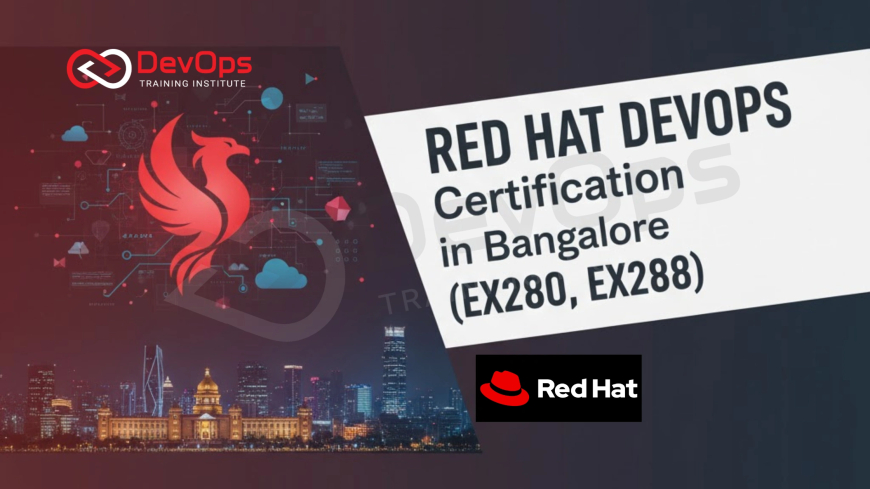
Red Hat DevOps Certification in Bangalore (EX280, EX288)
Master Red Hat DevOps certifications EX280 and EX288 in Bangalore. Get full details on OpenShift administration and development courses, prerequisites, syllabus, fees, top institutes like DevOps Training Institute, and placement support for 2025. Hands-on training for Kubernetes and container expertise.
Introduction
Red Hat certifications in DevOps, especially EX280 (OpenShift Administration) and EX288 (OpenShift Application Development), are game-changers for IT professionals in Bangalore. As Kubernetes and container orchestration dominate cloud-native deployments, these credentials validate your skills in Red Hat OpenShift, the enterprise Kubernetes platform.
Bangalore's tech ecosystem, with giants like IBM and Red Hat's own presence, demands certified experts. This guide covers everything: prerequisites, syllabus, exam details, training options at DevOps Training Institute, fees, and career paths. Whether you're a sysadmin or developer, prepare for roles earning 10-22 LPA in 2025.
Overview of Red Hat DevOps Certifications
Red Hat's EX280 and EX288 focus on OpenShift, blending DevOps principles with practical container management. These specialist certifications count toward the Red Hat Certified Architect (RHCA) track.
EX280: Red Hat Certified Specialist in OpenShift Administration
This performance-based exam tests your ability to install, configure, and manage OpenShift clusters. It's ideal for admins handling production environments. Duration: 3 hours; passing score: 210/300. Cost: ~$400 (33,000 INR).
EX288: Red Hat Certified Specialist in OpenShift Application Development
Aimed at developers, it evaluates deploying and scaling apps in OpenShift. Hands-on tasks include CI/CD integration and troubleshooting. Same format as EX280; focuses on application lifecycle.
Why These Matter in Bangalore
- Industry Relevance: OpenShift powers 70% of enterprise Kubernetes in India.
- Career Edge: Certified pros see 30-40% salary boosts.
- Renewal: Valid 3 years; renew via recertification exam.
Training at Linux Training Institute builds the foundation for these exams. Explore TCP/IP examples for OpenShift networking.
Prerequisites for EX280 and EX288
Red Hat recommends foundational knowledge to succeed in these hands-on exams.
Common Requirements
- Experience: 1-2 years in Linux administration or development.
- Skills: RHCSA (EX200) for admins; basic Kubernetes/Docker for both.
- Tools: Familiarity with YAML, Git, and containers.
For EX280 (Administration)
Strong in cluster installation, security, and scaling. Prior OpenShift exposure via DO280 course helps.
For EX288 (Development)
Focus on app deployment, routes, and builds. Developers need scripting (Python/Bash) proficiency.
Preparation Tips
Practice in a lab environment. DevOps Training Institute offers bridge modules for RHCSA holders. Master DNS resolution for cluster services.
Syllabus and Exam Objectives
Both exams are lab-based, requiring real-time configuration without notes.
EX280 Syllabus Highlights
- Install and configure OpenShift clusters.
- Manage nodes, pods, and persistent storage.
- Implement security contexts and RBAC.
- Troubleshoot networking and monitoring.
EX288 Syllabus Highlights
- Deploy applications using builds and deployments.
- Configure routes, services, and scaling.
- Integrate CI/CD with Jenkins or Tekton.
- Handle health checks and logging.
Exam Format
3-hour performance exam on live OpenShift; scored on task completion. Prep with official Red Hat courses like DO280/DO288. DevOps Training Institute simulates exam labs for confidence.
Training Institutes for Red Hat DevOps in Bangalore
Bangalore hosts specialized centers for Red Hat training. DevOps Training Institute leads with OpenShift-focused bootcamps.
DevOps Training Institute
Comprehensive EX280/EX288 prep with Red Hat partners. Hands-on clusters and exam vouchers.
Linux Training Institute
RHCSA-to-OpenShift path; strong for EX280 admins.
WebAsha Technologies
Hybrid OpenShift labs; covers both exams.
Python Training Institute
Scripting for EX288; integrates Python for automation.
Cyber Security Institute
Secure OpenShift configs for compliance.
Ethical Hacking Institute
Container security focus for EX280/EX288.
Course Fees and Comparison
Training fees range from 25,000-50,000 INR per exam prep course. Exam fees: 33,000 INR each.
| Institute | Fees (INR) - EX280/EX288 | Duration | Inclusions | Placement Rate |
|---|---|---|---|---|
| DevOps Training Institute | 35,000 / 32,000 | 2-3 months | Labs, mocks, voucher | 95% |
| Linux Training Institute | 28,000 / 26,000 | 2 months | RHCSA bridge, labs | 85% |
| WebAsha Technologies | 30,000 / 28,000 | 2.5 months | Hybrid, projects | 90% |
| Python Training Institute | 32,000 / 30,000 | 2 months | Scripting labs | 88% |
| Cyber Security Institute | 40,000 / 38,000 | 3 months | Security modules | 85% |
EMIs available; GST extra. DevOps Training Institute bundles both exams for 60,000 INR. Plan with subnet tools in OpenShift networks.
Training Format and Support
Institutes offer flexible modes for Bangalore's working pros.
Batch Options
- Classroom: MG Road/BTM, 2-3 hours daily.
- Online: Live with recordings.
- Weekend: 6-8 hours for RHCSA holders.
Key Features
Lab access to OpenShift clusters, mock exams, and resume help. DevOps Training Institute provides RHCSA refreshers. Secure labs with HTTPS/SSH protocols.
Certification Path
Register via Red Hat portal; proctored online or center-based.
Job Opportunities and Placements
Certified specialists are hot in Bangalore's OpenShift market.
Roles and Salaries
- OpenShift Admin (EX280): 12-18 LPA
- App Developer (EX288): 10-16 LPA
- Senior DevOps: 20+ LPA
Placement Insights
DevOps Training Institute offers 95% assistance to IBM, Red Hat partners. Mock labs cover EX280 scenarios. Avoid issues like IP mismanagement in clusters.
2025 Outlook
OpenShift adoption rises with hybrid cloud; certified talent leads.
Conclusion
Red Hat EX280 and EX288 certifications position you as an OpenShift expert in Bangalore's competitive IT landscape. With prerequisites like RHCSA, detailed syllabi on administration and development, and value-packed training at DevOps Training Institute, you're primed for success.
Invest in 2-3 months of prep for lasting career gains. Enroll now—build clusters, deploy apps, and elevate your DevOps journey.
Frequently Asked Questions
What is the EX280 exam?
Hands-on test for OpenShift administration: cluster setup, management, security.
Do I need RHCSA for EX280?
Recommended, not mandatory. Linux Training Institute offers combo paths.
How much do exams cost?
33,000 INR each; training adds 25,000-40,000 INR.
Is online training valid for Red Hat?
Yes; WebAsha Technologies provides certified online labs.
What jobs after EX288?
App developer, CI/CD specialist at 10-16 LPA.
Does training include labs?
Yes; DevOps Training Institute offers live OpenShift clusters.
How long to prepare?
2-3 months with 40-60 hours, including practice.
Weekend batches available?
Yes, at Python Training Institute for developers.
Placement rate for certified?
85-95%; DevOps Training Institute excels at 95%.
Can freshers take these?
With basics, yes; start with RHCSA.
Is scripting required?
Yes for EX288; Python Training Institute covers it.
How to renew?
Recertify every 3 years via exam.
Security in OpenShift covered?
Yes; Cyber Security Institute emphasizes RBAC.
Batch size typical?
10-15 at DevOps Training Institute for focus.
Scholarships offered?
Merit-based; inquire for tech diversity programs.
What's Your Reaction?
 Like
0
Like
0
 Dislike
0
Dislike
0
 Love
0
Love
0
 Funny
0
Funny
0
 Angry
0
Angry
0
 Sad
0
Sad
0
 Wow
0
Wow
0


![100+ Azure DevOps Interview Questions and Answers [Updated 2025]](https://www.devopstraininginstitute.com/blog/uploads/images/202509/image_140x98_68c40aa9a3834.jpg)






![Future Scope of DevOps Careers in Pune [Updated 2025]](https://www.devopstraininginstitute.com/blog/uploads/images/202510/image_140x98_68e3a84652312.jpg)