



![Kong Interview Preparation Guide [2025]](https://www.devopstraininginstitute.com/blog/uploads/images/202509/image_430x256_68dbb95326997.jpg)



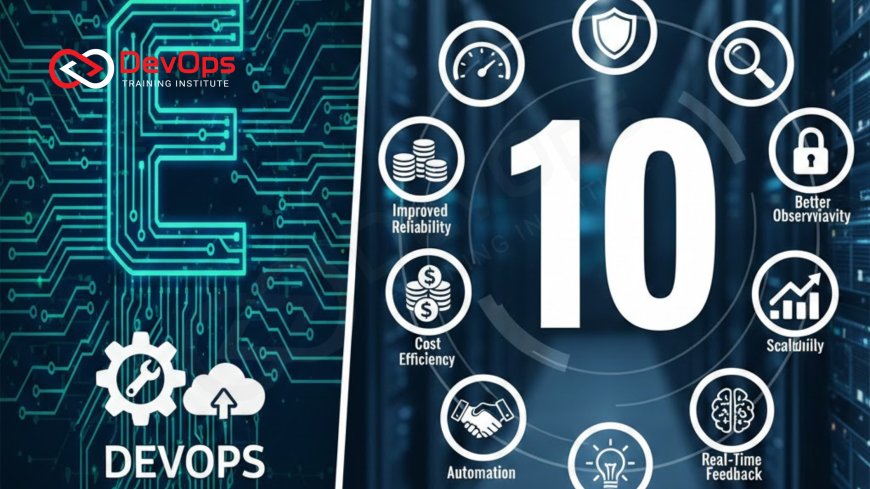
10 Benefits of Event-Driven DevOps
Unlock the power of modern software delivery by exploring the 10 key benefits of implementing Event-Driven DevOps (EDDO). Learn how shifting from linear, synchronous pipelines to reactive, asynchronous workflows—triggered by real-time events—improves speed, scalability, and resilience. This guide covers advantages in areas like automated incident response, true decoupling of microservices, enhanced observability, and accelerated continuous delivery, providing a blueprint for building self-healing, high-velocity systems that respond instantly to changes in their environment, from code commits to production anomalies.
Introduction
The traditional DevOps pipeline is often characterized by a linear, synchronous workflow: a code change triggers a build, which then triggers a test, which finally triggers a deployment. While effective, this model is inherently limited in modern, distributed, cloud-native environments, particularly those built on microservices and serverless architectures. The future of high-velocity operations lies in Event-Driven DevOps (EDDO)—a paradigm shift where actions are not initiated by a fixed sequence, but by real-time, meaningful events that occur anywhere in the system.
In an event-driven world, a change in state—whether it's a surge in latency, a successful security scan, a new metric anomaly, or a merged code branch—acts as a trigger for a specific, focused automation action. This approach moves the entire operational model from slow, rigid workflows to a fast, flexible, and reactive ecosystem. It transforms DevOps from a series of linked steps into a highly responsive fabric that can adapt instantly to both successful changes and unexpected failures. This is the essence of building truly self-healing systems and achieving true operational resilience at scale.
Adopting EDDO offers profound advantages, particularly in optimizing resource utilization, drastically reducing Mean Time to Restore (MTTR), and accelerating continuous delivery in ways synchronous models cannot match. This guide explores the 10 most compelling benefits of integrating event-driven principles into your DevOps strategy, providing the justification for building your next generation of automated pipelines and operational controls.
1. Accelerated Continuous Delivery (True Asynchronous Flow)
In traditional pipelines, subsequent stages must wait for the preceding stage to complete, creating latency. EDDO breaks this rigid dependency. For example, a successful unit test run can instantly emit an event that triggers the parallel deployment to two separate staging environments, which in turn emit events that trigger downstream functional tests. This asynchronous parallelization significantly reduces the total lead time for changes, allowing the team to achieve a much faster, more consistent release cadence.
Benefit: Decoupling stages via events enables maximum parallelism. Artifact creation, security scanning, and pre-production environment provisioning can all happen concurrently, shortening the time from code commit to customer value. This speed is critical for maintaining a competitive edge in any high-velocity environment.
2. Enhanced Decoupling of Microservices and Tooling
Event-driven architecture is built on the principle of loose coupling. By using a central event bus, microservices don't need to know about their consumers or producers; they only need to know how to emit or subscribe to a specific event type. This benefit extends directly to the DevOps toolchain: the monitoring system doesn't need to know how to call the incident response platform; it just emits a `critical_alert` event that the response platform consumes.
Benefit: The resulting system is more modular, resilient, and easier to modify. Swapping out a security scanner, upgrading a database, or replacing an entire build server becomes simpler because the integration logic is centralized around the event bus rather than hardcoded into dozens of individual tool configurations. This loose coupling makes the pipeline itself more maintainable.
3. Proactive, Automated Incident Response (Self-Healing)
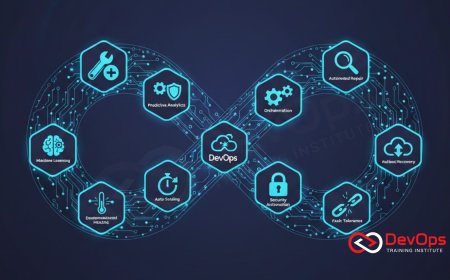
EDDO is the foundation of self-healing systems. Monitoring tools (like Prometheus or cloud providers) can emit events based on anomalies—e.g., `cpu_saturation_alert` or `pod_restart_detected`. These events instantly trigger automated remediation workflows (runbooks-as-code) to take corrective action, such as scaling up a deployment, rolling back a failed deployment, or clearing a full log disk. This eliminates the delay inherent in human-initiated intervention.
Benefit: Drastically reduces Mean Time to Restore (MTTR) by acting instantly. The system reacts to failures in seconds rather than the minutes or hours it takes to page an on-call engineer, diagnose the issue, and manually execute a fix. This speed is non-negotiable for maintaining high service availability and user satisfaction in modern, complex systems.
4. Centralized Observability and Auditing
Every significant change—from a passing unit test to an infrastructure scaling event—is a traceable, time-stamped event on the central bus. This creates a powerful, centralized audit trail that correlates application actions with infrastructure state changes, which is far superior to trying to stitch together data from disparate systems after the fact. The event bus essentially becomes a real-time source of truth for all operational activity.
Benefit: Provides unparalleled observability. Auditing compliance becomes simpler as the event stream chronologically details every action taken. Furthermore, correlating metrics with events allows engineers to quickly pinpoint the operational cause of a performance degradation or security incident, as they can instantly see which event led to the change in state. This real-time audit trail simplifies log management best practices by centralizing event logs.
5. Streamlined DevSecOps and Compliance Gates
In a synchronous pipeline, if a security scan is slow, the whole deployment is delayed. In EDDO, security is a continuous, reactive process. A code commit event can trigger a build and a security scan simultaneously. The build artifact is ready for staging, but the deployment only proceeds if the necessary security event—`SAST_scan_successful`—is also received before the deployment timeout. This allows slow, in-depth scans to run in the background without blocking faster, more frequent deployments.
Benefit: Allows security checks to be asynchronous, ensuring security is continuous but not a bottleneck. This model natively supports the "shift-left" principle by treating security validation as an event-driven quality gate, ensuring compliance without sacrificing the high-velocity requirements of modern CI/CD pipelines.
6. Cost Optimization via Dynamic Scaling
Event-driven systems are inherently good at managing cost because they only execute a function when a specific event occurs, aligning computing resources precisely with demand. This is often leveraged using serverless technologies (AWS Lambda, Azure Functions, Google Cloud Functions).
Benefit: Resources are consumed only when needed. For DevOps tooling, this means scaling down build agents to zero during quiet periods, and instantly spinning up dedicated infrastructure (like a temporary VM for an integration test) only when a `deployment_requested` event is received. This precise alignment of compute time with events drives significant savings in cloud infrastructure costs.
7. Simplified Integration with Cloud and Third-Party Services
Modern cloud providers and SaaS tools (e.g., GitHub, Jira, Datadog) are event-driven at their core, communicating via webhooks. EDDO allows for native integration with these services. For example, a new Jira ticket creation event can trigger an automation that provisions a dedicated development environment, or a GitHub event for a merged PR can trigger the entire CD process.
Benefit: Eliminates the need for complex polling or custom connector code. By consuming native events directly, you streamline integration, making your pipeline more resilient to API changes and ensuring that external services are reflected in your operational fabric instantly. This makes managing API Gateways and cloud resources more reactive to external changes.
8. Better Utilization of Observability Data
The three pillars of observability (metrics, logs, traces) are all event generators. EDDO leverages these signals to drive operational automation. For example, instead of an alert simply notifying an engineer, an alert event can instantly trigger an automation that dumps diagnostic data, archives logs, or initiates a debugging session. This turns passive alerts into active operational hooks, making the system respond intelligently to its own telemetry.
Benefit: Maximizes the value of monitoring data. By using a monitoring system to emit real-time events, you instantly act on insights. This is a crucial step towards implementing intelligent AIOps techniques, where machine learning analyzes event streams to proactively predict and prevent failures, making the system truly predictive rather than just reactive.
9. Facilitates GitOps Compliance and Enforcement
In a GitOps environment, the desired state of the infrastructure is stored in Git. EDDO enhances this by treating the Git commit as a critical event. A `git_config_merged` event can trigger a dedicated reconciliation agent (like Argo CD or Flux) to check the live state against Git and apply the changes. More powerfully, a compliance event—e.g., `SELinux_config_drift_detected` on a target host—can trigger a self-healing process to pull the correct configuration from Git and automatically enforce it on the host.
Benefit: Strengthens compliance and security enforcement. By treating the Git commit as the event, you ensure every infrastructure change is traceable and automatically reconciled. This is especially vital when enforcing host-level security policies, such as ensuring all nodes adhere to RHEL 10 hardening best practices instantly upon configuration drift detection.
The continuous threat modeling process can also be directly linked to event streams, with security events triggering automated policy updates in real-time, moving defense from static definitions to dynamic, reactive controls. This ability to instantly enforce a desired state based on an event is the core benefit of combining GitOps with an event-driven control plane, ensuring continuous security and configuration integrity.
10. Clearer Separation of Concerns (SLOs and Error Budgets)
By defining every action as a response to a specific event, teams create clearer boundaries of responsibility. An event defines the contract between the producer and the consumer. This clear contract simplifies the definition of Service Level Objectives (SLOs) and the management of Error Budgets, as service reliability can be tied directly to the successful processing of specific, critical events.
Benefit: Improved governance and focus. The developer owning the `order_placed` service is only responsible for emitting that event correctly, and the deployment team owning the CI/CD platform is only responsible for processing the `artifact_ready` event correctly. This separation of concerns allows teams to manage their reliability with precision, fostering the accountability needed for a mature SRE practice. Furthermore, this clear contract simplifies integration, a core principle in configuring SSH keys security in RHEL 10 for different service access levels.
Conclusion
Event-Driven DevOps is not merely an optional optimization; it is the inevitable evolution of operationalizing complex, distributed, cloud-native applications. By shifting from rigid, synchronous workflows to a fluid, reactive fabric powered by real-time events, organizations unlock profound benefits: dramatically accelerated continuous delivery, self-healing resilience that cuts MTTR down to seconds, enhanced security compliance through asynchronous validation, and precise cost control via serverless automation. The event bus becomes the nervous system of the entire platform, connecting every component—from the developer's Git commit to the live production monitoring system—into a single, highly observable, and responsive operational whole.
The decision to adopt EDDO is a strategic one, requiring investment in robust event brokers and a cultural shift toward asynchronous communication. However, the returns—in the form of increased speed, stability, and efficiency—are undeniable. By leveraging the instantaneous feedback provided by observability data and treating every state change as an actionable event, organizations can build systems that adapt, heal, and scale autonomously. This mastery of event-driven automation ensures that the promise of DevOps—high-velocity delivery with superior reliability—is fully realized, setting the stage for true operational excellence in the years to come.
Frequently Asked Questions
What is the core difference between synchronous and event-driven DevOps?
Synchronous workflows run linearly, waiting for a stage to finish. Event-driven actions are parallel and triggered asynchronously by any state change in the system.
How does EDDO improve Mean Time to Restore (MTTR)?
It enables self-healing by instantly triggering automated remediation workflows in response to a failure event, reducing the delay inherent in human diagnosis and manual intervention.
Where does cost optimization come into play in EDDO?
EDDO aligns resource consumption precisely with demand, often via serverless functions that only run and incur costs when a specific triggering event is received.
How can an event-driven system strengthen security compliance?
Security validation can run asynchronously and emit an event (e.g., `SAST_successful`) that acts as a gate, ensuring compliance checks are continuous but not blocking the initial deployment speed.
What is the relationship between EDDO and the GitOps philosophy?
EDDO treats a `git_config_merged` event as the trigger for the reconciliation agent, ensuring instant and automated enforcement of the desired state stored in Git against the live environment.
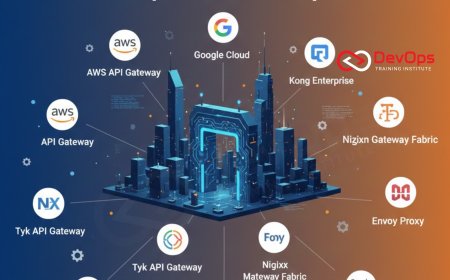
What role do API Gateways play in an event-driven microservices architecture?
API Gateways manage synchronous external traffic, but their logs and metrics can emit events (e.g., `high_error_rate_detected`) that trigger downstream asynchronous operational actions and self-healing mechanisms.
How does the observability pillar of metrics contribute to EDDO?
Metrics systems define alert thresholds that, when crossed, emit a critical event (e.g., `latency_spike_alert`) that instantly triggers automated incident response or diagnostics collection.
How does EDDO simplify toolchain integration?
Tools communicate via a central, standardized event bus, eliminating complex, hardcoded point-to-point connections and making it easy to swap out or upgrade individual components without impacting others.
Is EDDO limited to serverless functions?
No, while serverless is a popular choice, EDDO can trigger any form of automation, including containerized build agents, Kubernetes operators, or configuration management scripts.
How can EDDO help enforce RHEL 10 hardening best practices?
A host-level monitoring agent can emit a `config_drift_detected` event when a security setting changes, instantly triggering an automated process to pull the compliant configuration from Git and re-enforce the policy.
What is the benefit of asynchronous security scanning in EDDO?
It allows slow, deep security scans to run in the background without holding up faster stages of the deployment, ensuring that security is comprehensive but never a continuous bottleneck.
How does EDDO improve auditing?
Every action and state change is recorded as a time-stamped, traceable event on the bus, creating a complete and chronological audit trail that correlates application and infrastructure activities for compliance and forensics.
What kind of event would trigger a self-healing process?
Events such as `pod_crash_looping`, `database_connection_timeout`, or `disk_full_alert` would instantly trigger an automated runbook for remediation.
How does continuous threat modeling leverage EDDO?
Event data (e.g., failed logins, suspicious network activity) informs the threat model in real-time, triggering automated policy updates in security tools and strengthening guardrails dynamically against emerging patterns.
What are some practical events that can trigger CI/CD stages?
Events like `git_branch_merged`, `test_suite_passed`, `artifact_pushed_to_registry`, and `security_scan_complete` are commonly used to orchestrate the pipeline flow dynamically.
What's Your Reaction?
 Like
0
Like
0
 Dislike
0
Dislike
0
 Love
0
Love
0
 Funny
0
Funny
0
 Angry
0
Angry
0
 Sad
0
Sad
0
 Wow
0
Wow
0

![100+ Azure DevOps Interview Questions and Answers [Updated 2025]](https://www.devopstraininginstitute.com/blog/uploads/images/202509/image_140x98_68c40aa9a3834.jpg)






![Future Scope of DevOps Careers in Pune [Updated 2025]](https://www.devopstraininginstitute.com/blog/uploads/images/202510/image_140x98_68e3a84652312.jpg)