

![Kong Interview Preparation Guide [2025]](https://www.devopstraininginstitute.com/blog/uploads/images/202509/image_430x256_68dbb95326997.jpg)


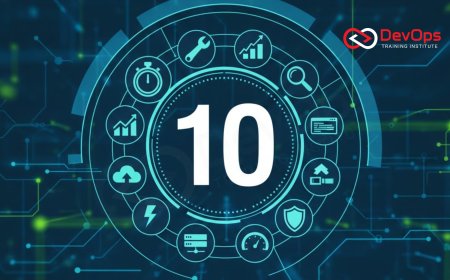
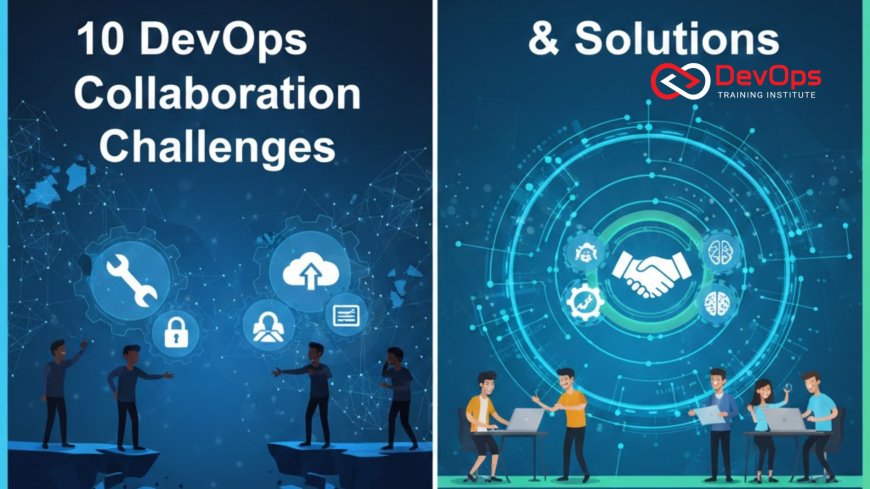
10 DevOps Collaboration Challenges & Solutions
In the fast-evolving landscape of 2026, the success of any engineering organization hinges on its ability to bridge the gap between development and operations. This guide identifies the ten most critical DevOps collaboration challenges that modern teams face, from siloed organizational structures and cultural resistance to tool sprawl and communication gaps between technical and non-technical stakeholders. Learn practical, high-impact solutions such as implementing "golden paths" through platform engineering, fostering blameless cultures, and leveraging AI-augmented collaboration tools. Discover how to align diverse team goals and build a resilient, cross-functional technical environment that accelerates software delivery and ensures high-quality production outcomes in today's demanding digital economy.
Introduction to the Collaborative DevOps Era
As we navigate through 2026, the definition of DevOps has shifted from a mere set of tools to a sophisticated cultural philosophy centered on unified ownership. Collaboration is no longer a secondary goal; it is the primary engine that drives rapid innovation and system stability in a multi-cloud world. However, despite the widespread adoption of automation, many organizations still struggle with the human and structural barriers that prevent development and operations teams from functioning as a single, cohesive unit. These challenges often lead to delayed releases, fragmented security controls, and a significant increase in technical debt.
Successfully overcoming these hurdles requires a strategic blend of organizational change and the right technical enablement. Modern engineering leaders are increasingly moving away from scattered, team-specific toolchains toward unified platforms that encourage transparency and shared responsibility. In this guide, we will explore ten of the most common collaboration pitfalls and provide actionable, professional solutions to help your team build a high-trust, high-velocity environment. By addressing these cultural change factors today, you can ensure that your DevOps journey leads to measurable business value and a superior experience for both your engineers and your customers.
Challenge One: Siloed Organizational Structures
The "wall of confusion" between development and operations remains one of the most persistent challenges in the industry. In siloed organizations, developers are incentivized to ship new features quickly, while operations teams are focused on maintaining system stability. These conflicting goals lead to friction, where code is "thrown over the wall" without regard for how it will behave in production. This lack of interaction results in poor visibility into cluster states and creates a blame-oriented environment where troubleshooting becomes a slow and reactive process rather than a collaborative one.
The solution lies in fostering cross-functional "engineering squads" where developers, operations, and security experts work together from the very beginning of a project. By creating shared goals and key performance indicators, such as the DORA metrics, you align the entire team toward a common vision of success. Implementing who drives cultural change initiatives helps transition from command-and-control management to a model of shared ownership. This structural shift ensures that operations context is built into the code and development agility is integrated into the infrastructure, leading to a much higher standard of software delivery.
Challenge Two: Resistance to Cultural Change
Technical tools can be updated overnight, but human habits often take years to change. Resistance to DevOps often stems from a fear of losing specialized roles or a lack of trust in automated processes. Senior engineers who have spent years perfecting manual workflows may view continuous synchronization as a threat to their job security or system integrity. This hesitation can lead to "shadow ops," where teams bypass the official automated pipelines to perform manual tweaks, ultimately causing configuration drift and making the entire system more fragile and difficult to manage.
To solve this, leadership must clearly communicate the benefits of DevOps—not just for the business, but for the engineers themselves. Highlighting how automation reduces "toil" and pager fatigue can win over skeptics. Providing the right training and fostering a blameless post-mortem environment are critical for building trust. When employees understand that mistakes are viewed as systemic opportunities for improvement rather than individual failures, they are more likely to embrace experimentation. This psychological safety is the foundation of a resilient technical culture where everyone feels empowered to innovate and contribute to the collective success of the organization.
Challenge Three: The Bottleneck of Tool Sprawl
In the rush to automate, many organizations fall victim to "Shiny Object Syndrome," where every team adopts its own preferred set of tools. This fragmentation leads to a disjointed toolchain that is difficult to secure and maintain. When the security team uses one scanning tool and the developers use another, the resulting reports are often inconsistent and confusing. This lack of a "single pane of glass" makes it nearly impossible to have a clear view of the overall deployment quality or the current state of reserved instance optimization, leading to wasted budget and increased risk across the cloud environment.
The solution is to standardize on a core set of "golden paths" through a centralized platform engineering team. By building an Internal Developer Platform (IDP), you provide a curated set of tools that handle continuous synchronization and compliance by default. This reduces the cognitive load on developers, allowing them to focus on code rather than infrastructure. Utilizing GitOps ensures that all tool configurations are version-controlled and auditable. Standardizing the toolchain doesn't mean limiting creativity; it means providing a stable, secure foundation that allows teams to scale their efforts without introducing unnecessary complexity or security vulnerabilities.
Challenge Four: Inconsistent Environments
The infamous "it worked on my machine" problem is a direct result of poor collaboration and environment inconsistency. When development, staging, and production environments are configured differently, code that passed all tests in one environment can fail spectacularly in another. This pitfall is often caused by manual infrastructure changes that aren't reflected in the official documentation. This lack of parity leads to late-stage bug discovery, delayed releases, and increased friction between the teams responsible for building and those responsible for running the software.
Implementing Infrastructure as Code (IaC) is the definitive fix for this challenge. By defining all environments in version-controlled scripts (using tools like Terraform or Ansible), you ensure that every instance of your infrastructure is an exact replica of the others. This promotes consistency and makes it easy to recreate environments for debugging. Furthermore, choosing a consistent runtime like containerd across all stages of the lifecycle ensures that the containerized applications behave identically everywhere. This technical alignment serves as a bridge for collaboration, providing a common ground for developers and operations to troubleshoot and optimize the system together.
DevOps Collaboration Challenges and Solutions
| Challenge | Primary Impact | Proposed Solution | Effort Level |
|---|---|---|---|
| Siloed Teams | Frequent Handoffs/Delays | Cross-functional Squads | High |
| Tool Sprawl | Inconsistent Controls | Platform Engineering / IDPs | Medium |
| Manual Testing | Slow Feedback Loops | Automated CI/CD Pipelines | Medium |
| Blame Culture | Fear of Innovation | Blameless Post-mortems | Low |
| Hidden Costs | Unexplained Cloud Spend | FinOps Integration | Medium |
Challenge Five: Communication Gaps with Non-Technical Teams
One of the most overlooked collaboration hurdles is the disconnect between DevOps engineers and non-technical stakeholders such as finance (FinOps) or product management. Finance teams often see cloud costs as a black box, while DevOps teams are focused on fast deployment cycles and may overlook fiscal responsibility. This misalignment can lead to "sticker shock" during the billing cycle and creates tension that slows down organizational momentum. Without a common language to discuss trade-offs between performance and cost, decision-making becomes fragmented and reactive.
To bridge this gap, organizations must integrate FinOps into the standard DevOps workflow. By providing dashboards that translate technical resource usage into business costs, you enable more informed decisions across the company. Utilizing ChatOps to deliver real-time cost alerts directly to the engineering channels ensures that everyone is aware of the financial impact of their cloud architecture patterns. This transparency fosters a sense of shared accountability and allows teams to proactively manage reserved instance optimization and cloud waste. It turns the technical operation into a business-aligned engine that contributes directly to the company's bottom line.
Challenge Six: Security as aStand-alone Team
Historically, security has been a separate, late-stage gate in the software delivery process, often leading to significant delays and friction. In a high-speed DevOps pipeline, this "bolt-on" security model is a major bottleneck. When a security team identifies vulnerabilities just hours before a scheduled launch, it results in rushed fixes and damaged relationships between the dev and security departments. This isolation also means that developers often lack the real-time context they need to write secure code from the start, increasing the overall risk of the application.
The solution is to "shift left" by adopting a DevSecOps model where security is integrated into every phase of the pipeline. By utilizing admission controllers, you can automatically enforce security policies at the cluster level. Integrating secret scanning tools into the CI/CD process catches credential leakage before it ever reaches a repository. Sharing the responsibility for security across all roles ensures that it is treated as a core feature rather than a separate task. This collaborative approach leads to a more resilient system and allows for faster, more confident releases that meet the highest standards of safety and compliance.
Techniques for Better DevOps Collaboration
- Blameless Retrospectives: Focus on uncovering systemic flaws rather than pointing fingers at individuals after an incident or deployment failure.
- Knowledge Sharing Workshops: Hold regular "lunch and learn" sessions where developers and operations staff can teach each other about their respective roles.
- Unified Messaging: Use tools like Slack or Microsoft Teams as a central hub for all alerts, deployment statuses, and technical discussions using ChatOps.
- Common Metrics: Establish a shared dashboard of DORA and SPACE metrics to track the health and productivity of the entire technical organization.
- Interactive Documentation: Keep environment specs and architectural decisions in a shared Wiki or "Docs as Code" format that is easily accessible to everyone.
- AI-Augmented Insights: Leverage observability 2.0 platforms that use AI to correlate data across logs and traces, providing a shared view of system behavior.
- Rotational Programs: Encourage engineers to spend time in different departments to gain a deeper empathy for the challenges faced by their colleagues.
Adopting these techniques requires a proactive effort from both engineers and leadership. It is about creating a "connected" organization where information flows freely and silos are naturally dismantled. By utilizing ChatOps techniques, you can ensure that critical alerts are never missed and that the right people are involved in incident resolution instantly. This real-time collaboration is what separates elite DevOps teams from the rest of the pack. It turns every technical challenge into a learning opportunity and every deployment into a shared victory for the entire company.
Conclusion: Unified Ownership for Long-term Success
In conclusion, the ten DevOps collaboration challenges discussed in this guide are not just technical problems; they are opportunities for organizational growth. By dismantling silos, standardizing tools, and fostering a blameless culture, you create a technical environment where innovation can truly flourish. The move toward unified ownership and shared accountability is the defining characteristic of modern engineering excellence. As systems become more complex and distributed, the ability of your team to work together as a single, cohesive unit will be your greatest competitive advantage in the digital-first economy of 2026.
As you move forward, consider how continuous verification can further enhance your collaborative efforts by providing real-time feedback on your deployment quality. Embracing release strategies that prioritize safety and transparency will ensure that your organization remains agile and resilient. The future of DevOps is collaborative, intelligent, and business-aligned. By prioritizing these ten solutions today, you are building a future-proof foundation that will support your organization through any technical or market challenge that lies ahead. The path to DevOps mastery is a shared journey—start taking those collective steps today.
Frequently Asked Questions
What is the primary goal of DevOps collaboration?
The main goal is to break down silos between development and operations to ensure faster, more reliable, and secure software delivery cycles.
How can blameless post-mortems improve team performance?
They encourage engineers to be open about mistakes, allowing the team to identify systemic issues and prevent future failures without fear of punishment.
What is a "golden path" in platform engineering?
A golden path is a standardized, self-service set of tools and workflows that allow developers to deploy services quickly and safely with minimal friction.
Why is "environment parity" critical for DevOps success?
Consistency across development, staging, and production ensures that code behaves as expected everywhere, reducing the risk of late-stage bugs and deployment failures.
How does ChatOps facilitate real-time collaboration?
It brings critical alerts and technical actions into shared chat channels, ensuring everyone has visibility and can coordinate incident responses instantly.
What role does leadership play in driving cultural change?
Leadership must provide the vision, budget, and psychological safety necessary for teams to transition from traditional silos to a collaborative DevOps model.
How do admission controllers support security collaboration?
They automate the enforcement of security policies at the cluster gate, ensuring that development and security goals are aligned without manual handoffs.
What are DORA metrics and why are they important?
DORA metrics measure deployment frequency, lead time, failure rate, and recovery time, providing a standardized way to evaluate DevOps team performance.
Can small teams benefit from an Internal Developer Platform?
Yes, even small teams benefit from standardizing their tools and workflows to reduce cognitive load and avoid the pitfalls of technical debt.
How does FinOps integrate with the DevOps lifecycle?
FinOps brings fiscal responsibility into the technical workflow, ensuring that cloud cost optimization is a shared goal alongside performance and speed.
What is the "shift-left" approach in DevSecOps?
It involves moving security testing and policy enforcement to the earlier stages of development to catch vulnerabilities before they reach production servers.
How do cross-functional squads improve deployment quality?
By including diverse expertise from the start, squads ensure that operational and security context is built into the application from day one.
What is configuration drift and how can it be prevented?
Drift is when environments deviate from their code; it is prevented by using Infrastructure as Code and automated reconciliation tools like GitOps.
Why is knowledge sharing important in a DevOps culture?
It prevents information silos and "single points of failure" by ensuring that multiple team members understand the entire lifecycle of the software.
What is the first step in resolving DevOps collaboration issues?
The first step is to establish open communication and identify shared goals that align the diverse interests of development, operations, and business units.
What's Your Reaction?
 Like
0
Like
0
 Dislike
0
Dislike
0
 Love
0
Love
0
 Funny
0
Funny
0
 Angry
0
Angry
0
 Sad
0
Sad
0
 Wow
0
Wow
0


![100+ Azure DevOps Interview Questions and Answers [Updated 2025]](https://www.devopstraininginstitute.com/blog/uploads/images/202509/image_140x98_68c40aa9a3834.jpg)






![Future Scope of DevOps Careers in Pune [Updated 2025]](https://www.devopstraininginstitute.com/blog/uploads/images/202510/image_140x98_68e3a84652312.jpg)