


![Kong Interview Preparation Guide [2025]](https://www.devopstraininginstitute.com/blog/uploads/images/202509/image_430x256_68dbb95326997.jpg)



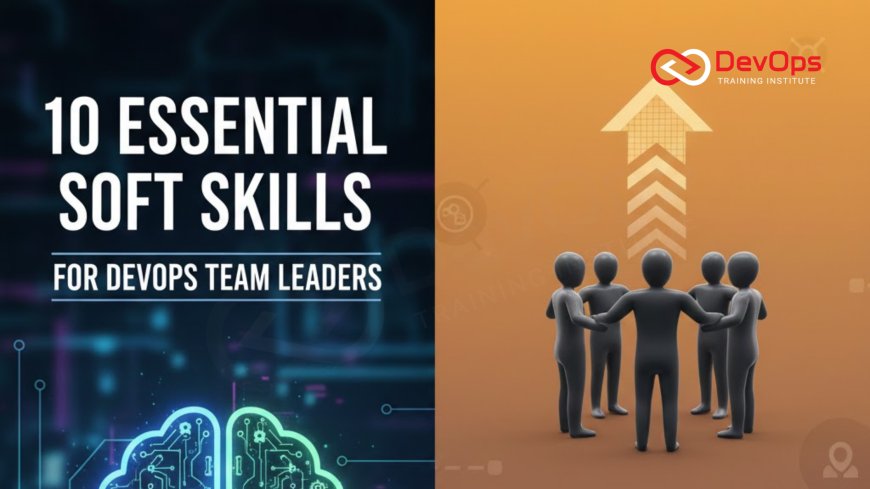
10 Essential Soft Skills for DevOps Team Leaders
As we navigate the technical landscape of 2026, the success of a DevOps team is determined more by its leadership's interpersonal capabilities than by their scripting prowess. This guide explores the ten essential soft skills for DevOps team leaders, focusing on empathy, conflict resolution, and the newly emerging field of context engineering for AI-enabled workflows. Learn how to foster a blameless culture, bridge the gap between complex engineering and business outcomes, and lead with emotional intelligence in a hybrid, automated world. Mastering these skills will allow you to reduce team burnout, improve deployment frequency, and drive a high-performance culture that thrives on continuous learning and mutual respect today.
Introduction to Human-Centric DevOps Leadership
In the rapidly accelerating world of 2026, the traditional image of a technical lead focused solely on code and infrastructure is becoming obsolete. As automation and artificial intelligence handle the mechanical aspects of CI/CD and cluster management, the true value of a leader shifts toward the human element. DevOps is, at its heart, a cultural movement aimed at breaking down silos and fostering collaboration. For a team leader, this means that the ability to listen, empathize, and communicate is just as critical as knowing how to manage a Kubernetes cluster or a complex multi-cloud environment.
Leading a DevOps team in this era requires a delicate balance between technical vision and emotional intelligence. Leaders must navigate high-pressure incidents, manage diverse personalities across hybrid environments, and align technical goals with broader business objectives. By focusing on these ten essential soft skills, you can move beyond being a "manager of tasks" to becoming a "leader of people." This transition is vital for reducing turnover, sparking innovation, and ensuring that your team remains agile and resilient in a digital landscape where the only constant is change. It is about building a foundation of trust that allows technology to thrive.
Skill One: Context Engineering and AI Oversight
A newly emerging and vital skill for 2026 is context engineering. As DevOps teams increasingly rely on Large Language Models (LLMs) and agentic AI to supervise the software lifecycle, the leader’s role becomes one of "context provider." This involves more than just writing prompts; it is about providing the AI with the deep background, supporting documents, and system constraints needed to produce accurate and safe results. A leader must be able to frame technical problems in a way that AI can solve them without "hallucinating" or introducing security vulnerabilities into the continuous synchronization pipeline.
Beyond the technical side, context engineering requires a leader to translate business needs into technical requirements for both the AI and the human engineers. You must be able to explain "the why" behind a specific architectural choice so that the team can evaluate the AI's output with a critical eye. This skill combines strategic thinking with technical oversight, ensuring that the team doesn't become over-reliant on automated tools. By mastering context engineering, you ensure that your team remains the ultimate judge of quality and security, even as they leverage the most advanced automation tools available in the industry today.
Skill Two: Empathy and Emotional Intelligence (EQ)
Empathy is often called the "DevOps superpower" because it is the primary tool for breaking down silos between development, operations, and security. A leader with high emotional intelligence can sense when a team member is reaching the point of burnout or when a cross-departmental conflict is brewing. In the high-stakes world of 2026, where deployments happen thousands of times a day, the ability to support your colleagues during an incident handling crisis without assigning blame is what keeps a team together. Empathy allows you to see a problem from the perspective of a developer facing a deadline or an operations engineer managing a 2 AM outage.
Building EQ involves active listening and self-awareness. It means staying calm under pressure so that your team feels safe to communicate honestly about failures. When a leader models empathy, it trickles down, creating a psychological safety net where engineers are comfortable taking risks and proposing innovative solutions. This shift in cultural change is what transforms a group of talented individuals into a high-performance squad. By prioritizing the well-being and perspectives of your people, you create a loyal and motivated team that can handle any technical challenge with a sense of shared purpose and mutual respect.
Skill Three: Conflict Resolution and De-escalation
In any cross-functional environment, conflicts are inevitable. Whether it is a disagreement over tool selection or a "blame game" following a production outage, a DevOps leader must be a master mediator. Conflict resolution in 2026 is about shifting the conversation from "who caused this?" to "how do we fix this and prevent it?" This requires the ability to de-escalate high-emotion situations and guide the team toward a solution-oriented mindset. You must be able to manage the friction that naturally arises when different departments with different priorities are forced to collaborate closely on a single cluster states goal.
Effective conflict management also involves addressing "hidden" tensions before they erupt. This means having frequent one-on-one meetings and fostering an environment of open feedback. A leader should be able to facilitate "blameless retrospectives" where the focus is entirely on process improvement rather than individual punishment. By treating every conflict as a learning opportunity, you strengthen the team's dynamics and ensure that disagreements lead to better technical outcomes rather than lingering resentment. This skill is essential for maintaining the system resilience needed to survive in a fast-paced, high-pressure cloud native environment.
Soft Skills for DevOps Leadership Comparison
| Soft Skill | DevOps Impact | 2026 Trend Factor | Primary Outcome |
|---|---|---|---|
| Context Engineering | Better AI Outcomes | Extreme (AI-first) | Accurate Automation |
| Empathy | Silo Breaking | High (Hybrid Work) | Team Loyalty/Retention |
| Conflict Resolution | Faster MTTR | Medium (Cross-team) | Continuous Improvement |
| Storytelling | Stakeholder Buy-in | High (Business Alignment) | Project Funding/Approval |
| Adaptability | Toolchain Evolution | Extreme (Rapid Change) | Future-proof Operations |
Skill Four: Strategic Communication and Storytelling
As a DevOps leader, you often serve as the bridge between deep technical engineering and high-level business strategy. Being able to explain complex systems to non-technical stakeholders is a critical skill. Strategic communication involves more than just reporting uptime percentages; it is about storytelling. You must be able to frame a cloud architecture patterns upgrade not just as a technical necessity, but as a direct lever for reducing time-to-market or improving customer retention. This "translation" skill is essential for securing the budget and support needed for long-term platform improvements.
Effective storytelling also applies internally. A leader must be able to share a compelling technical vision that motivates the team through difficult migrations or architectural shifts. By using real-world examples and clear narratives, you can make abstract goals feel concrete and achievable. This builds a shared sense of ownership and pride in the team's work. When you can articulate the "why" in a way that resonates with both an executive and a junior developer, you become a powerful driver of cultural change and innovation across the entire organization, ensuring that your DevOps initiatives are seen as a business value center rather than just a cost.
Skill Five: Adaptability and Continuous Learning
In the DevOps world, the toolchain you use today will likely be obsolete in eighteen months. Adaptability is therefore a mandatory survival trait for any leader. This skill involves more than just a willingness to learn new tools; it is a "growth mindset" that embraces change as an opportunity rather than a threat. A leader must be the first to experiment with emerging trends in ai augmented devops and encourage the team to do the same. By promoting a culture of continuous learning, you ensure that your team's skills remain relevant and that your infrastructure remains competitive.
Adaptability also means being resilient in the face of failure. In 2026, the complexity of cloud native systems means that outages are inevitable. An adaptable leader doesn't panic when a "quick fix" breaks the production environment; instead, they stay calm, pivot, and lead the team through the recovery process. This resilience sets the tone for the rest of the squad. By modeling how to bounce back from setbacks and learn from mistakes, you build a team that is not only technically proficient but also emotionally robust and ready to handle the unpredictable challenges of a busy digital environment with confidence and ease.
Developing Your Soft Skill Toolkit
- Practice Active Listening: Focus on understanding the speaker's perspective before formulating your own response during team meetings.
- Volunteer for Cross-Department Projects: This is the best way to build empathy for other teams and understand their unique constraints.
- Master Written Clarity: In a world of remote and asynchronous work, being able to write clear, concise documentation and incident notes is a vital soft skill.
- Seek and Provide Regular Feedback: Move away from annual reviews and foster a culture of continuous, constructive feedback to drive growth.
- Study Modern Leadership Frameworks: Explore Situational and Adaptive leadership models to better handle the diverse challenges of 2026.
- Incorporate Transparency: Share as much information as possible about business goals and technical roadmaps to build trust with your engineering squads.
- Verify with Mentorship: Use coaching as a way to scale your own knowledge and empower the next generation of DevOps leaders in your organization.
Improving these skills is an iterative process that requires dedicated time and reflection. It is helpful to treat your own leadership development with the same rigor you apply to your release strategies. Set goals, measure your progress, and don't be afraid to ask for feedback from your team. By utilizing ChatOps techniques for internal communication, you can keep the lines of dialogue open and ensure that your leadership is as responsive and agile as the systems you manage. The ultimate goal is to create a "paved road" for your team to succeed both technically and personally in a complex global market.
Conclusion: Leading the DevOps Superhuman
In conclusion, the ten essential soft skills for DevOps team leaders in 2026 mark a shift toward a more human-centered and AI-aware style of management. From the technical oversight of context engineering to the deep interpersonal work of empathy and conflict resolution, these skills are what define a successful leader today. By prioritizing the "human" side of engineering, you create a culture that is not only faster and more secure but also more innovative and resilient. As technology continues to evolve, your ability to lead, mentor, and inspire will remain your greatest competitive advantage in the digital world.
Looking toward the future, the integration of AI-augmented leadership tools will likely provide even more support for decision-making and team management. Staying informed about which release strategies enable faster time to market will ensure your technical vision stays sharp. Ultimately, the success of your DevOps team is a direct reflection of your ability to handle humans as well as you handle YAML. By mastering these ten soft skills today, you are preparing yourself to lead the next generation of engineers and drive meaningful, long-term impact for your business and the people who make it possible.
Frequently Asked Questions
What is context engineering in a DevOps leadership context?
It is the skill of providing AI tools with the necessary background and constraints to ensure automated outputs are safe, accurate, and business-aligned.
Why is empathy considered a core DevOps skill?
Empathy is essential for breaking down silos between developers and operations teams, fostering the collaboration needed for successful and rapid software delivery.
How can a leader promote a blameless culture?
By conducting retrospectives that focus on identifying system and process failures rather than pointing fingers at individual engineers after a production incident.
Does a DevOps leader still need to be technically proficient?
Yes, foundational technical knowledge is vital for evaluating AI-generated outputs and providing the right context for complex engineering and architectural decisions.
What is the benefit of storytelling for an engineering manager?
Storytelling helps translate technical needs into business value, making it easier to secure stakeholder buy-in and funding for long-term infrastructure and platform projects.
How can I improve my conflict resolution skills?
Practice active listening, assume positive intent, and always steer the conversation toward finding solutions rather than dwelling on the cause of the problem.
What role does adaptability play in 2026 DevOps?
Adaptability is critical for keeping up with the rapid evolution of cloud-native toolchains and remaining resilient during unpredictable system failures and market shifts.
Why is transparent communication important for remote teams?
Transparency builds trust and ensures that everyone is aligned on goals, timelines, and responsibilities, which is essential for maintaining productivity in hybrid environments.
Can soft skills be learned or are they innate?
Soft skills can definitely be learned through practice, feedback, and study of leadership frameworks like emotional intelligence and adaptive management models.
How does mentorship benefit a DevOps team leader?
Mentorship allows you to scale your impact by empowering junior engineers, which ultimately reduces your own operational burden and improves team resiliency.
What is "vibe coding" and how does a leader oversee it?
Vibe coding involves using AI to supervise the entire lifecycle; a leader provides the high-level oversight and judgment to ensure the "vibe" is safe.
How do I balance authority with empathy in leadership?
Leading with empathy involves understanding the needs of your team, which actually builds the trust and respect necessary for effective authority when needed.
What is the impact of poor soft skills on a DevOps team?
Poor soft skills lead to communication breakdowns, increased silos, lower morale, and ultimately slower deployments and higher change failure rates for the business.
How can ChatOps improve team dynamics?
ChatOps brings communication and technical actions into shared channels, increasing transparency and ensuring everyone has real-time visibility into the system's current state.
What is the first soft skill a new leader should focus on?
The first skill to master is active listening, as it is the foundation for empathy, conflict resolution, and effective communication across all technical levels.
What's Your Reaction?
 Like
0
Like
0
 Dislike
0
Dislike
0
 Love
0
Love
0
 Funny
0
Funny
0
 Angry
0
Angry
0
 Sad
0
Sad
0
 Wow
0
Wow
0

![100+ Azure DevOps Interview Questions and Answers [Updated 2025]](https://www.devopstraininginstitute.com/blog/uploads/images/202509/image_140x98_68c40aa9a3834.jpg)






![Future Scope of DevOps Careers in Pune [Updated 2025]](https://www.devopstraininginstitute.com/blog/uploads/images/202510/image_140x98_68e3a84652312.jpg)