








![Kong Interview Preparation Guide [2025]](https://www.devopstraininginstitute.com/blog/uploads/images/202509/image_430x256_68dbb95326997.jpg)




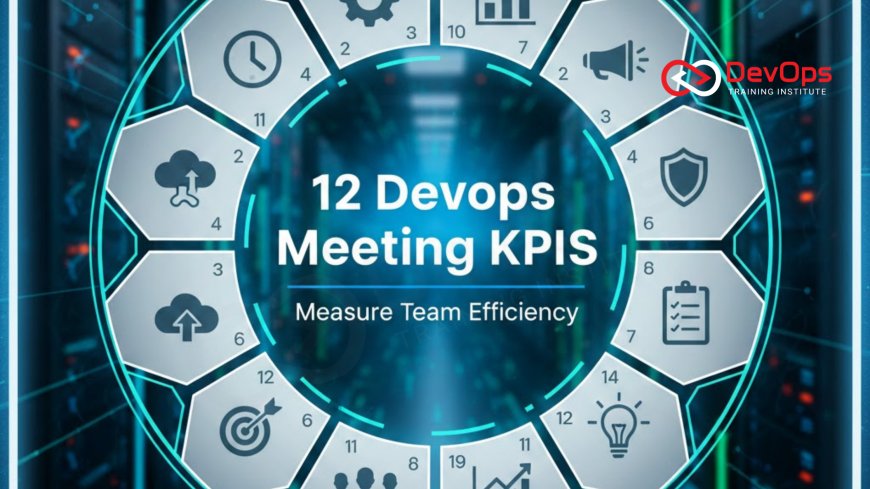
12 DevOps Meeting KPIs to Measure Team Efficiency
Optimize your engineering culture by tracking the twelve most critical DevOps meeting KPIs designed to measure and improve team efficiency in twenty twenty six. This comprehensive guide provides beginner friendly insights into balancing collaboration with deep work by monitoring meeting density, action item completion, and the overall return on time invested. Learn how to identify meeting fatigue, reduce context switching, and ensure that every synchronous session adds tangible value to your software delivery lifecycle. Discover the best practices for data driven communication that empowers modern DevOps teams to stay focused, agile, and highly productive in an increasingly complex and fast paced digital landscape today.
Introduction to DevOps Communication Metrics
In the world of DevOps, speed and automation are often the primary focus, yet the human element of collaboration remains the most significant driver of success. Meetings are essential for alignment, but when left unmanaged, they can become a silent killer of productivity and engineering flow. Measuring the efficiency of these interactions is not about micromanagement; it is about ensuring that the team has the necessary time for deep work while maintaining clear lines of communication. By applying a data driven approach to meetings, organizations can foster a culture that values time as a finite and precious resource.
As we navigate the complexities of twenty twenty six, the boundary between "working" and "talking about work" has blurred. DevOps teams must balance the need for rapid incident handling discussions with the requirement for long periods of uninterrupted focus to build stable systems. Establishing clear Key Performance Indicators (KPIs) for meetings allows leadership to identify bottlenecks in the collaborative process and make informed adjustments. This guide explores the twelve most impactful metrics that provide a window into your team’s internal health and their ability to deliver high quality software without burning out.
Tracking Meeting Density and Frequency
Meeting density refers to the percentage of an engineer's work week spent in synchronous meetings versus the time available for actual coding and system management. In a high performing DevOps environment, excessive density is often a leading indicator of project friction or unclear documentation. If a team is spending more than thirty percent of their time in meetings, it may be a sign that their continuous synchronization efforts are relying too heavily on human conversation rather than automated systems and clear written processes. Tracking this metric helps preserve the "paved road" for developers.
Frequency is the other side of this coin, looking at how often the flow of work is interrupted by scheduled sessions. Frequent, short meetings can be just as disruptive as one long meeting due to the high cost of context switching. It takes an average of twenty three minutes for an engineer to return to a state of deep focus after an interruption. By monitoring these patterns, team leads can implement "no meeting days" or "silent blocks" to protect the team's most productive hours. This metric is a vital component of driving cultural change toward a more respectful and efficient use of shared time.
Measuring Action Item Completion Rates
The ultimate goal of any meeting is to reach a decision or spark an action. If a meeting ends without clear next steps, it is often considered a failure of the collaborative process. Tracking the Action Item Completion Rate provides a direct measure of how effective your synchronous time truly is. This KPI monitors the percentage of tasks assigned during a meeting that are successfully completed before the next scheduled session. A high completion rate suggests that the meetings are resulting in meaningful progress and that the participants are aligned on their responsibilities.
Conversely, a low completion rate might indicate that the meetings are too long, the goals are unrealistic, or the participants are simply the wrong people to be in the room. This metric encourages a more disciplined approach to meeting agendas and minutes. It ensures that the time spent discussing cluster states or deployment hurdles actually leads to technical resolutions rather than just more talk. Using automated tools to track these items directly within your project management software can provide real time visibility into this KPI, allowing for immediate feedback and continuous improvement of the team's collaborative output.
Assessing Return on Time Invested (ROTI)
Return on Time Invested is a subjective but powerful metric where participants rate the value of a meeting relative to the time they spent in it. At the end of a session, a simple poll can ask attendees if the meeting was a "good use of time" or if the information could have been shared through an email or a chat bot. This qualitative data is essential for identifying "low value" recurring meetings that have simply become a habit rather than a necessity. It empowers every team member to provide honest feedback on the effectiveness of the organization's communication strategies.
Consistently low ROTI scores for a specific meeting type should trigger an immediate review of its format, frequency, or necessity. In a modern technical environment, many status updates can be offloaded to AI augmented devops tools that provide real time dashboards, making the meeting redundant. High ROTI scores, on the other hand, highlight the types of interactions that the team finds most valuable, such as post mortems or complex architectural brainstorming. By prioritizing high ROTI sessions, you ensure that the team stays engaged and that their collaborative energy is spent on the most impactful tasks for the business and the infrastructure.
Comparison of DevOps Meeting KPIs
| KPI Name | Measurement Goal | Ideal Direction | Difficulty to Track |
|---|---|---|---|
| Meeting Density | Time spent in meetings | Decreasing | Low |
| Context Switching Cost | Interruption frequency | Decreasing | Medium |
| Action Item Rate | Productivity of sessions | Increasing | Medium |
| ROTI Score | Perceived value | Increasing | Low |
| Meeting Attendance | Participant relevance | Optimizing | Low |
The Impact of Context Switching and Fragmented Time
Context switching is perhaps the single most expensive "tax" on engineering productivity. When a DevOps engineer has to jump from a deep debugging session into a standing meeting and then back again, they lose significant cognitive momentum. Measuring the amount of "fragmented time"—blocks of focus shorter than ninety minutes—provides a clear picture of how much potential output is being lost to a cluttered calendar. This KPI is directly linked to the team's ability to maintain high quality architecture patterns and robust automation scripts.
To optimize this, teams can use "meeting clustering," where all necessary synchronous time is grouped into a single afternoon, leaving the rest of the week open for deep work. Tracking the success of these scheduling changes allows you to quantify the improvement in team output. It also highlights the importance of using asynchronous communication for non critical updates. By reducing the frequency of interruptions, you allow your most talented engineers to stay in the "flow state" longer, which leads to better code, fewer bugs, and a more resilient production environment overall. It is a win for both the business and the individual contributors' mental health.
Analyzing Post-Mortem and Incident Review Quality
In the DevOps world, the post mortem meeting is one of the most critical sessions a team can have. However, if these meetings become repetitive or fail to identify root causes, they lose their effectiveness. A key KPI is the "Incident Recurrence Rate," which measures how often the same type of failure occurs after a post mortem has been conducted. If the same issues keep appearing, it suggests that the meetings are not successfully driving the necessary continuous verification or that the resulting action items are not being implemented effectively.
Another metric is the "Time to Insight," which tracks how quickly a team can move from an incident to a documented learning that can be shared across the organization. High quality post mortems should result in updated admission controllers or new automated tests to prevent a repeat performance. By measuring the quality and outcome of these reviews, you ensure that the team is truly learning from its mistakes. It turns a stressful incident into a valuable training opportunity that improves the long term stability of your systems. This is the essence of a mature, blameless DevOps culture that values continuous improvement above all else.
Best Practices for Measuring Meeting Efficiency
- Define Clear Agendas: Every meeting must have a pre-distributed agenda; track the percentage of meetings that fail to meet this basic requirement.
- Audit Recurring Sessions: Conduct a quarterly review of all recurring meetings to see if they still meet high ROTI standards for the team.
- Minimize Participant Counts: Use the "Two Pizza Rule" to keep meetings small; track the average number of attendees per session to avoid bloat.
- Adopt Async First: Encourage the use of written status updates; track the volume of status-only meetings that are successfully converted to email or chat.
- Use Silent Meetings: Experiment with meetings where the first ten minutes are spent reading a document in silence to ensure everyone is starting with the same context.
- Scan for Hidden Costs: Utilize secret scanning tools to ensure that meeting recordings or transcripts don't accidentally leak sensitive internal information or credentials.
- Monitor Delivery Speed: Correlate your meeting KPIs with your release strategies and DORA metrics to see how communication patterns impact delivery frequency.
Integrating these best practices into your operational routine will naturally lead to more productive and less frequent meetings. It is important to treat these KPIs as insights, not as targets for punishment. The goal is to create an environment where engineers feel their time is respected and where the organization can move quickly without losing alignment. As you gather more data, you may find that certain AI augmented devops trends allow you to automate even more of your communication, further freeing up your team for innovation. The most successful DevOps teams are those that communicate efficiently, leaving the majority of their time for building the future.
Conclusion: Balancing Talk and Tech in Twenty Twenty Six
In conclusion, the twelve DevOps meeting KPIs discussed here provide a comprehensive framework for measuring and improving team efficiency. By shifting the focus from the quantity of meetings to the quality of their outcomes, you can build a more agile and productive engineering organization. Whether it is through reducing context switching, increasing the ROTI, or ensuring that post mortems lead to real technical changes, every improvement in your communication flow directly impacts your system stability. The journey to efficient collaboration is an ongoing process of measurement, feedback, and adjustment that reflects the core DevOps principle of continuous improvement.
As we move further into twenty twenty six, the role of continuous verification in our collaborative processes will only grow. The ability to distinguish between productive alignment and wasteful overhead is a hallmark of a mature technical leader. By embracing these twelve KPIs today, you are giving your team the gift of time—time to think, time to build, and time to innovate. Respect your engineers' focus, value their synchronous contributions, and watch as your team's morale and technical output reach new heights in the modern, fast paced digital world where efficiency is the ultimate competitive advantage.
Frequently Asked Questions
What is the most important KPI for measuring meeting efficiency?
While all are valuable, the ROTI score is often the most revealing as it provides direct feedback on the perceived value of the meeting.
How much time should DevOps engineers ideally spend in meetings?
Ideally, engineers should spend less than fifteen to twenty percent of their week in meetings to maintain sufficient time for deep technical work.
What is context switching and why is it expensive?
Context switching is the mental energy required to shift between different tasks, which significantly reduces productivity and increases the likelihood of errors.
How can I reduce the number of meetings my team has?
Adopt an "async-first" communication culture where status updates are shared via documentation or chat instead of in-person meetings whenever possible.
Should every meeting have a written agenda?
Yes, an agenda ensures that the meeting stays on track and that all participants know what is expected of them beforehand.
What is the "Two Pizza Rule" in meetings?
It is a rule popularized by Amazon suggesting that no meeting should have more people than can be fed by two pizzas to ensure focus.
Can AI tools help in reducing DevOps meetings?
Yes, AI can summarize long chat threads, provide automated status reports, and even draft meeting minutes, reducing the need for manual updates.
What should I do if a recurring meeting has a low ROTI?
You should immediately review the meeting's purpose and consider either canceling it, changing its format, or moving it to an asynchronous channel.
How does meeting frequency affect engineering morale?
High meeting frequency can lead to burnout and frustration, as engineers feel they are unable to complete their primary technical responsibilities during work hours.
What is a "No Meeting Day"?
It is a designated day of the week where no internal meetings are scheduled, allowing the entire team to focus on deep work without interruption.
Does meeting efficiency impact software release speed?
Absolutely, more efficient communication leads to faster decision-making and fewer delays, which directly improves the overall velocity of your software releases.
How do I track meeting density without spying on employees?
You can use aggregated calendar data or simple self-reporting tools that focus on the team's overall trends rather than individual performance metrics.
What is a "Silent Meeting" and how does it work?
Participants spend the first part of the meeting reading a shared document and adding comments in silence before starting the verbal discussion.
Why are post-mortems essential DevOps meetings?
They provide a structured environment to learn from failures and implement technical changes that prevent the same issues from occurring in the future.
How often should I audit our team's meeting KPIs?
You should review these KPIs at least once a quarter to ensure that your communication habits are evolving alongside your team's needs.
What's Your Reaction?
 Like
0
Like
0
 Dislike
0
Dislike
0
 Love
0
Love
0
 Funny
0
Funny
0
 Angry
0
Angry
0
 Sad
0
Sad
0
 Wow
0
Wow
0





![100+ Azure DevOps Interview Questions and Answers [Updated 2025]](https://www.devopstraininginstitute.com/blog/uploads/images/202509/image_140x98_68c40aa9a3834.jpg)






![Future Scope of DevOps Careers in Pune [Updated 2025]](https://www.devopstraininginstitute.com/blog/uploads/images/202510/image_140x98_68e3a84652312.jpg)