


![Kong Interview Preparation Guide [2025]](https://www.devopstraininginstitute.com/blog/uploads/images/202509/image_430x256_68dbb95326997.jpg)
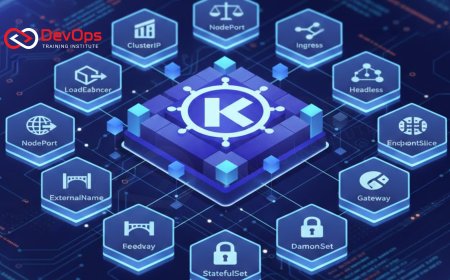


12 Kubernetes CRDs That Make Life Easier
Discover the most impactful Kubernetes Custom Resource Definitions that are currently simplifying complex container orchestration for engineering teams around the globe. This detailed guide explores how extending the native Kubernetes API allows you to automate infrastructure management, enhance security protocols, and streamline application deployments with ease. Learn about the specific tools that reduce manual configuration and provide a more intuitive developer experience while maintaining high standards of reliability and performance. Master these essential extensions to unlock the full potential of your clusters and transform how your organization manages distributed systems at scale in the modern cloud era today.
Understanding the Power of Custom Resource Definitions
Kubernetes has become the operating system of the cloud because of its incredible extensibility. At the heart of this flexibility lies the Custom Resource Definition, or CRD. A CRD allows you to define your own unique objects within the Kubernetes API, effectively teaching the cluster how to manage specialized resources that do not exist out of the box. Instead of being limited to standard building blocks like Pods and Services, developers can create custom abstractions for things like databases, SSL certificates, or even entire cloud infrastructure components. This capability turns Kubernetes into a universal control plane for almost any technical resource imaginable.
The beauty of using CRDs is that they follow the same declarative model as native Kubernetes objects. When you create a custom resource, you are telling the cluster what the desired state should be, and a specialized controller works in the background to make that state a reality. This consistency means that your existing tools for auditing, security, and deployment will work seamlessly with your new custom extensions. By leveraging these powerful tools, teams can automate complex operational logic that used to require manual intervention or brittle external scripts. It is a fundamental shift toward more intelligent and self healing infrastructure management.
Automating Security and Certificates with ease
One of the most widely used CRDs in the modern ecosystem is cert manager. Managing SSL and TLS certificates manually is a notoriously difficult and error prone task that often leads to unexpected downtime when a certificate expires. Cert manager introduces CRDs like Certificates and Issuers into your cluster, allowing you to automate the entire lifecycle of your security credentials. You simply define a certificate object in a YAML file, and the controller handles the request, renewal, and distribution of the keys to your applications. This ensures that your encrypted communication is always valid without any human effort required.
Beyond simple certificate management, security focused CRDs allow you to define fine grained access policies and network rules. For instance, tools like Calico or Cilium use custom resources to provide advanced networking capabilities that go far beyond the default Kubernetes network policies. These extensions allow you to define security rules based on service identity rather than just IP addresses, which is crucial for maintaining a zero trust environment. By using these specialized resources, you can ensure that your cluster states remain secure and compliant even as your application architecture becomes increasingly complex and distributed across multiple cloud regions.
Simplifying Database Management and State
Running stateful applications like databases on Kubernetes used to be a significant challenge. However, the rise of the Operator pattern and CRDs has changed the landscape entirely. Tools like the Postgres Operator or the MongoDB Community Operator allow you to treat a complex database cluster as a single Kubernetes object. When you need a new database, you don't have to manually configure storage, replicas, and backups. Instead, you create a custom resource that describes your requirements, and the operator handles the heavy lifting of provisioning and maintaining the database throughout its entire lifecycle.
These database CRDs often include built in logic for automated backups, point in time recovery, and seamless version upgrades. This level of automation reduces the risk of human error during critical maintenance tasks and allows developers to self serve their data needs without waiting for a dedicated database administrator. It also makes it much easier to implement continuous verification of your data integrity and availability. By abstracting away the operational complexity of stateful services, these custom resources allow engineering teams to focus more on building features and less on the underlying plumbing of their data storage layers.
Extending Kubernetes to External Cloud Resources
Crossplane is a revolutionary project that uses CRDs to manage resources outside of the Kubernetes cluster. With Crossplane, you can define cloud services like AWS S3 buckets, Azure SQL databases, or Google Cloud Pub Sub topics as Kubernetes objects. This allows you to manage your entire infrastructure using the same tools and workflows you use for your applications. It effectively eliminates the need to switch between different CLI tools or web consoles when provisioning resources. This unified approach to management is a key driver of cultural change within organizations moving toward full platform engineering models.
Using CRDs for external resources also brings the benefits of Kubernetes reconcilliation to your infrastructure. If someone manually changes a setting in the cloud console, the controller will detect the drift and automatically change it back to match the state defined in your Git repository. This ensures that your infrastructure remains consistent and prevents the dreaded configuration drift that often plagues large scale cloud environments. By integrating your cloud providers directly into the Kubernetes API, you create a powerful, single source of truth for your entire technical estate. This makes it easier for teams to implement admission controllers that govern both internal and external resources simultaneously.
Essential Kubernetes CRDs for Modern Teams
| CRD Tool Name | Category | Main Benefit | Popularity |
|---|---|---|---|
| Cert-manager | Security | Automated SSL renewals | Extremely High |
| Prometheus-Operator | Observability | Simplified monitoring setup | High |
| ArgoCD | GitOps | Declarative deployments | Very High |
| Istio | Service Mesh | Advanced traffic control | High |
| ExternalDNS | Networking | Auto DNS record updates | Medium |
Streamlining GitOps and Application Delivery
GitOps has become the gold standard for deploying applications to Kubernetes, and it relies heavily on custom resources to function. Tools like ArgoCD and FluxCD introduce CRDs that represent the connection between a Git repository and a cluster namespace. By defining an Application or a Kustomization resource, you are telling Kubernetes to watch a specific Git path and apply any changes found there automatically. This eliminates the need for manual kubectl commands and ensures that your production environment is always a perfect reflection of your version controlled code. This approach significantly reduces the risk of unauthorized changes and provides a clear audit trail for every deployment.
These GitOps tools also provide powerful visualization features through their custom resources, making it easy for developers to see the health and status of their deployments at a glance. When a deployment fails, the CRD status will often provide detailed error messages that help with incident handling and rapid troubleshooting. By using continuous synchronization, teams can achieve a much higher deployment frequency with fewer errors. This model also makes it incredibly easy to roll back to a previous state simply by reverting a commit in Git. It is a robust and scalable way to manage thousands of microservices across multiple clusters without losing control of the environment.
Advanced Traffic Management with Service Meshes
As microservices grow in number, managing the communication between them becomes a major operational burden. Service meshes like Istio or Linkerd use CRDs to provide advanced traffic management features like canary releases, blue green deployments, and circuit breaking. Instead of hardcoding these features into your application, you define them using custom resources like VirtualServices and DestinationRules. This allows you to control how traffic flows through your system with incredible precision, enabling you to test new versions of your software on a small percentage of users before a full rollout. This is a vital part of modern release strategies that prioritize safety and speed.
Service mesh CRDs also provide deep observability into your network traffic without requiring any changes to your application code. They can automatically collect metrics and traces for every request, giving you a complete map of how your services interact. This visibility is essential for identifying performance bottlenecks and security vulnerabilities in a complex distributed system. By leveraging these custom extensions, you can implement sophisticated incident handling logic that automatically reroutes traffic away from failing services. This level of control ensures that your application remains highly available even when individual components are experiencing issues, providing a better experience for your end users.
Scaling and Optimizing Cluster Resources
Managing the resource requirements of hundreds of pods is a difficult balancing act. If you allocate too little memory, your applications will crash; if you allocate too much, you are wasting money on unused cloud capacity. CRDs like the Vertical Pod Autoscaler or the Carpenter project for AWS help automate this optimization process. These tools use custom resources to observe the actual usage of your applications and automatically adjust the resource requests or even provision new nodes that better match your workload requirements. This dynamic adjustment ensures that your cluster is always running at peak efficiency, which is a core goal of any architecture patterns designed for the cloud.
Using these scaling CRDs also reduces the cognitive load on developers, as they no longer need to perfectly predict the resource needs of their applications. The system learns from real world data and makes adjustments in real time. This is particularly important for applications with unpredictable traffic patterns, such as those that experience sudden spikes during marketing events or seasonal sales. By automating the underlying infrastructure management, you free up your team to focus on higher value tasks. It is also important to consider the choice of containerd or other runtimes when optimizing for speed and resource density, as these lower level components play a significant role in how efficiently your custom resources can be managed by the cluster.
Conclusion on Kubernetes Extensibility
In conclusion, Kubernetes CRDs are the secret sauce that transforms a standard container orchestrator into a powerful and highly customized automation platform. By leveraging these extensions, you can automate everything from security certificates and database management to external cloud resources and advanced traffic routing. This not only makes the life of a DevOps engineer much easier but also provides a more consistent and reliable environment for developers to build and ship software. As you continue to explore the vast ecosystem of available operators and custom resources, remember that the goal is always to reduce manual work and increase the resilience of your systems.
Looking ahead, the role of AI augmented devops will likely lead to even more intelligent CRDs that can self optimize based on complex predictive models. Integrating emerging trends into your cluster management strategy will ensure that you remain at the forefront of the industry. Whether you are improving your secret scanning tools integration or fine tuning your release strategies, CRDs provide the flexible framework you need to succeed. By embracing these 12 essential tools today, you are building a future proof infrastructure that can adapt to any challenge the digital world throws your way. The power of Kubernetes is truly limited only by the custom definitions you choose to implement.
Frequently Asked Questions
What exactly is a Kubernetes CRD in simple terms?
A CRD is a way to extend the Kubernetes API by creating custom objects that behave like built in resources like Pods.
Do I need to be a programmer to use CRDs?
No, you typically use them by writing YAML files, though creating your own custom controller does require some programming knowledge today.
Is there a performance penalty for using many CRDs?
While each CRD adds some overhead to the API server, modern clusters can handle hundreds of custom resources without significant performance issues.
How do I find high quality CRDs for my cluster?
The best place to look is Artifact Hub or GitHub, where many reputable open source projects provide well maintained operators and CRDs.
Can I delete a CRD once it is installed?
Yes, but be careful as deleting a CRD will also delete all of the custom resource objects that were created using it.
Are CRDs specific to a single cloud provider?
Most CRDs are cloud agnostic, although some like Crossplane have specific providers for AWS, Azure, and Google Cloud to manage their resources.
How do CRDs help with security and compliance?
CRDs allow you to define security policies as code, which can then be automatically enforced and audited by the Kubernetes control plane.
What is the relationship between an Operator and a CRD?
A CRD defines the data structure, while the Operator is the software that watches that data and performs the necessary actions.
Can I use Helm to install and manage my CRDs?
Yes, Helm is a popular way to package and deploy CRDs along with the controllers that manage them in a cluster.
Why is cert-manager considered an essential CRD?
It eliminates the manual effort of managing SSL certificates, which is a common cause of security issues and website downtime for teams.
Does using CRDs make my cluster harder to upgrade?
It can, if the CRD versions are not compatible with newer Kubernetes releases, so it is important to keep your operators updated.
Can CRDs manage resources outside of Kubernetes?
Yes, tools like Crossplane allow you to manage databases, buckets, and other cloud services through the standard Kubernetes API and tools.
What happens if the controller for a CRD stops working?
The custom resources will still exist in the API, but no changes will be made to the actual infrastructure until the controller recovers.
Are there any security risks when installing third party CRDs?
Yes, you should always audit the permissions required by the controller to ensure it does not have excessive access to your cluster.
How do I troubleshoot issues with a custom resource?
You can use standard commands like kubectl describe to view the status and events associated with the custom resource for more details.
What's Your Reaction?
 Like
0
Like
0
 Dislike
0
Dislike
0
 Love
0
Love
0
 Funny
0
Funny
0
 Angry
0
Angry
0
 Sad
0
Sad
0
 Wow
0
Wow
0

![100+ Azure DevOps Interview Questions and Answers [Updated 2025]](https://www.devopstraininginstitute.com/blog/uploads/images/202509/image_140x98_68c40aa9a3834.jpg)






![Future Scope of DevOps Careers in Pune [Updated 2025]](https://www.devopstraininginstitute.com/blog/uploads/images/202510/image_140x98_68e3a84652312.jpg)