

![Kong Interview Preparation Guide [2025]](https://www.devopstraininginstitute.com/blog/uploads/images/202509/image_430x256_68dbb95326997.jpg)

12 Tools to Automate Cloud Security Policies
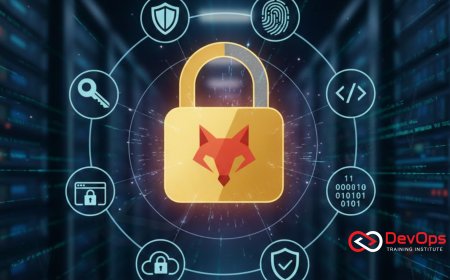
Automate and enforce cloud security policies across your infrastructure with the 12 best DevSecOps tools for Policy as Code (PaC) and Cloud Security Posture Management (CSPM). This essential guide details how to leverage Terraform, Open Policy Agent (OPA), Checkov, and Cloud-native tools (AWS Config, Azure Policy) to continuously scan, validate, and remediate misconfigurations. Learn the strategic shift from manual compliance to automated governance, embedding security checks into your CI/CD pipeline and ensuring every resource adheres to enterprise standards, mitigating risk, and achieving scalable compliance across diverse cloud environments today.
Introduction
The convergence of rapid development and dynamic cloud environments means security is fundamentally a challenge of scale and speed. Traditional, manual security checks—conducted infrequently and late in the deployment cycle—are simply incapable of keeping pace with the rapid changes orchestrated by modern DevOps teams. The strategic answer to this challenge is automation, giving rise to the concept of Policy as Code (PaC). PaC treats security and compliance rules not as static documents, but as executable software policies that can be version-controlled, tested, and applied automatically across the entire infrastructure, ensuring that every provisioned resource adheres to strict organizational standards.
The core goal is to shift security left, embedding automated checks directly into the developer workflow and the CI/CD pipeline, catching misconfigurations at the point of creation—in the Infrastructure as Code (IaC) file—rather than after they have been deployed to the live cloud environment. Successfully achieving this requires a specialized toolkit that spans static analysis, identity management, and continuous runtime monitoring. The shift from managing compliance manually to defining it programmatically is what allows enterprises to minimize risk while maintaining the high velocity required for continuous delivery, regardless of whether the operating system is based on Linux or Windows servers in the cloud.
This guide introduces the 12 most critical tools that every DevOps Engineer and security professional must master to define, enforce, and continuously verify security policies across complex cloud and containerized environments. These tools empower teams to transform the security function from a necessary operational step into a core, enabling component of the automated software delivery process, guaranteeing that compliance is baked into the foundation of the architecture from the very start, which is a key requirement for modern DevSecOps practices.
Phase 1: Policy as Code (PaC) Enforcement (Shift Left)
The most effective way to automate cloud security is by embedding checks directly into the Infrastructure as Code (IaC) configuration before it is ever deployed. These PaC tools scan the declarative definition files (Terraform, CloudFormation, Kubernetes YAML) for misconfigurations and policy violations, creating mandatory security gates in the CI process. This is the core strategy for implementing the "Shift Left" philosophy, where security findings are delivered to the engineer as immediate, actionable feedback, preventing costly remediation down the line.
- 1. Open Policy Agent (OPA) / Gatekeeper: OPA is the industry-leading, open-source, general-purpose policy engine that allows you to define policies as code using its declarative language, Rego. It can enforce security, governance, and compliance policies across various technologies, including cloud APIs, application code, and CI/CD pipelines. When integrated with Kubernetes via Gatekeeper, OPA acts as a powerful admission controller, preventing non-compliant resources (e.g., containers running as root) from ever being created in the cluster, enforcing compliance at the API layer.
- 2. HashiCorp Sentinel: Sentinel is a Policy as Code framework specifically designed to integrate with the HashiCorp product ecosystem, including Terraform, Vault, and Nomad. It enforces fine-grained, logic-based policies on the execution plans of these tools. For example, a Sentinel policy can ensure that no Terraform plan attempts to create a production database without encryption enabled or without mandatory resource tagging, providing an essential layer of governance before any infrastructure API call is made to the cloud provider, mitigating deployment risks.
- 3. Checkov: An open-source static analysis PaC tool that scans IaC files (Terraform, CloudFormation, Kubernetes, ARM, Helm) for security and compliance misconfigurations against hundreds of predefined security policies. Checkov is lightweight and easily integrated into the CI pipeline or pre-commit hooks, providing immediate feedback to developers on insecure configurations (e.g., publicly accessible storage buckets, overly permissive network access) as they are writing the infrastructure code, helping teams meet standards like the CIS Benchmarks efficiently.
- 4. tfsec: Another popular, open-source, dedicated security scanner for Terraform code. tfsec uses static analysis to detect common vulnerabilities like hardcoded secrets, misconfigured firewalls, or insecure IAM policies. Its primary advantage is its speed and ease of integration into the CI/CD pipeline, making it a critical, non-blocking gate that ensures every single IaC commit adheres to the security baseline before the provisioning tool interacts with the cloud APIs, guaranteeing the integrity of the infrastructure definition.
Phase 2: Continuous Verification (CSPM & Cloud-Native Tools)
Policy enforcement doesn't end with IaC; live environments are susceptible to configuration drift or manual changes that bypass the pipeline. Cloud Security Posture Management (CSPM) tools provide continuous, automated auditing by scanning the live cloud environment (AWS, Azure, GCP) to ensure all configurations adhere to security policies, industry benchmarks (e.g., PCI DSS, HIPAA), and internal governance rules in real-time. This active verification layer is vital for ensuring long-term compliance, as the cloud environment's security posture is constantly changing due to deployment activity.
5. AWS Config / Azure Policy / GCP Policy: These are the cloud providers’ native CSPM and governance services. They continuously monitor the configurations of all resources deployed within the account. If a resource configuration drifts from the compliant standard (e.g., a security group rule is manually changed, a VM is provisioned without logging), the service flags the resource as non-compliant and can automatically trigger remediation actions. Utilizing these native tools provides deep, integrated security visibility and auditability within each respective cloud environment, simplifying the process of meeting regulatory requirements.
6. Prowler: A comprehensive, open-source command-line tool designed for security auditing, hardening, and incident response exclusively for AWS environments. Prowler runs hundreds of checks covering CIS benchmarks, GDPR, and other standards across various AWS services, outputting detailed reports. DevOps Engineers use it to perform deep, scheduled security audits of their AWS accounts, ensuring continuous compliance validation that complements the automated checks performed by IaC tools at deployment time. This provides crucial insight into the security of the underlying infrastructure, which is necessary for managing network communication and access.
7. Cloud-Native Remediation Tools (e.g., AWS Security Hub, Azure Security Center): These services aggregate security data from various sources (native CSPM, external scanners, WAFs) and provide a centralized dashboard for the overall security posture. More importantly, they provide automated remediation capabilities—using services like AWS Systems Manager or Azure Automation—to automatically fix non-compliant configurations (e.g., automatically disabling public access to an exposed resource or adding mandatory encryption tags) as soon as drift is detected, reducing the time spent by operations on fixing routine security issues and streamlining the enforcement of security policy at the cloud level.
| # | Tool & Category | Primary Function | Deployment / Runtime Phase | Policy Language |
|---|---|---|---|---|
| 1 | Open Policy Agent (OPA) (PaC) | General-purpose policy enforcement across IaC, APIs, and Kubernetes admissions. | Pre-Deployment & Runtime | Rego |
| 2 | HashiCorp Sentinel (PaC) | Policy enforcement specifically on Terraform, Vault, and Nomad execution plans. | Pre-Deployment (Plan Stage) | Sentinel |
| 3 | Checkov (IaC Security) | Static analysis scanner for IaC misconfigurations (Terraform, K8s YAML). | Commit / CI (Code Review) | Python/YML |
| 5 | AWS Config / Azure Policy (CSPM) | Continuous, native monitoring and audit of live cloud resource configurations. | Runtime & Audit | Cloud Native |
| 9 | HashiCorp Vault (Secrets) | Centralized storage, access control, and dynamic generation of credentials. | Deployment / Runtime | HCL/API |
| 11 | Falco (Runtime Protection) | Real-time, kernel-level monitoring of container behavior for threat detection. | Runtime (Kubernetes) | Rules Engine |
Phase 3: Identity and Secrets Governance
Mismanagement of access keys and credentials remains the number one source of cloud breaches, often exposing services to unauthorized access. Automating Identity and Access Management (IAM) and secrets management is critical for enforcing the principle of least privilege. The ability to control who (user or service) can access what resource, and for how long, is central to the security model of modern cloud infrastructure and is essential for securing all network communication between services.
8. Cloud IAM Tools (AWS IAM, Azure AD, GCP IAM): These services are the fundamental security tools for defining roles, policies, and permissions that govern all access within a cloud environment. DevOps Engineers use them to write precise policies that grant the minimum necessary permissions (least privilege) to users, services, and deployed resources. Proper configuration of these policies, often defined via IaC, is non-negotiable for separating network resources and preventing lateral movement in the event of a security incident. Understanding the network exposure inherent in services that communicate over common ports and protocols is key to writing effective IAM policies.
9. HashiCorp Vault: Vault is the leading centralized secrets management tool. It securely stores, accesses, and dynamically generates secrets for applications and infrastructure across multi-cloud and containerized environments. It ensures that applications receive short-lived, time-bound credentials on demand, eliminating the catastrophic risk associated with hardcoded, static passwords in configuration files. Vault is the core enforcer of the principle of least privilege, as access is temporary and strictly controlled, providing a unified access plane for diverse infrastructure.
10. Cloud-Native Secret Managers (AWS Secrets Manager, Azure Key Vault, GCP Secret Manager): These managed services provide a secure, encrypted repository for storing sensitive data. They integrate natively with their respective cloud's IAM systems and are generally preferred over Vault for single-cloud deployments due to simplified integration and managed operational overhead. They ensure that all secrets are encrypted both at rest and in transit, simplifying compliance with standards requiring key rotation and secure storage for critical application data.
Phase 4: Runtime and Behavioral Protection
Even if code is scanned and IaC is compliant, runtime threats and security vulnerabilities can still emerge (e.g., zero-day exploits, internal compromise). Runtime protection tools continuously monitor the actual behavior of running applications and containers to detect malicious activity, providing the final, critical layer of defense that complements static pre-deployment checks, ensuring that any threat that bypasses the PaC gates is immediately identified and flagged for remediation.
11. Falco: As the de facto open-source runtime security tool for Kubernetes, Falco is a Cloud Native Computing Foundation (CNCF) project. It monitors the behavior of running containers and hosts by analyzing kernel-level system calls, alerting on suspicious activity such as a shell process being spawned in a web application container or unauthorized attempts to access system files. Falco provides critical, real-time threat detection for containerized workloads, enforcing security policies dynamically at the core operating system level, which requires an understanding of OSI and TCP/IP models to properly diagnose network-based anomalies.
12. Image Vulnerability Scanners (Trivy, Clair): While used in the CI phase, their effectiveness is validated at runtime. These tools scan container images for known vulnerabilities (CVEs) and are critical for ensuring that the running environment is secure. Continuous vulnerability monitoring of container images in the registry is required, as a clean image today may become vulnerable tomorrow due to new exploit discoveries, mandating continuous scanning and patching of base container images to ensure long-term integrity. This is a core practice of maintaining secure network services.
The Cloud Policy Automation Strategy
The strategic deployment of these 12 tools requires a deliberate, layered approach that ensures security policies are enforced at every possible point, moving from code definition to live cloud operation. This systematic strategy is key to achieving continuous compliance and scalable security in enterprise-grade environments:
- Policy Definition: Define all policies using PaC tools like OPA or Sentinel, which are version-controlled in Git, serving as the single source of truth for governance rules.
- CI Gate: Run static analysis tools like Checkov and tfsec in the CI pipeline against IaC pull requests, providing instant feedback and failing the build if a violation is found (Shift Left).
- Deployment Enforcement: Use OPA/Gatekeeper as a Kubernetes admission controller and Sentinel in the Terraform plan stage to prevent non-compliant infrastructure from being created. Simultaneously, inject credentials using Vault for secure access.
- Continuous Monitoring and Auditing: Use cloud-native CSPM tools (e.g., AWS Config) and external auditors (Prowler) to continuously monitor the live environment, detect configuration drift, and trigger automatic remediation actions to maintain the security posture defined by PaC, ensuring that security remains a continuous function, not a manual gate.
This layered approach guarantees that security is automated and enforced throughout the entire application lifecycle, reducing reliance on manual checks and enabling the engineering organization to move faster and safer. Furthermore, understanding the impact of networking decisions on the security posture is non-negotiable; for example, knowing which port numbers are commonly exploited is essential when configuring firewall rules with IaC.
Conclusion
Automating cloud security policies is the cornerstone of the DevSecOps movement and a non-negotiable requirement for organizations operating at enterprise scale. By strategically adopting and integrating these 12 specialized tools—from policy engines like OPA and governance scanners like Checkov to runtime protectors like Falco and secrets managers like Vault—DevOps Engineers can effectively enforce security and compliance standards programmatically. This shift ensures that security is continuously validated at every stage, preventing misconfigurations, minimizing risk, and securing the high-velocity software delivery that defines success in the cloud era. Mastering this integrated security toolchain is essential for any professional seeking to build and maintain resilient, trust-worthy cloud infrastructure, where both speed and security are realized through code and continuous automation.
Frequently Asked Questions
What is the difference between PaC and CSPM?
PaC (Policy as Code) defines security rules in code pre-deployment, while CSPM audits the live cloud environment against those rules continuously in runtime.
What is the core function of Open Policy Agent (OPA)?
OPA’s core function is to define and enforce security, governance, and compliance policies as code across various layers of the stack using the Rego language.
How does Checkov speed up security checks?
Checkov speeds up security by performing static analysis on IaC files during the CI phase, providing instant feedback and failing the build before infrastructure provisioning begins.
Why use HashiCorp Vault instead of cloud secret managers?
Vault is cloud-agnostic, enabling centralized secrets management and dynamic credential generation across AWS, Azure, and on-premises environments from a single control point.
How is Falco integrated into a Kubernetes cluster?
Falco is integrated by installing it as a host-level monitoring agent (DaemonSet) on every worker node to analyze kernel system calls for suspicious container behavior.
What is the purpose of AWS Config or Azure Policy?
Their purpose is native CSPM: continuously monitoring the live cloud environment to detect configuration drift and automatically trigger remediation actions for non-compliant resources.
What security concept do PaC tools enforce most strictly?
PaC tools most strictly enforce the principle of least privilege and the zero trust model by codifying precise access and configuration rules.
What IaC tool is HashiCorp Sentinel designed to govern?
HashiCorp Sentinel is primarily designed to enforce policies on the execution plans generated by Terraform before they are applied to the cloud infrastructure.
How do IaC scanners help with Linux system administration?
IaC scanners ensure that the virtual Linux machines provisioned via IaC adhere to hardened security baselines (e.g., no public SSH, correct file permissions) from the start.
What is the risk of environment drift?
Environment drift means the live system deviates from the secure IaC definition, creating configuration inconsistencies and potential security gaps that CSPM tools are designed to catch.
What is the role of GitOps in policy enforcement?
GitOps uses Git as the single source of truth for policy definitions, automating the deployment of policy changes (e.g., OPA rules) to the runtime environment.
How does Kubernetes admission control relate to PaC?
Admission controllers (like Gatekeeper) use OPA policies to intercept requests to the K8s API server, preventing the creation of non-compliant resources in real-time.
What is remediation in the context of cloud security?
Remediation is the automated process of fixing a security policy violation, such as automatically encrypting an unencrypted database or disabling public access to an exposed storage bucket.
Why is centralizing secrets management important in cloud?
Centralizing secrets management is critical for enforcing key rotation, auditing access to credentials, and ensuring no sensitive data is hardcoded into IaC or application files.
What is the primary benefit of using native cloud CSPM tools?
Native CSPM tools offer seamless integration with the cloud's IAM and logging services, providing deep visibility and auditability without the need for extensive external integration setup.
What's Your Reaction?
 Like
0
Like
0
 Dislike
0
Dislike
0
 Love
0
Love
0
 Funny
0
Funny
0
 Angry
0
Angry
0
 Sad
0
Sad
0
 Wow
0
Wow
0

![100+ Azure DevOps Interview Questions and Answers [Updated 2025]](https://www.devopstraininginstitute.com/blog/uploads/images/202509/image_140x98_68c40aa9a3834.jpg)




![Future Scope of DevOps Careers in Pune [Updated 2025]](https://www.devopstraininginstitute.com/blog/uploads/images/202510/image_140x98_68e3a84652312.jpg)