

![Kong Interview Preparation Guide [2025]](https://www.devopstraininginstitute.com/blog/uploads/images/202509/image_430x256_68dbb95326997.jpg)

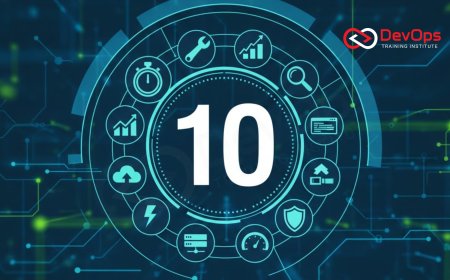
10 Infrastructure Audit Tools for DevOps Operations
Maintain total control over your digital environment by mastering the ten most powerful infrastructure audit tools for DevOps operations in twenty twenty-six. This comprehensive guide explores essential platforms for security compliance, drift detection, and cost optimization, including Prowler, Wiz, and Spacelift. Learn how to automate your auditing processes to identify vulnerabilities, ensure regulatory compliance, and reduce cloud waste across multi-cloud and containerized environments. Whether you are preparing for a SOC2 audit or optimizing your Kubernetes clusters, these professional tools will provide the visibility and automated remediation capabilities needed to build a resilient, secure, and highly efficient technical foundation for your business today.
Introduction to Infrastructure Auditing in DevOps
In the high-velocity world of modern DevOps, infrastructure is no longer a static asset but a dynamic, ever-changing ecosystem. As organizations scale their cloud presence, the complexity of managing thousands of resources across multiple providers often leads to "visibility gaps" where security risks and inefficiencies can hide. An infrastructure audit is the process of systematically reviewing your technical environment to ensure it aligns with security standards, compliance requirements, and cost targets. In twenty twenty-six, this is not a manual task but a continuous, automated operation that is integrated directly into the delivery pipeline.
The rise of Infrastructure as Code and GitOps has made it possible to treat your entire data center as a set of version-controlled files. This programmability allows for a new generation of audit tools that can "scan" your environment in real-time, detecting unauthorized changes or incident handling issues before they impact the business. By adopting the right suite of auditing tools, DevOps teams can move from reactive troubleshooting to proactive governance. This guide explores ten of the most impactful tools currently shaping the industry, helping you maintain a secure, compliant, and cost-effective cloud footprint that supports rapid innovation without sacrificing technical integrity.
Automated Security and Compliance Auditing
Security remains the primary driver for infrastructure audits, especially in regulated industries like finance and healthcare. Tools like Prowler and Qualys are essential for performing automated security assessments against industry benchmarks such as CIS, PCI-DSS, and SOC2. Prowler, an open-source favorite, specifically focuses on AWS, Azure, and GCP, providing a comprehensive report on misconfigurations, exposed secrets, and overly permissive access roles. These tools act as a continuous cultural change agent, enforcing security standards automatically across all your cloud accounts and regions.
Beyond simple scanning, advanced platforms like Wiz and Prisma Cloud offer "agentless" visibility into your entire cloud stack. These tools build a graph-based map of your infrastructure, identifying the actual paths an attacker could take to reach your sensitive data. This context-aware auditing is critical for identifying the "critical few" risks among thousands of alerts. By integrating these tools into your admission controllers, you can prevent insecure resources from ever being deployed. This ensures that your security posture is not just a point-in-time snapshot but a continuous state of hardened resilience in the cloud.
Infrastructure as Code (IaC) Drift Detection
Configuration drift occurs when manual changes are made to a cloud environment, causing it to deviate from the original code-defined state. This is a major source of instability and security vulnerabilities in DevOps operations. Auditing tools like Spacelift and Terraform (with HCP Terraform) are designed to solve this by providing native drift detection and automated remediation. These tools constantly compare your live environment with your version-controlled manifests, identifying any unauthorized tweaks or "snowflake" resources that have crept into your cluster states over time.
Remediation can be automated, where the tool forcefully returns the environment to the desired state, or it can trigger a notification for manual review via ChatOps. This ensures that your documentation (the code) always matches the reality of your production servers. By utilizing GitOps to manage these audits, you create a transparent and auditable trail of every change made to your infrastructure. This level of control is essential for teams aiming for high-frequency releases, as it provides the confidence that the underlying technical foundation is always stable and predictable, regardless of the pace of software updates.
Kubernetes and Container Auditing Tools
Kubernetes introduces its own set of auditing challenges due to its highly ephemeral nature. Tools like Kubescape and Trivy (by Aqua Security) are purpose-built to audit containerized environments and the orchestration layer itself. Kubescape scans your clusters for misconfigurations and vulnerabilities according to the NSA and CISA hardening guidelines, while Trivy provides deep misconfiguration and vulnerability scanning for your container images. These tools ensure that your containerd instances are secure and that your microservices are isolated correctly within the cluster network.
In addition to security, Kubernetes auditing involves monitoring resource utilization to prevent performance bottlenecks. Add-ons that integrate with your observability 2.0 stack can provide insights into which pods are over-provisioned or hitting resource limits. This allows engineers to optimize their reserved instance optimization and ensure that the cluster is operating at peak efficiency. By making these audits a mandatory part of the deployment lifecycle, you ensure that every new service launched in your cluster meets your organization's standards for both security and performance, protecting your global infrastructure from the risks of "container sprawl" and resource exhaustion.
Comparison of Top Infrastructure Audit Tools
| Tool Name | Primary Focus | Cloud Support | Delivery Model |
|---|---|---|---|
| Prowler | Security Compliance | AWS, Azure, GCP | Open Source / SaaS |
| Wiz | Agentless CNAPP | Multi-Cloud | SaaS |
| Spacelift | IaC Management & Drift | Cloud-Agnostic | SaaS |
| Kubescape | K8s Hardening | Kubernetes Native | Open Source / SaaS |
| nOps | FinOps & Cost Audit | AWS focus | SaaS |
FinOps and Cost Auditing for Cloud Efficiency
With cloud spend becoming a top-five expense for many enterprises, auditing for cost efficiency has become just as important as auditing for security. Tools like nOps and CloudHealth provide a deep audit of your cloud bill, identifying unused resources, orphaned storage, and opportunities for reserved instance optimization. These tools help teams bridge the gap between technical operations and financial accountability, ensuring that every dollar spent on the cloud is delivering measurable business value. This "FinOps" approach is a vital part of choosing architecture patterns that are fiscally sustainable at scale.
Cost auditing involves more than just looking at the monthly bill; it requires analyzing resource utilization trends to identify "waste" in real-time. For example, a script or tool can audit your environments to find development clusters that are running during weekends and automatically shut them down. By integrating these audits with your ChatOps workflows, you can notify resource owners of potential savings, empowering them to take action. This proactive cost management ensures that your cloud infrastructure grows alongside your revenue rather than outstripping it, providing a stable and profitable technical platform for your long-term business goals.
Unified Observability and Audit Trails
A successful infrastructure audit relies on high-quality data from your monitoring and logging systems. Full-stack observability platforms like Datadog, New Relic, and Dynatrace provide the "audit trails" needed to understand who did what and when across your entire environment. These platforms correlate infrastructure changes with application performance, allowing you to see if a specific configuration update led to increased latency or a security event. In twenty twenty-six, this observability 2.0 model is essential for meeting the strict audit requirements of regulators and enterprise customers.
Having a unified view of your logs and metrics simplifies the auditing process by providing a single source of truth for all technical events. You can use these platforms to build custom "audit dashboards" that track compliance drift, security alerts, and cost anomalies in real-time. By utilizing ChatOps techniques, these insights can be pushed to the right stakeholders instantly, ensuring that audit findings are addressed immediately rather than waiting for a quarterly review. This level of transparency fosters a culture of shared responsibility, where every engineer is aware of the audit status and contributes to the overall health and security of the organization's digital assets.
Best Practices for Continuous Infrastructure Auditing
- Automate the Baseline: Use tools like Prowler to establish a security baseline and run automated scans daily to catch deviations immediately.
- Enforce Version Control: Treat every infrastructure change as a code update, ensuring that your continuous synchronization process is the only way to modify production.
- Implement Least Privilege: Use secret scanning tools and IAM audits to ensure that users and services have only the minimum access they need.
- Audit Your Dependencies: Use Trivy to audit your container images and open-source libraries for known vulnerabilities before they reach your clusters.
- Monitor Cost Daily: Use FinOps tools like nOps to audit your cloud spend and identify waste before it becomes a significant budget issue.
- Maintain Immutable Records: Use your observability 2.0 stack to keep immutable logs of all API calls and configuration changes for forensic analysis.
- Verify the Fixes: Use continuous verification to confirm that any issues found during an audit are actually resolved and do not reappear.
Integrating these best practices into your daily operations will transform auditing from a stressful event into a routine, automated part of your technical culture. It is important to remember that the goal of an audit is not to find fault but to drive continuous improvement in your systems. As you become more proficient with these tools, you can explore more advanced release strategies that include automated "audit gates" in your CI/CD pipelines. This ensures that only hardened and compliant infrastructure changes are allowed to reach production, providing your business with a resilient and secure technical edge in an increasingly competitive global market.
Conclusion: Building a Culture of Auditable Infrastructure
In conclusion, the ten infrastructure audit tools and strategies discussed in this guide provide the necessary framework for maintaining a world-class DevOps environment in twenty twenty-six. From the security-first assessments of Prowler and Wiz to the IaC management of Spacelift and the cost-conscious auditing of nOps, these tools empower teams to stay ahead of the technical curve. By automating your auditing processes, you not only improve your security and compliance posture but also free up your engineers to focus on high-value innovation rather than manual compliance chores.
As you look toward the future, the integration of AI augmented devops will further simplify the auditing process by predicting risks and automatically suggesting optimizations. Staying informed about AI augmented devops trends will ensure that your auditing practices remain modern and efficient. Ultimately, the goal is to create an "auditable by design" infrastructure where every change is transparent, secure, and optimized for value. By embracing these tools today, you are building a future-proof foundation that will support your organization through every technical and regulatory challenge that lies ahead in the digital world.
Frequently Asked Questions
What is the primary purpose of an infrastructure audit?
An infrastructure audit systematically reviews your technical environment to ensure it meets security, compliance, and cost-efficiency standards for the business.
How often should a DevOps team run an infrastructure audit?
In 2026, audits should be continuous and automated, with major manual reviews typically happening quarterly or before major release events.
What is "configuration drift" and why is it a risk?
Drift occurs when manual changes cause live systems to deviate from the documented code, creating security gaps and unpredictable system failures.
Can Prowler audit multiple cloud providers?
Yes, Prowler is a versatile open-source tool that supports security and compliance auditing across AWS, Azure, and Google Cloud Platform environments.
What is the difference between an agent-based and agentless audit tool?
Agent-based tools require software on the server, while agentless tools (like Wiz) scan the environment through API access and storage snapshots.
How do audit tools help with SOC2 compliance?
Audit tools automate the collection of evidence and the monitoring of controls required for SOC2, significantly reducing the manual effort for teams.
What role does GitOps play in infrastructure auditing?
GitOps ensures that every change is versioned in Git, providing an immutable audit trail of who changed what in the infrastructure code.
How can I audit the security of my Kubernetes clusters?
Use specialized tools like Kubescape or Trivy to scan for misconfigurations and vulnerabilities according to official Kubernetes hardening guidelines and standards.
What is FinOps and why is it part of auditing?
FinOps is the practice of financial accountability in cloud spend; auditing identifies waste and ensures resources are optimized for business value.
Do infrastructure audit tools impact system performance?
Most modern audit tools are designed to be "non-intrusive," either running asynchronously or using agentless methods that have zero impact on live performance.
What are "golden paths" in platform engineering?
Golden paths are standardized, pre-audited, and self-service infrastructure templates that allow developers to deploy services safely and quickly every time.
Can I use AI to help with infrastructure auditing?
Yes, AI-augmented tools can analyze vast amounts of log and configuration data to predict risks and automatically suggest remediation steps for teams.
What is a "secret scanning" tool?
Secret scanning tools automatically check your code and configurations for hardcoded passwords or API keys to prevent accidental security breaches and leaks.
How do admission controllers assist in auditing?
They act as a gateway, automatically rejecting any new resource deployments that do not meet your organization's security and compliance audit policies.
What is the first step in starting an infrastructure audit?
The first step is to establish a clear security and compliance baseline and then select an automated tool to scan for deviations.
What's Your Reaction?
 Like
0
Like
0
 Dislike
0
Dislike
0
 Love
0
Love
0
 Funny
0
Funny
0
 Angry
0
Angry
0
 Sad
0
Sad
0
 Wow
0
Wow
0

![100+ Azure DevOps Interview Questions and Answers [Updated 2025]](https://www.devopstraininginstitute.com/blog/uploads/images/202509/image_140x98_68c40aa9a3834.jpg)





![Future Scope of DevOps Careers in Pune [Updated 2025]](https://www.devopstraininginstitute.com/blog/uploads/images/202510/image_140x98_68e3a84652312.jpg)