

![Kong Interview Preparation Guide [2025]](https://www.devopstraininginstitute.com/blog/uploads/images/202509/image_430x256_68dbb95326997.jpg)


14 Real-Time DevOps Automation Examples in Production
Unlock elite software delivery performance by exploring 14 critical real-time automation examples actively deployed in modern production environments. This detailed guide covers the spectrum of automation, from instantaneous Continuous Deployment and smart self-healing infrastructure to advanced DevSecOps security gates and automated financial governance. Learn how to leverage tools like Kubernetes, Terraform, and advanced observability platforms to eliminate manual toil, drastically reduce Mean Time to Restore (MTTR), and ensure your systems remain stable, secure, and cost-effective at massive scale, moving your team into the realm of high-velocity engineering by adopting proven, mature DevOps practices.
Introduction
The promise of DevOps is realized through automation, transforming manual, error-prone software delivery into a high-velocity, consistent process. In today’s complex production environments, where applications are often distributed across hundreds of microservices and cloud resources, automation must be more than just scheduled scripting; it must be real-time and event-driven. Real-time automation refers to systems that instantly detect a change in state—a new code commit, a surge in user traffic, or a critical system failure—and automatically execute a pre-defined sequence of actions to address that change, often in seconds. This capability is the single most defining characteristic of elite, high-performing technology organizations, allowing them to maintain stability while deploying code at an unprecedented pace.
The journey from traditional IT operations to a fully automated DevOps practice is iterative, but focusing on real-time scenarios offers the highest return on investment by directly impacting system stability, security, and time-to-market. These automated mechanisms act as continuous safety nets and accelerators, allowing engineering teams to shift their focus from repetitive maintenance tasks, commonly known as "toil," to strategic feature development and innovation. When systems are designed to heal themselves, scale dynamically, and enforce compliance automatically, human engineers are empowered to tackle higher-order problems. The following 14 examples represent the most impactful, real-time automation strategies currently deployed in successful, large-scale production environments across the globe, providing a blueprint for achieving operational excellence.
This guide breaks down these powerful automation examples across the entire software development lifecycle, from the moment a developer commits code to the final stages of incident management and cost control. We will explore how technologies like Kubernetes, Infrastructure as Code (IaC) tools, and specialized monitoring platforms integrate to create a resilient, self-managing delivery ecosystem. Understanding and implementing even a handful of these real-time examples can dramatically reduce organizational risk, improve the efficiency of your engineering teams, and ensure your production environment is capable of handling the demands of modern, continuous delivery. The future of operations is automated, and these are the blueprints for that future, demanding a shift in mindset toward code-driven operations and governance.
Automation in Continuous Delivery and Deployment
The speed of a modern organization is measured by its Lead Time for Changes—the time from code commit to code running successfully in production. Real-time automation in the CI/CD pipeline is what drives this metric down to minutes or even seconds. It’s no longer about deploying once a week; it’s about making deployment an instant, low-risk, and routine event. This requires tightly integrated automation that moves beyond simple scripting to intelligent orchestration, ensuring that every transition from one environment to the next is flawless and fully auditable. This automation guarantees that the artifacts passing through the pipeline are consistent, tested, and ready for end-user traffic without any manual gatekeeping, which is essential for maintaining velocity under strict quality controls.
A critical component of this velocity is the ability to instantly revert changes. A deployment is only truly continuous if the system can reliably recover from failure faster than a human can manually intervene. The automated checks performed post-deployment—often known as smoke tests or health checks—are executed in real-time, providing immediate feedback on the deployed service’s behavior. Furthermore, the CI/CD pipeline needs to seamlessly integrate with advanced deployment models to mitigate risk. Without these robust automated mechanisms, teams are forced to deploy less frequently, directly undermining the core tenets of DevOps and slowing down business responsiveness. The goal is to make deployment an anticlimax, a non-event that happens constantly in the background, minimizing the stress and risk associated with updates.
Example 1: Automated Continuous Deployment with Rollback
The moment a code change is merged into the main branch, the automated CI/CD pipeline instantly builds the application, runs integration tests, and triggers a production deployment. This process is fully automated, eliminating the “push button” step. Crucially, post-deployment checks, often simple API calls to key service endpoints, run in real-time against the live environment. If these checks fail, or if monitoring metrics spike, an automated mechanism is instantly triggered to revert the deployment to the last known stable version. This Automated Rollback is a key real-time feature, ensuring the Mean Time to Restore (MTTR) is minimized and service impact remains negligible, preventing a small bug from turning into a major outage and preserving user experience.
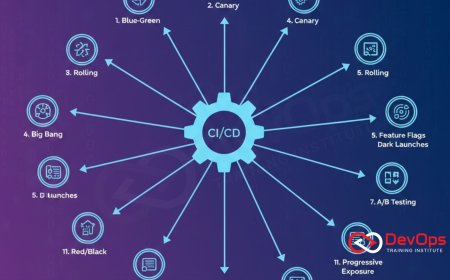
Example 2: Advanced Deployment Strategies (Canary and Blue/Green)
Advanced deployments use real-time traffic management to safely introduce new code. A Canary Deployment automatically routes a small percentage of live user traffic (e.g., 2-5%) to the new version. The system then monitors key performance indicators (KPIs) and error rates from this small group in real-time. If the new version’s error rate remains within acceptable thresholds, the automation gradually increases the traffic percentage over minutes or hours until the new version is fully rolled out. Conversely, if errors spike, the automation instantly cuts off traffic to the new version and reverts to the old stable version. Blue/Green Deployments are similar, where the new version is deployed to a mirrored environment, tested, and then the traffic router is instantly switched over only when all automated gates pass, offering zero-downtime releases.
Example 3: Automated Build and Unit Testing on Commit
This is the foundational real-time automation. Every time a developer commits code to a version control system (VCS) like Git, a webhook instantly triggers the CI process. The CI server (e.g., Jenkins, GitLab CI) immediately pulls the code, compiles it, and executes the suite of unit and component tests. The real-time feedback loop is essential: the results are reported back to the developer and the pull request status within seconds or a few minutes. If the build fails or tests do not pass, the developer is instantly notified, preventing flawed code from contaminating the main branch. This immediate validation ensures that integration issues are caught early, where they are cheapest and fastest to fix, rather than allowing them to escape downstream to production, where the cost of remediation is exponential.
Automation in Infrastructure, Configuration, and Policy
Managing the underlying infrastructure and configuration of a complex, distributed system manually is impossible at scale. Real-time automation in this area ensures that the infrastructure remains consistent, secure, and compliant with policy, regardless of how often it changes. This is achieved by treating infrastructure itself as code and continuously verifying the real-world state against the desired state defined in the Git repository. These practices eliminate configuration drift—the silent killer of stability—by ensuring that no manual, undocumented changes can persist in the environment. This shift from manual ticketing for server provisioning to self-service, instant environment deployment represents a monumental change in operational efficiency and developer experience.
Policy enforcement is equally critical. In a high-velocity environment, human reviewers cannot manually check every single change for security or compliance violations. By codifying these rules using frameworks like Open Policy Agent (OPA), the automation acts as an instantaneous gatekeeper. The system automatically rejects any request that violates a corporate rule, ensuring continuous compliance in a way that is transparent and non-blocking to the delivery process. This proactive approach drastically reduces the risk of security vulnerabilities and compliance fines. This level of automated governance allows for both speed and control, the hallmark of mature DevOps organizations, proving that security can be an accelerator, not a roadblock.
Example 4: Infrastructure as Code (IaC) Provisioning
IaC tools like Terraform or CloudFormation enable the declarative definition of all cloud resources. The real-time application here is that any change or request for a new environment—from a developer needing a staging replica to operations needing to scale a database cluster—can be executed instantly by applying the codified templates. The moment a feature is greenlit, the required infrastructure can be provisioned within minutes via an automated pipeline, fully configured and ready for deployment. This eliminates weeks of manual work and ensures that the infrastructure is always identical across environments, eliminating the "works on my machine" problem and providing consistent reliability. This is the foundation for all modern, elastic cloud environments.
Example 5: Configuration Drift Detection and Remediation
Configuration drift occurs when a running server’s configuration differs from its intended codified state, often due to emergency manual intervention. Real-time automation tools, usually configuration management platforms like Ansible or dedicated cloud auditing services, continuously monitor the production environment. They compare the actual state of servers, security groups, or networking rules against the desired state defined in Git. When drift is detected, the automation instantly raises an alert, and in many cases, automatically runs a script to revert the drifted configuration back to the baseline. This continuous auditing process ensures production consistency and security in real-time, preventing configuration inconsistencies from causing unexpected failures and upholding the principle of immutable infrastructure.
Example 6: Policy-as-Code Compliance Enforcement
Policy-as-Code (PaC) automates governance rules. Using tools like Open Policy Agent (OPA) or vendor-native policy services (e.g., AWS Config Rules), security and compliance policies are codified. When a DevOps pipeline attempts to provision a resource (via IaC) or deploy a service (via Kubernetes manifest), the PaC engine intercepts the request in real-time. For instance, if an engineer tries to deploy a database without encryption enabled or create a public S3 bucket, the PaC engine instantly rejects the request and provides immediate feedback on the violation. This real-time enforcement prevents accidental security lapses and ensures that all deployed resources are compliant from the moment they are created, a necessary guardrail in highly regulated environments. This process is far more reliable than human review.
Automation in Security and Quality Gates
Security automation moves the process from a periodic, manual audit to a continuous, integrated part of the development and delivery workflow—the core of DevSecOps. The goal is to detect and mitigate risks immediately, well before they have a chance to affect the production environment or expose the company to potential threats. By automating security and quality gates, teams can maintain a high-frequency release cadence while simultaneously enhancing their security posture. These gates act as non-negotiable checkpoints in the pipeline, ensuring that all code, dependencies, and deployment artifacts meet the highest standards of quality before they are trusted to run live. This "shift-left" philosophy integrates security seamlessly.
Equally important is ensuring that secret credentials are never exposed. Manual handling of API keys, database passwords, and tokens is a primary source of security breaches. Real-time automation through secret management tools ensures that these sensitive values are injected securely and dynamically at the very last moment before the application starts, dramatically reducing the risk of hardcoded or exposed credentials. Finally, providing developers with automated, isolated environments for testing ensures that quality assurance is performed under realistic, production-like conditions, catching environment-specific bugs that would otherwise make it to end-users. This investment in automated quality checks pays dividends by preventing costly post-release fixes.
Example 7: Real-Time Static and Dynamic Security Scans (SAST/DAST)
Security vulnerability scanning is deeply integrated into the CI/CD pipeline. Static Analysis Security Testing (SAST) tools automatically scan the application source code for common security vulnerabilities (e.g., SQL injection, XSS) the moment the code is compiled. Dynamic Analysis Security Testing (DAST) is then run against the live, deployed application in the staging environment, simulating attacks to find runtime flaws. Both are run as non-blocking, automated pipeline stages, but if a high-severity vulnerability is found, the automation instantly fails the build and prevents the artifact from progressing further. This real-time gating prevents insecure code from ever reaching the production environment, a key part of modern software defense that helps implement continuous threat modeling.
Example 8: Automated Secrets Management Injection
Applications require sensitive credentials like API keys and database passwords. These secrets must be securely stored and never hardcoded. Real-time automation uses dedicated secrets managers (like HashiCorp Vault or AWS Secrets Manager) to inject these values into the application at runtime. During the automated deployment process, the CI/CD pipeline or a dedicated agent ensures that the secret is securely fetched and mounted as an environment variable or file, visible only to the running application container. The secret value itself never passes through the pipeline as a plain text variable, and it can be instantly rotated or revoked without requiring a code redeployment, enhancing security and reducing human risk from credential exposure.
Example 9: Automated Environment Provisioning for Testing
To ensure high quality, developers and QA teams need environments that perfectly mirror production. This automation uses IaC and configuration management to instantly spin up ephemeral, production-like environments whenever a feature branch is created. When a developer creates a pull request (PR), the automation dynamically provisions a temporary Kubernetes namespace, deploys the code, and runs the full suite of integration tests. This environment exists only for the duration of the review, automatically being destroyed upon merging or closing the PR. This ensures that every piece of code is tested in a dedicated, high-fidelity environment, catching environment-specific bugs that manual testing often misses and accelerating the feedback cycle for developers significantly.
Table: The 14 Real-Time DevOps Automation Examples
The table below summarizes the 14 real-time automation examples, categorized by the area of the DevOps lifecycle they impact, demonstrating the pervasive nature of automation in high-performance production systems. Each of these practices contributes significantly to the overall goals of speed, stability, and security in the modern software development lifecycle. Understanding these categories helps in strategically prioritizing implementation efforts based on organizational pain points and desired outcomes, and serves as a quick reference guide for professionals.
| Category | Example | Primary Real-Time Benefit |
|---|---|---|
| Continuous Delivery | 1. Automated Continuous Deployment with Rollback | Instantaneous deployment and immediate failure recovery (Low MTTR). |
| Continuous Delivery | 2. Advanced Deployment Strategies (Canary/Blue-Green) | Real-time risk mitigation via incremental traffic shifting based on live metrics. |
| Continuous Integration | 3. Automated Build and Unit Testing on Commit | Immediate feedback loop to developers, preventing bad code from entering the main branch. |
| Infrastructure as Code | 4. Infrastructure as Code (IaC) Provisioning | Rapid, consistent, and repeatable environment provisioning in minutes. |
| Configuration Management | 5. Configuration Drift Detection and Remediation | Continuous audit of infrastructure state against code baseline, ensuring consistency. |
| Governance/Compliance | 6. Policy-as-Code Compliance Enforcement | Instant rejection of non-compliant infrastructure changes before they are deployed. |
| Security (DevSecOps) | 7. Real-Time Static and Dynamic Security Scans | Proactive identification and blocking of vulnerabilities and coding flaws in the pipeline. |
| Security (Runtime) | 8. Automated Secrets Management Injection | Secure, dynamic injection of sensitive credentials at runtime, minimizing exposure. |
| Quality Assurance | 9. Automated Environment Provisioning for Testing | On-demand, high-fidelity testing environments for every code branch or pull request. |
| Observability/Scaling | 10. Auto-Scaling Infrastructure based on Metrics | Dynamic capacity adjustment (scaling up or down) in response to live load conditions. |
| Incident Management | 11. Self-Healing Infrastructure (Auto-Remediation) | Instant, automated corrective action (e.g., restart, replacement) upon component failure. |
| Incident Management | 12. Automated Incident Triage and Context Aggregation | Instantaneous notification to the correct on-call team with aggregated diagnostic data. |
| Database Management | 13. Automated Database Schema Migrations | Transactional, automated application of database changes coupled with code deployment. |
| Financial Governance | 14. Automated Cost Optimization and Resource Tagging | Continuous monitoring of spend, automated resource shutdown, and mandatory cost-tracking. |
Automation in Observability and Incident Response
In a dynamic production environment, failures are inevitable, but outages are optional. The key to maintaining high uptime is the ability to detect, diagnose, and recover from failures faster than a user is impacted. This resilience is entirely dependent on real-time automation in the observability space, which includes collecting, analyzing, and acting upon data streams from the system. Observability goes beyond simply tracking if a server is up; it focuses on understanding the internal state of the application across complex, distributed service meshes. Without automated systems to manage this massive influx of data, a human team would quickly become overwhelmed, leading to slow and stressful incident response times. Mastering this area is what separates operational maturity from chaos and ensures high quality service delivery.
The concept of Self-Healing Infrastructure is the ultimate expression of this automation. It takes the insights gained from automated monitoring and translates them directly into automated corrective actions. Instead of simply sending an alert that wakes up an engineer, the system attempts to fix the problem itself first. This significantly reduces the cognitive load on operations teams and reserves human effort for novel, complex failures that require architectural decisions. Furthermore, when an incident does require human intervention, automated triage provides all the necessary context immediately, turning a frantic search for data into a focused problem-solving effort. These automations are the defensive layers protecting the user experience and the company's reputation, enhancing overall system reliability significantly.
Example 10: Auto-Scaling Infrastructure based on Metrics
Cloud and container orchestration platforms (like AWS Auto Scaling Groups or Kubernetes HPA) use real-time metrics to dynamically adjust resource capacity. This automation continuously monitors load indicators like CPU utilization, request queue length, or application-specific metrics. If the load exceeds a threshold, the system instantly provisions and configures new virtual machines or containers. Conversely, when the load drops, it gracefully decommissions resources. This elasticity is crucial for handling unpredictable traffic spikes, ensuring uninterrupted service, and optimizing cloud spending. The entire decision-making process—what to scale, when to scale, and how much—is executed autonomously based on the configured policies, maximizing cost-efficiency and performance.
Example 11: Self-Healing Infrastructure (Auto-Remediation)
Self-healing is the automated response to a localized failure. For instance, if a Kubernetes pod fails its liveness probe (health check), the system automatically terminates the faulty pod and starts a new one. More advanced examples involve complex runbooks: if an application log reveals a recurring memory leak, the automation could trigger a graceful process restart to clear the memory without affecting user sessions. The ability to automatically restart failing services is fundamental. If a host operating system’s disk space is critically low, the automation might instantly execute a script to clear temporary files or rotate logs before paging a human. This immediate corrective action drastically reduces potential downtime and enhances platform resilience.
Example 12: Automated Incident Triage and Context Aggregation
When a critical alert fires, the system should not just send a pager notification; it should instantly initiate triage. This real-time automation aggregates all necessary diagnostic data: recent deployment history, relevant snippets from the Log Management system, associated traces, and links to live Grafana dashboards. All this context is automatically compiled and posted to the incident chat channel and the on-call engineer's ticket, often before the engineer has even woken up. This automated context aggregation is key to lowering the Mean Time to Detect (MTTD) and speeding up the Mean Time to Resolution (MTTR) by allowing engineers to jump straight into diagnosis without wasting time searching for information. This is where advanced observability pillar insights truly matter.
Automation in Database and Data Management
Database management is historically one of the most manual and high-risk areas of operations. Schema changes, in particular, often require coordination, downtime, and careful manual execution, posing a major bottleneck to continuous delivery. Real-time automation seeks to integrate database changes seamlessly and safely into the CI/CD pipeline, treating schema modifications with the same rigor as application code. This practice is crucial because data integrity is paramount, and a failed schema migration can be far more catastrophic than a failed application deployment. The automation here guarantees that the application code and the underlying data structure are always compatible and properly versioned.
Tools designed for database migration (like Flyway or Liquibase) manage version control for the schema, ensuring that migrations are applied transactionally. This means that if a migration fails partway through, the database instantly reverts to its prior state, preventing a broken, inconsistent schema that could cripple the application. By automating this process, the developer can simply commit the migration script alongside the feature code, and the pipeline handles the execution automatically and safely during deployment. This removes the database administrator as a manual bottleneck and empowers the full development team to manage their features end-to-end, a true reflection of the shared responsibility culture of DevOps. This shift is essential for high-frequency releases involving persistent data.
Example 13: Automated Database Schema Migrations
Database schema changes are integrated into the CI/CD pipeline using dedicated migration tools. The automation triggers the schema migration to run on the target database environment just before the application code update. This execution is performed transactionally; the automation ensures that the migration either completes fully and successfully, or it instantly rolls back the partial changes if an error is encountered. This process guarantees data integrity during the deployment process and allows complex database changes to be deployed as frequently as application updates, supporting a high-velocity delivery model without introducing unacceptable risk to the core data. This eliminates the need for manual intervention and reduces deployment windows.
Automation in Financial and Auditing Controls
In the age of cloud computing, resource utilization and financial governance are becoming critical operational concerns. A production system that scales seamlessly is excellent, but one that scales cost-effectively is truly optimized. This final layer of real-time automation ensures that as infrastructure and applications scale dynamically, the associated costs and compliance requirements are automatically managed and monitored. This shifts the responsibility for cost management from periodic, post-facto review by finance to continuous, proactive control enforced by the engineering team through code. This practice demonstrates a maturity that aligns engineering excellence with core business financial health, making engineers more strategic business partners.
A key aspect of this financial automation is Resource Tagging. In a large cloud environment, tracking which team or project owns a resource is impossible without strict rules. Automated tagging ensures that every piece of infrastructure spun up by IaC is instantly labeled with necessary metadata (e.g., owner, environment, cost center). This enables accurate chargebacks and financial reporting. Furthermore, the automation can police resource waste by automatically shutting down underutilized or non-essential resources based on predefined rules, saving significant operational expenditure. This proactive financial governance is a powerful demonstration of business-aware engineering, maximizing ROI on cloud services.
Example 14: Automated Cost Optimization and Resource Tagging
This automation continuously monitors cloud spend and resource utilization in real-time. Tools and scripts automatically identify idle or oversized non-production resources (like staging environments or development VMs that are running overnight or on weekends) and trigger automated shutdown or downsizing actions. Additionally, the automation enforces mandatory resource tagging during IaC provisioning. If a resource is created without the required cost center tag, the automation instantly blocks its creation or applies the required tags retroactively. This guarantees that financial accountability and tracking are maintained across all cloud environments, making it easier to manage costs and budget accurately, which is essential for scaling responsibly.
Conclusion
The DevOps profession thrives on the strategic implementation of real-time automation, which is the foundational element driving high performance and operational resilience in modern production environments. The 14 examples detailed in this guide—from Continuous Deployment and automated security scanning to self-healing infrastructure and financial governance—represent the current pinnacle of operational maturity. These practices eliminate manual toil, reduce human error, and ensure that systems are stable, compliant, and cost-effective, allowing organizations to achieve sustained high-velocity software delivery. The commitment required is significant, encompassing cultural shifts and technical investment across the entire spectrum of the SDLC.
The core philosophy across all 14 examples is that automation must be immediate, contextual, and preventative. It must react to a state change instantly, providing full diagnostic context during an incident, and proactively preventing bad code or non-compliant infrastructure from reaching production. By mastering these automated systems, engineering teams shift their role from reactive maintenance to strategic platform enablement. This shift allows engineers to focus on innovative, high-value work, while trusting the automated infrastructure to manage the complexities of scale, configuration, and security in real-time. This is the path to achieving true operational excellence.
To successfully integrate these real-time automations, a strong foundational knowledge is non-negotiable. This includes deep expertise in configuration management, container orchestration, and host OS security. For instance, understanding the nuances of SELinux and robust firewall rules is just as critical as managing Kubernetes manifests. By using this guide as a strategic blueprint, any team can begin the essential work of automating their delivery pipeline and production environment, ensuring their platform is not just functional, but truly resilient and ready for the future demands of technology.
Frequently Asked Questions
What is the difference between an Automated Rollback and a Manual Rollback?
An automated rollback is triggered instantly by a metric threshold violation and executes without human intervention, ensuring ultra-low recovery time.
What is Configuration Drift, and how does real-time automation prevent it?
Drift is when actual configuration deviates from the codified state; automation continuously compares the two and instantly corrects or alerts.
Why is Policy-as-Code considered a real-time security gate in the pipeline?
The PaC engine intercepts deployment requests instantly, blocking non-compliant changes before they are provisioned to production resources.
Which observability pillar is most crucial for Self-Healing Infrastructure?
Metrics are most crucial, as they provide high-frequency, numerical data used to define the exact thresholds that trigger auto-remediation actions.
What is the benefit of Automated Environment Provisioning for developers?
It provides high-fidelity, isolated testing environments on demand for every code branch, eliminating environment contention and testing bottlenecks.
How does automated Secrets Management reduce security risk?
It prevents credentials from being hardcoded or exposed in the CI/CD logs, injecting them securely and dynamically only at application runtime.
What is the primary goal of Automated Incident Triage and Context Aggregation?
To reduce the Mean Time to Acknowledge (MTTA) and provide all necessary diagnostic data instantly to the on-call engineer for faster diagnosis.
How does a Canary Deployment mitigate risk in real-time?
It exposes new code to only a small fraction of users and instantly reverts all traffic if live performance metrics show any degradation.
Is Infrastructure as Code (IaC) provisioning considered real-time?
Yes, because it allows complex environments to be spun up or scaled in minutes through code execution, eliminating manual waiting periods.
What is the importance of firewall management in an automated system?
Automated firewall management rules, defined as code, ensure consistent network security policies are applied instantly across all newly provisioned hosts and services.
What is the distinction between SAST and DAST in a security pipeline?
SAST analyzes source code before execution, while DAST tests the deployed application running in a staging environment for runtime vulnerabilities.
How does automation help with Cloud Cost Optimization?
It automatically identifies and shuts down idle or underutilized resources, ensuring costs are aligned with actual, active resource consumption.
Why are Automated Database Schema Migrations considered high-impact automation?
They guarantee that schema changes are applied transactionally and without manual error, preventing data corruption during frequent deployments.
What foundational knowledge is still required despite using advanced automation tools?
Deep knowledge of the host OS, like understanding system fundamentals, is essential for complex troubleshooting and advanced security hardening.
How does real-time log management contribute to automation?
It ensures log data is instantly aggregated and standardized, allowing automated tools to analyze error patterns and trigger remediation actions immediately.
What's Your Reaction?
 Like
0
Like
0
 Dislike
0
Dislike
0
 Love
0
Love
0
 Funny
0
Funny
0
 Angry
0
Angry
0
 Sad
0
Sad
0
 Wow
0
Wow
0


![100+ Azure DevOps Interview Questions and Answers [Updated 2025]](https://www.devopstraininginstitute.com/blog/uploads/images/202509/image_140x98_68c40aa9a3834.jpg)





![Future Scope of DevOps Careers in Pune [Updated 2025]](https://www.devopstraininginstitute.com/blog/uploads/images/202510/image_140x98_68e3a84652312.jpg)